
Add ₹999 more to unlock FREE SHIPPING!
Your sacred cart is currently empty.
Shop Photo FramesIn the Amarkosha, a ‘Math’ is defined as a ‘dwelling place for students.’ Generally, it is customary to refer to the residence of Brahmacharis, Sannyasis, Bairagis, mendicants, etc., whether men or women, as a Math. A Math attains religious sanctity. It is inhabited by individuals who engage in religious worship, study mysticism, lead a life of renunciation, or are selfless, passionless saints and religious preceptors. There are thousands of such ancient and famous Maths in Maharashtra. The Khaki Baba Math in Hingoli city is one of them.
The Mahants here state that this Math is about 350 years old. It was established by Ramdasi Baba, who came to Hingoli from Uttar Pradesh. He was famous in Hingoli as Khaki Baba. No one knows why he was given this name. Many miracles are attributed to Khaki Baba, such as walking on water, being present in two places at once, and visiting Kashi secretly every day. It is said that, impressed by his miracles, the king of that time donated twelve hundred acres of land to the Math. To date, ten Mahants have served in this Math, including Shri Ramdas Khaki Baba, Jankidas Maharaj, Vishnudas Maharaj, Govardhandas Maharaj, Bhagwandas Maharaj, Shewridas Maharaj, Ramswaroopdas Maharaj, Shivramdas Maharaj, Bharatdas Maharaj, and Kaushalyadas (Kamaldas) Maharaj. The tradition of Mahants in this Math continues unbroken.
This Math is situated on the banks of the Kayadhu River, near the Hingoli-Aundha road. The Math has a double fortification. The outer wall is about twelve feet high. The spacious courtyard of the Math houses the residences of the attendants, priests, and Mahants. The second fortification of the Math is more ancient and is structured like a mansion (wada). There are guard rooms at the entrance of the fortification. In the inner courtyard, along the walls, are the ancient dwellings of the attendants, while in the center stands the temple of Khaki Baba. In front of the temple is a Tulsi Vrindavan.
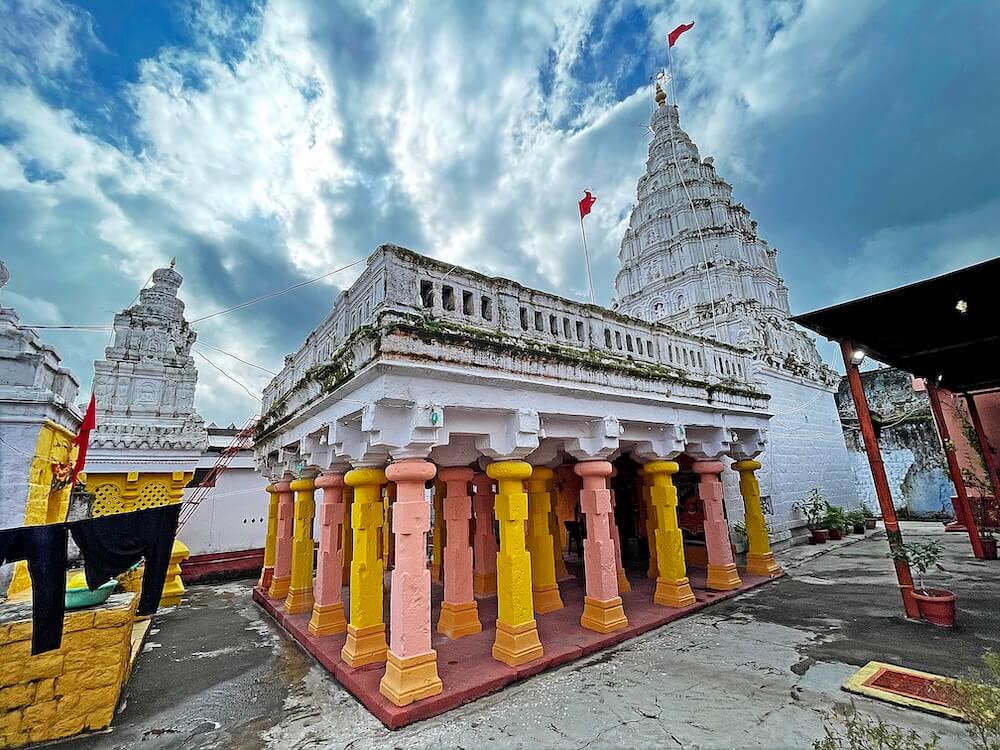
The Khaki Baba temple is structured with a Sabhamandap (assembly hall), Antarala (vestibule), and Garbhagriha (sanctum sanctorum). The semi-open Sabhamandap has six rows of six stone pillars each. There are a total of 36 pillars here. All pillars stand on square bases. Their shafts feature geometric shapes such as squares, octagons, and circles. In the center of the Sabhamandap floor, there is a tortoise sculpture. A palanquin used during festivals is hung from the ceiling. In the Sabhamandap, there is Khaki Baba’s bed of nails. It is said that the Baba used to sleep on this bed, which has sharp spikes.
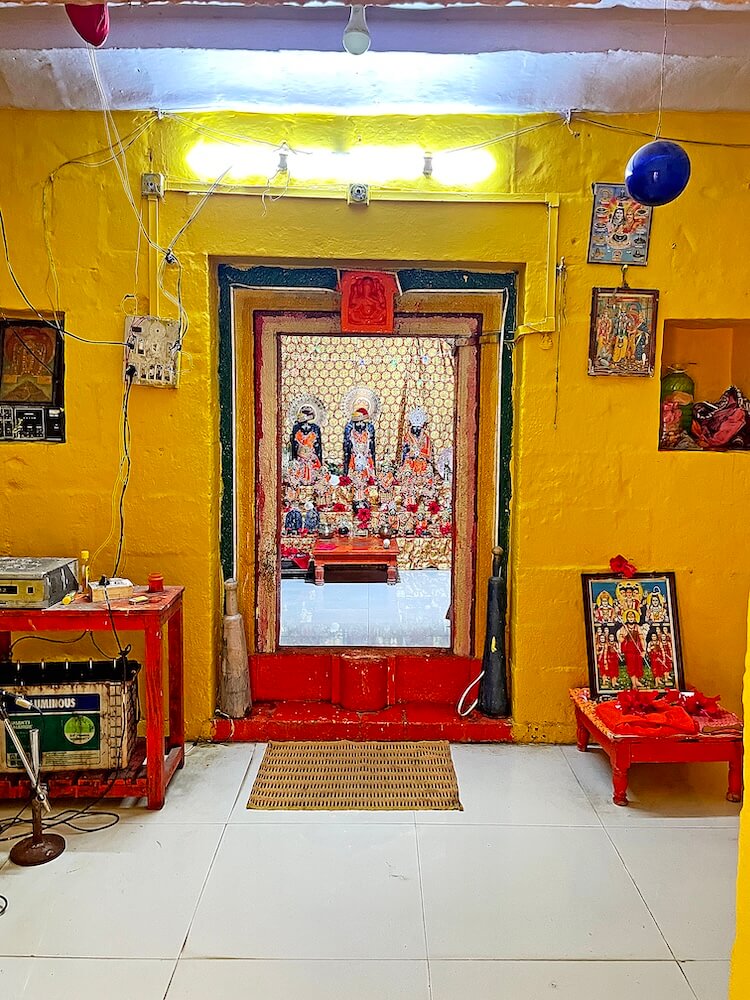
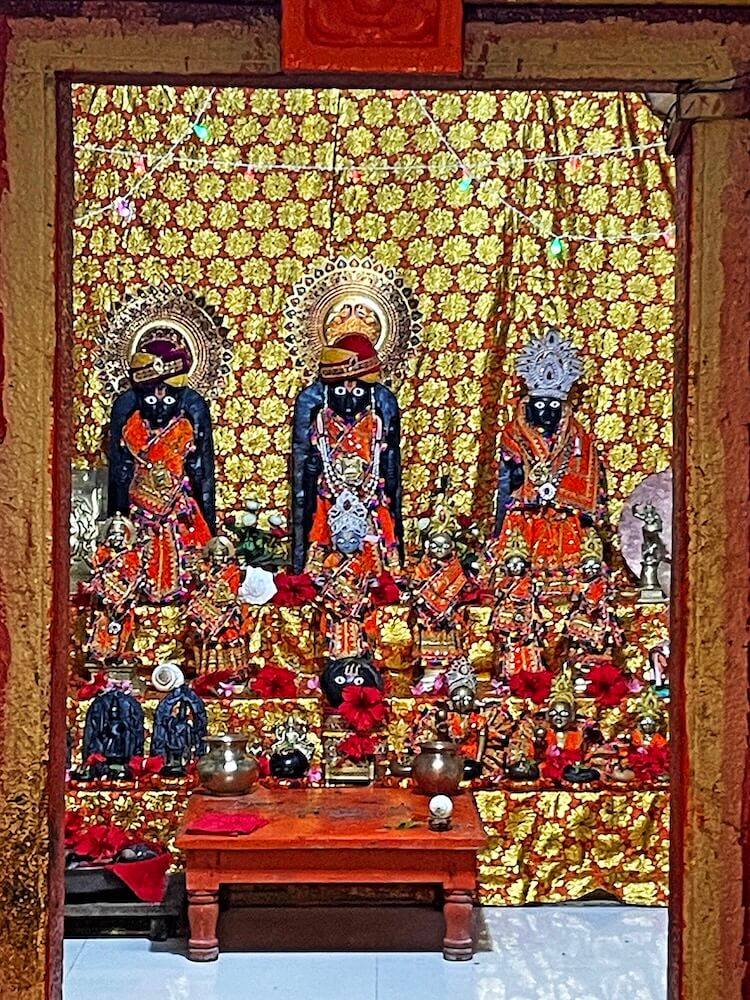
Further ahead is the enclosed Antarala and Garbhagriha. On the front wall of the Antarala, on both sides of the entrance, are two niches containing sculptures of two-armed, staff-bearing gatekeepers (Dwarapalas). The door frames feature carvings of foliage, flowers, and pillars, while the lintel bears a sculpture of Lord Ganesha. There is a moonstone (Chandrashila) at the threshold. The Antarala contains the seats of the Mahants and some portraits. Beyond this is the entrance to the Garbhagriha. The entrance has three door frames adorned with floral carvings. The lintel features a Ganesha sculpture, and there is a moonstone at the threshold. Inside the Garbhagriha, on a Vajrapitha (throne), are the idols of Khaki Baba and his disciples, along with several small idols of various deities.
There is a circumambulation path (Pradakshina path) around the exterior of the temple. The roof of the Sabhamandap has a safety railing on all four sides. The roof of the Garbhagriha features a seven-tiered Dravidian-style Shikhara (spire). Each tier of the Shikhara contains niches, sculptures of deities, and miniature spires (Urushringi). At the top of the Shikhara are two Amalakas placed one above the other, topped by a Kalash and a flag.
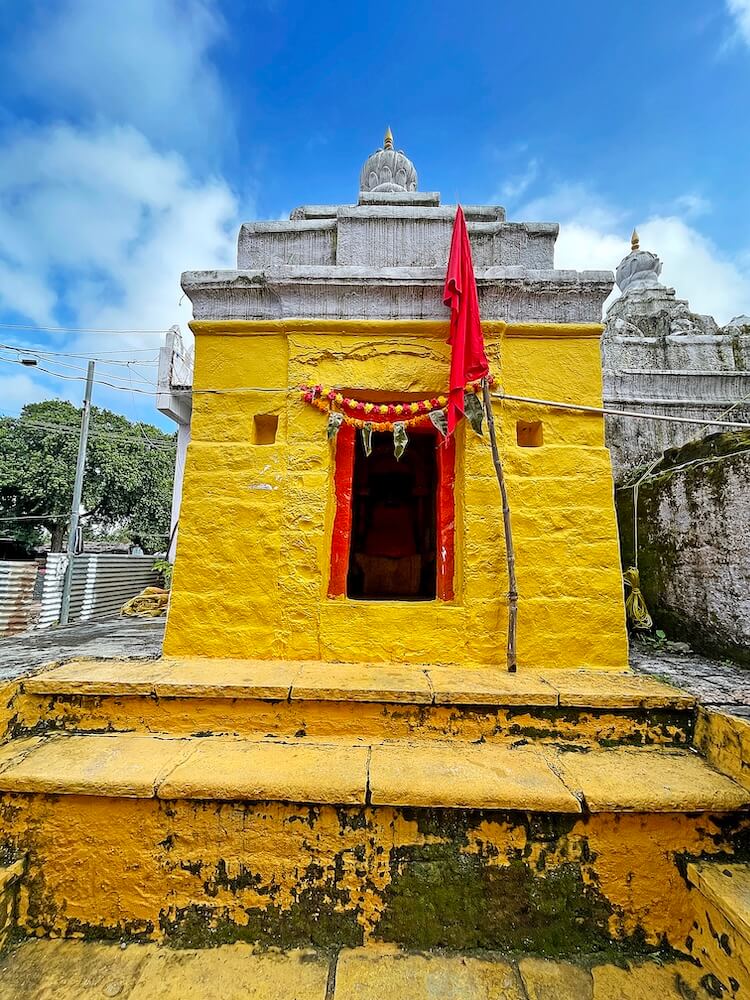
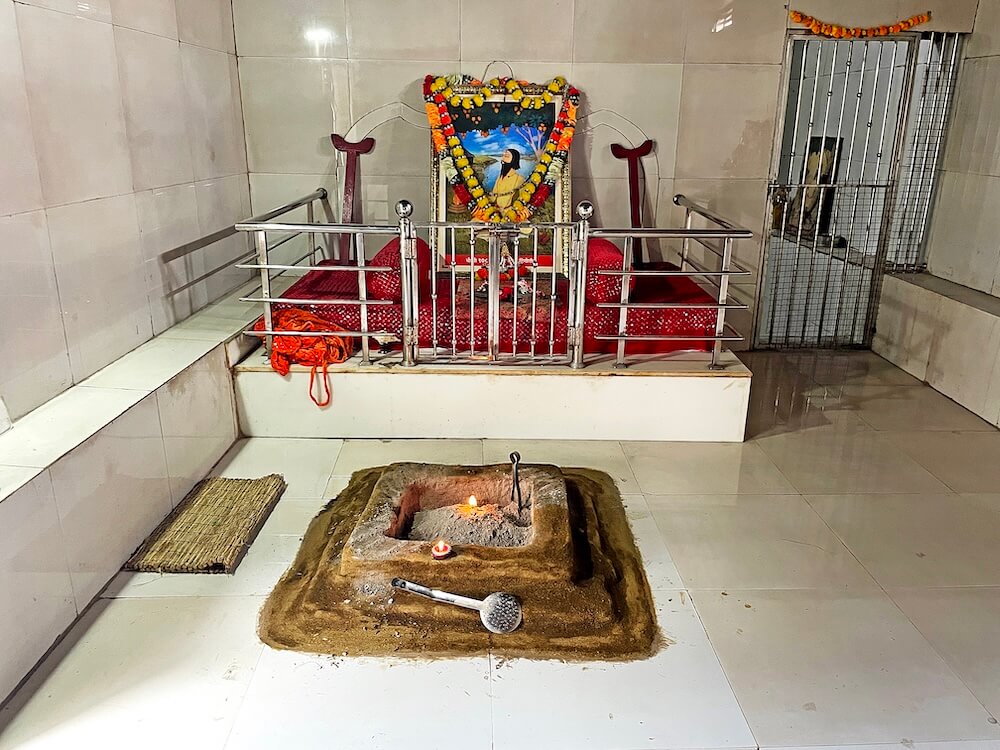
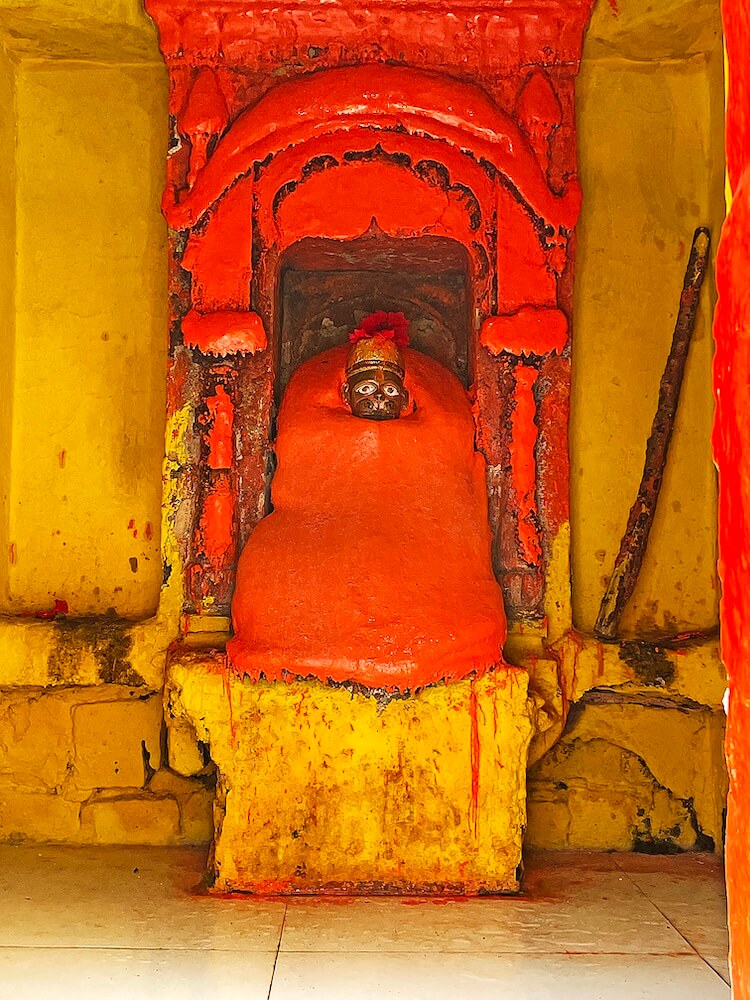
In front of the Khaki Baba temple is an ancient Hanuman temple. This temple, which consists only of a Garbhagriha, houses a vermilion-smeared stone idol of Hanuman on a Vajrapitha. Next to the Hanuman temple is an ancient Shiva temple. Inside, there is a Shiva Linga on the floor and a Nandi sculpture in front. A pot (Kumbh) for dripping water onto the Shiva Linga is placed on a tripod stand. Beside the Shiva temple is the ancient Samadhi temple of the departed Mahants. This Samadhi temple, with its latticed walls, has a four-tiered Dravidian-style Shikhara on its roof, topped by an Amalaka and a Kalash. Next to the Samadhi temple is the Dhunighar (sacred fire chamber). It is said that Khaki Baba used to live here. Inside the Dhunighar, there is a sacrificial pit (Yajnakunda) on the floor. In front of it, on a raised platform a few inches high, is a stainless steel railing. The Baba’s seat, wooden sandals (Padukas), and staff (Danda) are kept here. The Dhunighar was renovated in recent times. There is an idol of Lord Ganesha against the wall in the Dhunighar.
In the temple courtyard, there is an underground chamber where it is said that Khaki Baba used to meditate. In the courtyard, there is a small tank about four square feet in area and three feet deep, containing a stone that floats on water. It is said that this stone is from the construction of the Ram Setu bridge that connected to Lanka. Outside the temple courtyard, along the fortification on the banks of the Kayadhu River, are some chambers (Ovaryas). These were built for devotees performing holy baths in the Kayadhu River.
The major festivals celebrated here include Khaki Baba’s Punyatithi (death anniversary) on Bhadrapada Vadya Ekadashi, Ram Janmotsav, Hanuman Jayanti, and Mahashivratri. During these festivals, a palanquin procession and a chariot procession are organized. Thousands of devotees from Maharashtra and other states attend the temple during these festivals. Programs such as Bhajans, Kirtans, discourses, music, and Mahaprasad are organized in the temple during all festivals. The Marwadi community participates significantly in the Diwali Padwa festival. A large number of devotees visit the temple for Darshan on Thursdays, full moon days (Purnima), new moon days (Amavasya), and other auspicious occasions.
This sacred temple stands as a testament to deep spiritual devotion, ancient architectural grandeur, and rich local cultural traditions.
The sanctum sanctorum houses the divine idol consecrated according to ancient Vedic traditions, surrounded by serene courtyards and traditional temple architecture.
Navratri, Maha Shivratri, Annual Temple Jatra & Deepotsav
Compare and book flights, secure top-rated local hotels near the temple, hire reliable guides, and rent cars instantly.
Extend your pilgrimage by visiting other highly sacred temples located nearby.


Add ₹999 more to unlock FREE SHIPPING!
Your sacred cart is currently empty.
Shop Photo FramesFill in your delivery details below to place your order.
Add comment