
Add ₹999 more to unlock FREE SHIPPING!
Your sacred cart is currently empty.
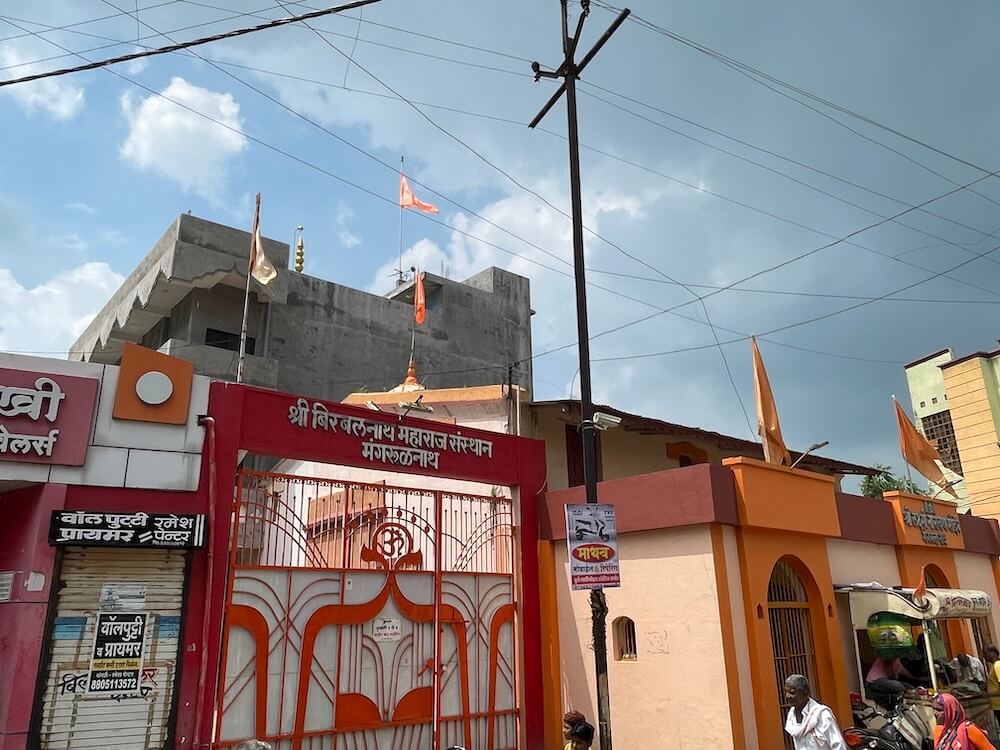
Shop Photo FramesThe village of Mangrul is known today not only as Mangrulpir but also as Mangrulnath. In the seventeenth century, due to Shah Badruddin, also known as Hayat Kalandar, a Pir who came here from the ancient city of Tus in Iran, Mangrul came to be known as ‘Mangrulpir’. Similarly, the suffix ‘Nath’ was added to the name of this town due to the revered yogi and ascetic, Saint Birbalnath Maharaj. Saint Birbalnath Maharaj was a contemporary of Saint Gajanan Maharaj, Pitambar Maharaj, Bhaiji Maharaj, and Mauni Maharaj. He is considered the Gramdaivat (village deity) of Mangrulpir. His temple is situated in the heart of the town.
Birbalnath Maharaj was an ascetic of the Nath Sampradaya. It is a traditional belief that this sect, which emerged between the eighth and twelfth centuries, originated from Adinath Paramashiva. Hence, this tradition within the Shaiva lineage came to be known as ‘Nathpanth’. Shrishail Kardaliban in Andhra Pradesh is considered the birthplace of the Nath Sampradaya, and Andhra, Karnataka, and Maharashtra are regarded as its primary places of divine play (leelasthals). Guru Gorakshanath was the founder of this tradition, and Matsyendranath (Machhindranath) was his Guru. The goal of this path is to use the practice of Yoga to attain Siddhatva (perfection). Nath Yogis consider ‘Nath’ as the supreme state and practice Yoga to achieve it. After receiving initiation into the Sampradaya, seekers append the title ‘Nath’ to their names. Birbalnath was an ascetic in this very tradition. His method of spiritual practice and attire were in accordance with the Navnath Sampradaya.
According to information in the Washim District Gazetteer, Birbalnath Maharaj was originally from Punjab. It is said that around the year १८५० CE, he arrived here at the age of १४. Seeing his radiant form and pure conduct, the villagers requested him to reside there. He took refuge in the village’s Mahadev Temple. In this temple, he lit a Dhuni (sacred fire) at that time. It is said about this Dhuni that even if it rained in that area, the area around the Dhuni never received rain. It continued to burn. This Dhuni is still burning today, almost two hundred years later. Saint Gajanan Maharaj and Pitambar Maharaj of Kondoli, who served him for २४ years, were contemporaries of Birbalnath Maharaj. It is said that they used to meet Birbalnath Maharaj. The Lakshmi-Narayan Temple in Mangrulpir was established by Birbalnath Maharaj. He established communal harmony in the village and undertook many constructive works. On Magh Shuddha Pournima, Shake १८५०, Saturday, the ४th of February, १९२८, at ६ PM, he took Sanjeevan Samadhi (living samadhi) here. According to local legend, that was the time of British rule. When the then British District Collector learned that Birbal Maharaj was taking Samadhi, he came here with government machinery. He tried to dissuade Birbalnath, but Maharaj’s resolve to take Samadhi was firm. The Maharashtra Government’s Washim Gazetteer records that at the time he took Samadhi, Maharaj’s Math owned २५ acres of land.
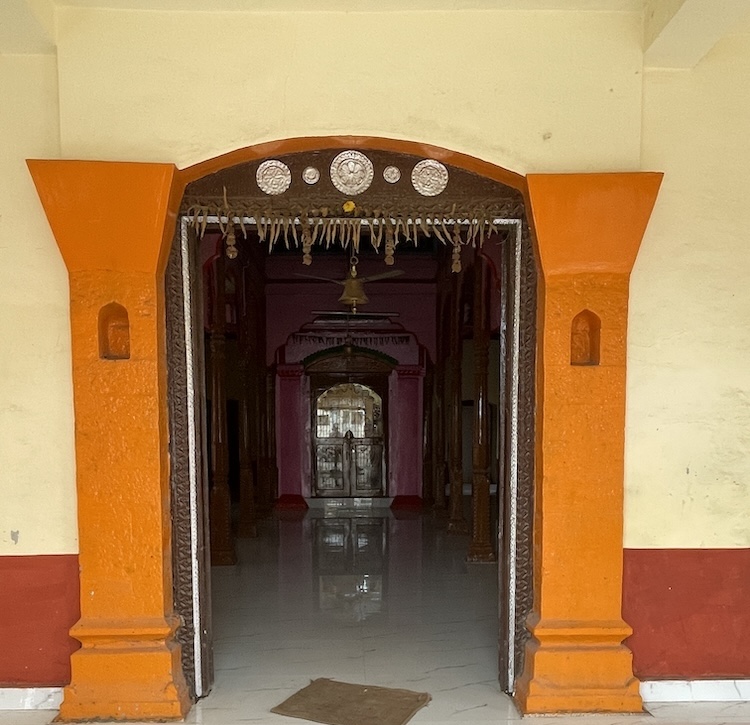
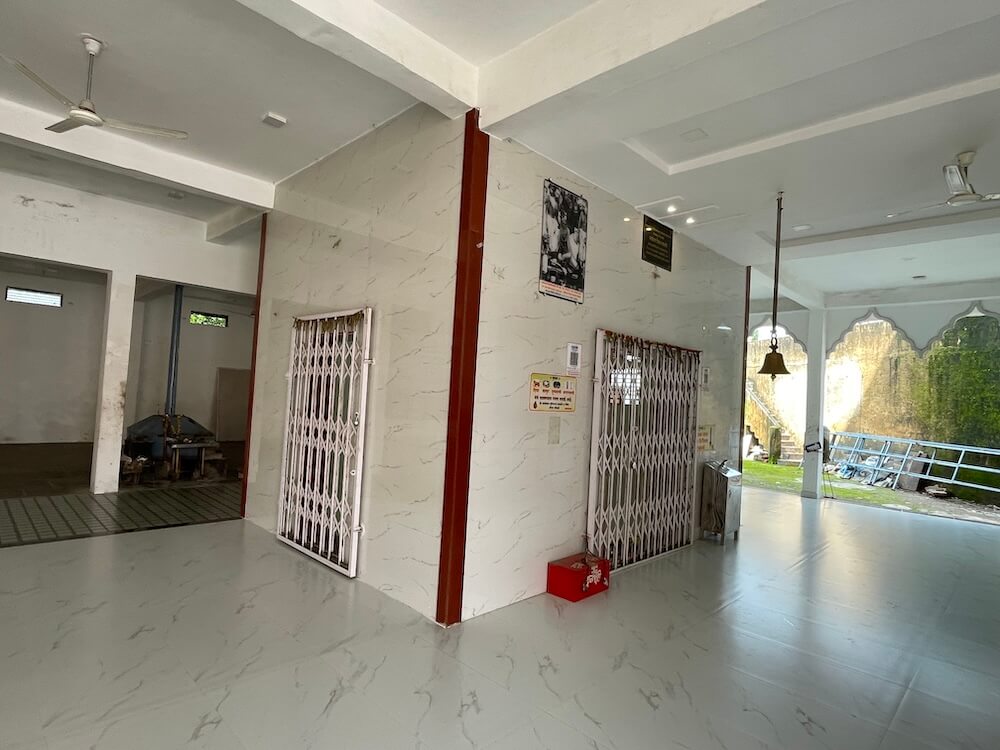
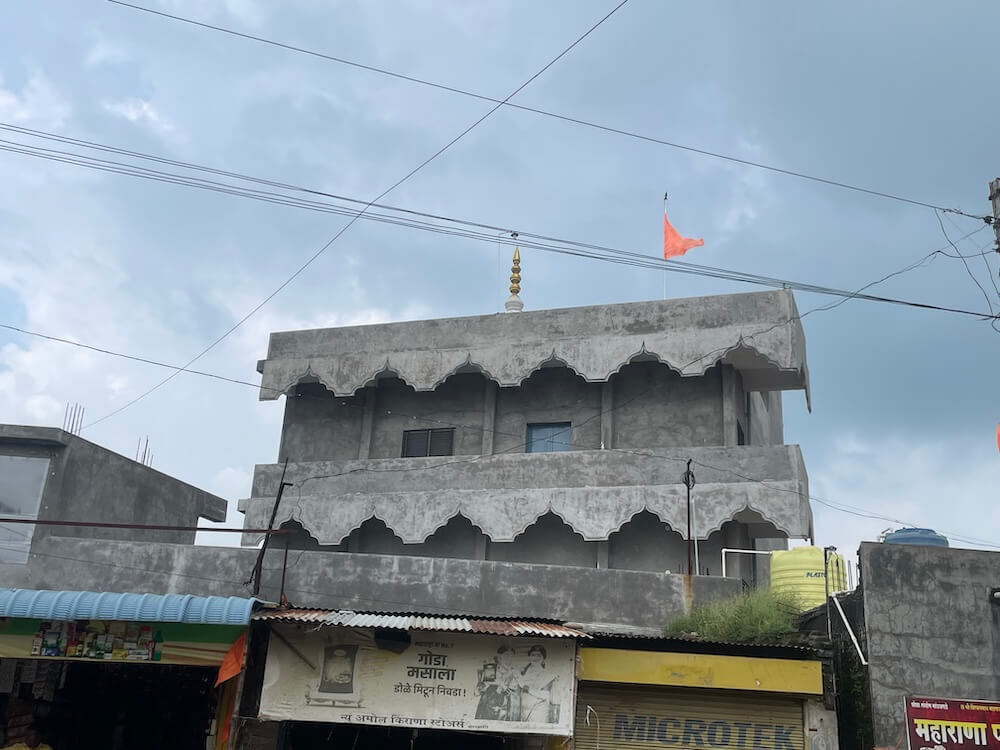
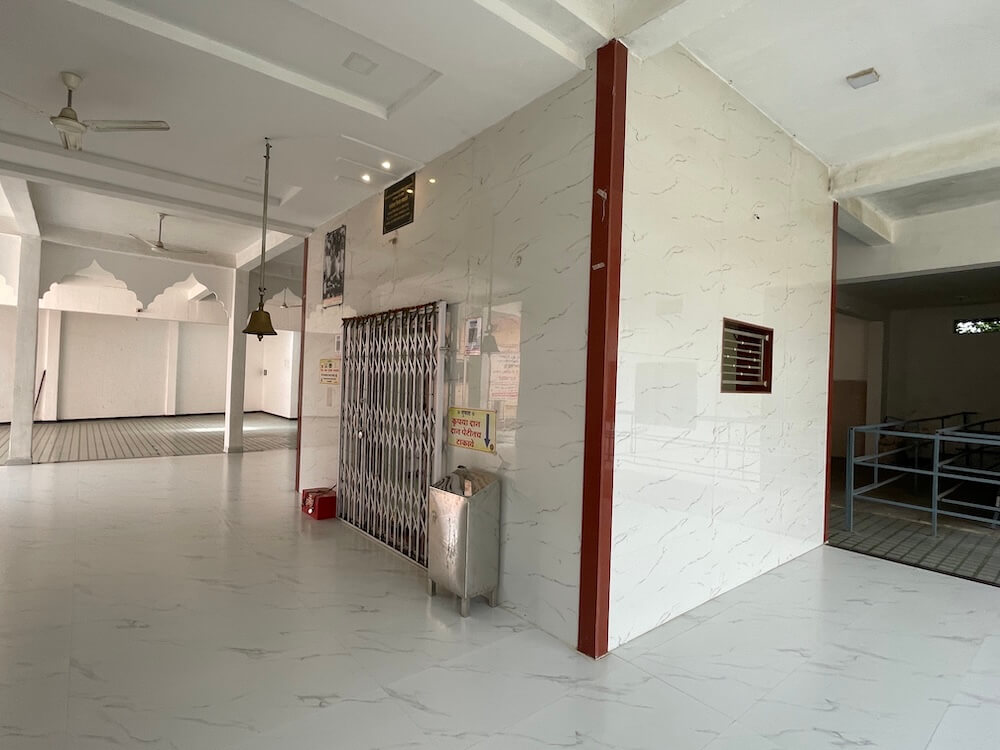
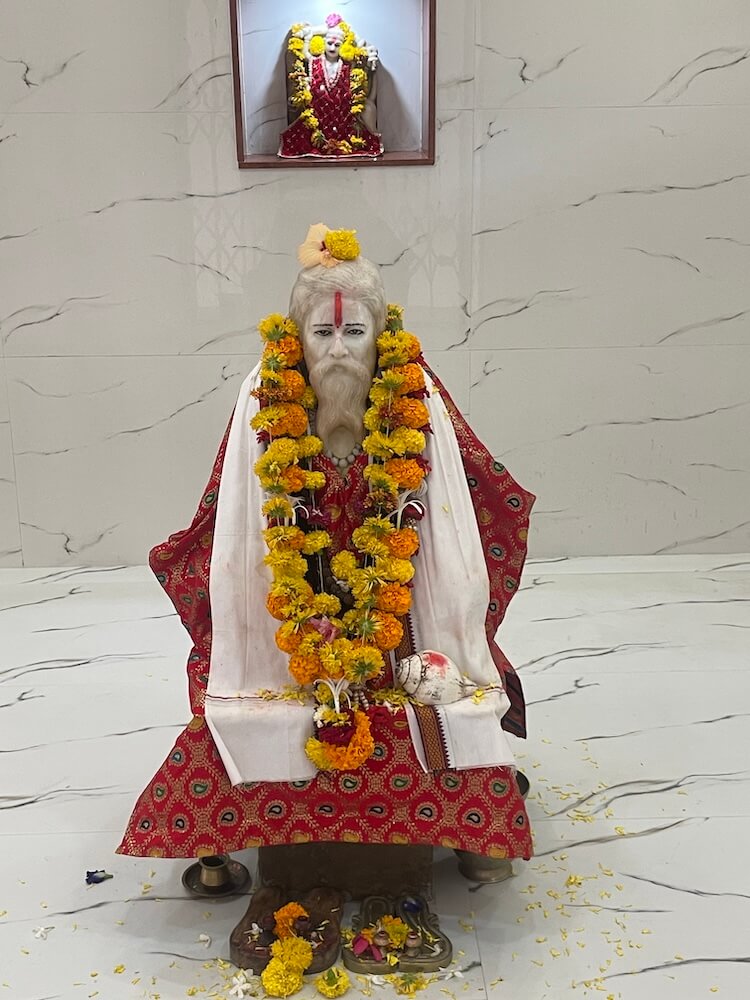
This historic site of Birbalnath is located in the central part of Mangrulpir. One enters the temple courtyard of Maharaj through a square archway adjacent to the Lakshmi-Narayan Temple, which was built according to the instructions of Birbalnath Maharaj. Inside, there is a large assembly hall of modern construction, with many pillars and arches. On one side, there is Maharaj’s continuously burning Dhuni. A special chimney has been arranged for the smoke from this Dhuni to exit the assembly hall. In the center of the assembly hall is the Garbhagriha (sanctum sanctorum). This Garbhagriha, adorned with marble tiles inside and out, has two doors – one at the front and one on the left side. Above the main entrance here, an old photograph of Birbal Maharaj taken before he took Samadhi is displayed. In the center of the Garbhagriha is the Samadhi Sthan (place of Samadhi) of Maharaj. A marble idol of Saint Birbal Maharaj is installed on it. In front of this are two pairs of Maharaj’s Padukas (footprints). In a niche on the wall behind the Samadhi Sthan, an idol of Goddess Durga, the revered deity of Birbalnath Maharaj, is enshrined. Lalsingh Devisingh Raghuvanshi was a disciple of Birbalnath. His shrine is also in this temple. Above the Garbhagriha is a Shikhar (spire) in the Maratha architectural style. Within the temple complex are ancient temples of Lakshmi-Narayan and Mahadev. A Shivling is enshrined in the Mahadev temple. Similarly, there are idols of Bhairavnath, Ganesh, and a deity named Chaturthi here.
In this temple, devotees can have Darshan of Maharaj from morning until late at night, except for the period from १ PM to ४ PM. A ten-day fair is held here, starting from Magh Pournima and continuing until Mahashivratri. The Yatrotsav (pilgrimage festival) began here in the very next year after Birbalnath took Samadhi, i.e., from १९२९. The festival commences with the Abhishek (ritual bathing) of Maharaj on Magh Pournima. On the fifth day, there is a Mahaprasad (grand feast), and on the following day, a Palkhi Sohala (palanquin procession) and Gopalkala are performed. During this fair, which is attended by thousands of devotees, various religious and cultural programs such as Khanjeri Bhajan competitions are organized. The shops at the fair are set up in Baldev Maidan, one to one and a half kilometers away from the temple.
Useful Information:
This sacred temple stands as a testament to deep spiritual devotion, ancient architectural grandeur, and rich local cultural traditions.
The sanctum sanctorum houses the divine idol consecrated according to ancient Vedic traditions, surrounded by serene courtyards and traditional temple architecture.
Navratri, Maha Shivratri, Annual Temple Jatra & Deepotsav
Compare and book flights, secure top-rated local hotels near the temple, hire reliable guides, and rent cars instantly.
Extend your pilgrimage by visiting other highly sacred temples located nearby.


Add ₹999 more to unlock FREE SHIPPING!
Your sacred cart is currently empty.
Shop Photo FramesFill in your delivery details below to place your order.
Add comment