
Add ₹999 more to unlock FREE SHIPPING!
Your sacred cart is currently empty.
Shop Photo FramesThe etymology of the word ‘Devi’ is stated as ‘Divyati Iti Devi’. Here, the root verb ‘Div’ means to engage in divine play (Leela). According to Indian spiritual philosophy, the Goddess engages in the divine play of creation, preservation, and dissolution of infinite cosmic universes. This Goddess is considered the ultimate origin of the universe, which is why She is revered as Jaganmata (Mother of the Universe) or Jagat-Amba. A Swayambhu (self-manifested) idol of Goddess Jagadamba is enshrined in the temple at Nagartas. According to popular faith, this Goddess grants the prayers and vows of Her devotees. Within this temple trust complex, there are also temples dedicated to Tulja Bhavani and Renuka Mata, who are forms of Adishakti Adimaya Herself.
Jagadamba is the Kuldevta (family deity) of many families in Vidarbha and Marathwada. This sacred site holds immense importance as devotees can seek the divine darshan of three Shakti deities—Jagadamba, Renuka, and Tulja Bhavani—together in these temples. The Jagadamba Devi Temple here is said to be about 400 years old. According to the legend surrounding the temple’s establishment, in the seventeenth century, prior to the era of Chhatrapati Shivaji Maharaj, there was a settlement named Kasarwadi in this region. A householder named Dashru Ghunse lived there. Once, while plowing his fallow land, he discovered the idols of Goddess Jagadamba and other divine manifestations buried in the earth. Dashru Ghunse built a temple on his land and consecrated them. It is said that since then, his family surname became ‘Devle’ (temple keepers), and the village came to be known as ‘Nagartas’ (plowed furrow).
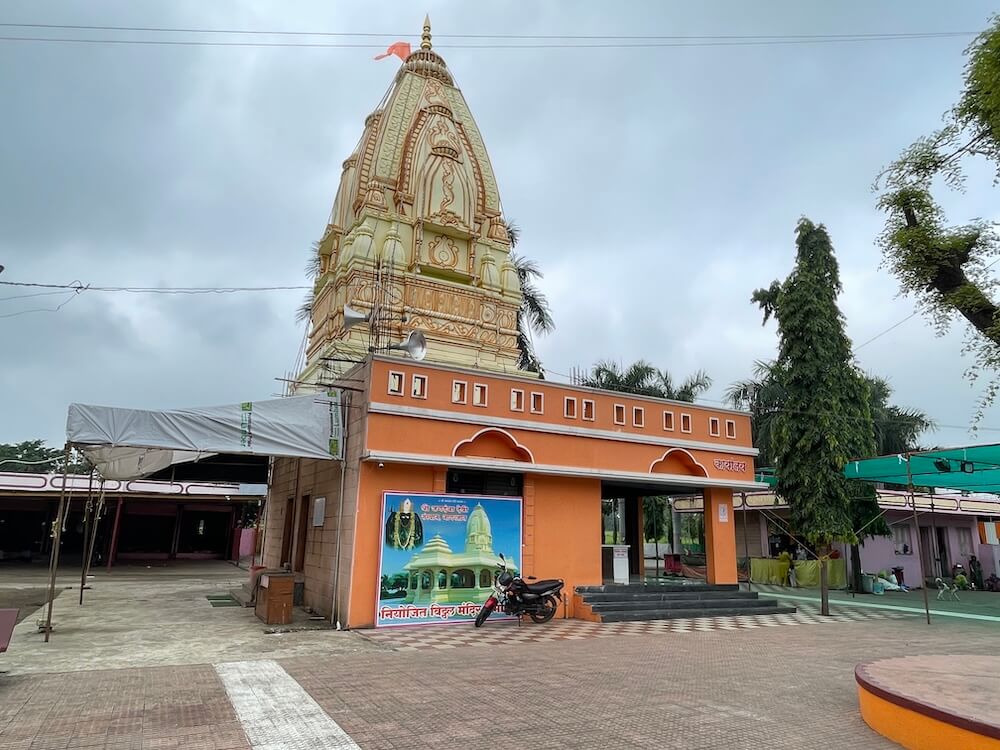
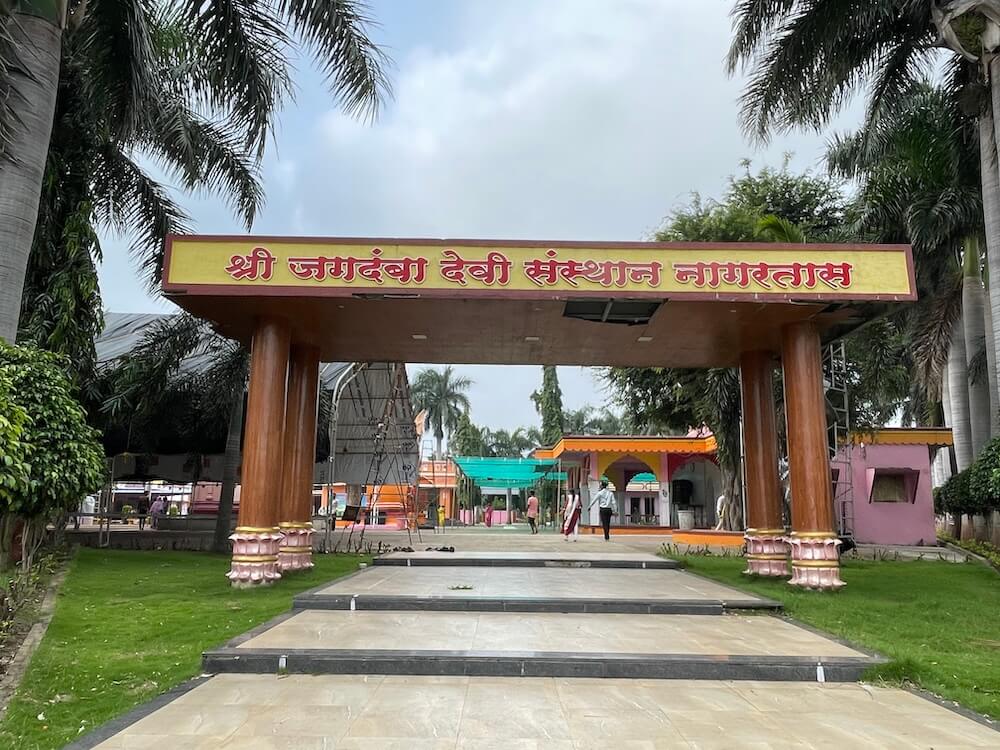
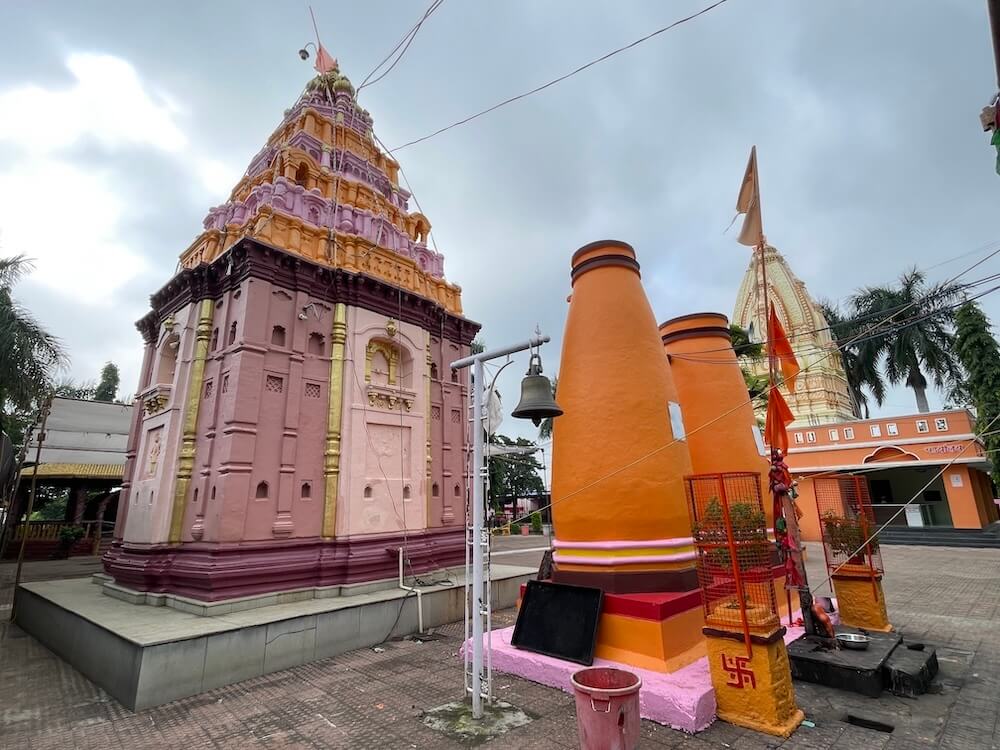
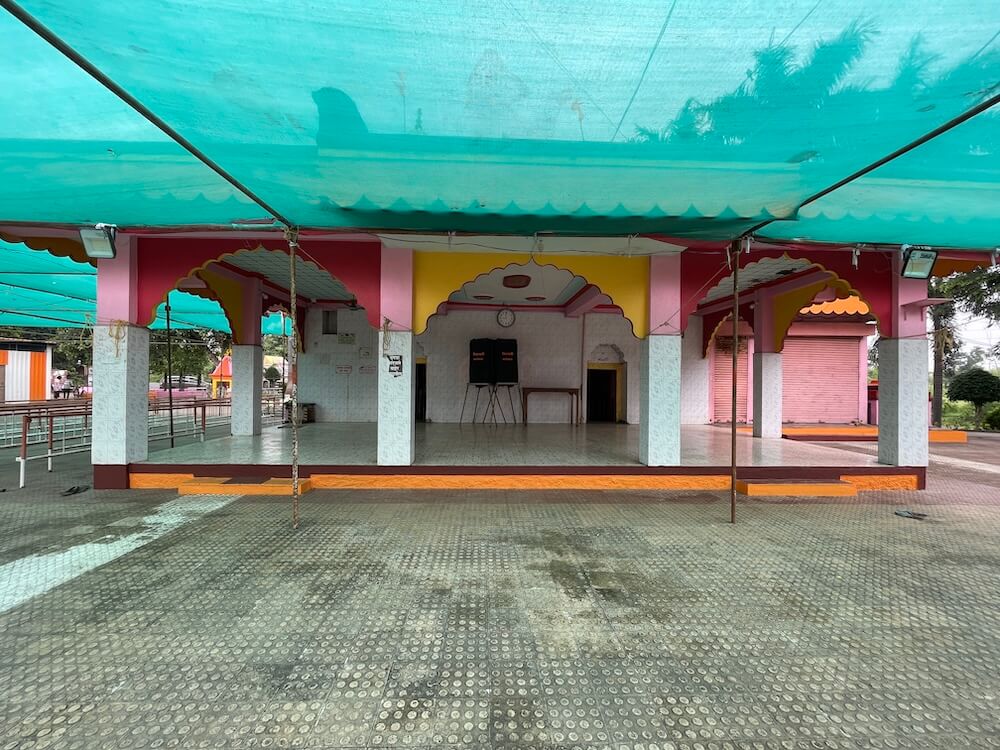
The temple of Jagadamba Devi is situated here amidst a spacious complex adorned with various trees and beautiful gardens. The temple premises feature a grand entrance gate. On the right side stands an ancient tamarind tree, at the base of which is a small shrine dedicated to Lord Hanuman. Nearby, on a raised platform, are vermilion-coated sacred stones of subordinate deities, said to be remnants of the original ancient temple. Directly ahead, on a high plinth, stands the neat and elegant temple of Mother Jagadamba. Adjacent to the temple are two large Deepstambhas (light towers) and two Tulsi Vrindavans. The sacred flag pole (Dhwajakathi) of the Goddess is also located here.
The temple architecture comprises a Sabhamandap (assembly hall) leading directly into the Garbhagriha (sanctum sanctorum). A special feature of this temple is its exterior walls, which are beautifully decorated with vertical geometric patterns, along with several small and large niches and delicate lattice windows. The main entrance of the temple also features intricate decorative carvings. On the front facade, tall pillars shaped like carved Kalashes flank both sides of the entrance. Inside the assembly hall, the inner walls feature numerous small niches. Near the ceiling, relief sculptures depicting Yakshas, horsemen, and warriors—resembling ancient cave art—are delicately carved. This forms a unique decorative feature of the temple. Inside the sanctum sanctorum, placed upon a high plinth, resides the vermilion-coated Tandala-shaped (aniconic rock form) idol of Goddess Jagadamba. Brass eyes are fitted onto this Tandala-form idol. A large Malvat (turmeric and vermilion mark) and Kumkum adorn Her forehead, with a delicate nath (nose ring) on Her nose. The idol wears an intricately designed crown upon Her head, along with traditional ornaments such as pearl necklaces and a Mangalsutra around Her neck, and is draped in a rich brocade saree. Devotees firmly believe this idol of the Goddess to be Swayambhu (self-manifested). The divine Padukas (sacred footprints) of the Goddess rest in front of the idol. To the left, in a wall niche, is another goddess idol, also in Tandala form. The spire (Shikhara) of the temple tapers upward on all four sides, featuring numerous small pillars and niches, topped with a grand Kalash.
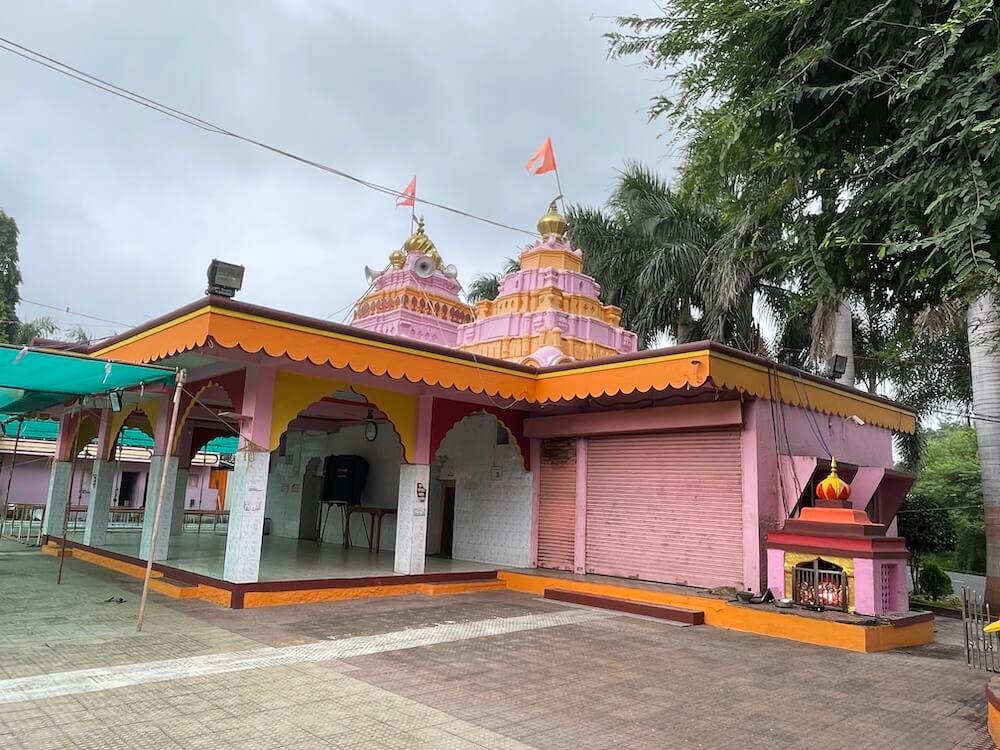
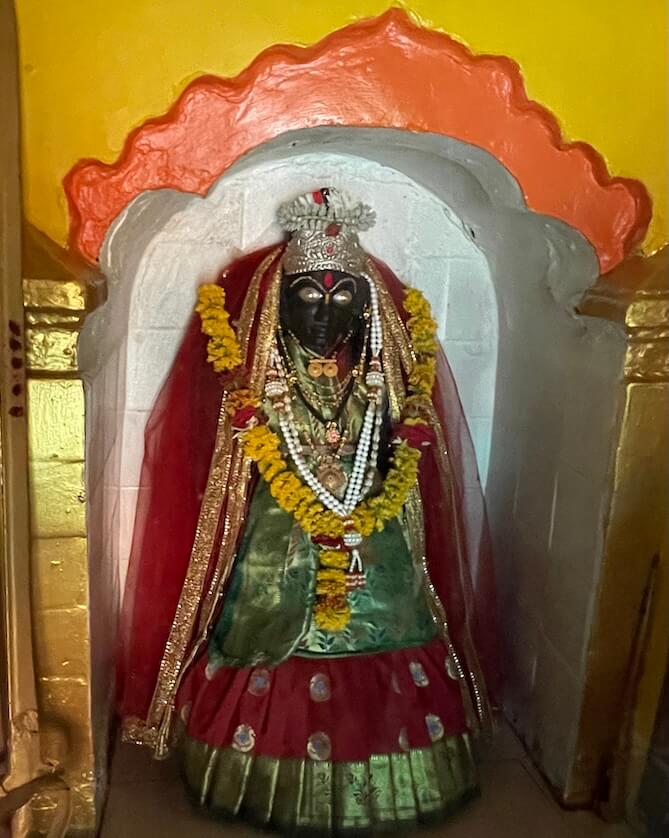
In front of the temple, there is a Mandap for performing Hom-Havan (sacred fire rituals). At a short distance from the main temple lies the temple of Goddess Tulja Bhavani. Built in a modern style, this temple features a large, open assembly hall. The idol of the Goddess inside is carved from black stone, wearing a silver crown upon Her head. She has bright, luminous eyes, and along with fine ornaments, She wears a sacred garland of cowrie shells. A sword is placed on Her right side. The interior of this temple also has a high domed roof. A central door from here leads into the adjacent temple of Renuka Mata. The idol of Renuka Mata is carved in black stone, with an idol of Lord Parshuram in child form by Her side; both idols wear silver crowns. The idol of Tulja Bhavani was specially crafted in black stone and brought from Tuljapur, while the idol of Renuka Mata was brought from Mahur.
Within the complex, there is a separate temple dedicated to Lord Vitthal and Goddess Rukmini. In this temple, charming black stone idols of Vitthal and Rukmini are enshrined side by side on separate plinths. Shrines dedicated to Lord Ganesha, Asra Mata, and Isamata are also located in this temple. Within the temple premises, there are shops selling items for offering Oti (devotional offering to the Goddess) and Prasad.
At this Jagadamba Mata Temple Trust, both Chaitra and Sharadiya Navratri festivals are celebrated with great enthusiasm. During Navratri, the traditional Gondhal (devotional musical rendering) in honor of the Goddess takes place every night. Arati is performed morning and evening, and Mahaprasad (food offering) is served twice daily.
This sacred temple stands as a testament to deep spiritual devotion, ancient architectural grandeur, and rich local cultural traditions.
The sanctum sanctorum houses the divine idol consecrated according to ancient Vedic traditions, surrounded by serene courtyards and traditional temple architecture.
Navratri, Maha Shivratri, Annual Temple Jatra & Deepotsav
Compare and book flights, secure top-rated local hotels near the temple, hire reliable guides, and rent cars instantly.
Extend your pilgrimage by visiting other highly sacred temples located nearby.


Add ₹999 more to unlock FREE SHIPPING!
Your sacred cart is currently empty.
Shop Photo FramesFill in your delivery details below to place your order.
Add comment