
Add ₹999 more to unlock FREE SHIPPING!
Your sacred cart is currently empty.
Shop Photo FramesAmong the places that preserve a rich heritage of ancient sculpture, the village of Hottal in Degloor taluka holds special significance. The sculptures carved on the walls and pillars of the temples here are so lifelike that one feels as if they are communicating with us. The Chalukya Emperor Vikramaditya (VI) had granted this village the status of a sub-capital. The Chalukya kings built several magnificent temples here. Along with the Siddheshwar Mahadev and Parvati temples, the Parameshwar and Someshwar temples in the village are also excellent examples of sculptural art. Unfortunately, over the passage of time, the significance of the Someshwar temple has been somewhat overshadowed, yet these temples still stand today as witnesses to their past glory.
Inscriptions found here prove that the Parameshwar temple at Hottal dates back one thousand one hundred years. In the eleventh century, the Badami Chalukyas held power in the Marathwada and Kannada regions. Hottal, known as ‘Potal’ in ancient times, was the capital of the kings of the Vanhikula clan, who were feudatories of the Chalukyas. Inscriptions found here mention that Chalukya Emperor Vikramaditya VI built this temple and donated several villages for the maintenance, decoration, and offerings of the temple. These inscriptions and the sculptural beauty on the temple are sufficient to prove the antiquity of the temple.
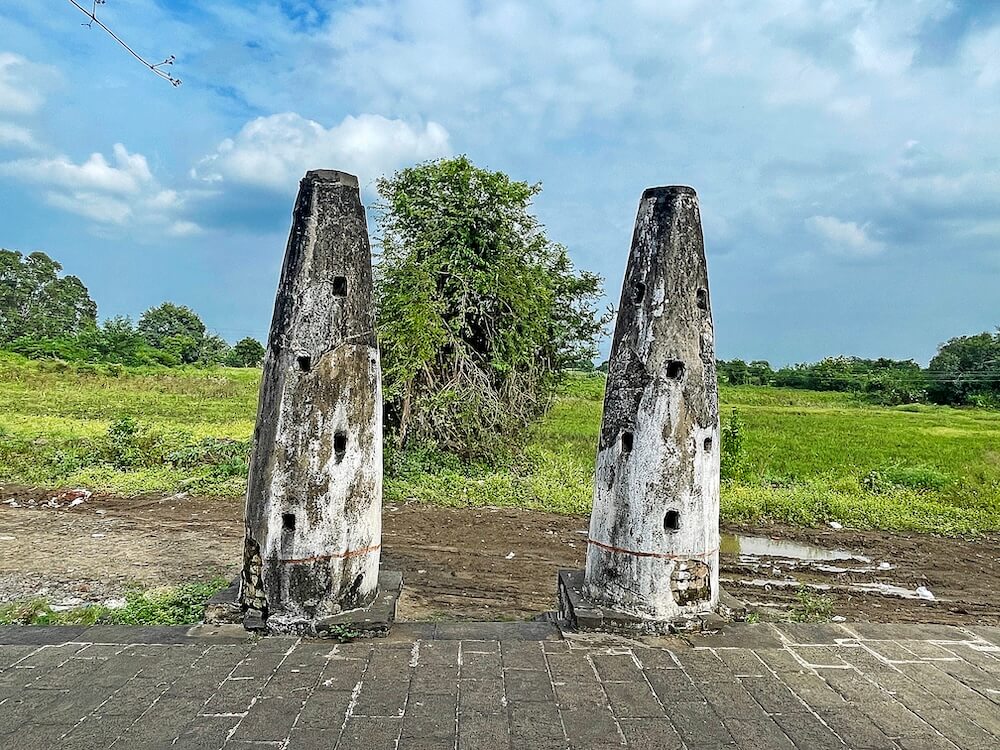
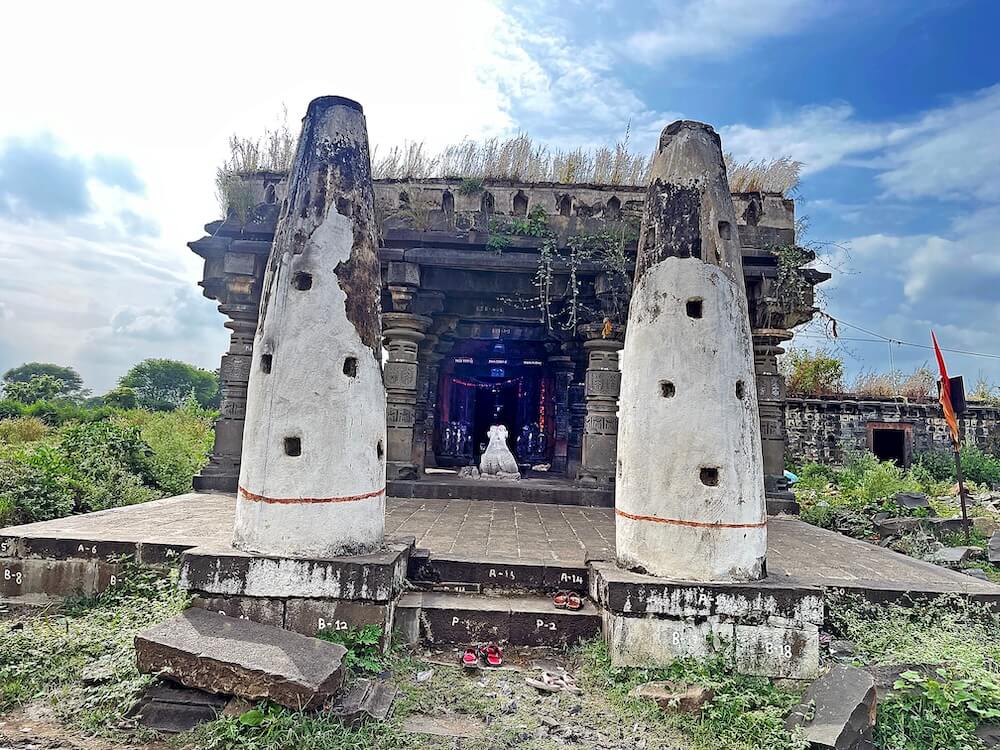
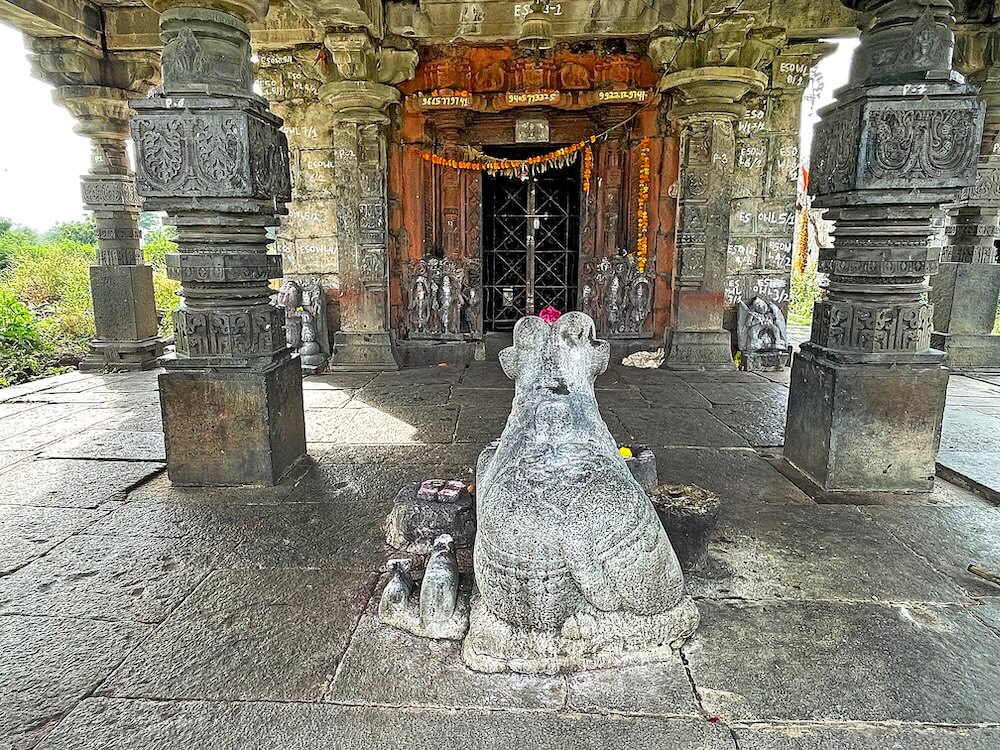
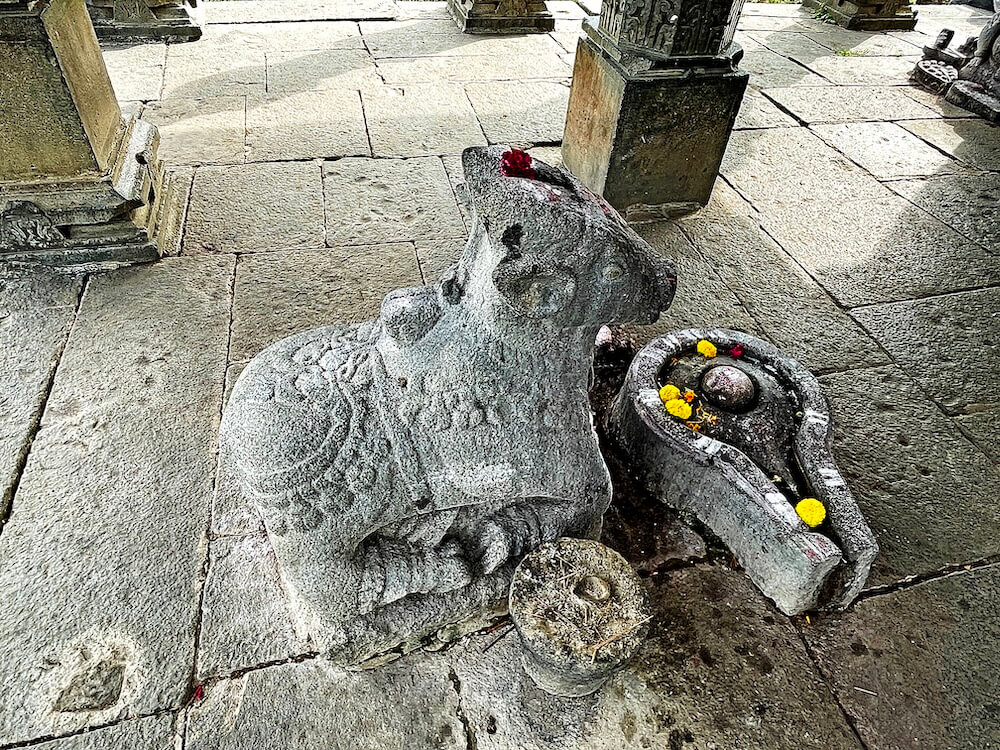
In front of the temple are two square platforms topped with lamp pillars (Deepstambhas) that taper towards the top. The temple, which consists of an open pavilion (Khula Mandap), a main hall (Sabhamandap), an intermediate chamber (Antarala), and the sanctum sanctorum (Garbhagriha), is 54 feet long and 25 feet wide, standing on a three-foot-high plinth. In front of the temple is an open pavilion with stone paving. Beyond that, in the semi-open Sabhamandap, there are four rows of three ornate pillars each. The lower part of the pillar shaft, about three feet high, is square, while the upper part features various geometric shapes such as square, circular, hexagonal, and octagonal. At the top, there is a circular capital with brackets. The octagonal ceiling features circular carvings and stone chandeliers. The square panels on the pillar shafts are carved with various designs, Kirtimukhas, and mythological scenes. The brackets and beams are adorned with diverse carvings. In the center of the Sabhamandap stands an idol of Nandi. Near Nandi, there are several Shiva Lingas of various sizes and some stone footprints (Padukas).
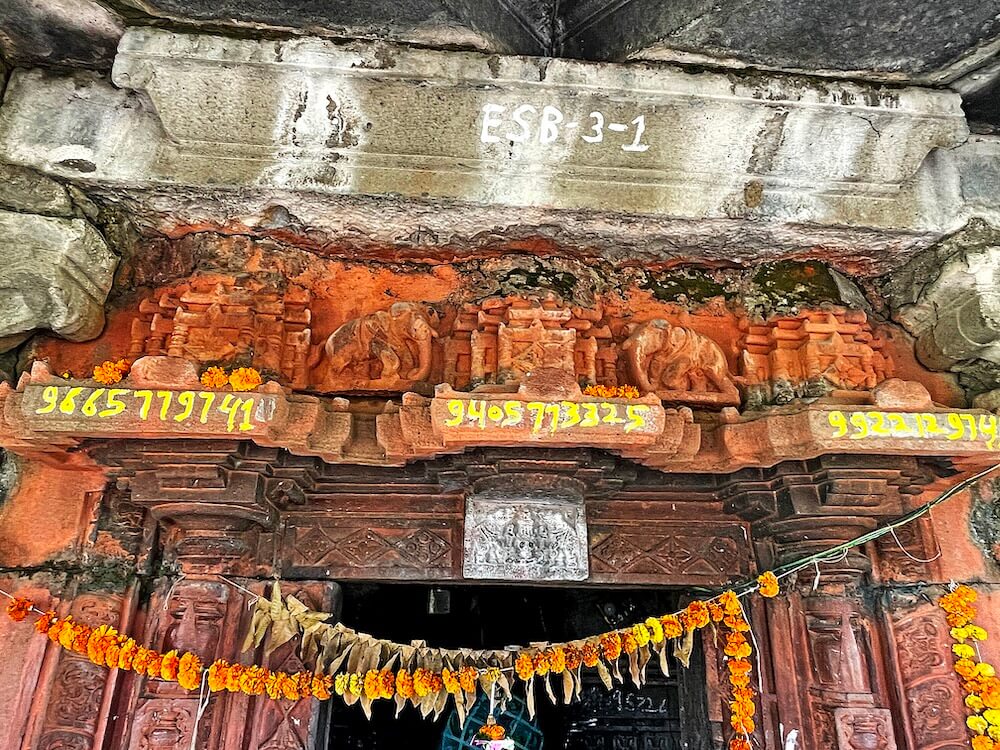
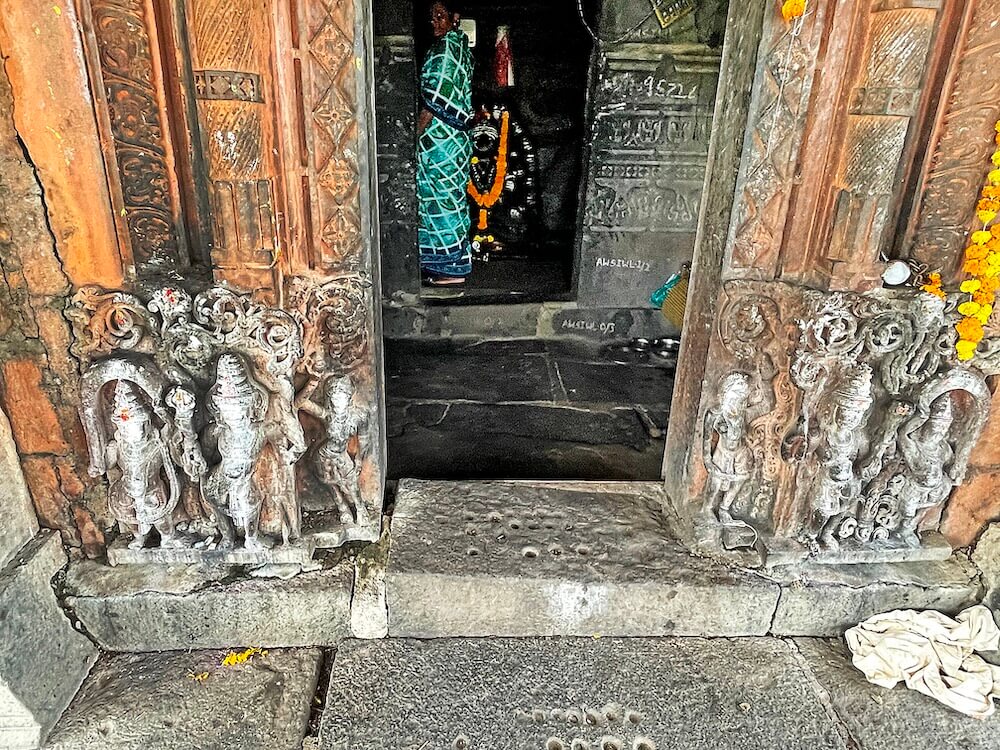
Near the front wall of the Antarala, to the left of the entrance, is a four-armed black stone idol of Lord Ganesha, with a Shiva Linga in front. On the right side is a two-armed idol of Lord Maruti (Hanuman). In one hand, the idol holds a mace, and in the other, it carries a mountain. On the door frames of the Antarala, at the lower section, are sculptures of Ganga-Yamuna and gatekeepers (Dwarpals). The Dwarpals are depicted wearing garments and jewelry, with gems carved into their crowns. They hold various weapons in their hands. Above the Dwarpals are carvings of foliage and flowers. The entrance features decorative branches of vines, flowers, and pillars. On the lintel (Lalatbimba) is a sculpture of Gajalakshmi, and the architrave is adorned with floral creepers. Above the entrance, on the upper lintel, is a carving of a temple spire (Shikhara). The enclosed Antarala is narrow, leading to the entrance of the Garbhagriha. The door frames of the Garbhagriha are decorated with various geometric patterns and floral designs. Inside the Garbhagriha, on a diamond-shaped pedestal (Vajrapitha), sits a four-armed idol of Parameshwar in a cross-legged yogic posture. The two rear hands hold a conch and a discus, while the two front hands are intertwined. On the back slab of the idol, there are carvings of five Lingas at the top. Brass bells hang from the ceiling in front of the idol. The pillars in the Antarala and the walls of the Garbhagriha feature various carvings, and the ceilings are adorned with circular designs. There is a circumambulation path (Pradakshina Path) around the exterior of the temple. The roof of the temple features a sloping eave and a parapet on all four sides.
Special festivals are celebrated in the temple on Maha Shivaratri and every Monday during the holy month of Shravan. During these festivals, Maha-Abhishek and elaborate worship of the deity, including Aarti, are performed. On the last Monday of the month of Paush, the ‘Butti Yatra’ is celebrated. On this occasion, devotees bring Puran Poli in bamboo baskets to offer as Naivedya to the deity and distribute food to the poor. Thousands of devotees visit here for the deity’s Darshan during the Yatra.
The Someshwar temple is located approximately 500 meters from this temple. The structure of this temple consists of a front pavilion (Mukhamandap), a main hall (Sabhamandap), and three sanctums (Garbhagrihas). It is said that this was originally a temple dedicated to Brahma, Vishnu, and Mahesh. Currently, a large part of the roof of the Mukhamandap of this 100-square-foot temple has collapsed. In the center of the Sabhamandap, between four ornate square pillars, is a central stone slab. The pillar shafts feature various geometric shapes, and the square panels of the pillars have intricate composite carvings. In front of each of the three Garbhagrihas are two ornate pillars. All the pillars here stand on square bases and feature geometric shapes like squares, hexagons, octagons, and circles. The main Garbhagriha houses a Shiva Linga. The left and right Garbhagrihas are currently empty. Although this temple is in a dilapidated state, the sculptures of Surya, Vishnu, and Narasimha on the outer walls (Mandovara) are clear and in good condition.
This sacred temple stands as a testament to deep spiritual devotion, ancient architectural grandeur, and rich local cultural traditions.
The sanctum sanctorum houses the divine idol consecrated according to ancient Vedic traditions, surrounded by serene courtyards and traditional temple architecture.
Navratri, Maha Shivratri, Annual Temple Jatra & Deepotsav
Compare and book flights, secure top-rated local hotels near the temple, hire reliable guides, and rent cars instantly.
Extend your pilgrimage by visiting other highly sacred temples located nearby.


Add ₹999 more to unlock FREE SHIPPING!
Your sacred cart is currently empty.
Shop Photo FramesFill in your delivery details below to place your order.
Add comment