
Add ₹999 more to unlock FREE SHIPPING!
Your sacred cart is currently empty.
Shop Photo FramesIn India, the tradition of Maths, Gurukuls, and Ashrams is even more ancient than the tradition of temples. In the Guru-Shishya tradition, Maths hold slightly more significance than temples. For this reason, thousands of Maths of various sects and traditions have been active in the country for hundreds of years. The ancient Guru-Shishya tradition, their customs, and official honors are still preserved here. The faith of the society and the public in these Maths remains intact even today. One such ancient Math is in the village of Betmogara in Mukhed Taluka. The 128th Mahant is currently serving in this Math, which has a tradition of about one thousand years. The influence of this Math on the people of this region remains strong.
The current Mahant states that this Math was established during the time of the Chalukya kings. A copper plate (Tamrapat) can be seen here, which shows that the Bahmani rulers later maintained the rights of this Math. Subsequently, Aurangzeb and the Nizamshahi also issued decrees (Sanads) to confirm the rights and land grants (Jahagiri) of this Math.
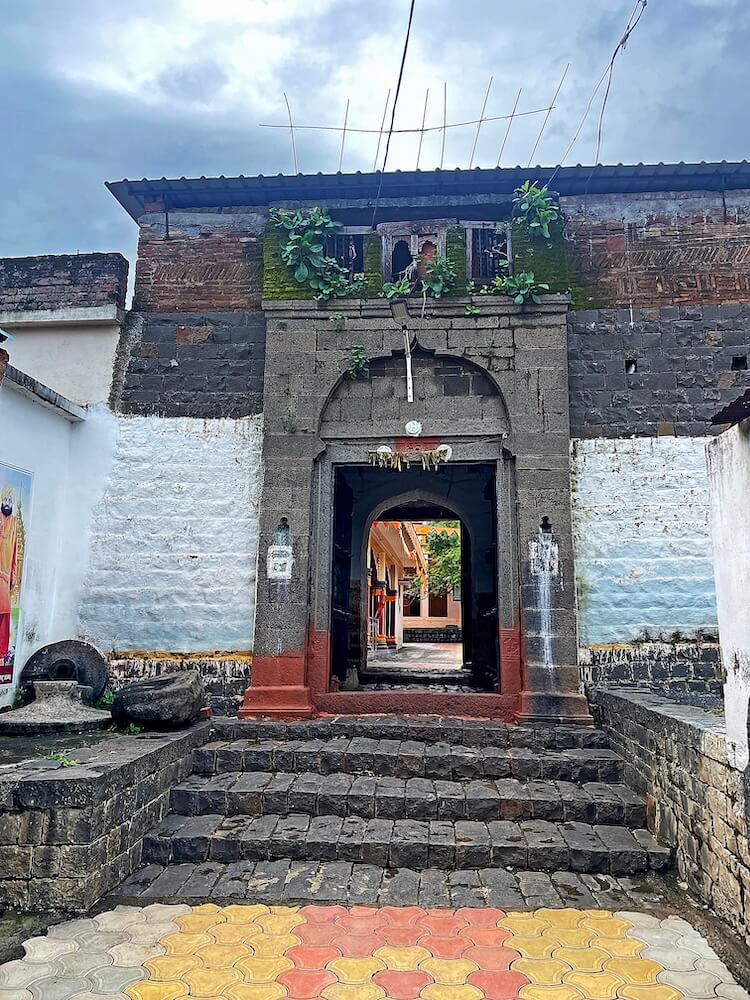
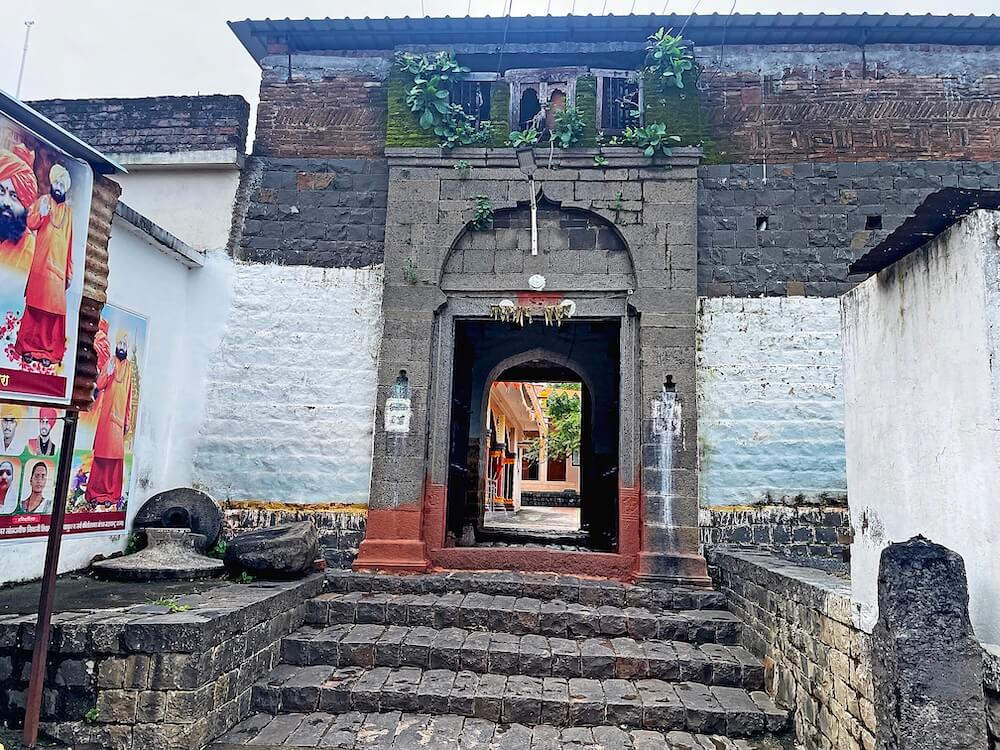
This Math is like a small fortress. The Math has strong fortifications, and there are carved stone steps in front of the entrance. There are square pillars on both sides of the entrance. The entrance has ancient wooden shutters with copper spearheads. Inside the entrance, there are guard rooms on both sides. In the paved courtyard of the Math, there is a stage and a building on the right side. The current Mahant runs a Gurushala here. On a platform on the veranda, there are many ancient items such as the Sanads given to the Math by Aurangzeb and the Nizams, copper plates given by the Bahmani rulers, badges of the attendants, official seals, royal umbrellas (Chatra), whisks (Chamar), and fans (Chaurya).
Further ahead, there is an entrance to go into the main building of the Math. It is said that this building was constructed in the year 1705. Coins from the Mughal and Nizam eras are embedded in the first step of the entrance. As soon as one enters through the entrance, there is the seat (Gadi) of Shivling Badshah on the right and a guard room on the left. Moving forward through a narrow path, one reaches a room containing brass staffs (Dhal-kathya) representing the Muslim deities Hassan and Hussain, along with brass tiger-headed staffs (Wagh-kathya) that hold honorary status. These staffs are used in the Muharram procession celebrated here. It is said that these brass staffs were gifted to the Math by Aurangzeb in the year 1668. From here, in a small room on a Vajra-pitha (diamond throne), a Nandi Kalash and some brass idols are kept as symbols of the Nandi Ganas, who are considered the progenitors of this Math. There is a Mughal-era brass mirror box on the Vajra-pitha. From here, there is a tunnel about four feet high and three feet wide. After passing through this path, one reaches a narrow room containing the collective Samadhi of the eleven Gurus of Shivling Swami. There are eleven Shivling-like stones on the Samadhi platform. Beyond this is a closed tunnel. The Mahant here says that this tunnel used to lead to the forest near Shankar Math, which is eleven kilometers away. There are some brass masks in the niches of the walls of this room. There is another room nearby where the Samadhis of Shivling Swami’s successors, Jivakshetra and Shivkshetra, are located. There are brass idols of Brahma, Vishnu, and Mahesh on the Samadhi platform. From here, there is a steep stone staircase to go to the open ground in the upper part of the fortress. After climbing the stairs, there is a Nagarkhana (drum house) on the left. Various drums of different sizes and periods are kept in the Nagarkhana. These drums are played during all festivals and daily Aarti.
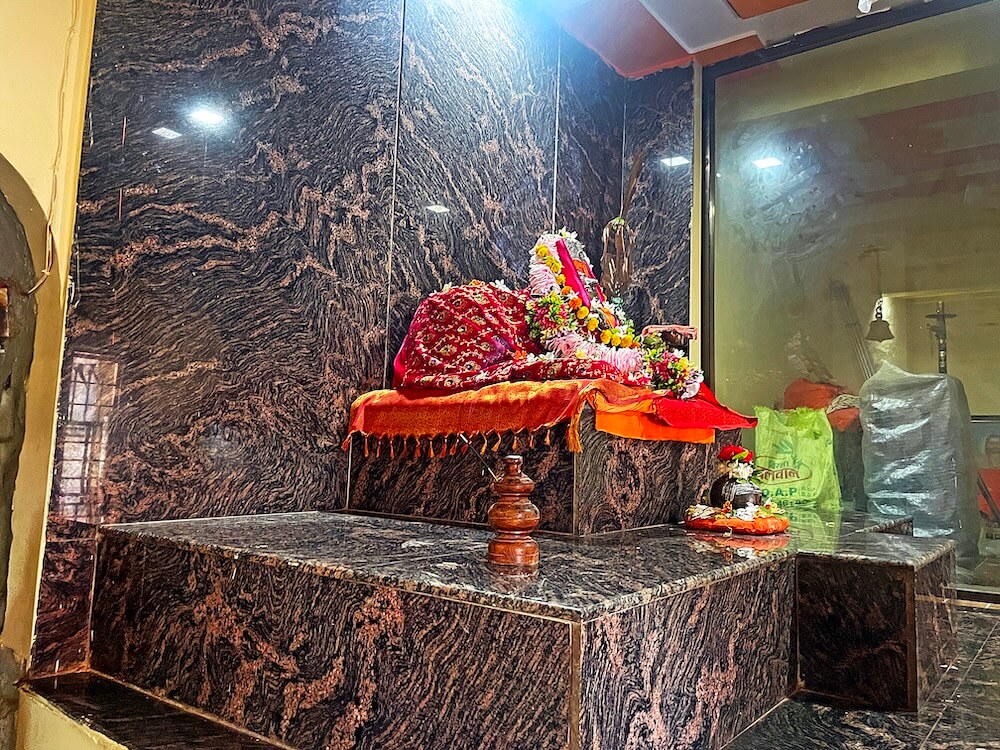
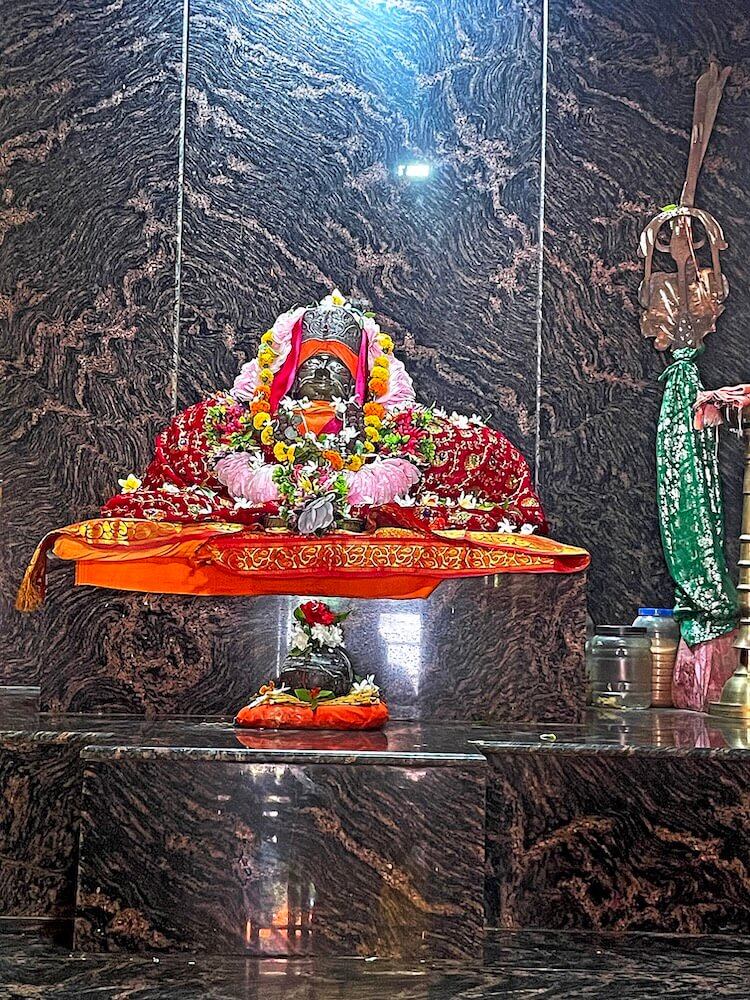
Next to the Nagarkhana is a canopy (Meghdambari) containing the idol of Jagdamba Mata facing south. It is said that this idol was installed by Shivling Swami in the year 1705. Further ahead is the Nyayamandir (Hall of Justice). There are stairs in the middle of the Nyayamandir to go up. There are attendant rooms on both sides of the staircase. Attendants were always alert here. Above this is the judge’s seat. Shivling Swami used to sit here and deliver judgments on local disputes. This judicial seat is crafted in the Mughal style, and Mughal-style carvings can be seen on it. There are windows on all four sides of this room.
There is a main spire in the center of the roof of this Nyayamandir. There are six other spires on all four sides. All the spires are dome-shaped. The main spire has a finial (Kalash), and the other six spires have the crescent and star, a symbol of the Muslim faith. It is said that this symbol exists because justice for all religions was delivered in this Nyayamandir.
Annual festivals like Mahashivratri, Datta Jayanti, and Guru Purnima are organized in this Math. Various religious programs are organized in the Math during all festivals. During the Mahashivratri Yatra festival, the Guru Maharaj’s palanquin goes around the village in a procession amidst the sound of drums and the throwing of Gulal. Thousands of devotees come to participate in the Maharaj’s festival.
This sacred temple stands as a testament to deep spiritual devotion, ancient architectural grandeur, and rich local cultural traditions.
The sanctum sanctorum houses the divine idol consecrated according to ancient Vedic traditions, surrounded by serene courtyards and traditional temple architecture.
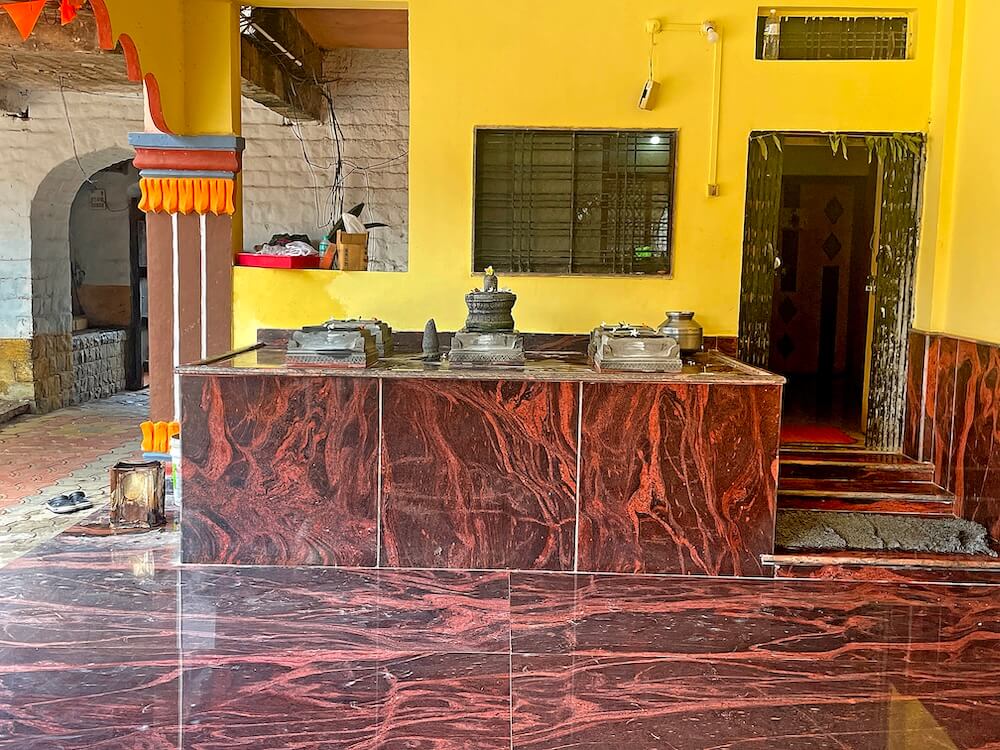
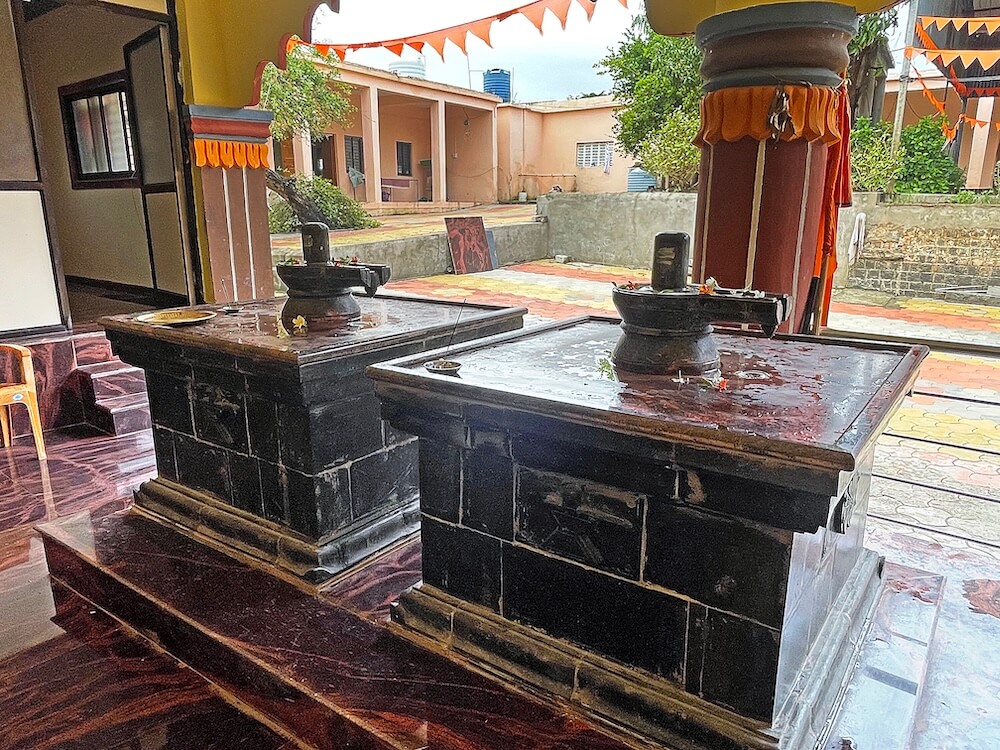
Navratri, Maha Shivratri, Annual Temple Jatra & Deepotsav
Compare and book flights, secure top-rated local hotels near the temple, hire reliable guides, and rent cars instantly.
Extend your pilgrimage by visiting other highly sacred temples located nearby.


Add ₹999 more to unlock FREE SHIPPING!
Your sacred cart is currently empty.
Shop Photo FramesFill in your delivery details below to place your order.
Add comment