
Add ₹999 more to unlock FREE SHIPPING!
Your sacred cart is currently empty.
Shop Photo FramesNrisimha or Narasimha is the fourth avatar of Lord Vishnu. In most Nrisimha idols, the form depicting the slaying of Hiranyakashipu is seen. However, at some places, Yoga-Nrisimha, meaning Nrisimha with a peaceful and composed expression in a yogic posture, is worshipped along with Kayadhu and Prahlad. Alongside parts of Karnataka and Andhra Pradesh in South India, there are many ancient temples of Nrisimha in the border districts of Maharashtra. Shelgaon in Degloor taluka also houses a famous temple of Nrisimha, and devotees firmly believe that the wish-fulfilling (Jagrut) Nrisimha here grants their prayers.
This temple is built adjacent to an ancient Shiva temple. The idol of Nrisimha here was discovered on September ३०, १९३७, by a woman of the village, Sonabai Patil, while digging for soil in her field. Following this, all the villagers together constructed a new sanctum sanctorum (garbhagriha) in the village’s Mahadev temple and consecrated this idol there. The installation of this idol was performed by Basvaling Shivacharya Maharaj, the Mathadhipati of Tamalur Math. According to scholars, this Nrisimha idol dates back to the twelfth century, and the remains of an ancient temple were found at the exact spot where it was discovered. Therefore, it is believed that the history of Shelgaon and the idol here is at least seven to eight hundred years old. Since the stone of this Nrisimha idol resembles the stone of the Vitthal idol at Pandharpur, it is also estimated that both these idols may be contemporary. At many places in the village, remnants of an ancient temple, namely pillars, brackets, hands, and lintels, etc., are found scattered everywhere. It is said that these very ancient remains might have been used in the construction of the Nrisimha temple.
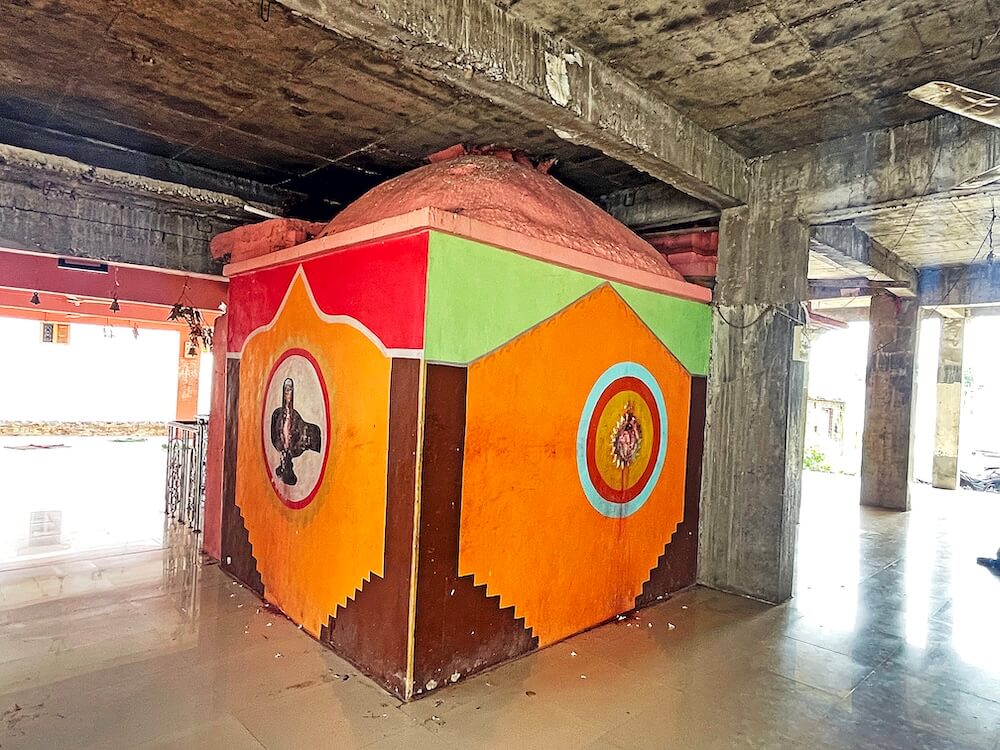
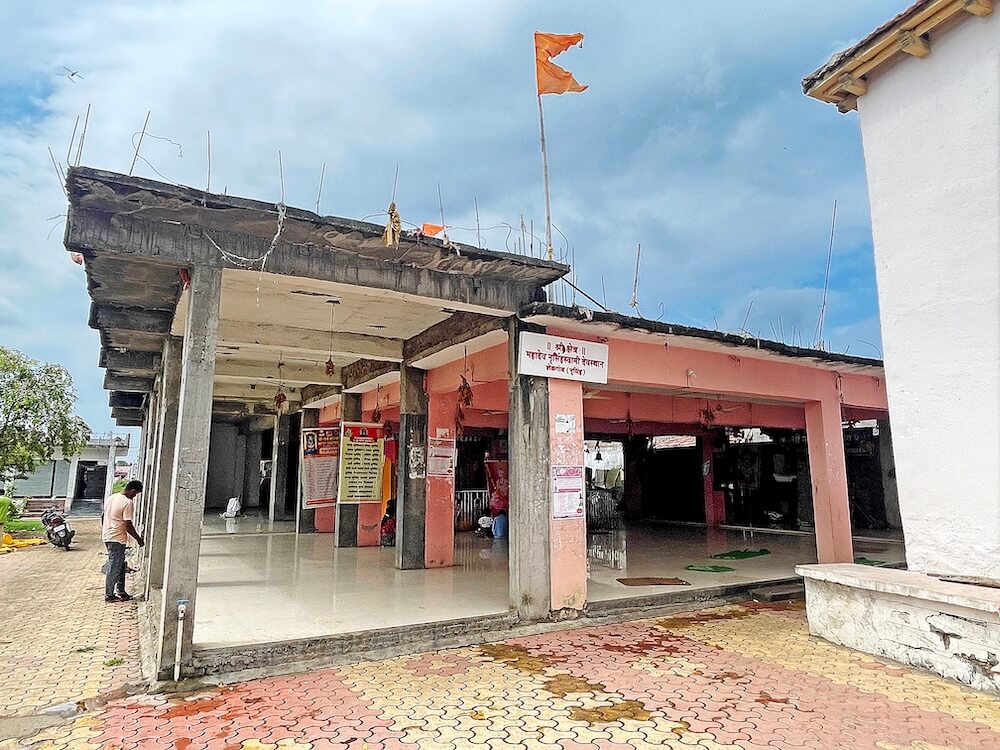
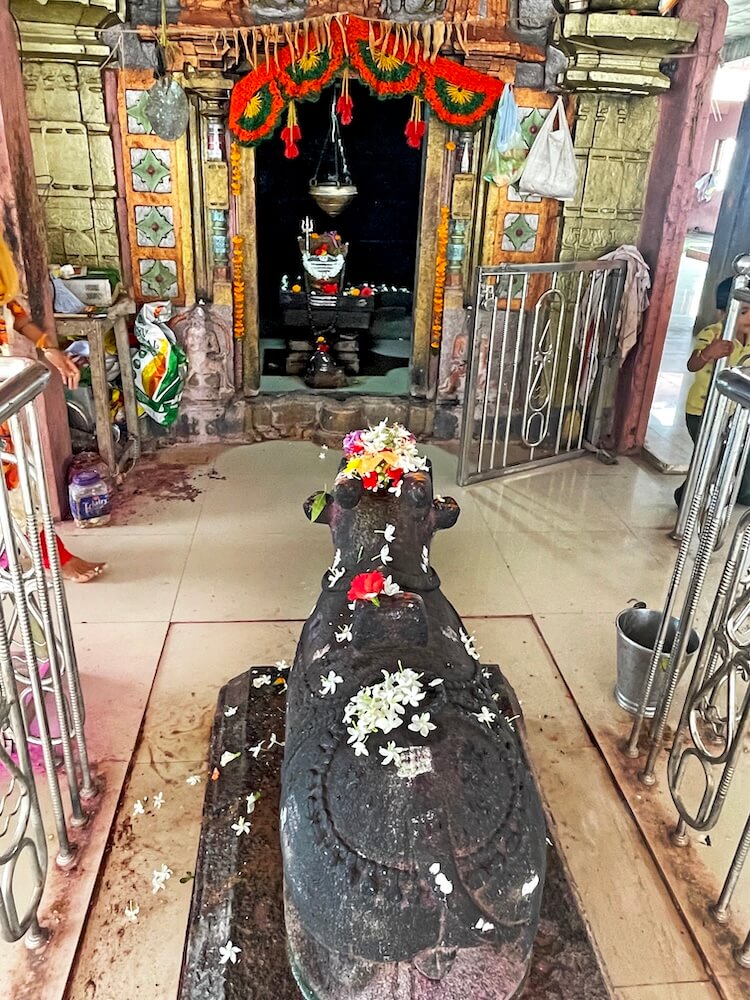
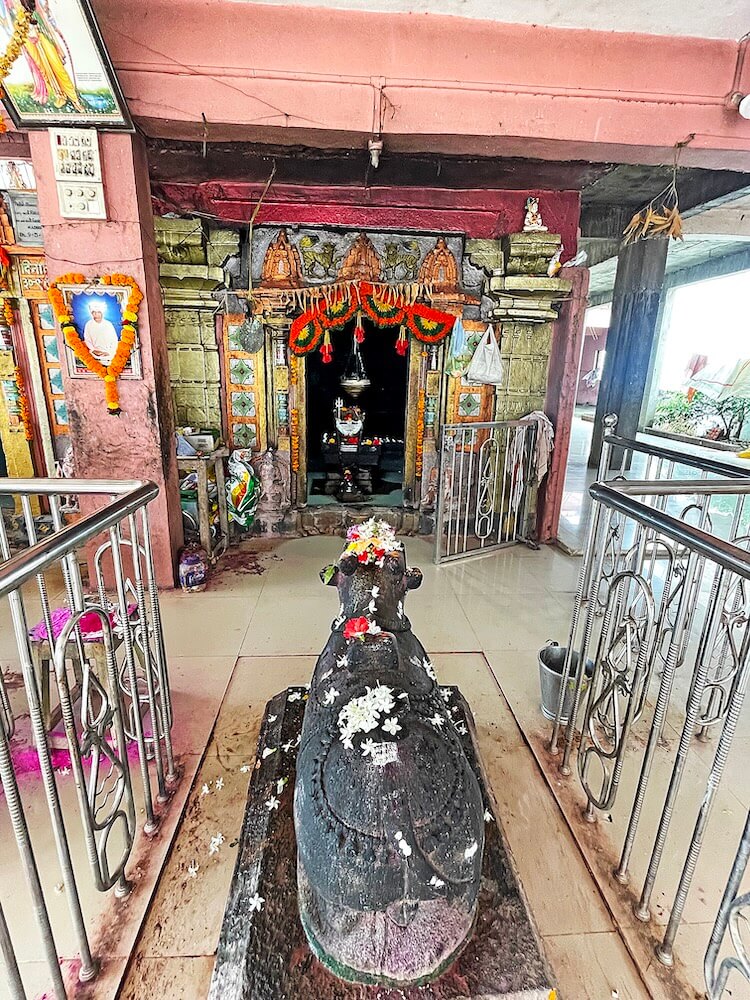
Shelgaon is situated at the confluence of three rivers—Manjara, Lendi, and Manyar—and this temple is located at one end of the village. There is a spacious courtyard in front of the temple. The temple’s structure consists of a assembly hall (sabhamandap) and two sanctums (garbhagrihas). The semi-open assembly hall here has been built in recent times. There are square pillars in this assembly hall. In this assembly hall, there are independent sanctums for Nrisimha and Mahadev side by side. Both sanctums are situated slightly higher than the assembly hall. The doorjambs of the entrances are flat. There are Ganesha idols at the lalatabimba (center of the lintel). On both sides of the entrances are carved pillars, and atop the pillars on the uttaranaga (upper lintel beam) are shikhara sculptures. There are chandrashilas (moon-stones) at the threshold (mandarka). An antarala (vestibule) has been created in front of the sanctum entrance by installing stainless steel railings.
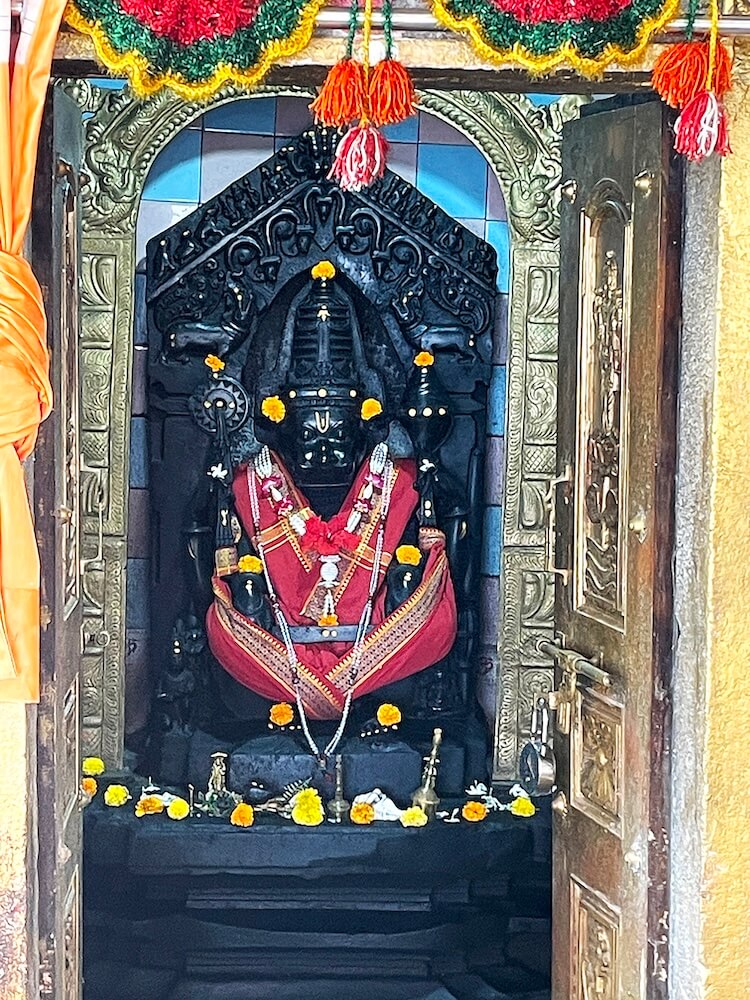
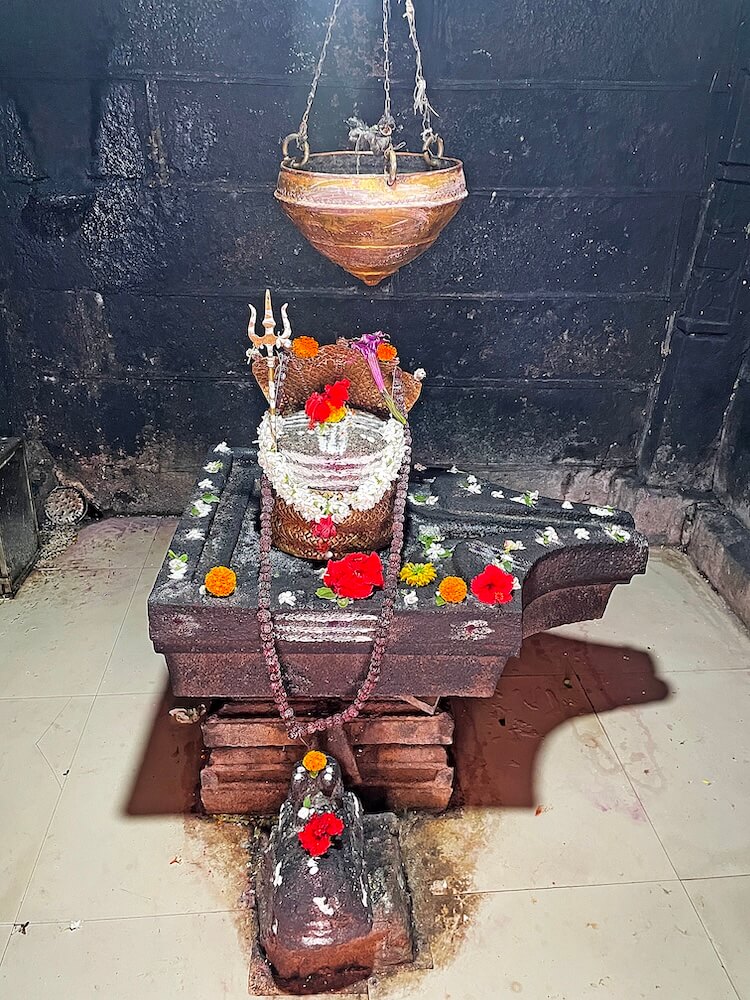
In the Nrisimha sanctum, the Nrisimha idol is placed on a low-height vajrapitha (pedestal). It is said that this vajrapitha belongs to the original temple and was found at the exact same spot where the idol was discovered. Therefore, it is considered to be as ancient as the idol itself. There are gentle expressions on the face of the Nrisimha idol. The Lord is seated in yogic posture (yogamudra and yogasana). The four-armed (chaturbhuja) Lord holds shankha (conch) and chakra (discus) in His upper two hands, while His lower two hands are placed on His knees. The Lord is seated in utkatasana with one leg placed over the other. A gada (mace) is placed next to the Lord. Garments and ornaments are carved on the idol. The Lord wears garlands around His neck, armlets (dandapatta) on His arms, a waist-band (mekhala) around His waist, and a crown on His head. The teeth, tongue, eyes, mane, fingers, and nails of the idol are carved with utmost clarity, showing that this is the work of a master sculptor. Sculptures of devotee Prahlad on the right side and Mother Kayadhu on the left side are near the Lord’s feet. On the back slab (pathshila) behind the idol, there is a kirtimukha at the top center and makara sculptures on both sides. The torana (arch) on the back slab depicts the Dashavatara (ten avatars) of Vishnu. These include sculptures of Matsya, Kurma (Kachchha), Varaha, Nrisimha, Vamana, Parashurama, Rama, Balarama, Buddha, and Kalki. On the right side of the idol is the sculpture of Garuda, the mount of Vishnu. There is a shikhara on the roof of the sanctum. In front of the sanctum adjacent to this sanctum is a monolithic Nandi idol, and inside the sanctum is a large Shivlinga. The architecture of this sanctum is similar to the sanctum housing the Nrisimha idol.
The festival of Nrisimha Jayanti is celebrated with great enthusiasm in the temple on Vaishakh Shukla Chaturdashi. In addition to this, various festivals throughout the year are celebrated, such as Shravan month, Bhadrapada Ganeshotsav, Chaitra Padva, Rama Navami, Hanuman Jayanti, Maha Shivratri, Vaikunth Chaturdashi, Kartik Purnima, Kojagiri Purnima, Shardiya Navratri, Dussehra, Diwali, etc. During all the festivals, programs like bhajans, kirtans, mahaprasad, dances, and short dramas are organized in the temple. During the festival season, many devotees come here for the darshan of the Lord and to fulfill their vowed offerings (navas). On days like Monday, Thursday, Ekadashi, Purnima, Amavasya, etc., the number of devotees coming to the temple for darshan is large.
This sacred temple stands as a testament to deep spiritual devotion, ancient architectural grandeur, and rich local cultural traditions.
The sanctum sanctorum houses the divine idol consecrated according to ancient Vedic traditions, surrounded by serene courtyards and traditional temple architecture.
Navratri, Maha Shivratri, Annual Temple Jatra & Deepotsav
Compare and book flights, secure top-rated local hotels near the temple, hire reliable guides, and rent cars instantly.
Extend your pilgrimage by visiting other highly sacred temples located nearby.


Add ₹999 more to unlock FREE SHIPPING!
Your sacred cart is currently empty.
Shop Photo FramesFill in your delivery details below to place your order.
Add comment