
Add ₹999 more to unlock FREE SHIPPING!
Your sacred cart is currently empty.
Shop Photo FramesIn the folk religions of many states in India, the Saptamatrikas, Sat Asara, and the Seven Sisters hold a position of great importance. In the folk traditions of Goa, the worship of the Seven Sisters is also held in exceptionally high regard. Lairai is one of these seven deities. The original temple of this goddess in Goa is situated at Shirgao. The annual festival (Jatrotsav) held here, which spans five consecutive days, is very famous. A unique feature of this festival is the ‘Agni Divya’ (divine ordeal by fire) performed by the ‘Dhonds’—the devout pilgrims who walk through a blazing pit of embers. Thousands of people gather here every year to witness this divine ordeal.
According to Goan folklore, the names of these seven sisters are Kelbai, Mahamaya, Shitala Devi, Mirabai alias Milagres, Ajadipa, Morjai, and Lairai. Khetoba, alias Khetlo, is their brother. These are the deities of the hardworking, common folk who have become one with the agricultural culture of Goa. The legend goes that all eight siblings were the children of a sage and hailed originally from the Kashi region. Due to some calamities there, they left and wandered until they reached the South. Descending the Chorla Ghat from the mountain range, they traveled through Morle, Girode, Mavalinge, and Latambarse, eventually arriving in Bicholim riding on an elephant. At that time, the Kadamba dynasty ruled Goa. Upon reaching Bicholim, they stopped at the abode of Goddess Shantadurga to seek hospitality. Goddess Shantadurga recognized the divine power within these siblings.
After hosting them, Goddess Shantadurga advised them to settle in the village of Mayem. Following this instruction, the siblings arrived at a place called Vadne in Mayem village. They rested there, and that site is known today as ‘Sat Mayechi Baska’. It was here that their story took a different turn. Kelbai was the eldest among the siblings. One day, she sent Khetoba to the village to fetch fire for cooking. Khetoba was young and became engrossed in playing games with the village children. When he did not return for a long time, Kelbai sent Lairai to call him. When Lairai reached the village, she found Khetoba playing with the children. Seeing this, Lairai became angry and kicked him in the waist. Khetoba, feeling insulted, left and went to Vayangini. After some time, Lairai regretted her behavior. To perform penance for her actions, she came to reside in Shirgao. It was here that she performed the divine act of walking over fire. In memory of this event in the story, the Dhonds of Goddess Lairai still perform the Agni Divya of walking over embers today.
The original seat of this goddess was at Muddi in Shirgao, where she was worshipped in the form of an anthill. According to the information provided by Pralhad Krishna Prabhudesai, the author of ‘Devikosh’, in Volume-2 of the Devikosh, references to this are found in some folk songs about the goddess. One folk song contains the line, ‘Chire tav neti muddevari’, which means, ‘Your garments are taken to the original seat on the hill.’ This indicates that the goddess’s original seat was on the hill and was later established at the foothills. Today, the goddess is worshipped in the form of a Kalash (sacred pot) in the main temple built in Shirgao. Goddess Lairai is considered to be of a fierce nature. A legend regarding this states that once, a wealthy landlord named Guddu Ravlu lived in Shirgao. Once, his family performed a puja for Goddess Lairai, but instead of performing it themselves, they had the household maid perform it. This was an insult to the goddess. The goddess became enraged and cursed Guddu Ravlu. Due to that curse, he lost his land, and his family was ruined. Devotees believe that if one worships the goddess with a pure heart, following all the traditions of her worship, she fulfills their desires.
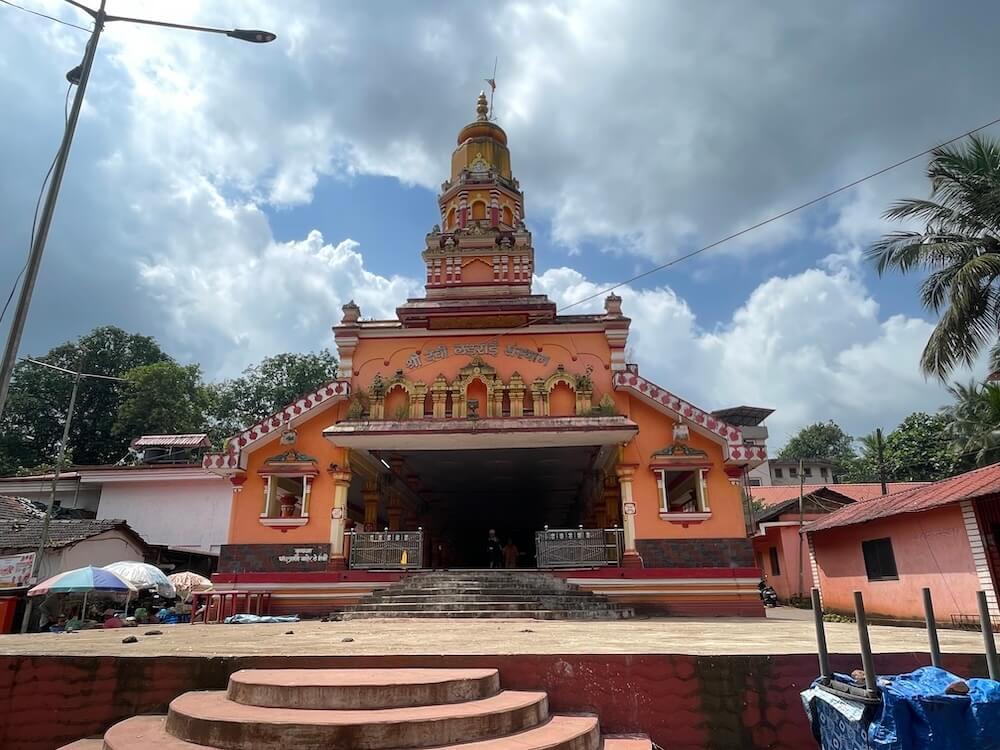
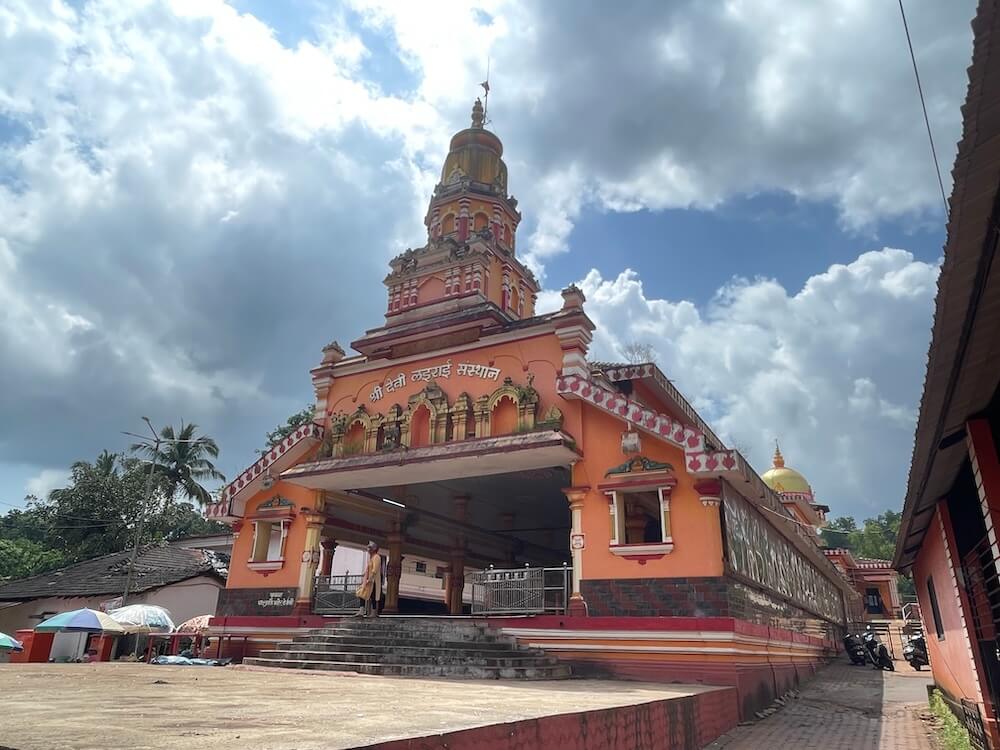
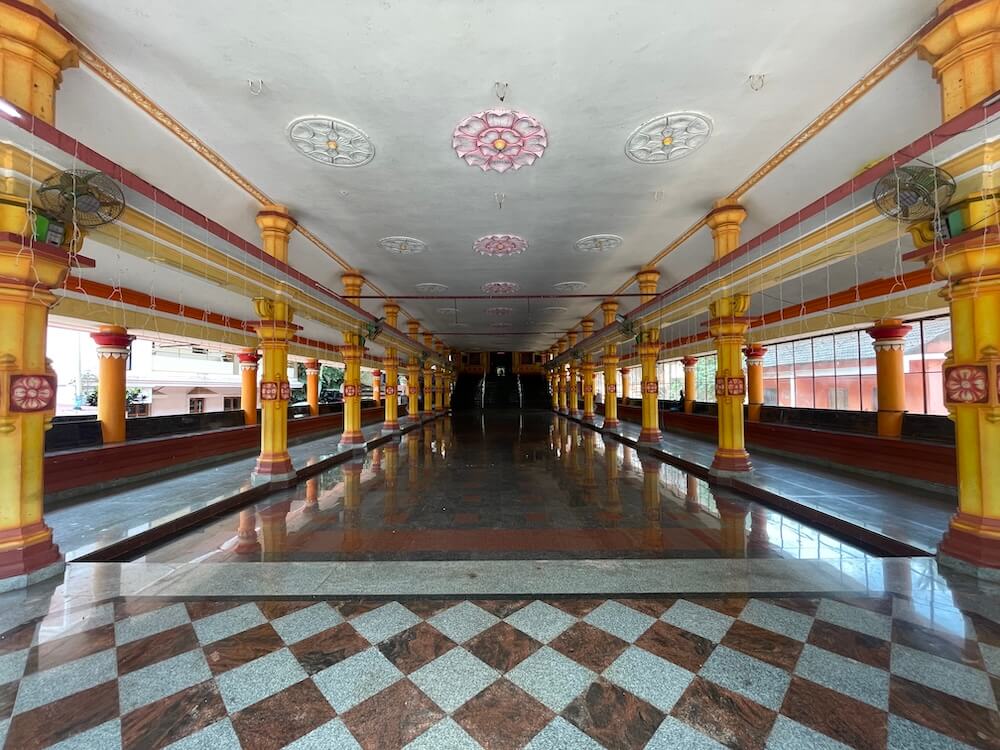
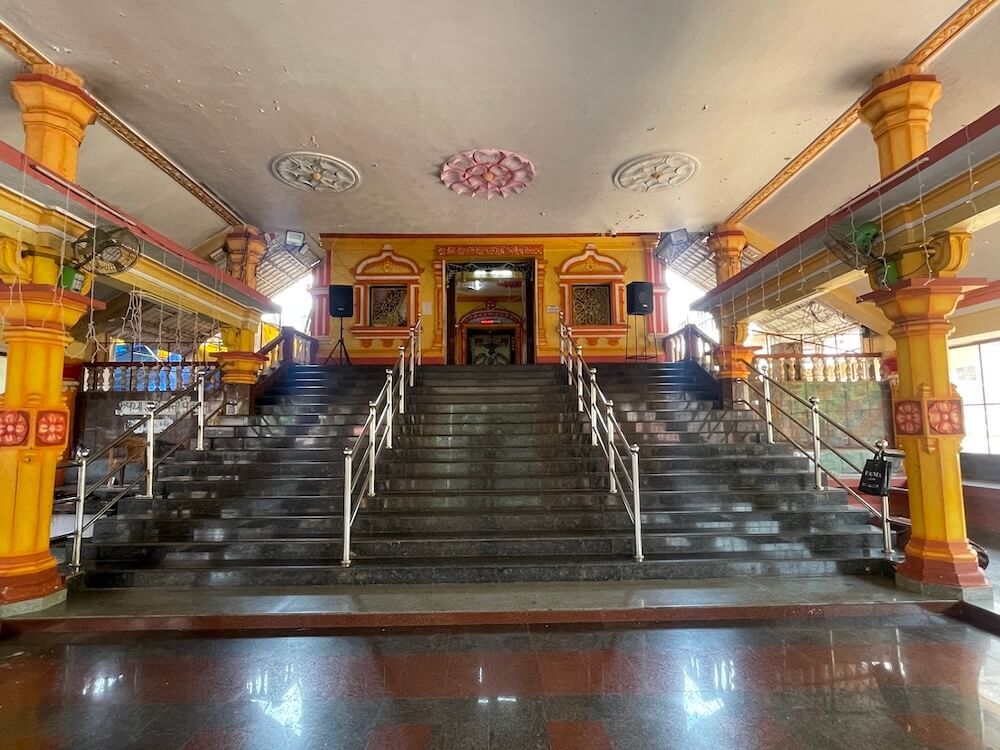
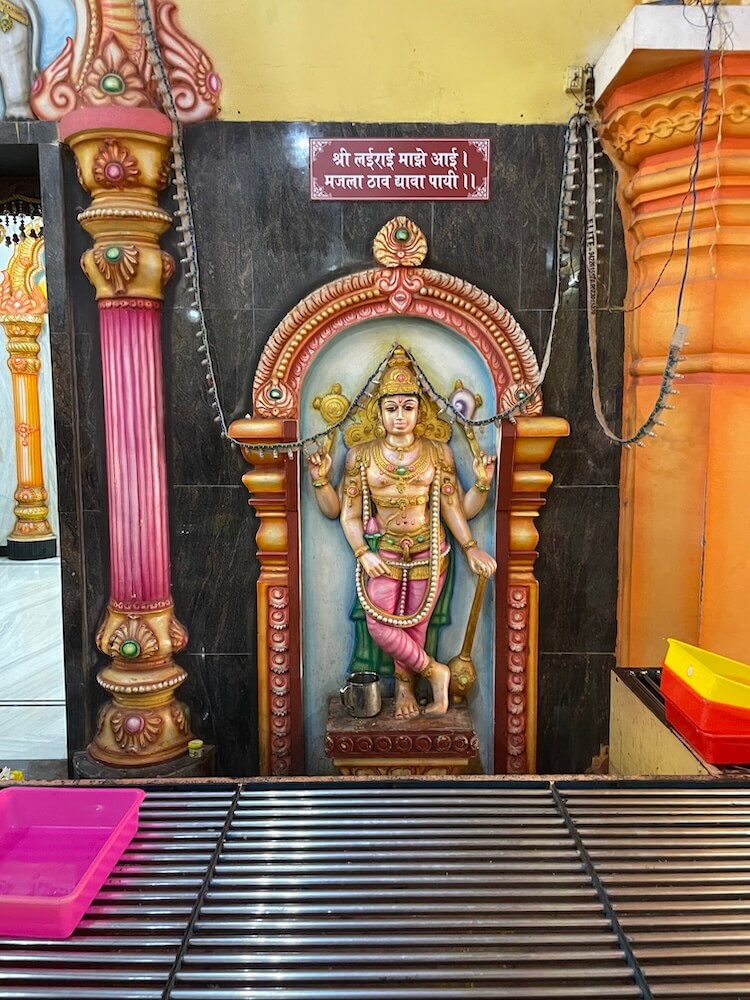
Previously, there was a small temple of the goddess in Shirgao. Thirty years ago, a magnificent new temple was built here. The re-consecration ceremony of the goddess took place in this temple on Magh Krishna Dashami, dated 24 February 1995. The temple is built in the Gomantakiya architectural style. The structure consists of a Sabha Mandap (assembly hall), Ardha Sabha Mandap (semi-assembly hall), Antaral (vestibule), and Garbhagriha (sanctum sanctorum). Built on a high plinth in the elevated part of the village, the temple has a spacious platform in front. From there, one climbs seven semi-circular steps to enter the Sabha Mandap. Above the entrance of the Sabha Mandap, there is a grand Shikhara (spire) in the Nagara architectural style. The Sabha Mandap is very spacious and open, with stone benches (kakshasanas) on both sides. From there, a few feet to the left and right, is a row of octagonal pillars. One climbs 16 steps from the Sabha Mandap to enter the Ardha Sabha Mandap. From this semi-hall, stairs have been constructed to reach the balcony in the courtyard of the main Sabha Mandap. Further ahead is another enclosed semi-hall. In the niches on the balcony above the central courtyard, there are small idols of various gods and goddesses. Beyond this is another semi-hall. In the upper part of its entrance, there is an idol of Mother Lakshmi. On both sides of this idol are Gajraj (elephants). Similarly, on both sides of this entrance are the Vaishnava gatekeepers, Jaya and Vijaya.
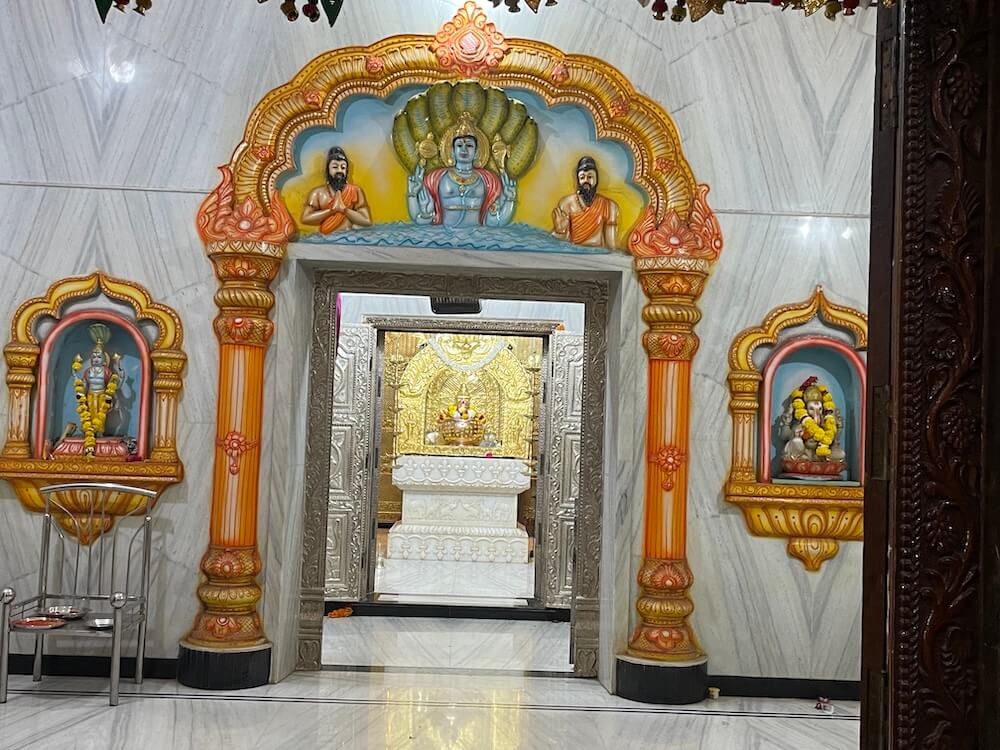
Beyond this is the Antaral of the temple. The frame of the entrance to the Antaral is decorated with ornate semi-pillars and arches. In the upper part of this door frame is an idol of Vishnu resting in the ocean. A seven-headed Shesha holds its hood over this idol, while on the sides are two sages in a posture of salutation. There are niches on both sides of this entrance. The niche on the left contains an idol of Vishnu, while the niche on the right houses an idol of Ganesha. The Garbhagriha of the temple has an entrance covered with ornate silver plates. Inside, on a high marble pedestal, the idol of the goddess in the form of a Kalash is consecrated within a golden canopy. This goddess is very fond of jasmine flowers. Therefore, on the day of the festival, one of the jasmine flowers offered to the goddess is placed inside this Kalash. It is only removed during the next festival. Notably, during this festival, the Our Lady of Milagres Church in Mapusa offers jasmine flowers, which are dear to Goddess Lairai. It is said that Milagres Saibin is the sister of Goddess Lairai. The Garbhagriha of the Lairai temple is topped by a grand Shikhara shaped like a squat tower. On its upper side is a large dome, topped with a Kalash.
The Jatra of Shri Devi Lairai is considered one of the major festivals in North Goa. It is held on Vaishakh Shuddha Panchami. In memory of the Agni Divya (fire ordeal) performed by Lairai, a sacrificial fire pit (Homakunda) measuring approximately 15 by 15 feet is prepared on the platform in front of the temple. In this, the Dhonds of the Goddess, who are devotees observing strict vows, perform the Agni Divya. Information regarding this states that all Dhonds begin their preparations for the Agni Divya about a week in advance, starting from Vaishakh Shuddha Pratipada. During this period, they stay away from their families and observe fasts. They can enter the Homakunda only after receiving the Kaul Prasad on the day before the Jatra. New Dhonds are initiated at the Adi Sthan, the original small temple of the Goddess at Muddi. From the Adi Sthan, the palanquin of the Goddess returns to the temple at 8 o’clock in the night. After 12:30 in the night, the Homakunda is ignited. The Agni Divya begins after the Dhonds arrive following a holy bath in the sacred pond. This ritual of walking on the embers continues until dawn. Thousands of devotees attend this Jatra festival. Apart from this, Navaratri is celebrated in the temple with great enthusiasm and grandeur. Similarly, other Hindu festivals and celebrations are also observed here in a religious atmosphere.
This sacred temple stands as a testament to deep spiritual devotion, ancient architectural grandeur, and rich local cultural traditions.
The sanctum sanctorum houses the divine idol consecrated according to ancient Vedic traditions, surrounded by serene courtyards and traditional temple architecture.
Navratri, Maha Shivratri, Annual Temple Jatra & Deepotsav
Compare and book flights, secure top-rated local hotels near the temple, hire reliable guides, and rent cars instantly.
Extend your pilgrimage by visiting other highly sacred temples located nearby.


Add ₹999 more to unlock FREE SHIPPING!
Your sacred cart is currently empty.
Shop Photo FramesFill in your delivery details below to place your order.
Add comment