
Add ₹999 more to unlock FREE SHIPPING!
Your sacred cart is currently empty.
Shop Photo FramesShantadurga is a form of Goddess Sateri, who is worshipped in the Goa and Konkan regions. Although the name Durga is present in the Goddess’s name, the Goddess resides here in a gentle form. This Goddess, who brings about reconciliation between the Shaiva and Vaishnava sects and who stopped the war between Shiva and Vishnu, is the family deity of many in Goa. In this ancient temple in Bicholim, along with Shantadurga, Ravalnath, the village deity of the Shaiva sect of Gomantak, is also enshrined. Every year, the ‘Navo Somor’ festival is celebrated with great enthusiasm in this temple.
According to religious history, the Goddess Shantadurga was brought to Goa from Trihotrapur. The name Trihotra is a corrupted form of the name Tirabhukti. In ancient times, the Mithila region was known as Tirabhukti. The region north of the Ganges in the present-day state of Bihar is known as the Tirhut region. From here, some Brahmins brought this Goddess to Gomantak. According to ‘Devikosha, Volume 2’, some Saraswats from the Kanyakubja region (present-day Kannauj in Uttar Pradesh) had gone on a pilgrimage to Rameshwar. While returning, they experienced a divine revelation in Goa and decided to settle here. Devasharma, Lokasharma, and Shivasharma were the prominent figures among them. They established the Goddess in Goa. Following this, a great tradition of Goddess worship was established here.
In the folk tradition of Goa, the Shantadurga Devi of Bicholim holds a unique place. This Goddess has a close connection to the story of the seven sisters worshipped in Goa. The folklore regarding this is that the names of these seven sisters are Kelbai, Mahamaya, Shitala Devi, Mirabai alias Milagres, Ajadipa, Morjai, and Lairai. Then Khetoba, also known as Khetlo, is their brother. These eight siblings were the children of a sage. They were originally from the Kashi region. Due to certain calamities that befell them there, they departed and, while wandering, arrived in the south. Descending the Chorla Ghat from the mountain range, they traveled through Morle, Girode, Mavlinge, and Latambarche, eventually arriving in Bicholim seated upon an elephant. At the Gavkarwada here, they had the darshan of Goddess Shantadurga. Following this, these eight siblings stayed for one night and one day at the temple in Gavkarwada. Goddess Shantadurga recognized that these siblings possessed divine powers. The Goddess formally extended hospitality to them and subsequently instructed them to settle in the village of Mayem; this is the legend that is told.
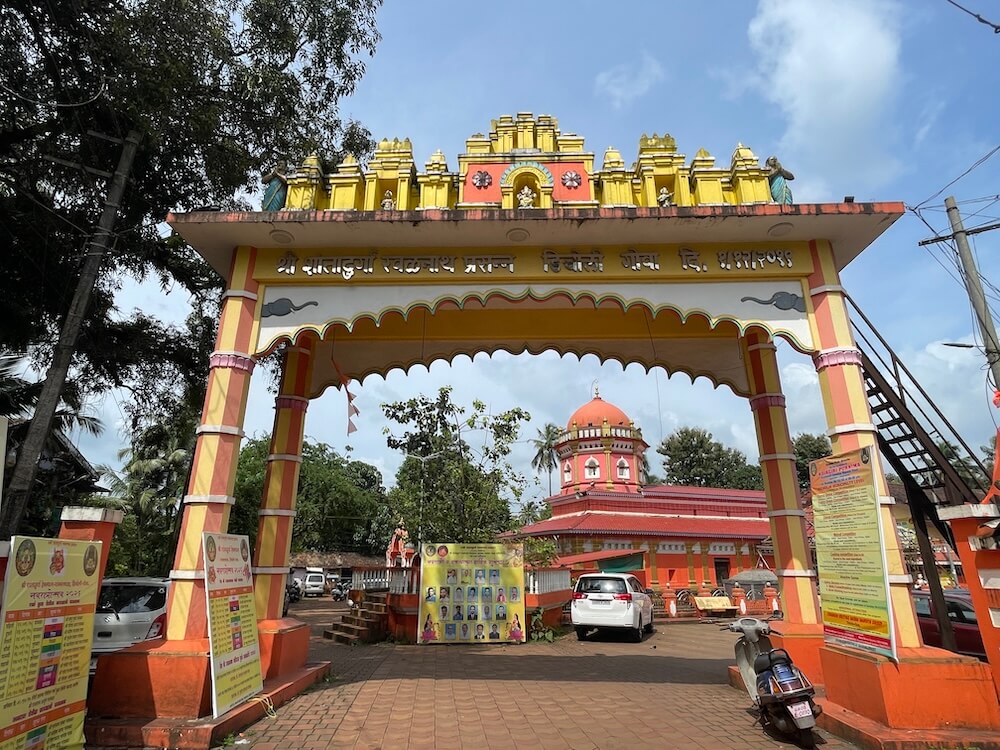
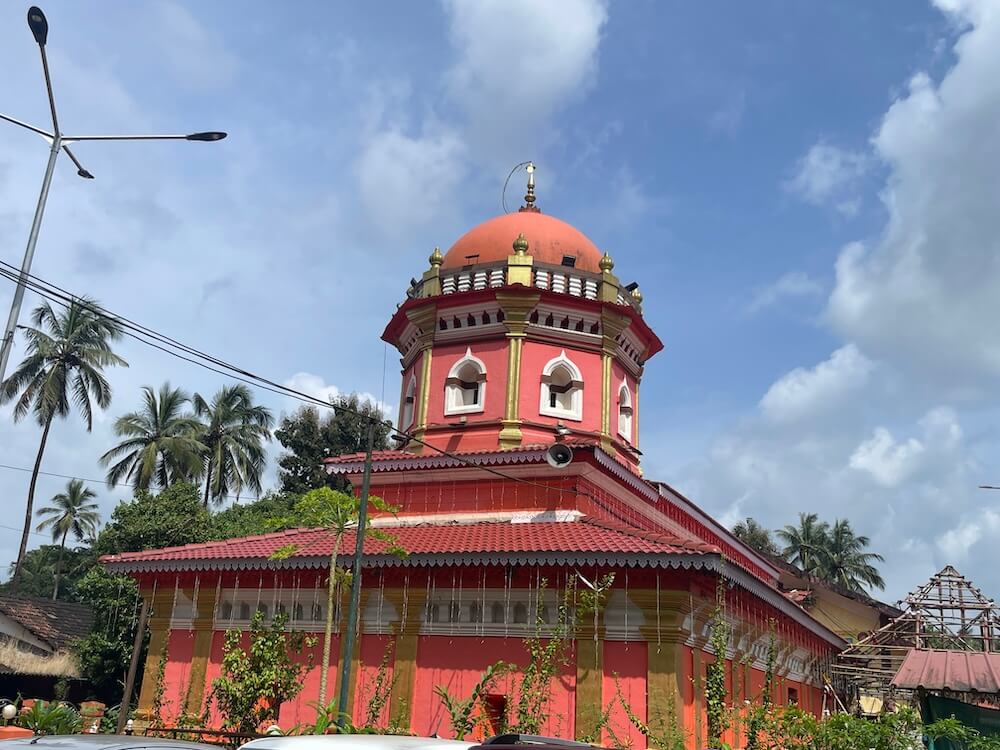
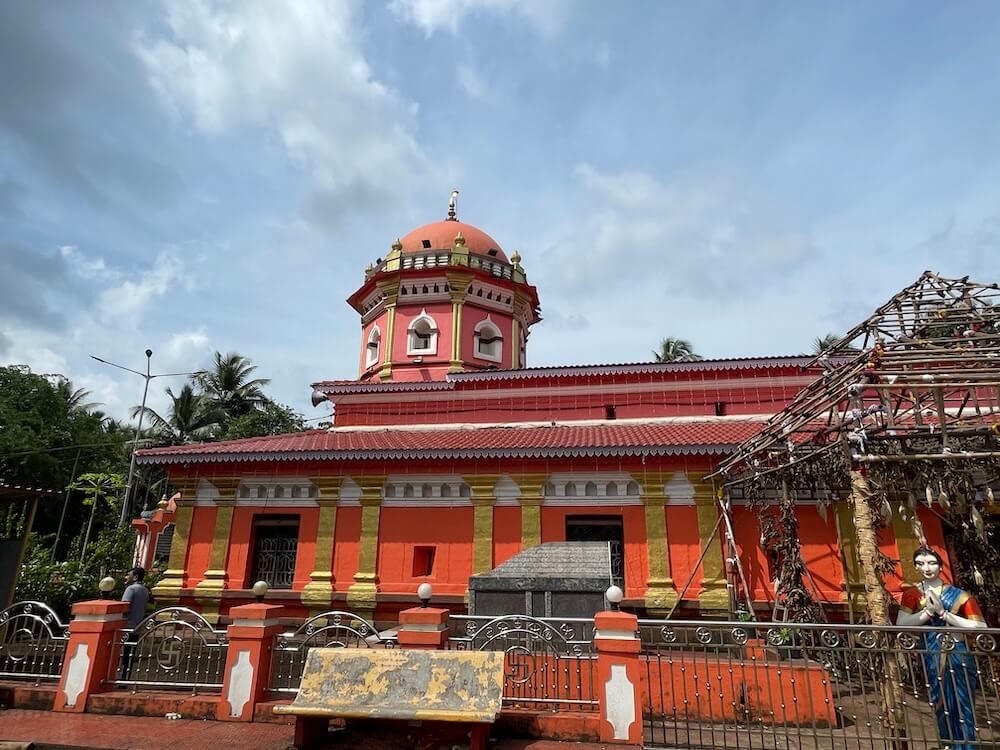
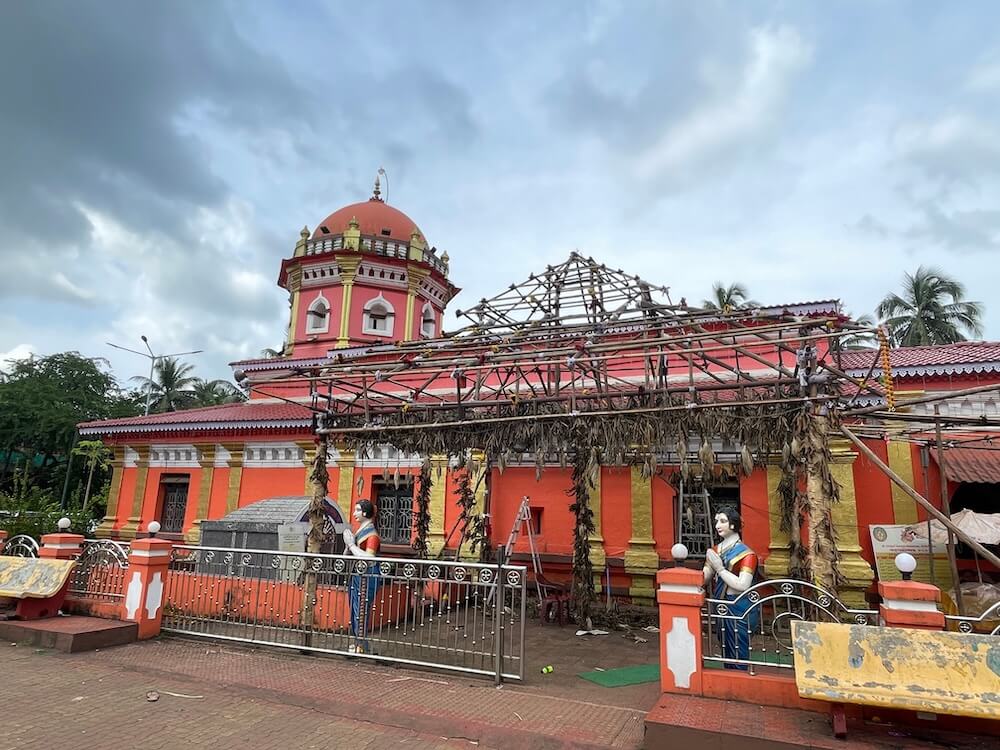
This temple is situated in a grand courtyard within the scenic surroundings of Bicholim. The courtyard features a large, ornate main gateway. In the niches above it, there is an idol of Ganesha in the center, flanked by idols of Lakshmi and Saraswati on either side. Beside them, on both sides, are two statues of welcoming figures adorned in traditional Goan attire. A short distance from here, there is another entrance arch. Near both pillars of this arch, there are also statues of welcoming figures. Inside stands a magnificent temple built in the Goan architectural style, painted in a terracotta hue. The structure of this temple consists of a main assembly hall (Sabhamandapa), two semi-halls (Ardhamandapas), an intermediate chamber (Antarala), and the sanctum sanctorum (Garbhagriha). Above the sanctum sanctorum stands a spire (Shikhara) shaped like a low octagonal tower topped with a dome. A stage (Rangamancha) is built in the front section of the assembly hall. In the center, a large brass lamp (Samai) is placed inside a glass cabinet. The pillars in the assembly hall are circular, while those in the semi-halls are carved and square, resembling pillars from ancient temples. These pillars feature distinctive bracket capitals (Tarangahasta). The intermediate chamber of the temple is relatively spacious, featuring wide square pillars connected to one another by arches. Large brass bells and glass chandeliers are suspended from the ceiling. In the sanctum sanctorum, the image of the Goddess in the form of a sacred anthill (Royan/Varul) is enshrined on a marble pedestal. Adorned with garments and flower garlands, the upper part of this anthill features a large brass mask of the Goddess. The Goddess is decorated with a nose ring (Nath), large necklaces, earrings (Kundale), and a tall crown on her head. Four tall brass lamps are placed at the four corners of the pedestal (Vajrapitha). In a niche (Devakoshthaka) on the back wall of the sanctum sanctorum, the brass Abhishek idol of the Goddess is enshrined.
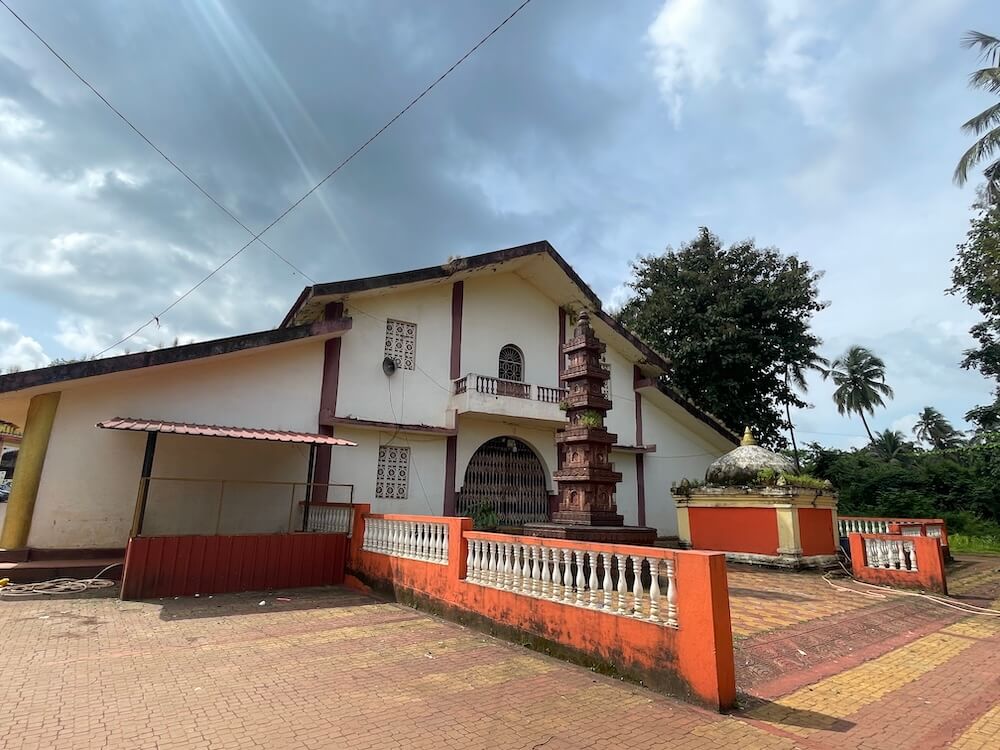
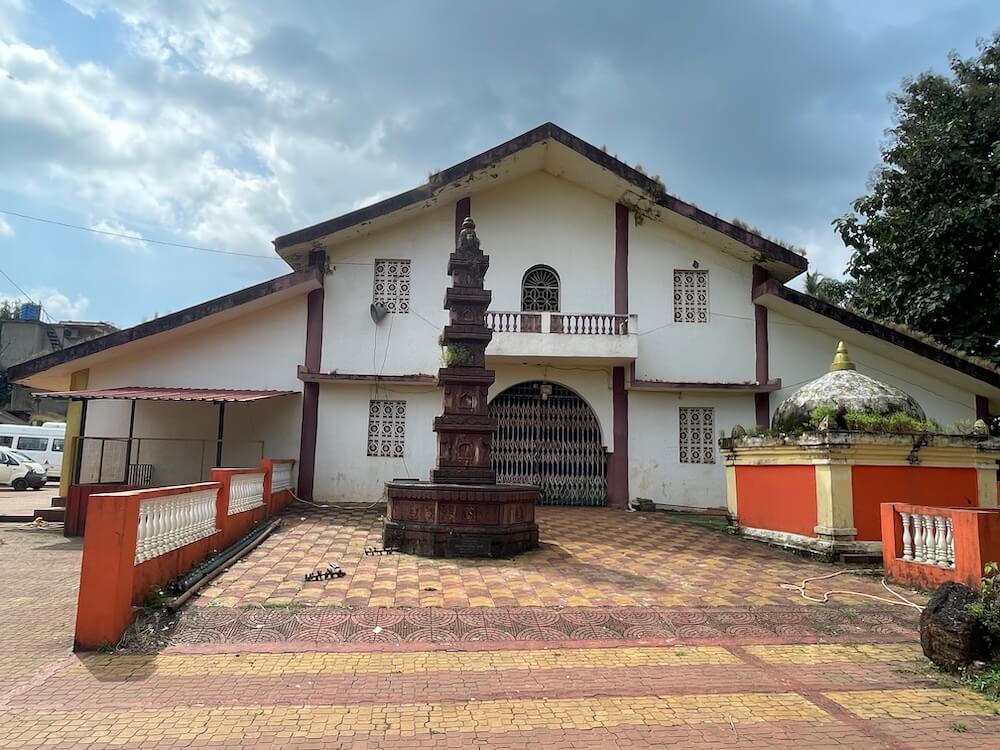
On one side of the temple courtyard stands a large temple of Ravalnath. In front of this two-story temple with a sloping roof, there is an ancient lamp pillar (Deepstambha). Similarly, there is a temple of Saptamaya in the courtyard. On a raised platform, there is a small shrine of the Serpent Deity (Nagdevta). In this shrine, there are idols of Shri Ram-Lakshman-Sita and Ganesh, as well as some Shiva Lingas.
Various festivals and celebrations are observed in this temple with great religious fervor. Among these, the Navaratrotsav and the ‘Navo Somor’ (New Monday) are considered particularly significant. During Navaratrotsav, the temple of the Goddess takes on the appearance of a fair. Along with various religious programs, Homa-Havan, and Bhajan-Kirtan, cultural events such as Fugadi competitions and musical performances are also organized here. Navo Somor is a unique annual festival of this temple. It is celebrated on the first Monday of the Margashirsha month. During this festival, a grand Palkhi Yatra (palanquin procession) of the Goddess is taken out through the city. This procession begins around ten-thirty at night and returns to the temple the next morning. In addition to religious programs like Abhisheka and Puja rituals, a musical concert by renowned singers is also organized during this festival. Celebrated vocalists such as the late Jitendra Abhisheki, Ramdas Kamat, Vasantrao Deshpande, Prabhakar Karekar, Shaunak Abhisheki, Devaki Pandit, and Ajit Kadkade have graced this festival with their performances.
This sacred temple stands as a testament to deep spiritual devotion, ancient architectural grandeur, and rich local cultural traditions.
The sanctum sanctorum houses the divine idol consecrated according to ancient Vedic traditions, surrounded by serene courtyards and traditional temple architecture.
Navratri, Maha Shivratri, Annual Temple Jatra & Deepotsav
Compare and book flights, secure top-rated local hotels near the temple, hire reliable guides, and rent cars instantly.
Extend your pilgrimage by visiting other highly sacred temples located nearby.


Add ₹999 more to unlock FREE SHIPPING!
Your sacred cart is currently empty.
Shop Photo FramesFill in your delivery details below to place your order.
Add comment