
Add ₹999 more to unlock FREE SHIPPING!
Your sacred cart is currently empty.
Shop Photo FramesEvery deity in Goa possesses a unique characteristic. Devotees here address their revered Goddesses and Gods with affectionate names. Consequently, depending on the location, the same deity is known by different names. A Goddess on a hill becomes ‘Dongrai’ (Goddess of the Hill), and one by a stream becomes ‘Odhyachi Aai’ (Mother of the Stream). In Goa, a Goddess who manifested in a banana grove (Kel) is addressed as Kelbai. There are many temples of Goddess Kelbai in Goa, among which one ancient and famous temple is located in Gavkarwada at Mulgao. Devotees believe that the awakened (Jagrut) Goddess here fulfills their prayers.
It is said that this temple dates back about seven to eight hundred years. The legend of the temple states that in ancient times, seven sisters—Morjai, Lairai, Kelbai, Mahamaya, Mirabai, Shitalai, and Anjidipa—along with their brother Khetoba, descended from the Ghats to visit Goddess Shantadurga at Dicholi in Goa. Enchanted by the natural beauty of the place, these deities decided to stay here. Shantadurga granted them permission to reside at Mayem village. Even today, this place is known as the ‘Meeting Place of the Seven Sisters’. Here, the seven sisters sent Khetoba to the village to fetch fire, but he became engrossed in playing with the village children. As he was late in returning, the eldest sister went to the village to find him. Seeing her brother lost in play, she became angry and kicked him in the waist. Enraged, he spoke harshly to his sisters, causing all seven to depart for different villages. At that time, Kelbai came to Mulgao and settled in Gavkarwada.
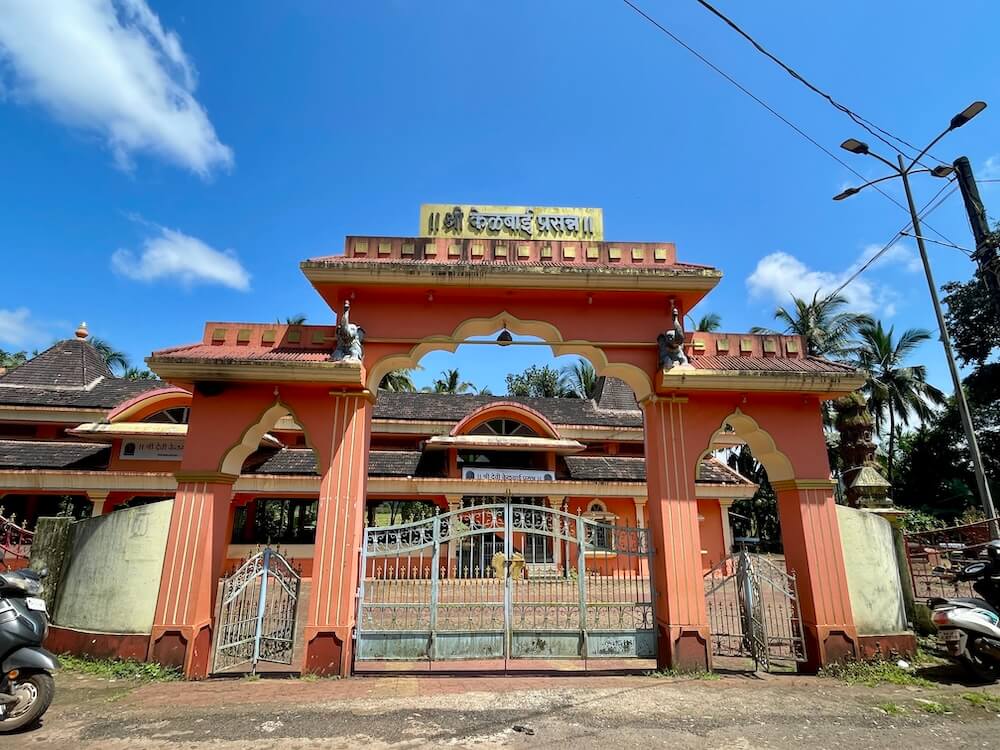
There is a paved road leading to this temple, which is located at some distance from the village. One enters the temple courtyard through an entrance arch in the surrounding compound wall. In the paver-block-covered courtyard, there is an octagonal, seven-tiered lamp tower (Deepmal) on a large platform in front of the temple. Each tier of the lamp tower has eight lamp niches. The tower is topped with a shikhara and a kalash. Beside the lamp tower, on the same platform, is an octagonal Tulsi Vrindavan, which features four lamp niches on its four sides. In the courtyard, there is a fresh-water tank, and on its bank, inside a canopy (Meghadambari), are the idols of the Goddess. During the festival, the masks of the Goddess are first bathed in this tank. This is followed by the ritual bathing of the priests and finally the congregation of devotees, marking the commencement of the Jatra (festival).
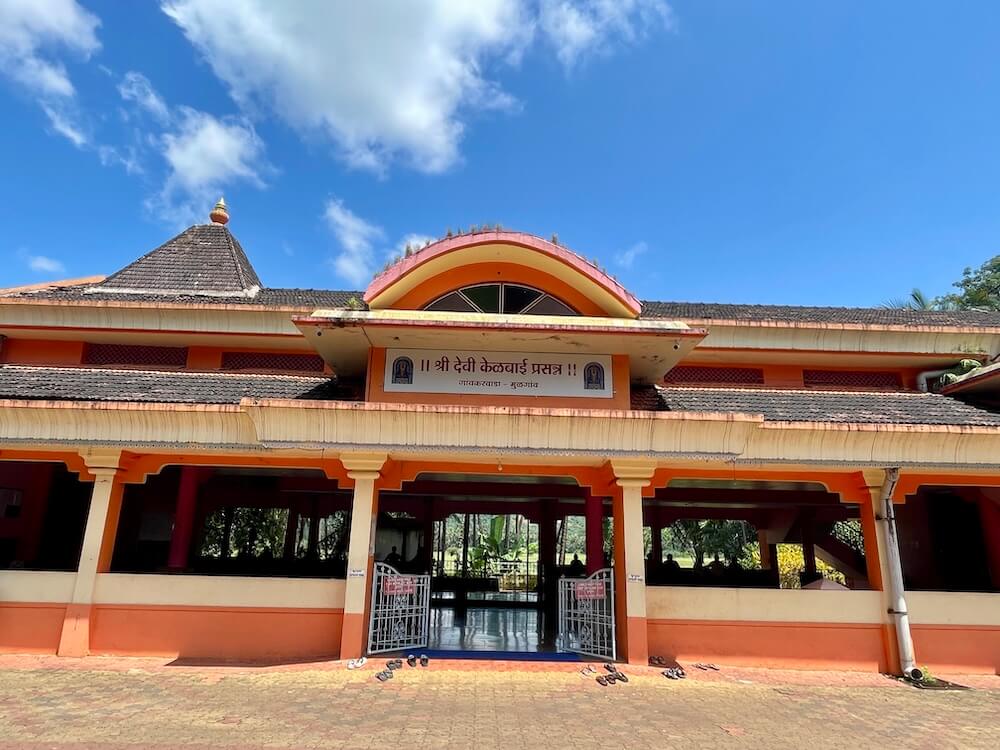
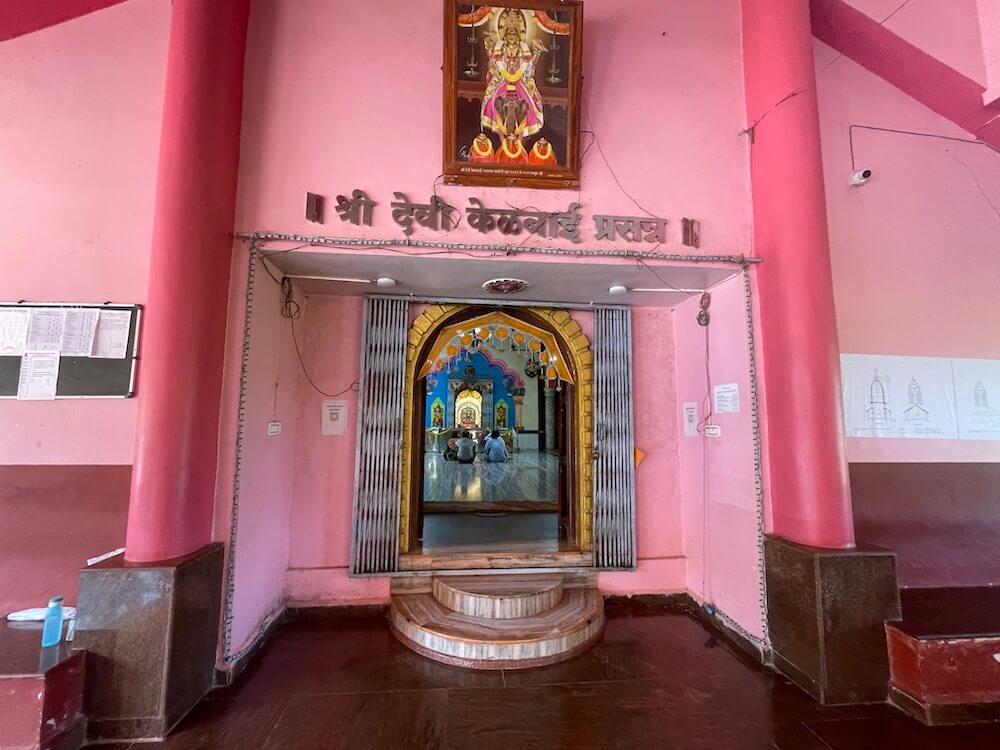
This two-story temple is structured with an Ardhamandapa (entrance hall), Sabhamandapa (main hall), Antarala (vestibule), and Garbhagriha (sanctum sanctorum). The entrance of the Ardhamandapa has two pillars on either side and a semi-circular arched roof. The enclosed Ardhamandapa has stone benches (Kakshasanas) for devotees to sit. There are windows in the Ardhamandapa for light and ventilation. Further ahead is the entrance to the Sabhamandapa, which has four rows of pillars. On the left and right sides of these pillars, there is a balcony (Sajja) on the upper floor. There are stairs on the left and right sides to reach the balcony. The Sabhamandapa has stone benches along the outer edges for devotees. The outer pillars are integrated into these benches. The pillars in each row are connected to each other by arched designs.
Further ahead is the entrance to the Antarala. In this enclosed space, there are two rows of four ornate circular pillars each. All pillars are connected by semi-circular arches. Brass bells and a glass chandelier are hung from the ceiling here. The ritual of placing the masks in a box during the Jatra is performed in this space. Beyond this is the Garbhagriha. On the front wall of the Garbhagriha, on both sides of the entrance, are two ornate pillars topped with lotus carvings and elephant-head (Gajamukh) sculptures. Above the entrance on the wall is a Kirtimukh. On both sides of the semi-circular entrance to the Garbhagriha are four-armed guardian (Dwarpal) sculptures.
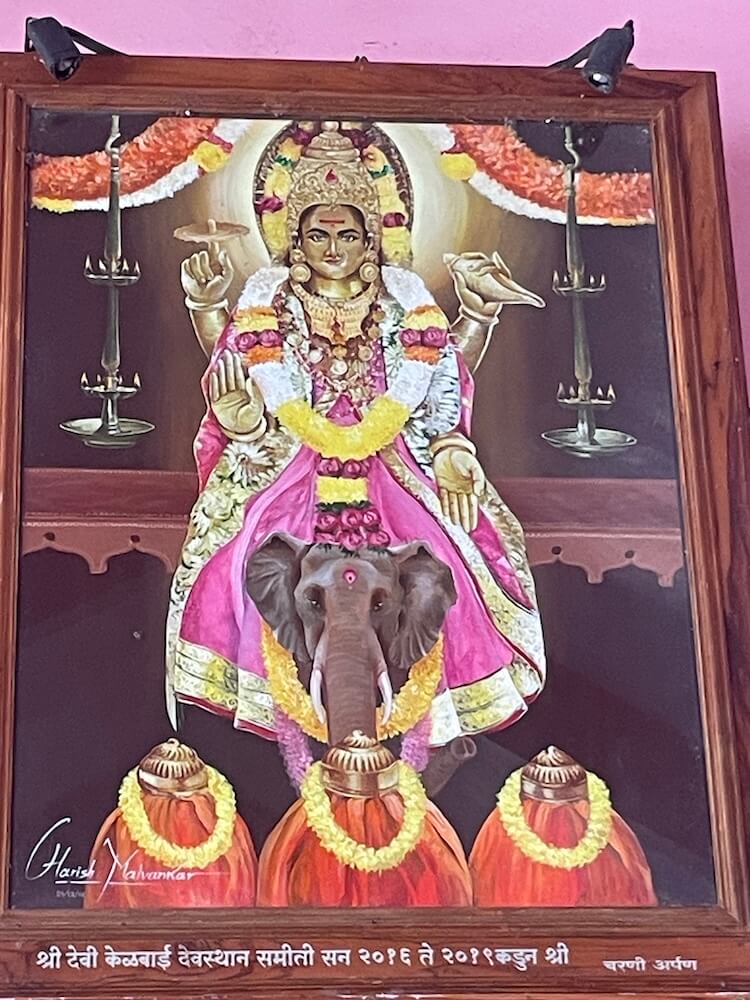
Inside the Garbhagriha, on a Vajrapitha (throne), is the four-armed idol of Goddess Kelbai carved in black stone. The Goddess holds weapons in two hands, a drinking vessel in one, and the fourth hand is in the Abhaya Mudra (gesture of fearlessness). Sculptures of elephants and Shakti are carved on both sides near the Goddess’s feet. The silver Prabhavali (halo) behind the idol features floral patterns and a Kirtimukh at the top. The idol is seated in a silver Makhar (shrine). The pillars of the Makhar have floral carvings, and there is a Kirtimukh in the center of the archway. Brass lamps are lit on both sides of the Makhar.
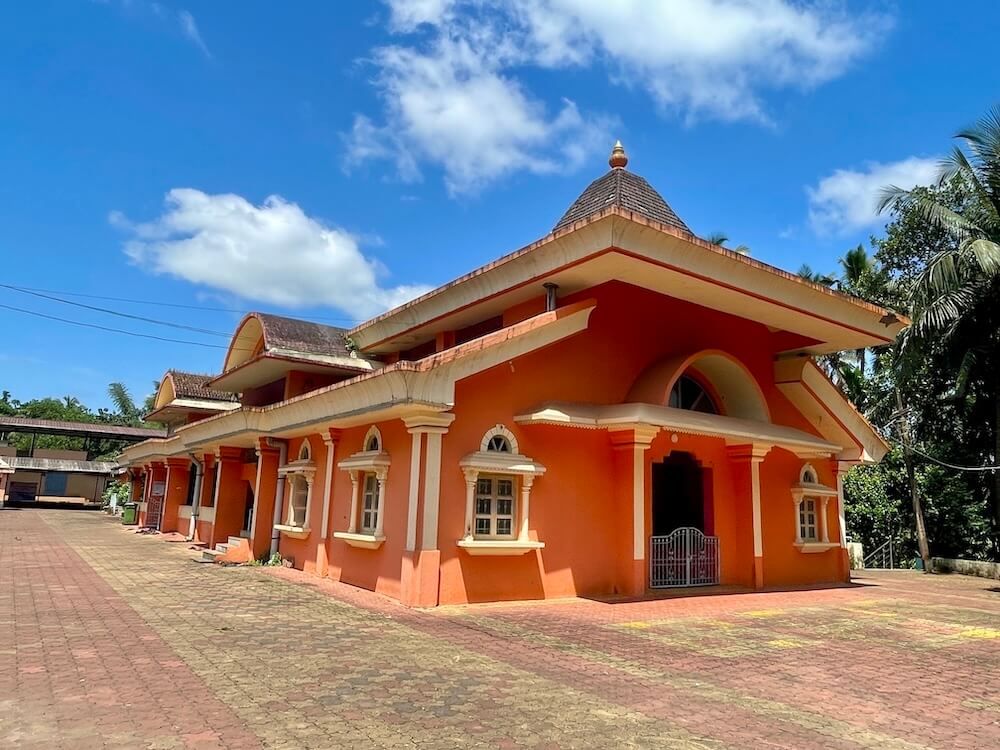
The temple has a tiled roof divided into lower and upper sections. The roof of the Ardhamandapa has a square, tapering tiled shikhara topped with an Amalaka and Kalash. The roof of the Antarala has a similar shikhara and Kalash. The entrances on the left and right sides of the Sabhamandapa have elephant-back (Gajaprishtha) shaped roofs. The roof of the Garbhagriha has a square, tapering shikhara. The niches on all four sides of this shikhara contain idols of various deities. The shikhara is topped with a Kalash and a flag.
The Jatra festival begins on the Phalguna Amavasya with the initiation ritual of new priests. This festival continues for fifteen consecutive days from Chaitra Padwa to the full moon (Paurnima). Chaitra Shuddha Panchami is the main day of the Jatra. On this day, the masks of the Goddess and Nandi are placed in a sacred box and carried in a procession with music, drums, and the throwing of Gulal, following the traditional route to visit the Goddess at Mayem village. After the meeting of the deities, the Goddess returns to her seat and is re-installed. Thousands of devotees attend the procession and bathe in the tank. The Goddess is hailed with chants while colorful banners are waved.
All festivals and occasions like Sharadiya Navaratri, Shravani Monday, Diwali, Kartik Paurnima, and Kojagiri Paurnima are celebrated in the temple. The ‘Kaul’ (divination) ceremony is also performed here. The number of devotees visiting for Darshan is higher on Tuesdays, Fridays, full moon days, new moon days, and Ashtami.
This sacred temple stands as a testament to deep spiritual devotion, ancient architectural grandeur, and rich local cultural traditions.
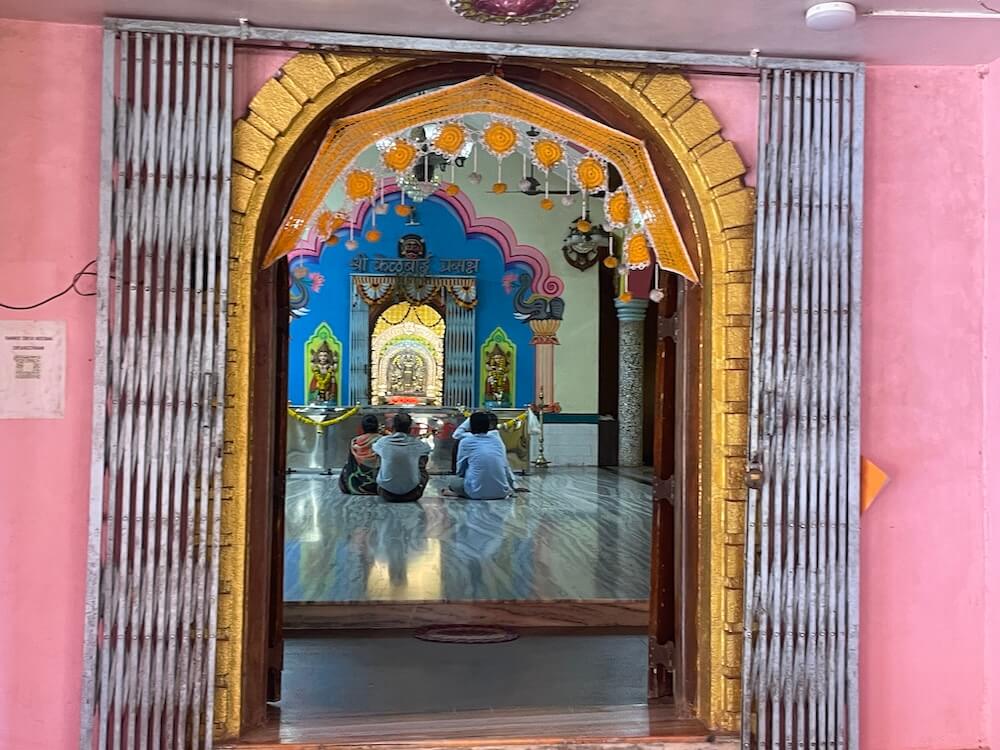
The sanctum sanctorum houses the divine idol consecrated according to ancient Vedic traditions, surrounded by serene courtyards and traditional temple architecture.
Navratri, Maha Shivratri, Annual Temple Jatra & Deepotsav
Compare and book flights, secure top-rated local hotels near the temple, hire reliable guides, and rent cars instantly.
Extend your pilgrimage by visiting other highly sacred temples located nearby.


Add ₹999 more to unlock FREE SHIPPING!
Your sacred cart is currently empty.
Shop Photo FramesFill in your delivery details below to place your order.
Add comment