
Add ₹999 more to unlock FREE SHIPPING!
Your sacred cart is currently empty.
Shop Photo FramesRavalnath is considered one of the primary deities in Goa. His original name is ‘Ravalu’. This is a name of affection that has been passed down since ancient times. When the Nathpanthis arrived in Goa, they changed the deity’s name to Shri Dev Ravalnath. Ravalnath is believed to be one of the Ganas (attendants) of Lord Shiva. There are over ۳۰۰ temples of Ravalnath in the Sindhudurg district of Maharashtra, which borders the state of Goa, and more than ۵۰ temples in Goa. Among these, the Ravalnath temple at Harmal in the Pernem taluka of North Goa is ancient and famous.
Ravalnath, an incarnation of Shiva, is worshipped as a guardian or protector deity. According to some scholars, Ravalnath is a Yaksha whose domain extends over the forests and the sea. According to Pandit Mahadevshastri Joshi, author of the ‘Bharatiya Sanskriti Kosh’, the ability to neutralize snake venom is considered a primary characteristic of Ravalnath. Temples of Shri Ravalnath are seen in smaller numbers from Karwar in the south towards the north. They appear in the form of the deity Kedarling. Temples of Shri Ravalnath are found in the Chandgad and Ajara regions. Therefore, literary scholar Pu. Ra. Behere is of the opinion that the deity entered the Konkan and Goa regions from the south.
It is said that this Ravalnath temple in Harmal is about five hundred years old. The temple acquired its current form after a renovation carried out a few years ago. A legend regarding this village of Harmal is prevalent among the people, linking it to the Mahabharata era. It is said that the Pandavas stayed in this part of Goa during their period of exile (Agyatvas), and during that time, they established the protector Ravalnath in this land. Because the Pandavas continuously chanted the name of ‘Hari’ in this place during their exile, the village was named Harimal, which later became corrupted and famous as Harmal.
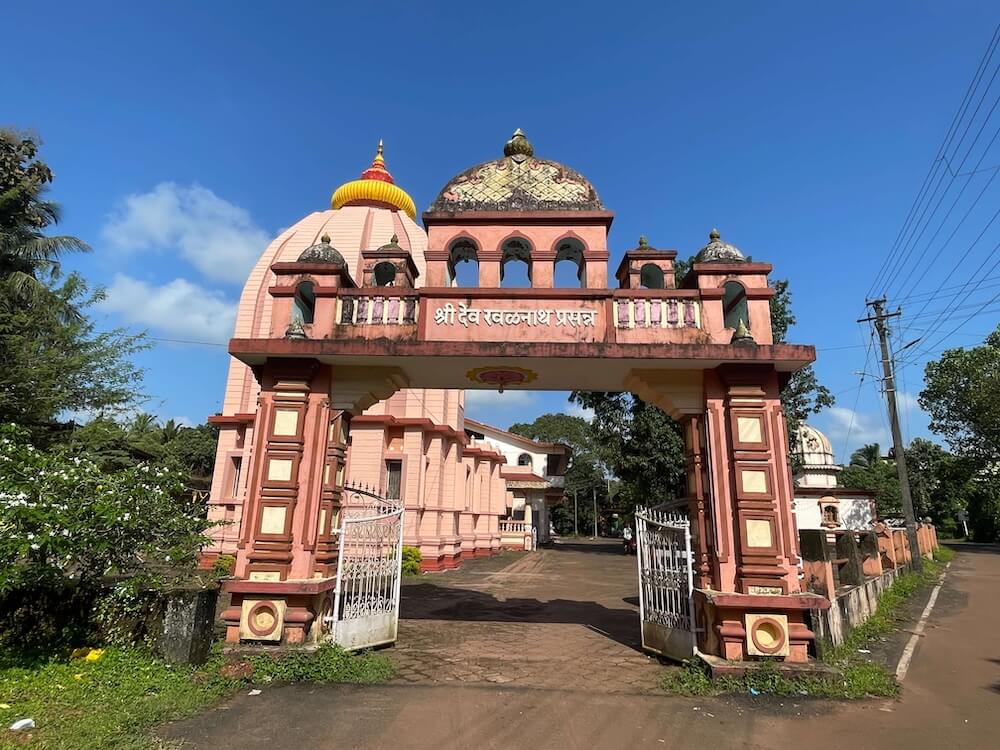
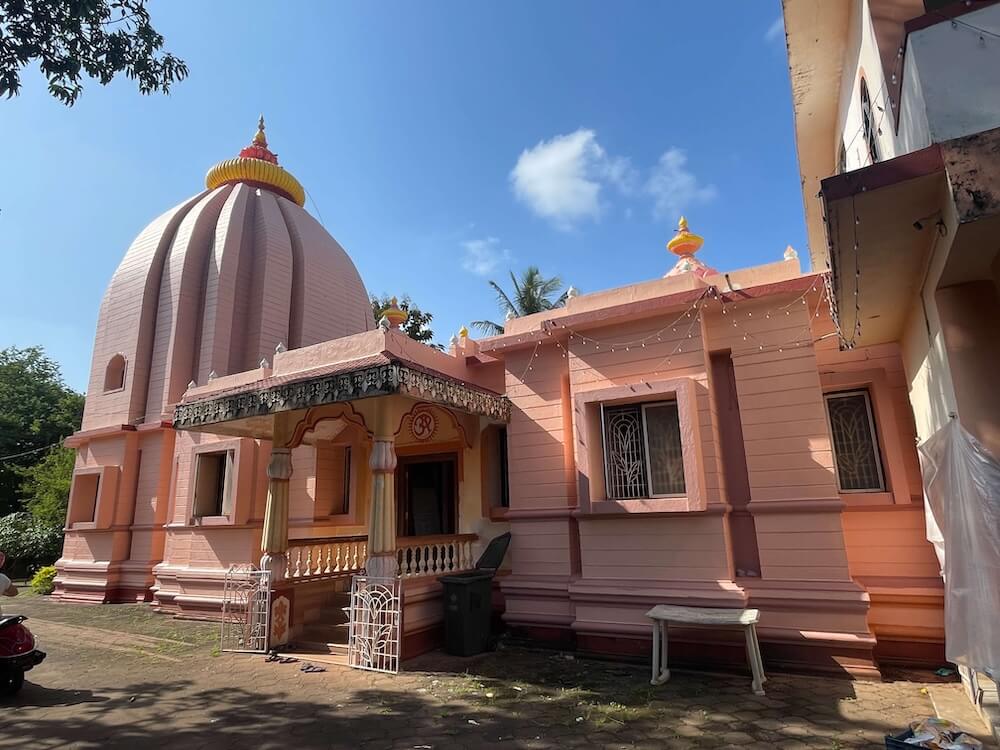
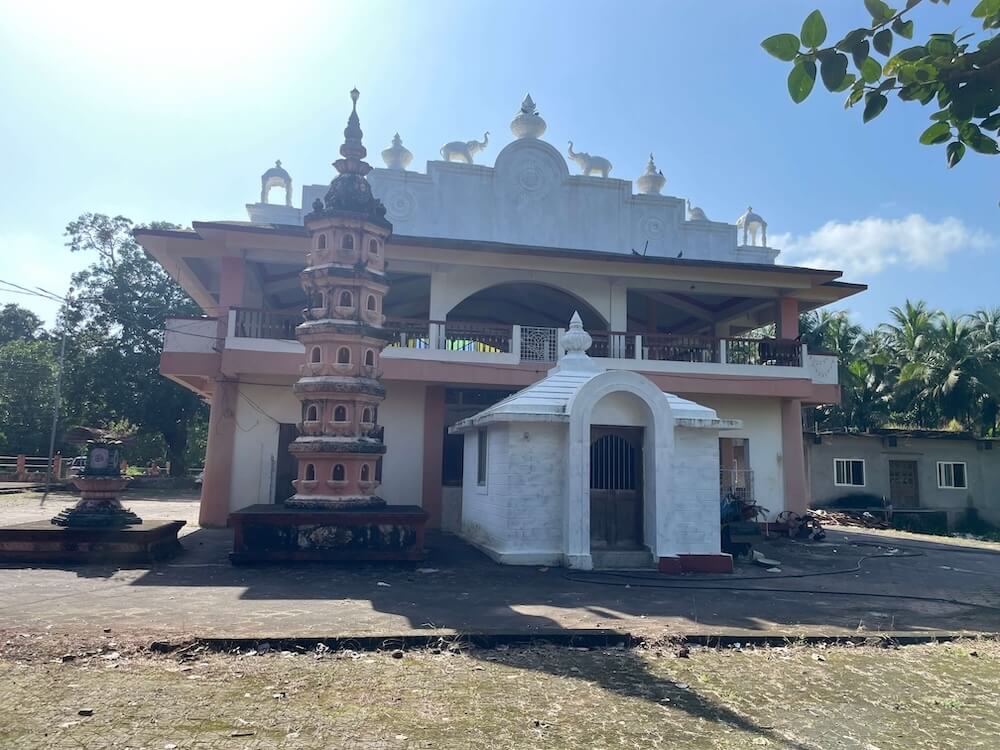
There is a paved road leading to this temple, which is located at a short distance from the village. There is a large entrance gate in the boundary wall surrounding the temple courtyard. On both sides of the entrance, there are two ornate square pillars with a balcony (sajja) above them. There are five small domes (meghdambari) on this balcony. Each dome roof has a pinnacle (shikhar) and a finial (kalash). One enters the temple courtyard through this entrance. The courtyard here is spacious and paved with blocks. In the courtyard, in front of the temple, there is a five-tiered octagonal lamp pillar (deepmal) on a pedestal. Each tier of the lamp pillar has eight lamp niches, with a pinnacle and finial at the top. Next to the lamp pillar, there is a Tulsi Vrindavan on a pedestal. The temple structure consists of a porch (mukhamandap), a main hall (sabhamandap), an antarala (vestibule), and a sanctum sanctorum (garbhagriha). The porch is slightly elevated above the courtyard. The entrance to the two-story main hall is simple. The semi-open main hall has six pillars on each side. There are beams on the pillars, and above them is the balcony of the upper floor. At the back of the main hall, there is a stage for cultural programs. The main hall houses the Tarang sticks and the palanquin. There are staircases on the left and right sides of the main hall to reach the balcony on the upper floor. The balcony has beams on the pillars, and there is a roof over the beams. Like other ancient temples in Goa, paintings in the Kavi style are depicted on the ceiling here as well.
Further ahead, there is a pedestal about three feet higher than the main hall. On the pedestal, there are circular ornate pillars on the right and left sides. Paintings in the Kavi style are depicted on the ceiling of this part of the main hall. On the front wall of the vestibule, on both sides of the entrance, there are sculptures of door guardians (dwarpal) in niches. The door frames of the vestibule feature Kavi-style floral and leaf paintings, and there is a Kirtimukh on the lintel.
The queue for darshan is managed in the vestibule by installing a railing with wooden balusters. Further ahead, the entrance to the sanctum sanctorum is slightly higher than the vestibule. The door frames of the sanctum have vertical edge carvings. Inside the sanctum, on a Vajra-peetha (diamond pedestal) within an ornate wooden shrine (makhar), stands the four-armed idol of Ravalnath. In the two back hands, the deity holds a damaru and a trident, while in one front hand, there is a sword, and in the other, a drinking vessel (panpatra). Near the feet of the deity, on one side, there is the Shakti holding a pot (Kumbh Dharini), and on the other side, there is a horse sculpture. On the back slab of the idol, there is a Kirtimukh at the top and floral carvings on both sides. In the silver arch (prabhaval) behind the idol, there are pillars with floral carvings on both sides. On these pillars, there is a peacock arch, and above the arch is a Kirtimukh. On the front side of the wooden shrine, there are floral carvings at the bottom and wooden balusters at the top. Peacock sculptures are carved on the arch above the balusters. There is a circumambulation path (pradakshina marg) outside the sanctum sanctorum.
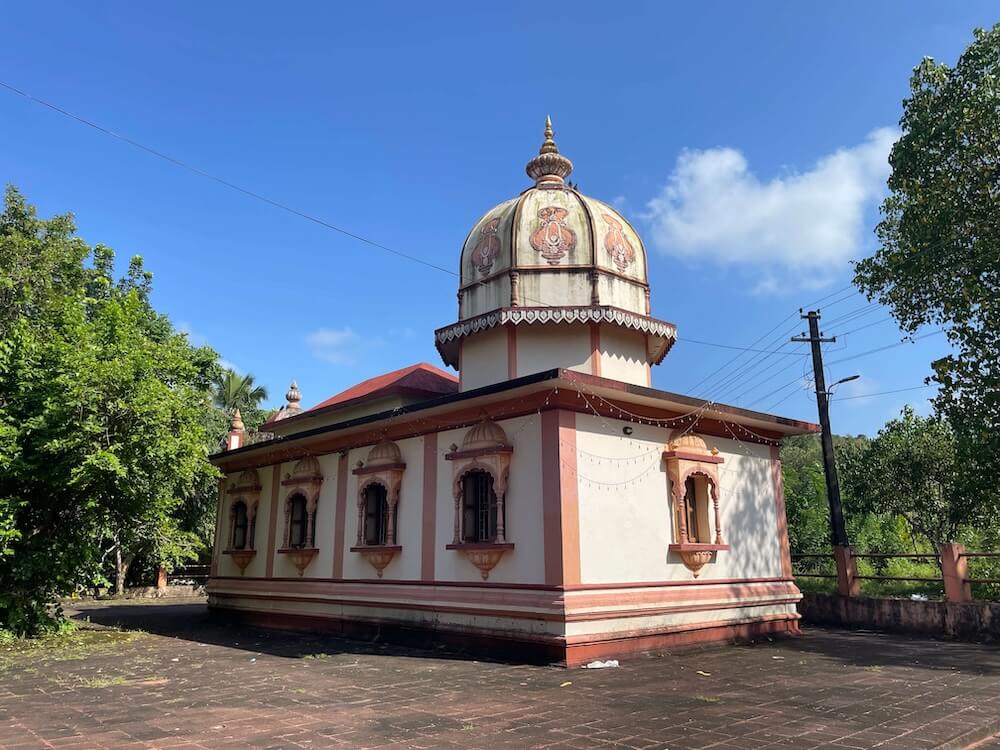
On the roof of the main hall, there is a decorative railing (bashingi) on the front side. In the center of the railing, there is an amalaka and a finial. On both sides of the amalaka, there are elephant sculptures, and behind them are again an amalaka and a finial. There are two small domes on both sides of the railing. The roof of the sanctum sanctorum has a square, five-tiered (pancharath) type of pinnacle. Adjacent to this temple is the Giroba temple. In its sanctum, there is a two-armed, horse-riding idol of the deity Giroba made of black stone. In the courtyard, there are also temples of Sateri Devi and Bhumika Devi. Additionally, there are stones of other local deities on a pedestal in the courtyard.
The annual fair (jatrotsav) of Ravalnath on Magh Shuddha Ashtami and of Giroba Deva on Paush Purnima is celebrated here with great enthusiasm. During this time, the palanquin procession of the deity is taken around the village amidst the sound of drums and the throwing of gulal. On this occasion, hundreds of devotees from the surrounding area come here for the deity’s darshan and to fulfill their vows. During this time, the deity’s Tarangs are also brought out. The temple’s anniversary (vardhapan din) on Magh Krishna Panchami is celebrated here with great zeal. Apart from this, all festivals and celebrations like Gudi Padwa, Ram Navami, Diwali, Dussehra, Tulsi Vivah, Mahashivratri, Holi, the month of Shravan, and Shardiya Navratri are celebrated in the temple.
This sacred temple stands as a testament to deep spiritual devotion, ancient architectural grandeur, and rich local cultural traditions.
The sanctum sanctorum houses the divine idol consecrated according to ancient Vedic traditions, surrounded by serene courtyards and traditional temple architecture.
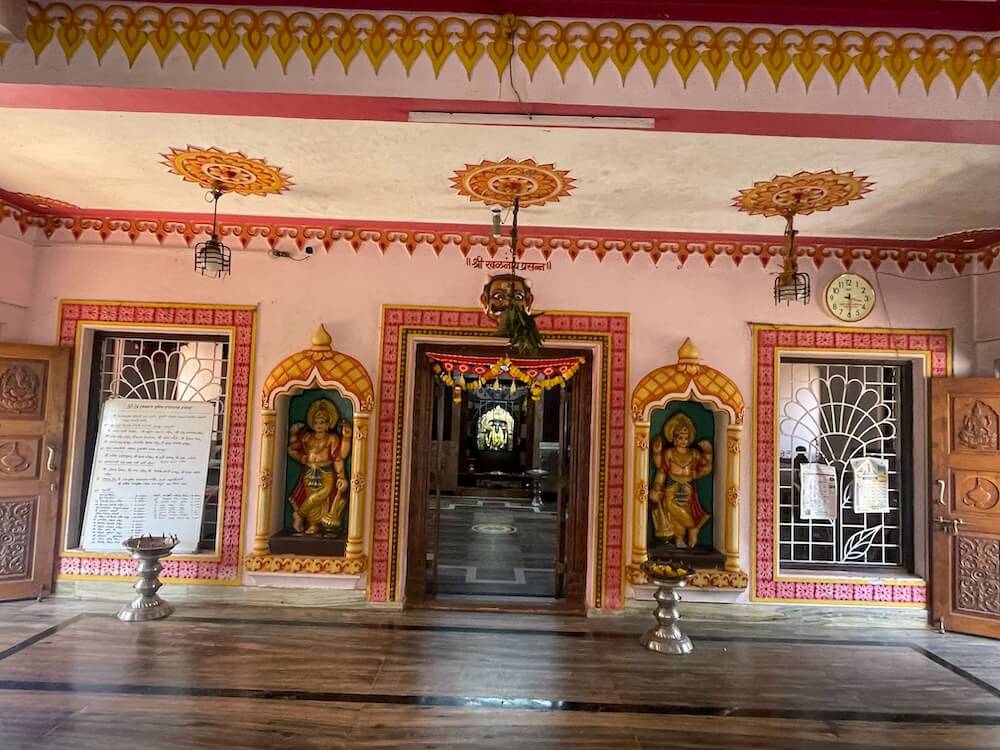
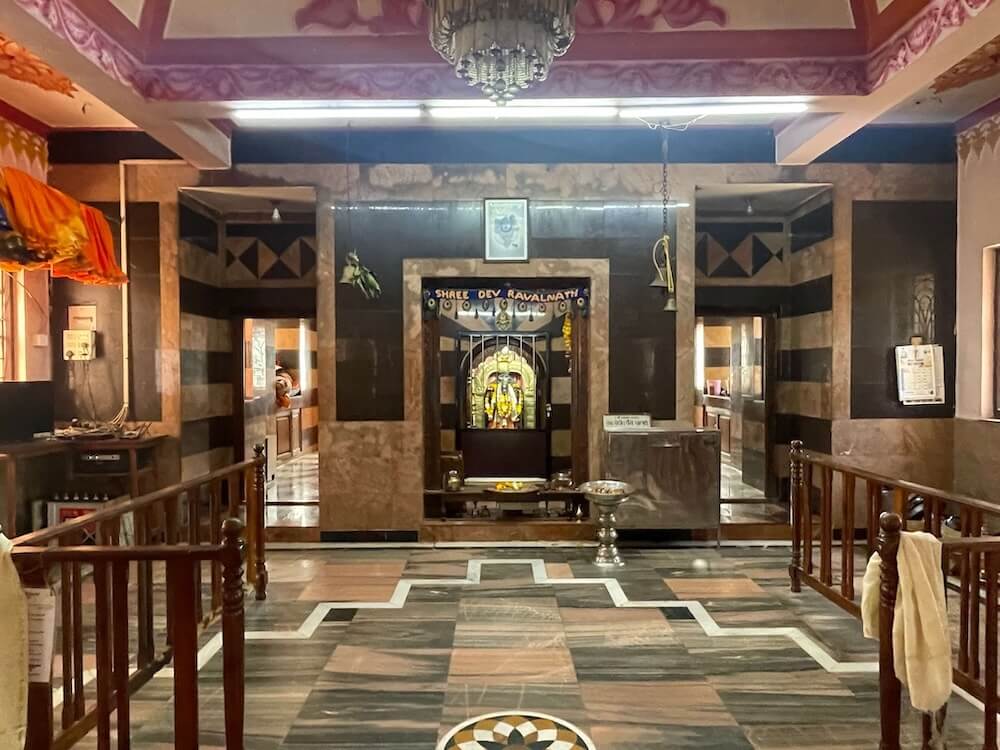
Navratri, Maha Shivratri, Annual Temple Jatra & Deepotsav
Compare and book flights, secure top-rated local hotels near the temple, hire reliable guides, and rent cars instantly.
Extend your pilgrimage by visiting other highly sacred temples located nearby.


Add ₹999 more to unlock FREE SHIPPING!
Your sacred cart is currently empty.
Shop Photo FramesFill in your delivery details below to place your order.
Add comment