
Add ₹999 more to unlock FREE SHIPPING!
Your sacred cart is currently empty.
Shop Photo FramesSateri, the Goddess worshipped in the form of an anthill in Goa, is considered one of the Saptamatrikas (Seven Divine Mothers). This Goddess is also known by the names Bhumka, Bhumika, and Purvi. According to mythological legends, the first form the Divine took was Prakriti or Maya, which is why she is called Bhumka, while her antiquity is expressed through the word Purvi. The renowned deity of Goa, Shantadurga, is a form of this very Goddess. There are many ancient temples of Sateri and Shantadurga in Goa. One such temple is situated in the village of Khorlim, near the city of Mapusa.
According to Hindu tradition, an anthill is considered a symbol of Goddess Sateri. In the Shakta tradition, the worship of the anthill holds significant importance. A mythological legend regarding Renuka, the mother of Lord Parashurama, states that she was born from an anthill and also disappeared into one. The word Renuka itself is derived from ‘renu’, meaning a minute particle of dust. An anthill is also formed by minute particles of soil. According to the renowned scholar R. Ch. Dhere, the anthill has been considered a symbol of the Yoni. The tradition of worshipping the Goddess in this form is ancient. Regarding her name Shantadurga, the legend goes that a war once broke out between Shiva and Vishnu. At that time, Goddess Durga preached to them and established peace; hence, she is called Shantadurga.
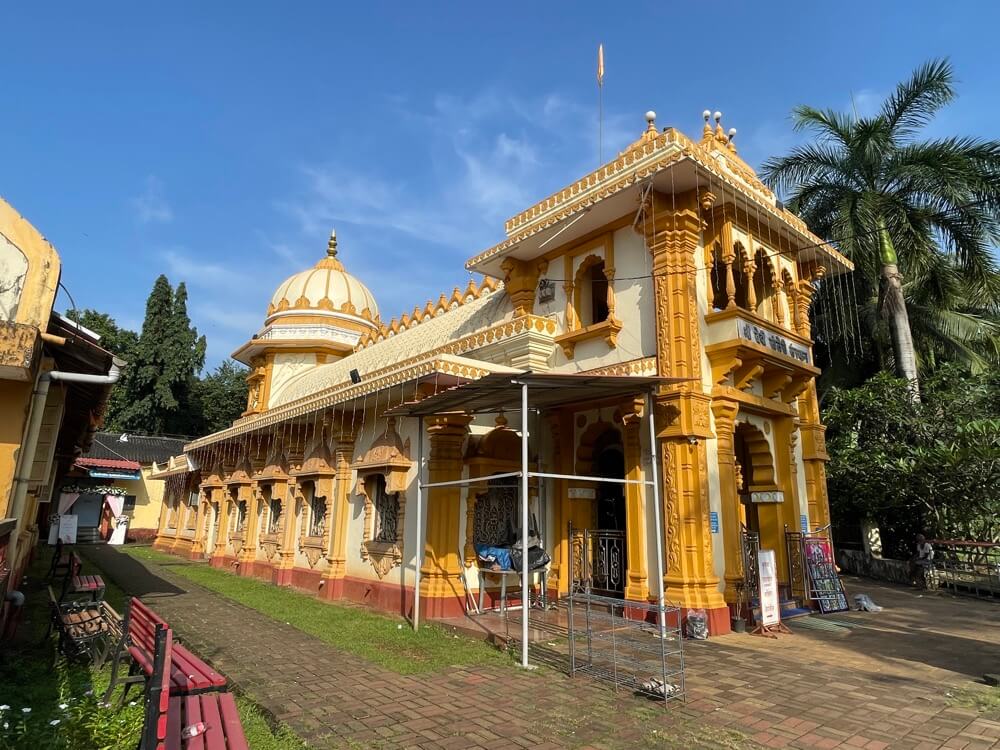
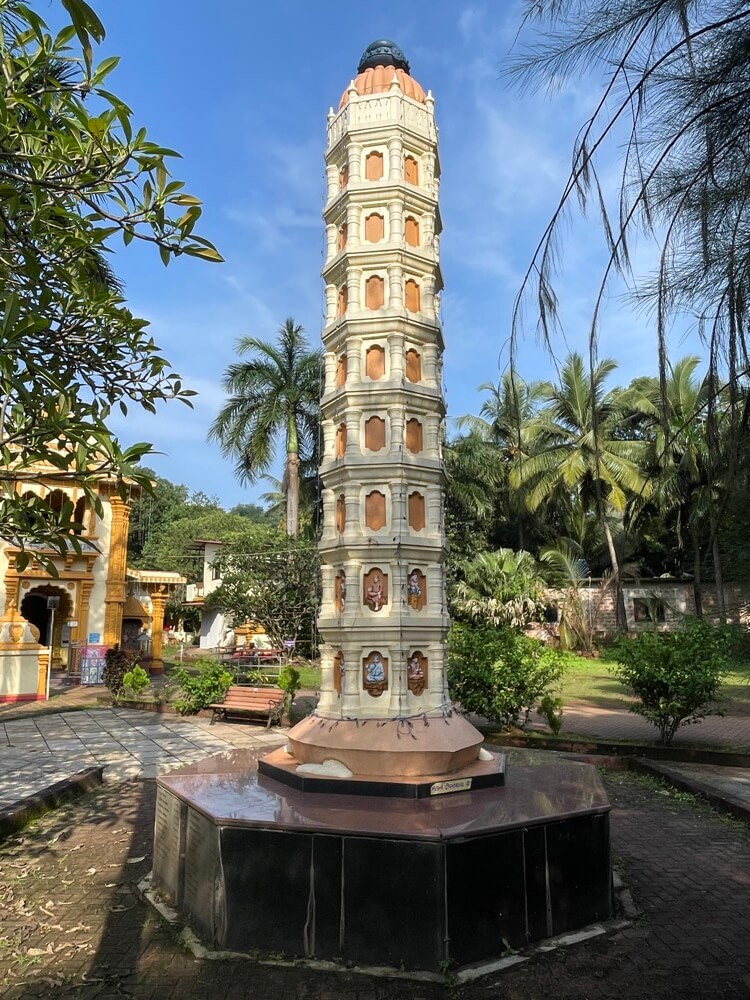
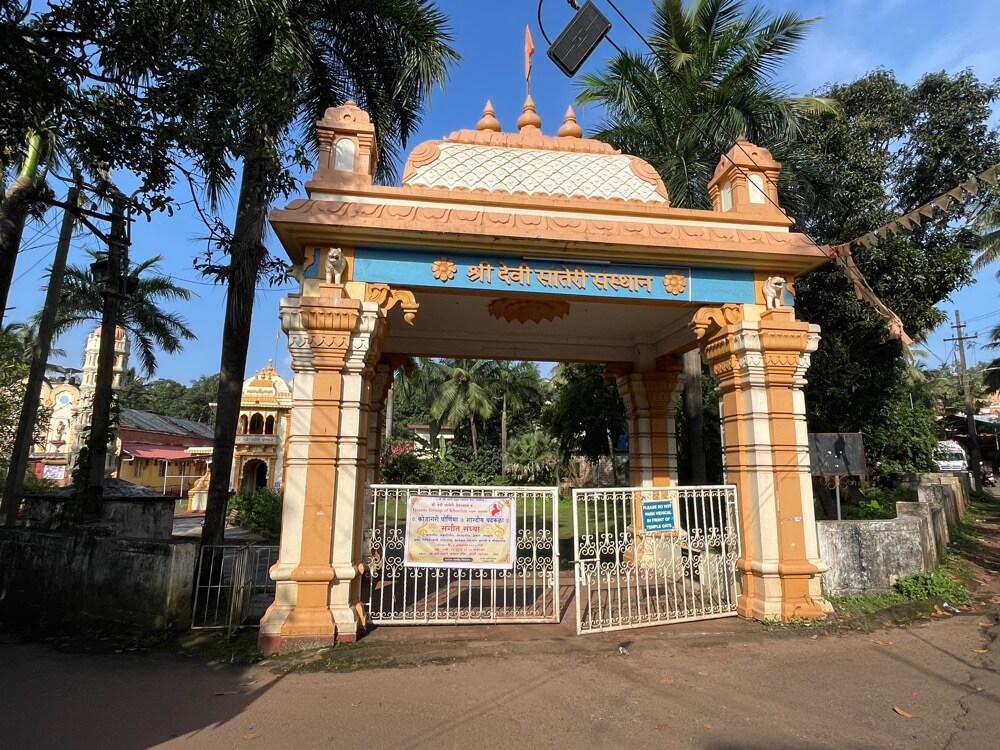
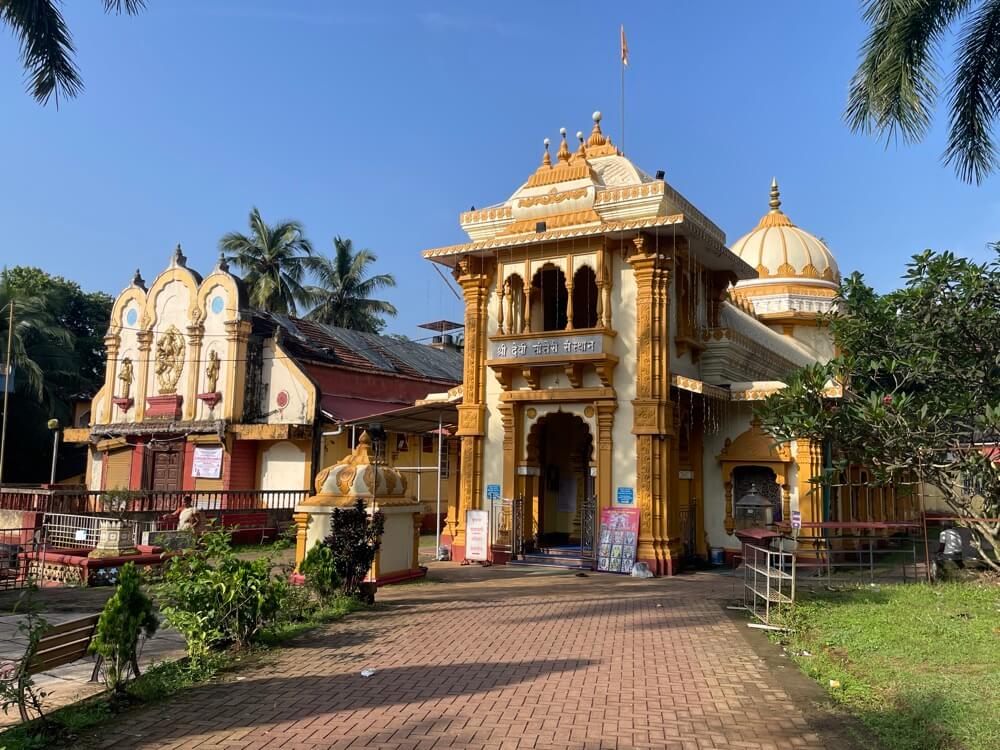
The Sateri temple in Khorlim is situated in a spacious courtyard amidst a picturesque environment. The courtyard is enclosed by a boundary wall. It features a main entrance gate that resembles a Southern-style Gopuram but is smaller in height. This main gate was inaugurated in the year 2004 by the then Chief Minister, Manohar Parrikar. Upon entering, one sees a magnificent nine-tiered lamp pillar (Deepastambha) on a marble platform to the left. Erected in the year 2002, this lamp pillar stands on the back of a tortoise. The niches in its lower two tiers contain relief sculptures of various deities, as well as saints like Sant Tukaram and Samarth Ramdas Swami. To the right, in a corner, a fountain has been built, where an idol of Lord Shiva is enshrined. A short distance from the main gate stands the grand temple of Sateri. In front of it is the temple of Chwateshwar. Chwateshwar is considered the guardian deity of the village. In this temple, the stone Linga of Chwateshwar is placed on a high platform shaped like a Shalunka. Behind it stands a marble idol of Chwateshwar in a blessing posture, dressed in a dhoti, shirt, and a turban on his head.
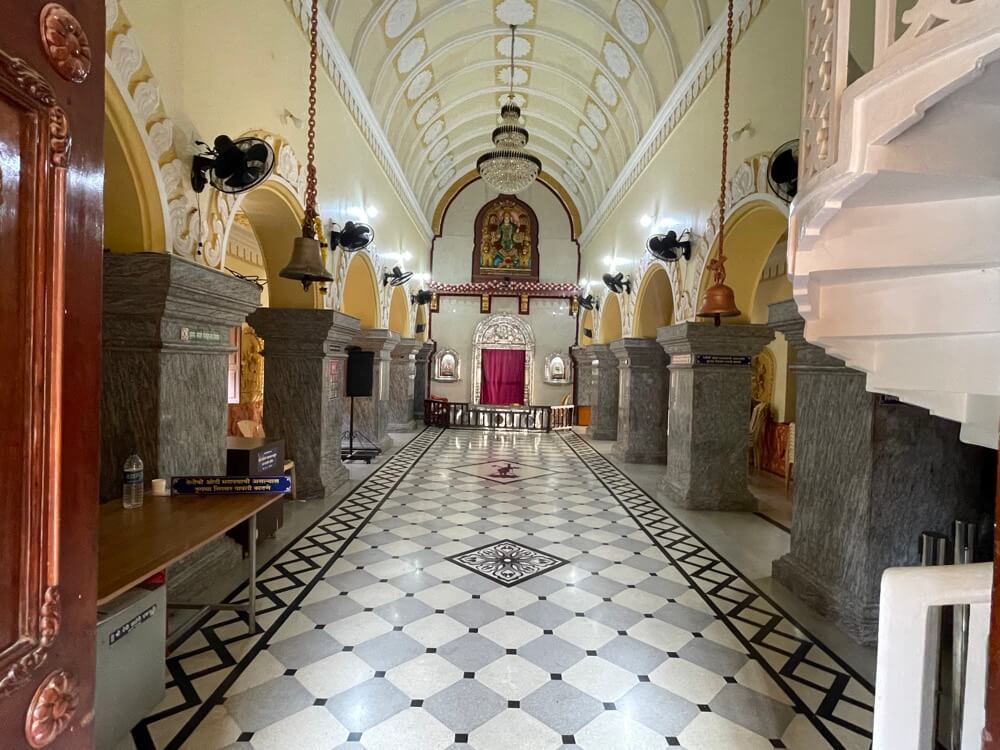
The architectural style of temples in Goa differs from that of temples in other parts of the country. According to temple scholars, the architecture of temples built here after the seventeenth century is heavily influenced by Renaissance-era European churches, as well as Mughal and Maratha architecture, alongside the Hindu temple style. This influence is evident in the grand, high assembly halls (Sabhamandapas), octagonal tower-like spires (Shikharas), and the dome-shaped tops of the spires. These features are clearly visible in the Sateri temple as well. The temple is structured with a front porch (Mukhamandap), an assembly hall (Sabhamandap), and a sanctum sanctorum (Garbhagriha). The front porch of the temple is high and two-storied. On its upper floor is the Nagarkhana (drum house). The roof of this Nagarkhana has a dome-shaped spire. The assembly hall has a high entrance with carved pillars. Inside, at a distance from the walls of the hall, there are large square pillars on both sides. These pillars are connected to each other by arches. The assembly hall has an elephant-back (Gajaprishthakara) ceiling. On the lower parts of the left and right walls of the assembly hall, there is a frieze of elephants (Gajathar). On the left wall of the assembly hall, a relief sculpture of Goddess Maheshwari riding Nandi is installed, while on the right wall, there is a relief sculpture of Goddess Brahmani riding a swan. The sanctum sanctorum has an entrance covered with silver sheets. An image of the Goddess is carved on its lintel (Lalatbimba). On both sides of the Goddess, elephant figures, which are symbols of prosperity, are carved. In the upper section above them is a grand image of Mother Sateri seated on a throne.
Inside the sanctum sanctorum, the idol of Mother Sateri, adorned with a silver mask, is enshrined. The Goddess holds a shield and a sword in her hands. The Goddess is bedecked with garments, ornaments, and garlands of flowers. There is a tall crown on the head of the Goddess. Above the sanctum sanctorum is an octagonal tower and a dome-shaped spire. On the spire, there is an Amalaka and a three-tiered Kalasha. A grand hall of the temple is situated on the left side of the temple courtyard.
Navaratri Utsav is celebrated with great enthusiasm in the temple of Mother Sateri. During the nine days of Navaratri, the temple premises are vibrant with various religious and cultural programs such as Bhajans, Kirtans, and music. People from various communities in the village participate in this festival. On Kartik Shuddha Pratipada, the day of Diwali Padwa, a grand festival of the Goddess’s palanquin procession through the town is celebrated. Apart from this, Gudi Padwa, Ashadhi Ekadashi, Kojagiri Purnima, and the temple’s foundation day on Bhadrapad Shuddha Purnima are celebrated with various religious programs. Every Shravani Monday, a special Puja of the Goddess is performed in the temple. The honor of this Puja belongs to the Twashta Brahmin community on the first and second Mondays, the Bhandari community on the third Monday, the Naik, Pankar, and Vaishya communities on the fourth Monday, and the Pujari or Brahmin community on the fifth Monday. Every Tuesday evening from 7:30 to 9:30, a Bhajan program by local artists is organized in the temple. Prasad (Kaul) is accepted in the temple on Mondays, Wednesdays, and Thursdays from 10:30 AM to 1:00 PM and from 4:00 PM to 7:00 PM.
This sacred temple stands as a testament to deep spiritual devotion, ancient architectural grandeur, and rich local cultural traditions.
The sanctum sanctorum houses the divine idol consecrated according to ancient Vedic traditions, surrounded by serene courtyards and traditional temple architecture.
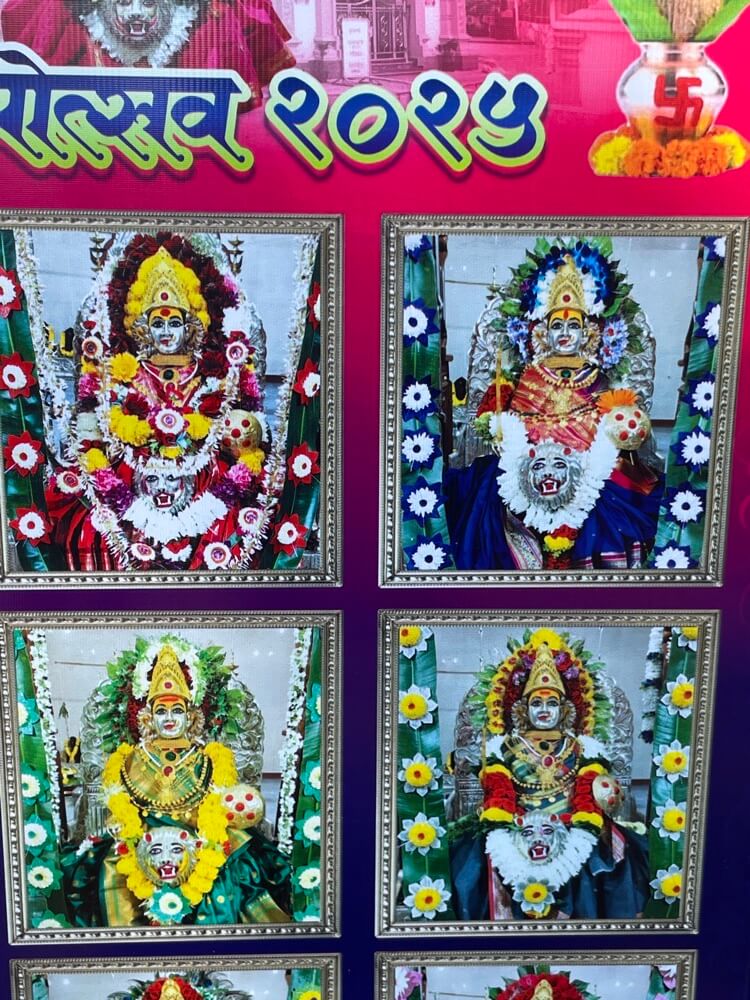
Navratri, Maha Shivratri, Annual Temple Jatra & Deepotsav
Compare and book flights, secure top-rated local hotels near the temple, hire reliable guides, and rent cars instantly.
Extend your pilgrimage by visiting other highly sacred temples located nearby.


Add ₹999 more to unlock FREE SHIPPING!
Your sacred cart is currently empty.
Shop Photo FramesFill in your delivery details below to place your order.
Add comment