
Add ₹999 more to unlock FREE SHIPPING!
Your sacred cart is currently empty.
Shop Photo FramesGanpati, the deity of intellect, is worshipped in many countries across the Asian continent. He is the leader of the Ganas as well as the remover of obstacles (Vighnaharta). It is precisely for this reason that in Hindu scriptures, Ganesha is accorded the status of being worshipped first (Adyapuja). There are numerous temples of this Lord Ganesha in Gomantak (Goa). Among them, the Mahaganapati Temple at Khandola is a very renowned temple. Dating back to the sixteenth century, this temple bears the historical record: “Shri Ganapati Navelkar Shristhal Khandole Tape Priol Bagayat”. Devotees have a deep faith that the Ganpati here grants their wishes (Navsas Pavnara). Consequently, there is always a crowd of devotees here to seek His Darshan.
Like many temples in Goa, this temple was also established following a migration. Its history is that the original abode of this Ganesha was on the island of Divadi, referred to as Dipavati in the Sahyadri Khand. This island in Tiswadi taluka comprised the villages of Navelim, Goltim, Malar, and Narve. An ancient temple of this Ganesha was situated in Navelim among them. In the year 1510 CE, the Portuguese foreigners entered Gomantak. During the reign of Afonso de Albuquerque, the contemporary Viceroy of the Portuguese in Hindustan, several prominent Hindus were involved in the administration of Goa, including Sarthanedar, Krishna Shenvi, Lakhu Naik of Chodan, Gopu Shenvi of Thoralya Nevrya, Anu Shenvi Mone of Goa city, and Dadaji Krishna Shenvi. During those early days, he had guaranteed religious protection to the Hindus.
Even so, within a short time, this Albuquerque demolished the temple of Saptakoteshwar in Tiswadi. According to the book ‘Devabhumi Gomantak’ (1988) by historian Vinayak Narayan Shenvi Dhume, it was during the time of this Albuquerque, around the year 1512 CE, that a threat arose to the Ganesha temple in Navelim. At that time, the Mahajans of Navelim secretly relocated the idol from the temple even before the Portuguese attack could take place. At that time, this idol of Lord Ganesha was consecrated at Khandepar, which lay outside the territory of the Portuguese rule. A few days later, an incident occurred here that necessitated the relocation of this idol from Khandepar as well. The incident was as follows: A devoted worshipper of Lord Ganesha named Shenvi Navelkar lived in Navelim. Distraught by the separation from Lord Ganesha after the village deity was moved to Khandepar, he became very restless. One day, he resolved to bring the idol of Lord Ganesha back. Accordingly, taking some people along with him, he went to Khandepar. There, on the night of Dhanatrayodashi, they stealthily entered the temple and secretly stole the idol of Lord Ganesha. The next morning, the villagers discovered that the idol was missing. Enraged, the people began searching for the idol everywhere. Some members of the search party spotted a group of people preparing to cross the creek, carrying a bundle. Seeing this, the people of Navelim grew suspicious and questioned them. The situation nearly came to blows. Finally, when the bundle was opened, the divine idol was revealed. Upon learning the reason for the theft, however, the people calmed down, and it was ultimately decided that the idol should be installed in a place that would be convenient for everyone to visit. Accordingly, it was consecrated within the borders of Bhatgram Bicholim, at Hindale-Narve (Narve-Bicholim). Later, between the years 1746 and 1751, the Portuguese Commander Marquis de Alorna attacked the forts in the regions of Bicholim and Sanquelim. Fearing this danger, the Ganesha temple was relocated once again from the Bicholim taluka and established at its present site in Khandola.
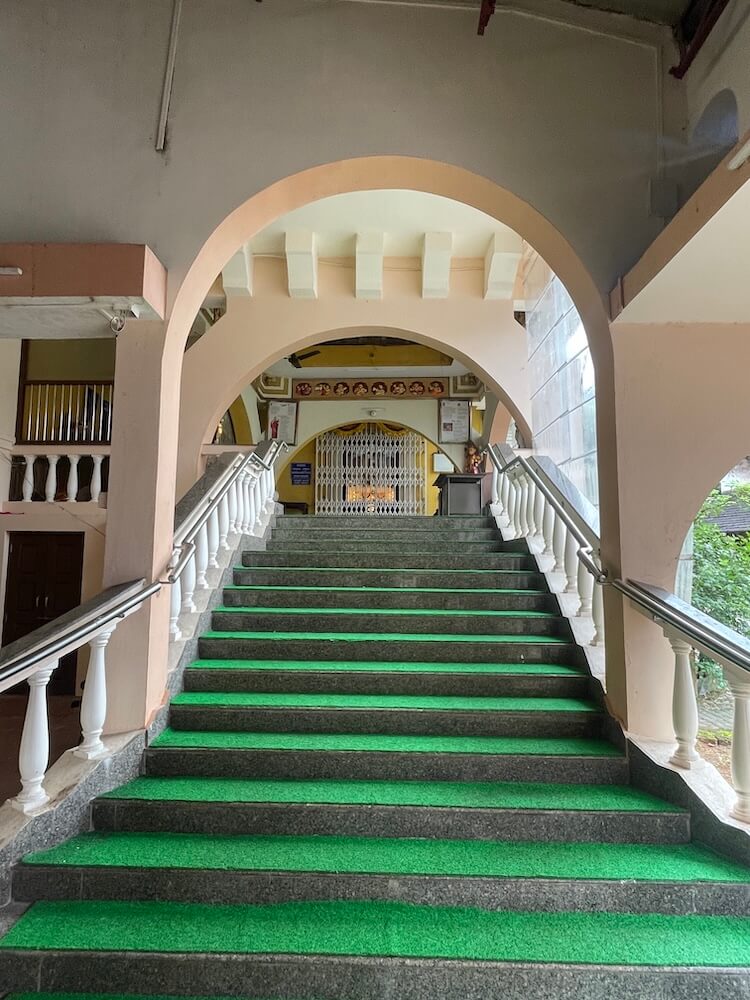
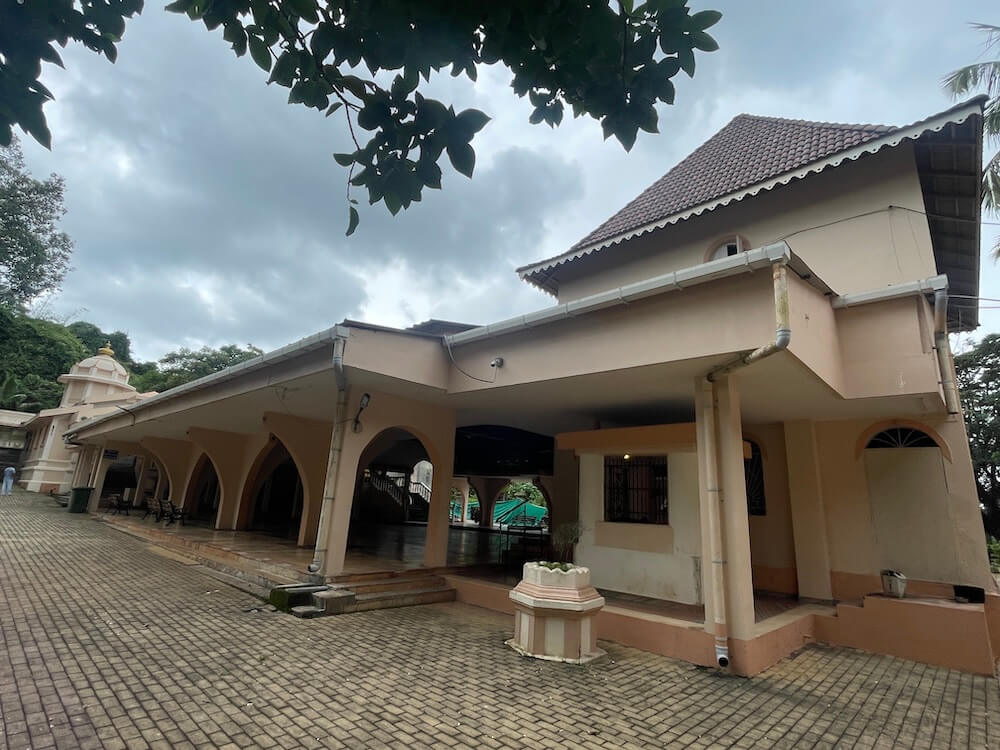
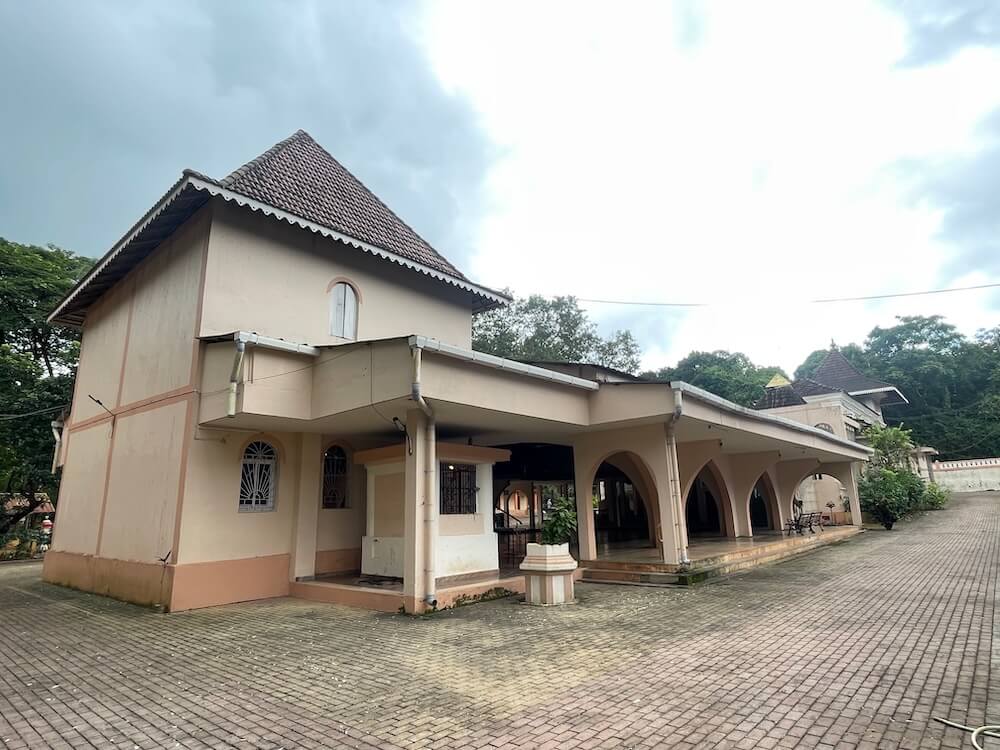
This grand temple is situated in a large courtyard here. The architecture of this temple is distinctive. It features a spacious assembly hall (sabhamandap) on the lower level. From there, two staircases—one on the left and one on the right—lead to the second floor. On the left is the temple of Goddess Shantadurga, while on the right, after ascending 15 steps, is the temple of Lord Ganesha.
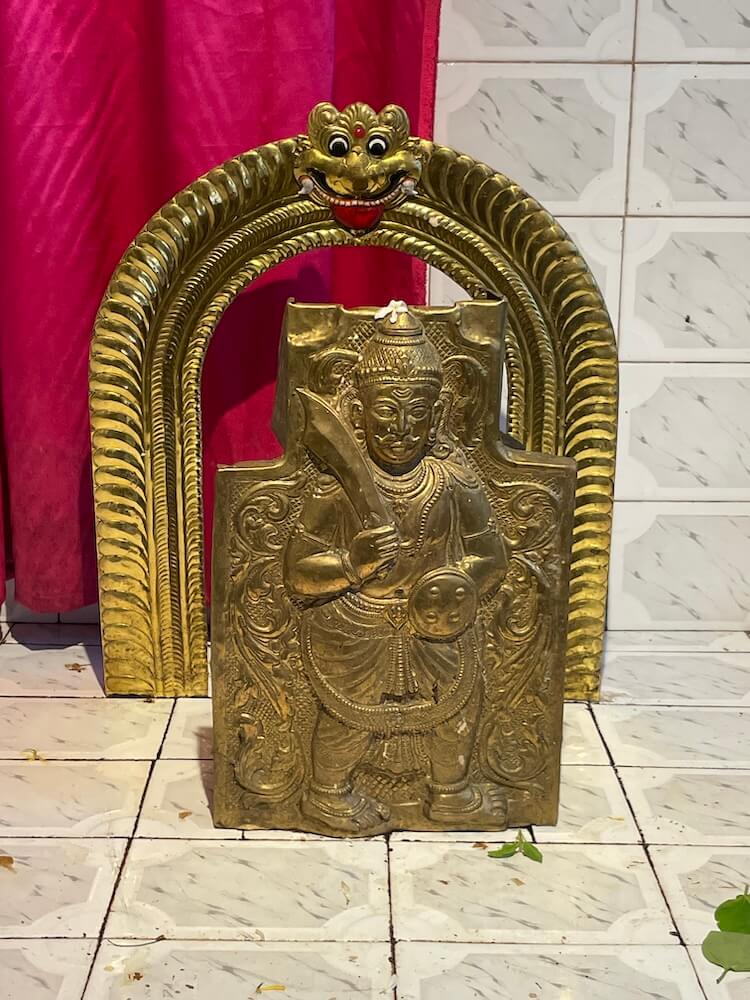
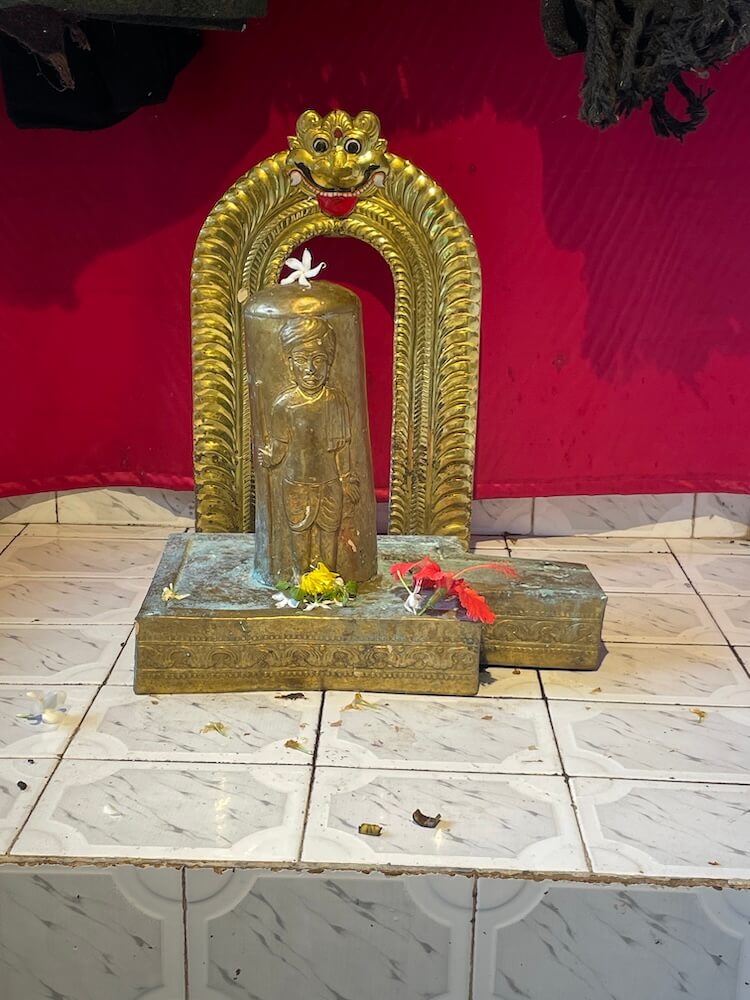
This grand assembly hall on the lower floor of the temple was inaugurated on 18 April 1973 by Shrimad Vidyadhiraj Teerth Shripad Vader Swamiji, the head of Gokarn Partagali Jeevottam Math. As one enters this newly constructed assembly hall, a small shrine of Kalabhairava is encountered. In it, a brass idol of Kalabhairava is installed on a marble pedestal. A large stage has been erected in the assembly hall adjacent to this temple. To its left is the niche of Nirankala (Nirankar). Inside, on a large pedestal, is a brass idol of Nirankala. Here, carved on a linga placed upon a square shalunga, is a standing idol of Nirankar wearing a dhoti and turban, with a staff in its hand. Behind it is a brass arch (prabhavali) featuring a large kirtimukha.
Climbing the twelve steps of the staircase on the left leads to the temple of Goddess Shantadurga. The architecture of this temple consists of a Mahamandapa and, leading from it, the sanctum sanctorum (Garbhagriha) with a circumambulation path (Pradakshinamarga). A large Samai (traditional brass oil lamp) is placed in the center of the Mahamandapa. Brass bells and glass chandeliers are suspended from the ceiling of the Mahamandapa. The sanctum sanctorum has an intricately carved wooden entrance doorway. At the center of the lintel (Lalatabimba) of the doorframe is a Kirtimukha (auspicious demonic face motif). Inside, the silver idol of Goddess Shantadurga is consecrated within a large silver shrine (Devara). Here, the Goddess is manifested in the form of a large brass pot (Ghat) surmounted by a silver face mask (Roupya Mukhawata). Behind this idol is a silver halo (prabhavali). Above this sanctum sanctorum (garbhagriha) is an octagonal shikhara featuring a dome and a kalasha on top.
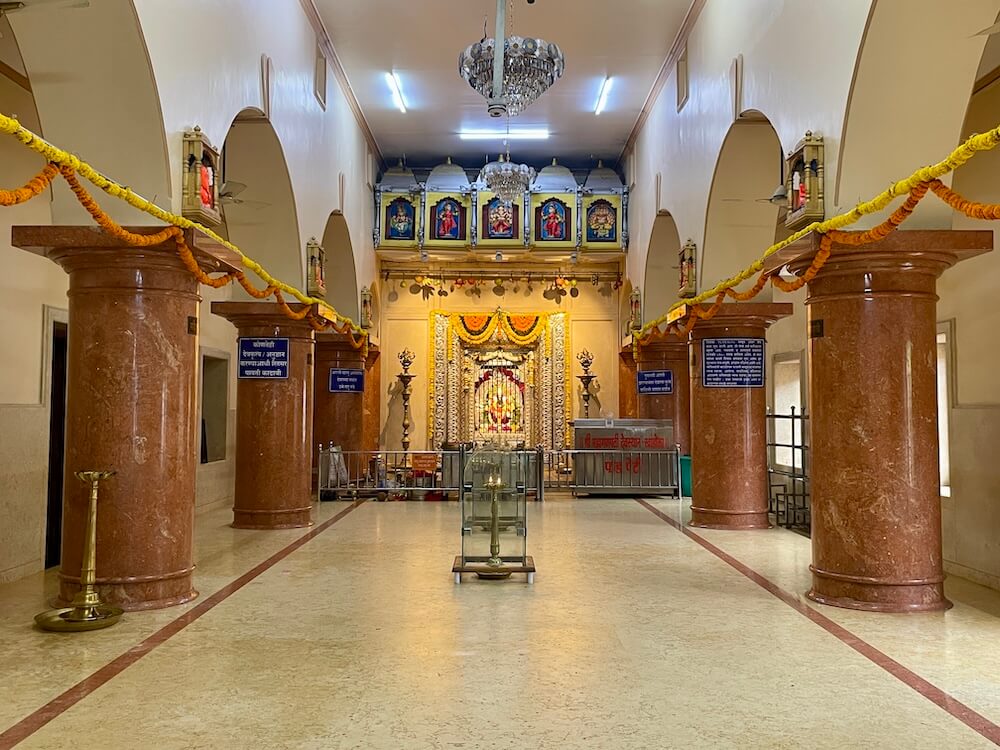
After climbing the 15 steps of the staircase on the right, one comes to the temple of Ganpati. In the ardha-mandapa of this temple, there are idols of guardian deities (dvarpalas) in all four corners. On the ceiling portion, there are relief sculptures of some sages and saints. In the maha-mandapa, set some distance inward from the outer walls, there is a row of wide, circular pillars on both sides. These pillars are connected to one another by arches. In the shrines (devharas) on these pillars, idols of the Ashtavinayaka are enshrined. The maha-mandapa is adorned with glass chandeliers on the ceiling. The pradakshina path (circumambulation path) of the garbhagriha (sanctum sanctorum) originates from the maha-mandapa itself.
On the upper part of the sanctum sanctorum’s front wall, there are five large alcoves (devhaares). In the middle of these is a relief sculpture of Lord Ganesha. On both sides of Ganesha are the idols of Riddhi and Siddhi. In the leftmost alcove is the idol of Mother Saraswati, and in the rightmost is the idol of Kartikeya. The sanctum features a four-shuttered doorway adorned with intricate leaf and flower carvings and floral festoons. On both sides of the entrance stand large brass lamps (samai) as tall as a man. A unique feature of these lamps is that a Ganesha idol adorns their top. Inside the sanctum, upon a high pedestal, stands the enshrined black stone idol of Lord Ganesha, exquisitely adorned with garments, ornaments, and flower garlands. Seated on a high throne with both legs dangling downwards, this four-armed (chaturbhuja) idol holds a snake-noose (naagapaasha) and an axe (parashu) in its upper hands, while one lower hand is in the abhaya mudra (gesture of fearlessness) and the other in the varada mudra (gesture of granting boons). The crown, ears, and arms of the idol are covered in silver plating. Behind the idol is a silver halo (prabhaaval), featuring a Kirtimukha at the top and carved figures of divine attendants at the bottom, with vyala (mythical beast) motifs above them. This new idol of Ganesha was crafted fifty-six years ago.
The earlier old idol of this temple is seated to the right of the main throne. Scholars believe this old Ganesha idol dates back to the thirteenth century, and the influence of Kadamba-Hoysala art is clearly visible on this brass idol. It is four-armed, holding an axe in its upper right hand, while the lower right hand is in the abhaya mudra. The upper left hand of the idol is broken, and the lower left hand holds a laddu. The halo of the idol features delicate carvings. Because this old Ganesha idol was extremely ancient and had been relocated three times, it had suffered considerable wear and tear. Therefore, it was decided to enshrine a new idol in the temple. Accordingly, a new idol was crafted, and it was consecrated in the sanctum sanctorum during the auspicious muhurta of Punarvasu Nakshatra on Magha Shukla Trayodashi, Friday, January 31, 1969, at 1.15 in the afternoon. This consecration was performed by Sachchidananda Saraswati Swamy, the pontiff of the Gaudapadacharya Sansthan, Kaivalyapura Matha. Following the consecration of a new idol, the old idol is traditionally immersed ritually in a river or the sea; however, due to certain reasons, the old idol here was retained within the temple itself. The sanctum features a square-shaped structure topped by a slanting roof and a shikhara crowned with a kalasha. Stone idols of Ravalnath, Mahalakshmi, Lakshminarayan, and Suryanarayan are also enshrined in this Ganesha temple.
All major Hindu festivals and celebrations such as Rama Navami, Anant Vrata, Vijaya Dashami, Tulasi Vivaha, Deepavali, and Ganeshotsav are celebrated with great enthusiasm at this holy shrine. A palanquin procession (shibikotsav) of Lord Ganesha is celebrated here on Chaturthi of every month. Similarly, the Ganesha Navaratri is celebrated here on Magha Shukla Chaturthi with great fanfare and in a deeply religious atmosphere. The tradition of seeking divine counsel through prasad-kaul has been practiced in this temple since ancient times.
This sacred temple stands as a testament to deep spiritual devotion, ancient architectural grandeur, and rich local cultural traditions.
The sanctum sanctorum houses the divine idol consecrated according to ancient Vedic traditions, surrounded by serene courtyards and traditional temple architecture.
Navratri, Maha Shivratri, Annual Temple Jatra & Deepotsav
Compare and book flights, secure top-rated local hotels near the temple, hire reliable guides, and rent cars instantly.
Extend your pilgrimage by visiting other highly sacred temples located nearby.


Add ₹999 more to unlock FREE SHIPPING!
Your sacred cart is currently empty.
Shop Photo FramesFill in your delivery details below to place your order.
Add comment