
Add ₹999 more to unlock FREE SHIPPING!
Your sacred cart is currently empty.
Shop Photo FramesSudhagad Fort is located in the Sudhagad taluka of Raigad district, which is known by the name of the Raigad Fort, the capital of Chhatrapati Shivaji Maharaj. Chhatrapati Shivaji Maharaj conquered Sudhagad Fort in the year 1657. The Ballaleshwar Temple of Pali in Sudhagad taluka is ancient and finds mention in many scriptures. There are caves in the taluka at Thanale and Gomashi that are approximately 2,000 years old. It is in this same Sudhagad taluka, in the village of Asare, that the ancient temple of Vireshwar is situated. Devotees believe that the awakened Mahadev here grants their wishes. It is also believed that performing divine service in the temple cures mental ailments.
This temple, with its stone construction in the Hemadpanti architectural style, is said to date back to the Yadava period, seven to eight hundred years ago. Although the appearance of the temple has changed due to several renovations, the sanctum sanctorum remains in its original form. According to information received, about three hundred years ago, the Peshwa commander Joshi Havaldar had camped in the vicinity of this temple while heading south with his army to conquer the Badami Fort in the Bangalore kingdom. At that time, he had vowed to Vireshwar Mahadev that if his mission was successful, he would renovate the temple. Later, after successfully completing the mission and returning, the Joshi commander renovated this temple.
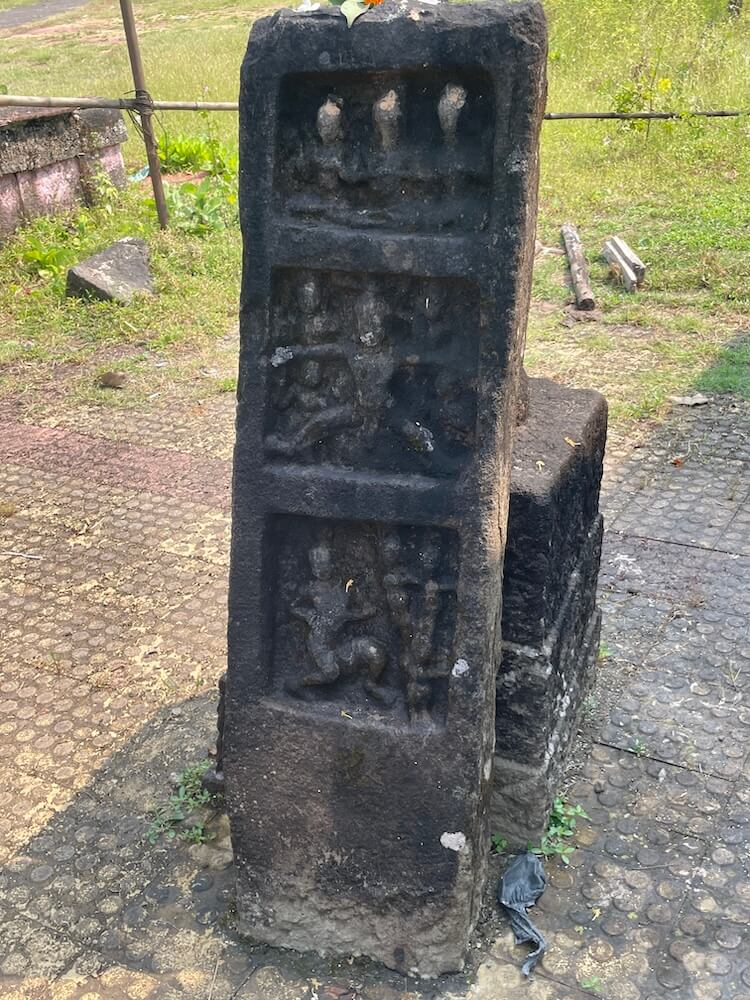
The temple is situated on the bank of a lake near the village. In the open ground in front of the temple, there is a stone platform with a lamp tower (Deepmala) upon it. The five-tiered square lamp tower has a circular plate at its peak. Near the lamp tower, there are ancient hero stones (Virgal) and a Tulsi Vrindavan. The temple courtyard is about six feet lower than the open ground, and there are steps to descend into it. The temple is surrounded by a stone perimeter wall. This wall contains many ancient hero stone sculptures and inscribed stones. In the courtyard, in front of the temple, there are some hero stone pillars and stone lamps.
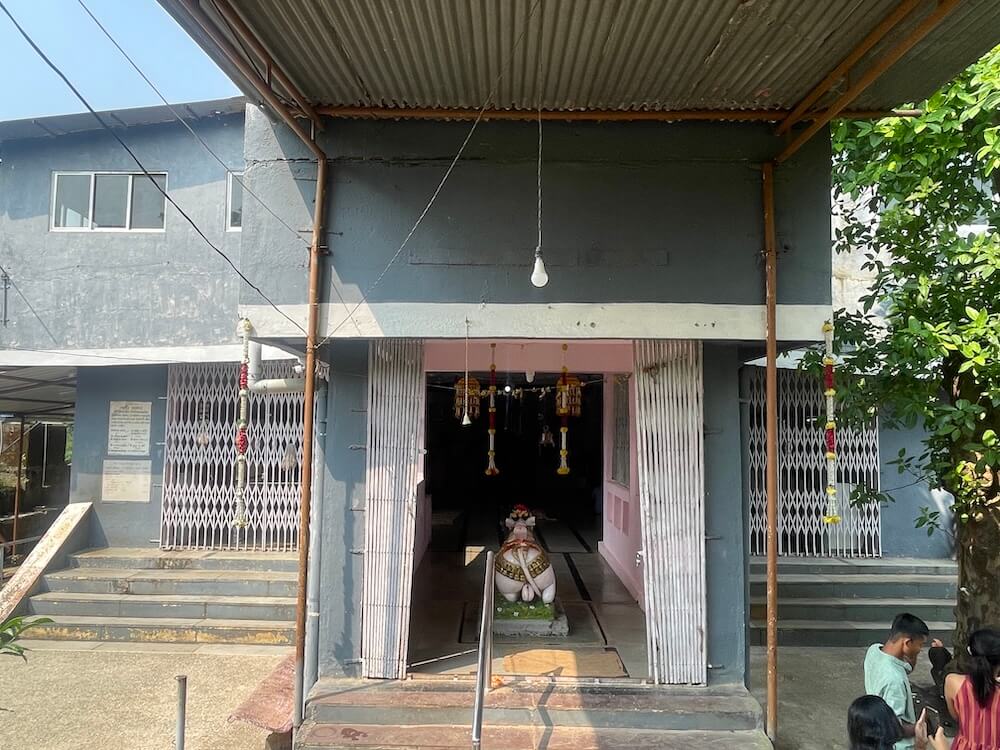
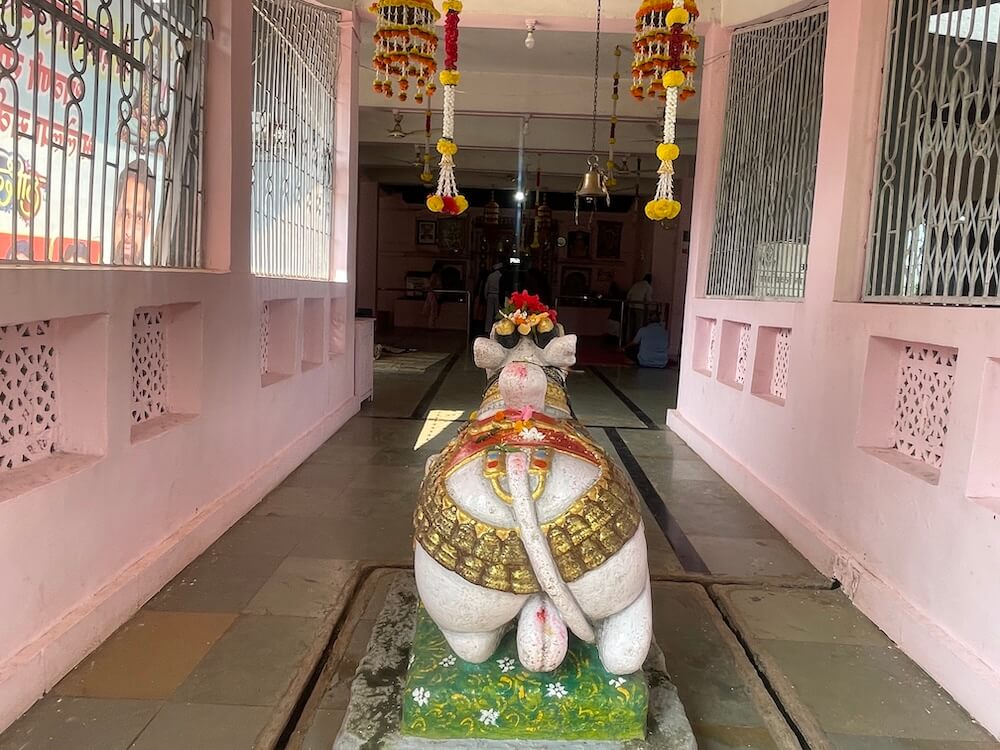
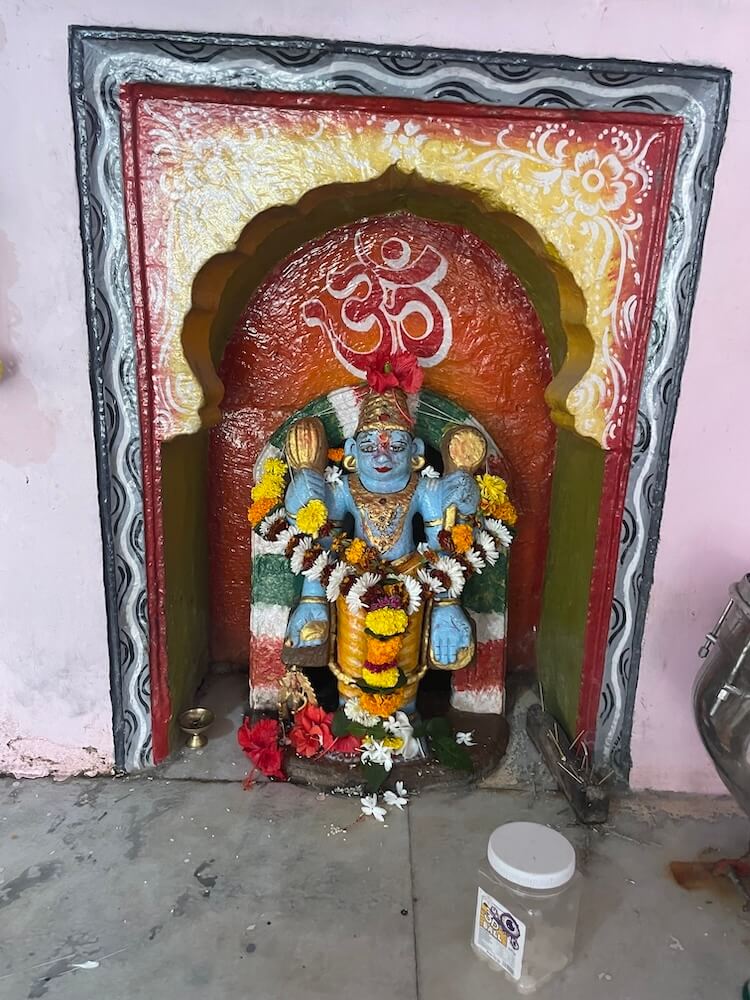
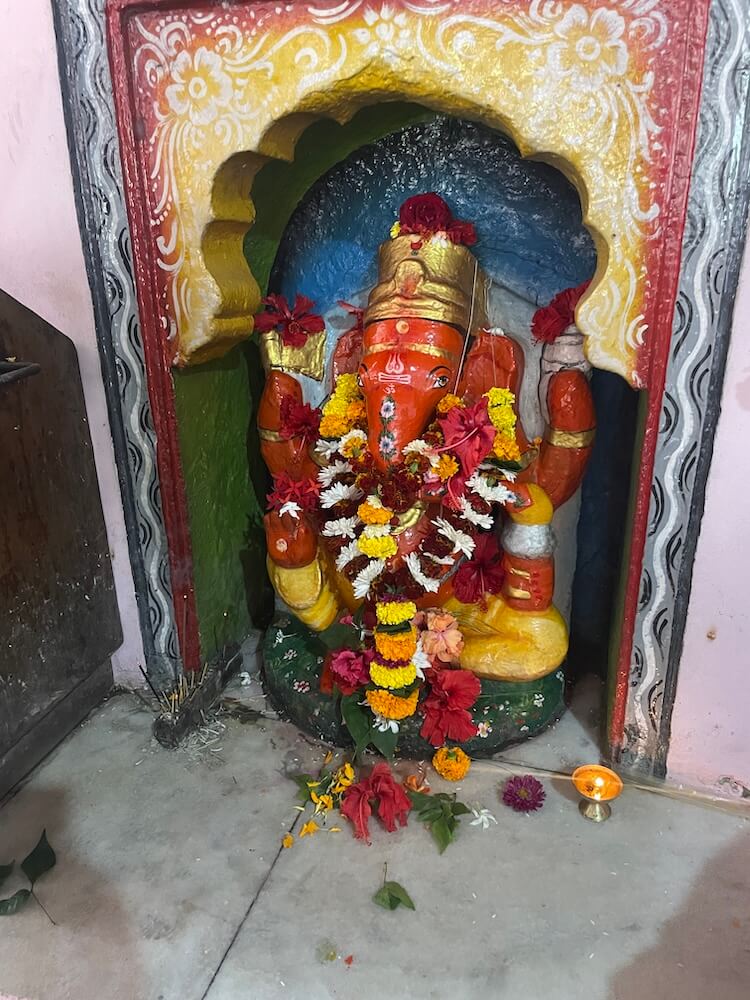
The structure of the temple consists of a front hall (Mukhamandapa), an assembly hall (Sabhamandapa), and a sanctum sanctorum (Garbhagriha). The assembly hall here is two-storied. The front hall is about four feet higher than the courtyard. The semi-open front hall has railings on both sides. In the front hall, there is a large black stone idol of Nandi on a platform. There are two more doors on the left and right sides of the assembly hall. The enclosed assembly hall has two rows of three square wooden pillars each. Brass bells are hung from the ceiling of the assembly hall. A drum (Nagara) and a palanquin used during festivals are kept near the wall in the assembly hall. In the assembly hall, on the front wall of the sanctum sanctorum, there are two niches on both sides of the entrance. In the niche on the left is an idol of Ganpati, and on the right is an idol of Vishnu.
The entrance to the sanctum sanctorum features floral and leaf motifs. On the lintel (Lalatbimba), there is a Ganpati sculpture, and the architrave is decorated with floral patterns. The threshold (Mandarka) features a moonstone (Chandrashila) and a Kirtimukha. In the center of the sanctum sanctorum floor is a self-manifested (Swayambhu) Shiva Linga, with a brass cobra holding a hood over it. A copper vessel for ritual bathing (Abhishek) is hung from the ceiling. In a niche on the back wall of the sanctum sanctorum, there is a four-armed Bhairavi sculpture. The goddess holds a trident (Trishul), a drum (Damaru), and a water pot (Kamandalu) in her hands, and one hand is in the gesture of fearlessness (Abhayamudra).
The roof of the sanctum sanctorum features a three-tiered spire (Shikhara). The first square tier of the spire has niches on all four sides, small spires on all four corners, and Amalakas above them. The second octagonal tier of the spire has eight niches. Above these niches are small spires with Amalakas. The third tier of the spire is octagonal and tapers towards the top. At the peak of the spire are an Amalaka, a finial (Kalash), and a flag. To the right of the temple is a Dharmashala (pilgrim rest house) that is about one hundred years old. Behind the building of this Dharmashala is a small Shiva temple. In front of this temple is an ancient stone lamp (Malta). Inside the temple, there is a Shiva Linga on the floor. Four faces are carved onto the Linga stone. This is called a Chaturmukh Shiva Linga. Such a Shiva Linga is considered rare.
Behind the temple is a vast lake. There are steps to descend into this lake. There are seats on the bank of the lake for devotees to sit. Janan Shanti and funeral rites (Shraddha) are performed in this area. Mahashivratri is celebrated here as an annual fair with great enthusiasm. On this occasion, programs such as Maha-Abhishek, Bhajans, Kirtans, discourses, and Maha-Prasad are organized in the temple. At this time, thousands of devotees from the surrounding areas come here for the deity’s darshan and to fulfill their vows. Additionally, a festival of lights (Deepotsav) is celebrated on Tripurari Purnima. In the month of Shravan, there is a rush of devotees here for darshan. Hundreds of devotees come here for darshan on Mondays, full moon days (Purnima), new moon days (Amavasya), and Ekadashi.
This sacred temple stands as a testament to deep spiritual devotion, ancient architectural grandeur, and rich local cultural traditions.
The sanctum sanctorum houses the divine idol consecrated according to ancient Vedic traditions, surrounded by serene courtyards and traditional temple architecture.
Navratri, Maha Shivratri, Annual Temple Jatra & Deepotsav
Compare and book flights, secure top-rated local hotels near the temple, hire reliable guides, and rent cars instantly.
Extend your pilgrimage by visiting other highly sacred temples located nearby.


Add ₹999 more to unlock FREE SHIPPING!
Your sacred cart is currently empty.
Shop Photo FramesFill in your delivery details below to place your order.
Add comment