
Add ₹999 more to unlock FREE SHIPPING!
Your sacred cart is currently empty.
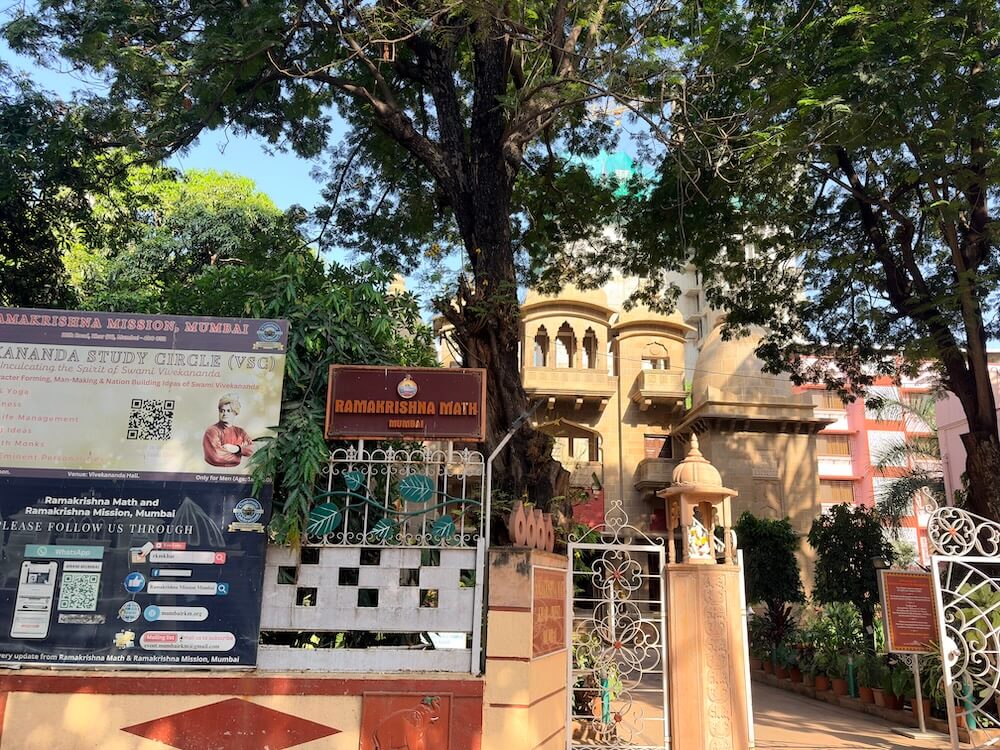
Shop Photo FramesA branch of the Ramakrishna Math, founded by the ‘Warrior Monk’ Swami Vivekananda—who gave the world the message of universal brotherhood and religious tolerance—is situated in Khar. This Math is one of the oldest centers of the Ramakrishna Order in Mumbai. It houses a universal temple dedicated to Vivekananda’s Guru, the world-renowned saint Ramakrishna Paramahansa, and his wife, Sarada Devi. Nestled in a spacious and serene environment, this Math currently serves as an important cultural and religious center in Mumbai, particularly for Bengali devotees.
In the Kali Yuga, the practice of truth is the ultimate penance. One should avoid attachment but never abandon compassion; one should serve living beings as manifestations of Shiva; the experience that the entire universe is a form of the Divine is superior to Nirvikalpa Samadhi; one should accept whichever path—knowledge or devotion, form or formless—that suits and nourishes one’s soul—these were the guiding principles of Ramakrishna Paramahansa, a great devotee of Mother Kali. He was born on 18 February 1836 in a village named Kamarpukur in West Bengal. His original name was Gadadhar, his father’s name was Khudiram, and his mother’s name was Chandramani Devi. His formal schooling lasted only for a year or two. At the age of twenty, he joined as a priest at the Kali temple in Dakshineswar, a village near Kolkata. Prior to this, he had received initiation from Kenaram Bhattacharya in Kolkata.
In the year 1859, at the age of twenty-three, he was married. His wife’s name was Saradamani. At the time of the marriage, she was six years old. However, this couple did not lead a conventional married life. When Saradamani came to Dakshineswar at the age of eighteen, Ramakrishna worshipped her as the Divine Mother. She was his spiritual partner in every sense. A legend is told about the devout Kali worshipper, Ramakrishna Paramahansa. While serving as a priest at the temple in Dakshineswar, Gadadhar’s devotion to God became intense. He would go under the banyan tree in the Panchavati near the temple at night and meditate. Later, he lost all awareness of day and night. He would remain oblivious to hunger, thirst, or even the clothes on his body. His nephew, Hriday, would feed him a few morsels. His constant cry was, “Mother, grant me a vision.” One day, in a state of intense agitation, he grabbed the sword of Mother Kali from the sanctum. Just as he was about to strike his own neck with it, the Divine Mother appeared before him. He was twenty-five years old at this time. All his subsequent daily life was illuminated by the light of divine experience.
Like his initiation guru, he had two other gurus. Among them, the ascetic Bhairavi Brahmani initiated him into the Tantric path. In the year 1864, an ascetic named Totapuri taught him Vedanta. Later, in the year 1866, through Govinda Ray, he practiced the Islamic faith. He was also introduced to the Bible through Shambhu Charan Mallick. Ramakrishna said, “Jesus Christ appeared to me and entered into my body.” From all these experiences, he formed the opinion that all religions are paths leading to the one Supreme God.
The educated people of Kolkata first became acquainted with Ramakrishna through an article written about him by Brahmo Samaj leader Keshab Chandra Sen. Ramakrishna would engage in conversations with his devotees for hours. Mahendranath Gupta, under the pseudonym ‘M’, compiled these dialogues in the book ‘Sri Sri Ramakrishna Kathamrita’ (five volumes, 1897-1932). This book was translated into English by Swami Nikhilananda as ‘The Gospel of Sri Ramakrishna’ (1944). Among his disciples, the world-famous one was Swami Vivekananda. On 15 August 1886, Sri Ramakrishna attained Mahasamadhi. Thereafter, according to his command, Naren (Swami Vivekananda) and his ten or twelve brother-disciples renounced their homes. They all began to live together in a small, old house. That was the Baranagar Math, the very first Ramakrishna Math. It was in this Math that they formally took Sannyasa. At that time, he assumed the name ‘Vividishananda’.
Swami Vivekananda was introduced to the world and to India through his speech at the Parliament of the World’s Religions in Chicago. Representatives from India who participated in this parliament included Dharmapala of Buddhism, Virchand Gandhi of Jainism, Pratap Chandra Majumdar and B. B. Nagarkar of the Brahmo Samaj, as well as Dr. Annie Besant of the Theosophical Society. On 11 September 1893, Swami Vivekananda delivered his first five-minute speech at this parliament. With just those six words, “My brothers and sisters of America,” he won over the entire parliament. During the seventeen-day duration of this parliament, Swami Vivekananda delivered six important speeches. Along with religion, Swami Vivekananda expressed his fundamental thoughts on many subjects such as education, politics, social issues, the upliftment of women, and the development of the masses. In the year 1898, he made the prophetic statement that the power of the working class would rise in the world. Subsequently, the Bolshevik Revolution took place in Russia. Scriptures and rituals, deities and modes of worship, philosophical thoughts and churches, mosques or temples—all these things are merely secondary and instrumental. Religion should not be narrow. With the thought that a comprehensive universal religion should be given to the world—one that embraces everyone from the person with animalistic, tamasic tendencies to the great soul who appears as an incarnation of God—he founded the ‘Ramakrishna Mission’ on 1 May 1897. ‘Ramakrishna Math’ and ‘Ramakrishna Mission’ are both interconnected organizations. The Math is primarily a traditional institution for monks, while the Mission is an organization that carries out social and religious work. Today, many centers of the Ramakrishna Mission and Math are active across the world in Europe, Russia, South America, Japan, Africa, Canada, and America. One of the important centers among these is in Khar, Mumbai.
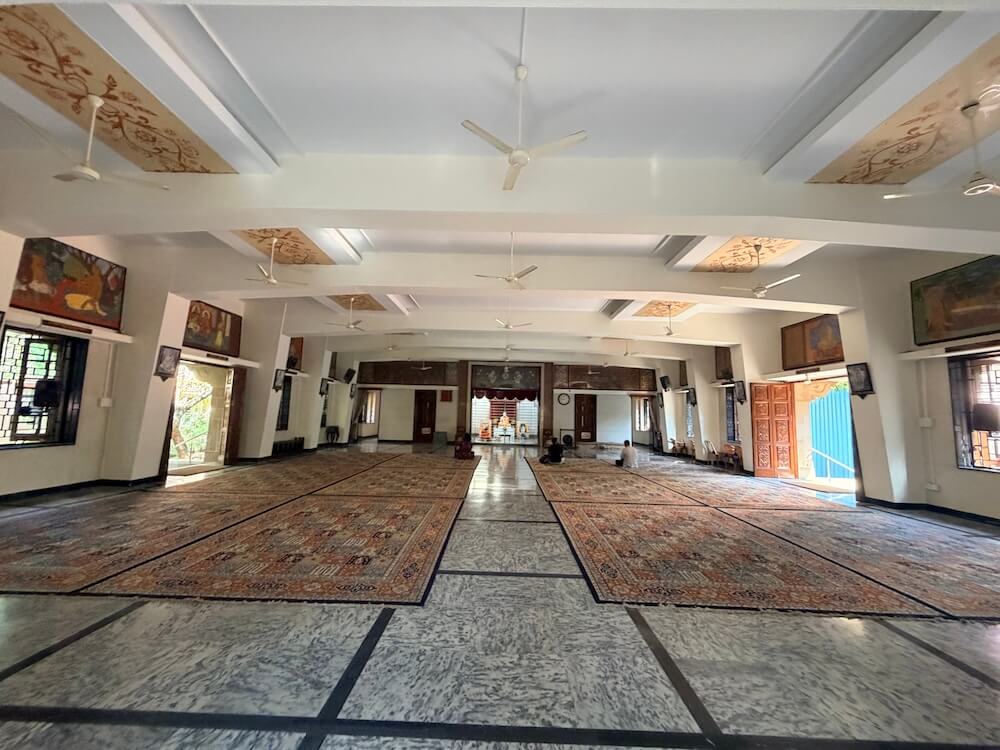
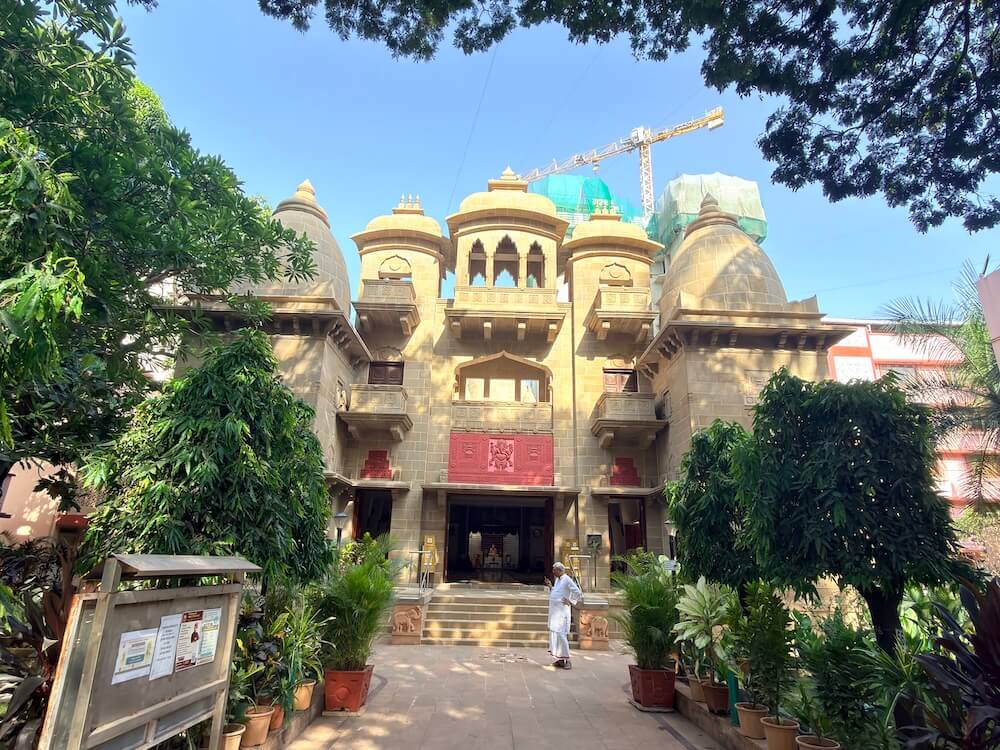
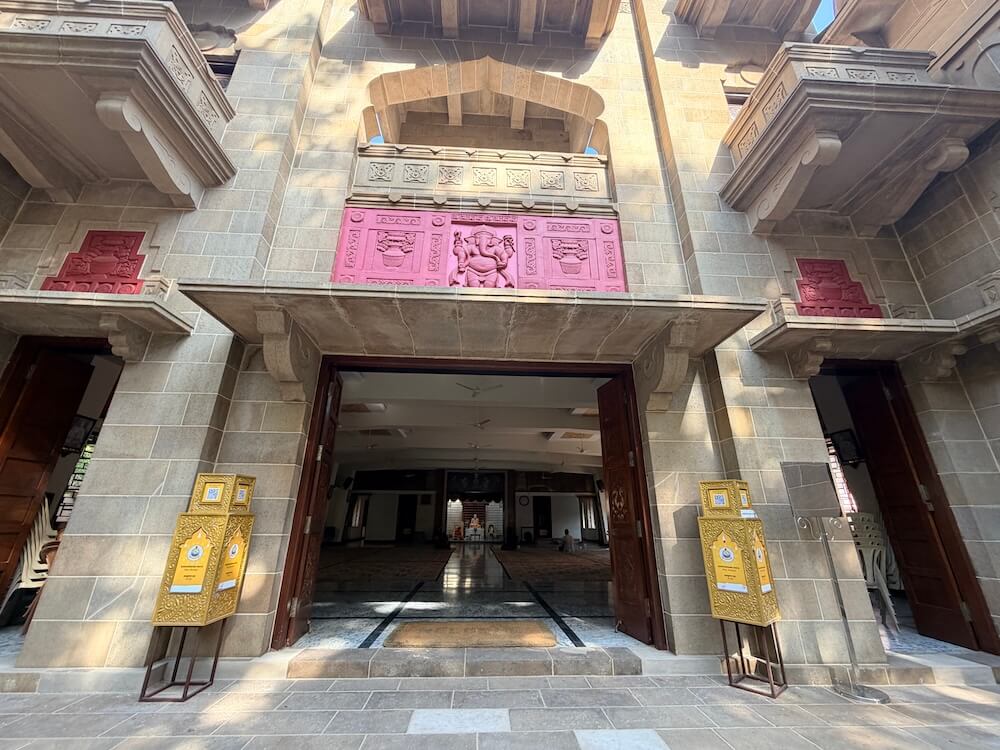
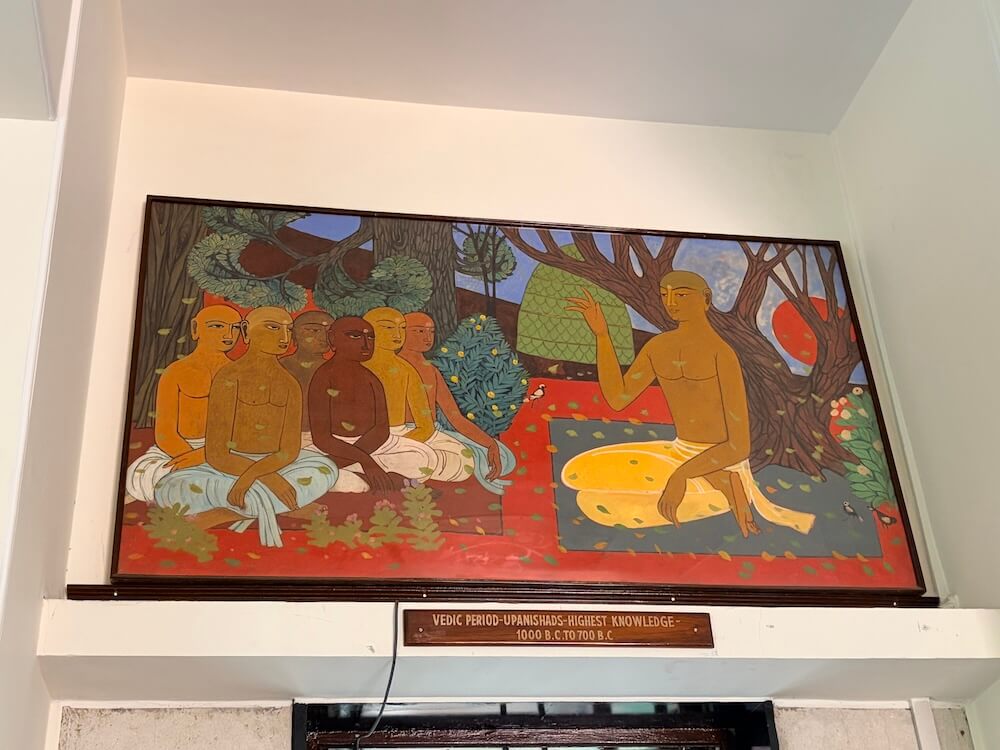
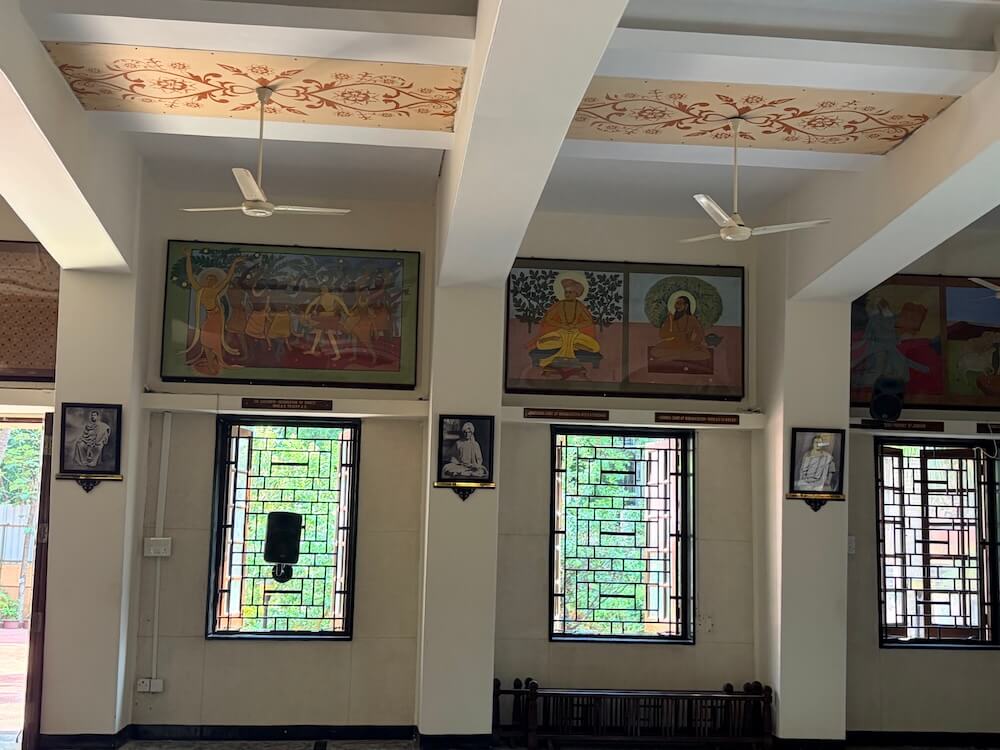
Following the ideals set by Ramakrishna Paramahansa and Swami Vivekananda for the service of Mother India, this Math was established on 18 February 1923 in a rented house in Santacruz. Just two years later, in the year 1925, the Math was relocated to its present site. On 27 June 1965, the magnificent building of this Math was inaugurated. The Math is situated in a sprawling campus adorned with various trees and gardens. The Math is enclosed by a high boundary wall. On the cement pillars of the iron entrance gate, there are two niches on either side. In one, a small marble idol of Ganesha is enshrined, while in the other, an idol of Hanuman is placed. Directly in front stands the grand stone edifice of the Math, which resembles a palace. On the roof of its facade, there are dome-shaped chhatris with a Rajasthani architectural influence. This structure is built upon a high plinth. One enters the sanctum of the Math by climbing six stone steps. Further ahead is the square, wide entrance of the Math, which leads into the spacious main hall. This hall is characterized by large windows, a bright atmosphere, and beautiful carpets on the floor. Portraits of various Swamis of the Ramakrishna Math are displayed in the hall. Along with these, several paintings depicting the journey of ancient Indian society and culture are also exhibited. Above the main entrance of the hall, on the inner wall, is a large mural of a banyan tree. On a plaque beside it, the words “Shmashaner buke amara ropan karechi panchavati tahari talay milaba amar jagatera shatakoti!” are inscribed. This means, “In the heart of the cremation ground, we have planted saplings of the Panchavati. Under their shade, we shall bring together a hundred crore people of this world.”
In the spacious sanctum located in the front, the idol of Ramakrishna Paramahansa is enshrined on a high marble altar. To the right of this idol, carved in marble and adorned in saffron robes, is the image of Sarada Mata, and to the left is that of Swami Vivekananda. Adjacent to this temple, which preserves beauty in simplicity and peace, is the Bhakta Niwas (pilgrim accommodation). A short distance from here, in the upper part of a large two-story building, is the temple of Sarada Mata. This temple was consecrated on 3 July 2012, on the auspicious occasion of Guru Purnima. After going upstairs via the staircase on the left, one finds a large platform built in the center of the terrace. Here, the marble idol of Sarada Mata is installed on a high altar. It is said that the sacred relics of Sarada Mata are kept here. Above this sanctum is a dome-shaped shikhara, topped with an amalaka and a kalasha bearing the Omkara symbol.
Devotees can seek darshan in this temple from 5:00 AM to 11:30 AM and from 4:00 PM to 8:30 PM. Aarti is performed in the temple every morning and evening. The morning aarti takes place at 5:00 AM. The evening aarti is held from 6:45 PM to 7:15 PM in winter and from 7:15 PM to 7:45 PM in summer. Ramnam Sankirtan is held here every evening at 6:00 PM from April to October and at 5:30 PM from November to March. People of all castes, creeds, and religions have free entry to this Math. The Durgotsav celebrated by this Math is a special attraction, particularly for the Bengali community in Mumbai. Durga Puja is performed here according to Bengali traditions. Thousands of Bengali and Maharashtrian devotees participate in this festival. On this occasion, various cultural programs are also organized. Apart from this, festivals like Ekadashi, Mahashivratri, and Ram Navami are also celebrated here in a religious manner. A grand charitable hospital is run by the Ramakrishna Math within the temple premises.
This sacred temple stands as a testament to deep spiritual devotion, ancient architectural grandeur, and rich local cultural traditions.
The sanctum sanctorum houses the divine idol consecrated according to ancient Vedic traditions, surrounded by serene courtyards and traditional temple architecture.
Navratri, Maha Shivratri, Annual Temple Jatra & Deepotsav
Compare and book flights, secure top-rated local hotels near the temple, hire reliable guides, and rent cars instantly.
Extend your pilgrimage by visiting other highly sacred temples located nearby.


Add ₹999 more to unlock FREE SHIPPING!
Your sacred cart is currently empty.
Shop Photo FramesFill in your delivery details below to place your order.
Add comment