
Add ₹999 more to unlock FREE SHIPPING!
Your sacred cart is currently empty.
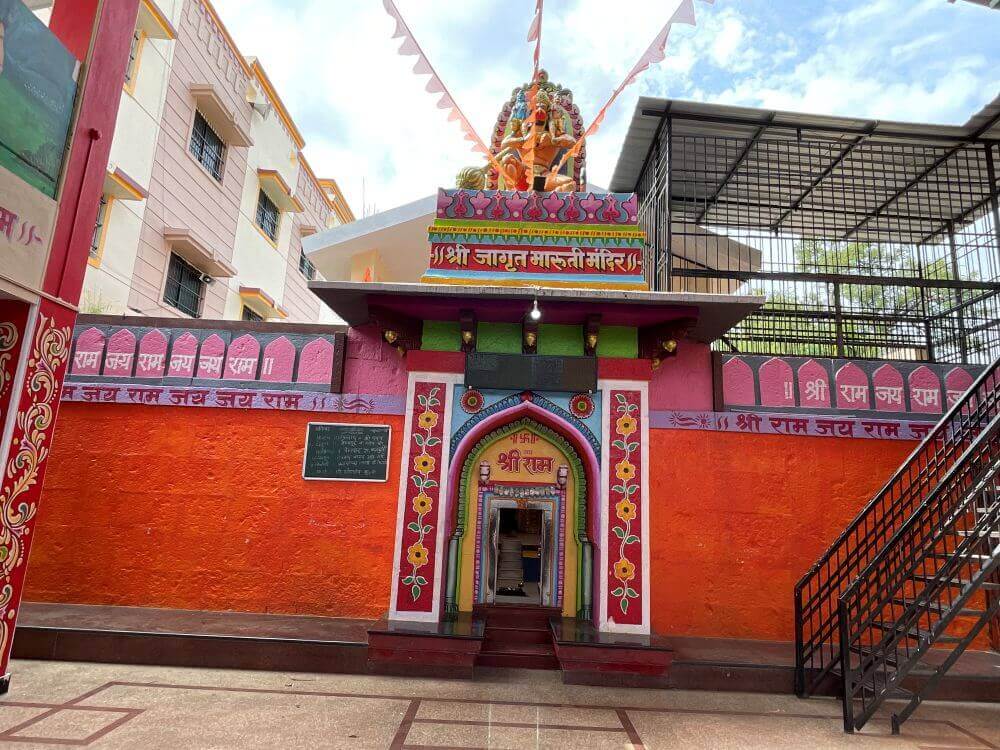
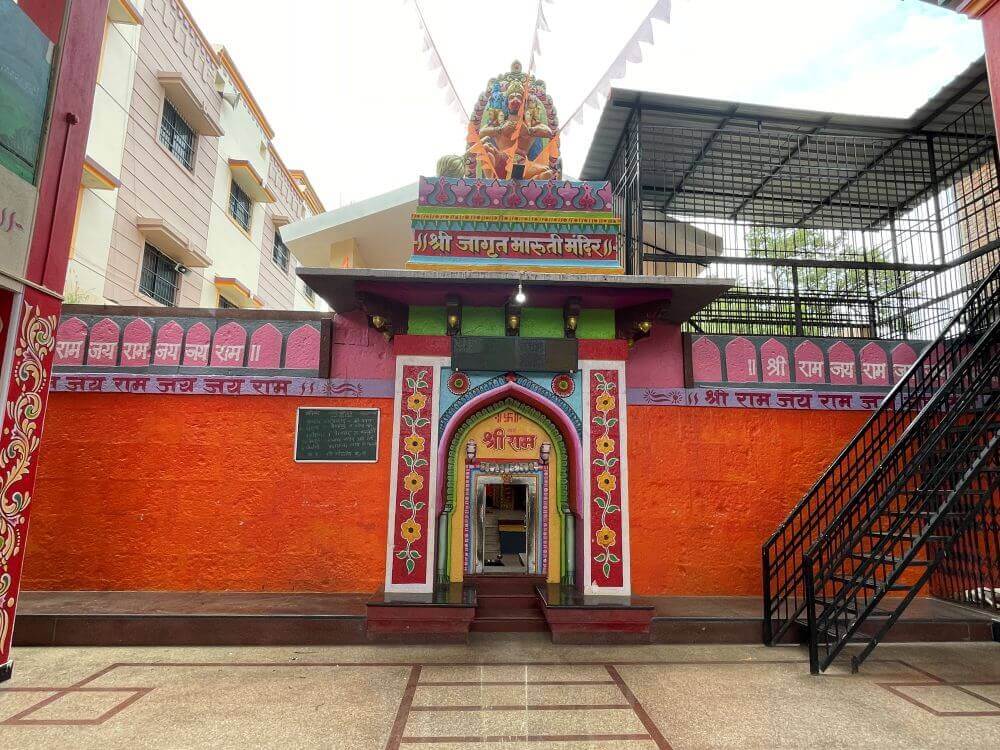
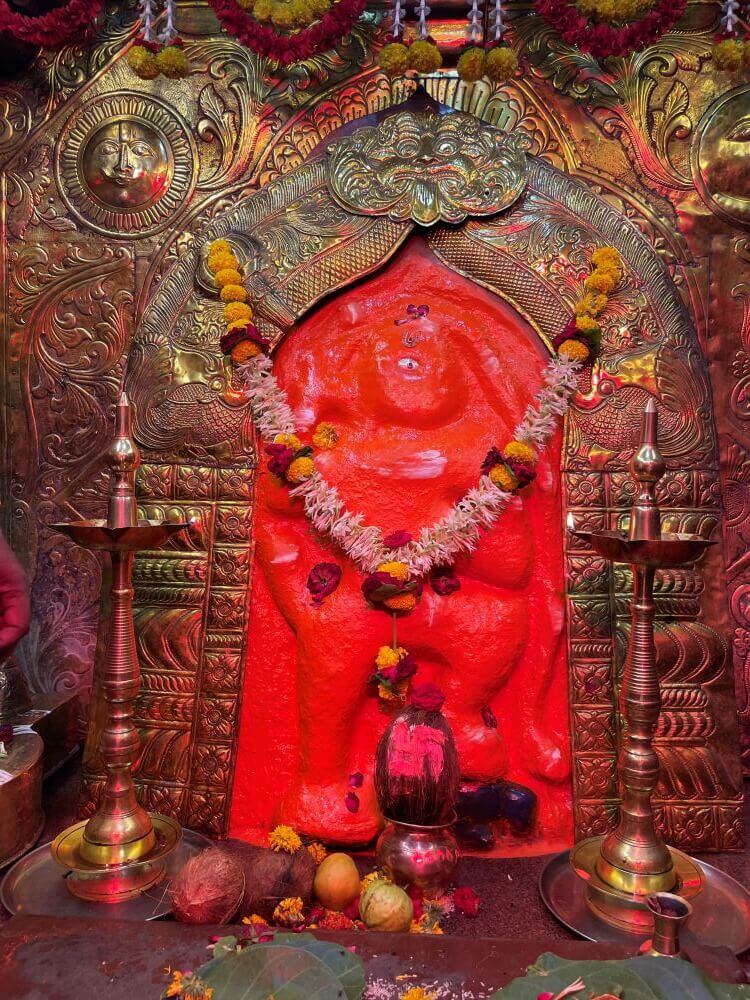
Shop Photo FramesHanuman, or Maruti, is one of the Saptachiranjivis (the seven immortals) and a deity of strength. Maruti is also looked upon as an ideal for learning how to become a true servant of the Lord through unparalleled devotion. Due to his heroic deeds, his devotees include people of all ages. To show society the path of worshipping strength, Samarth Ramdas Swami himself established Hanuman, or Maruti, temples at 11 locations. Similarly, inspired by him, countless Maruti temples were built in many places. One such temple is in Gaudgaon. The uniqueness of this south-facing and ‘Jagrut’ (awakened/manifest) Maruti is that he is depicted with a ‘Shendi’ (tuft of hair). An idol of Maruti with a Shendi is considered rare.
In the seventeenth century, Samarth Ramdas Swami brought about a religious revolution in society by considering Lord Shriram as his object of worship. ‘Balopasana’ (worship of strength) was an important part of the worship in his Samarth Sampradaya. Samarth Ramdas Swami considered Lord Shriram himself as his Guru, while Hanuman was his family deity. In one of his ‘Shatpadi’ (six-verse poems), Samarth said, “Hanumant amuchi kulvalli” (Hanuman is our lineage). He placed before society the ideal of the Ram-devotee Hanuman, who is the symbol of both strength and intellect. Samarth Ramdas Swami arrived in the Satara region in 1644 AD. He traveled along the banks of the Krishna River, visiting places like Masur, Shahapur, Umbraj, and Charegaon in the Karad taluka. It was in this region, during the ten years between 1644 and 1654, that he established these 11 Maruti shrines.
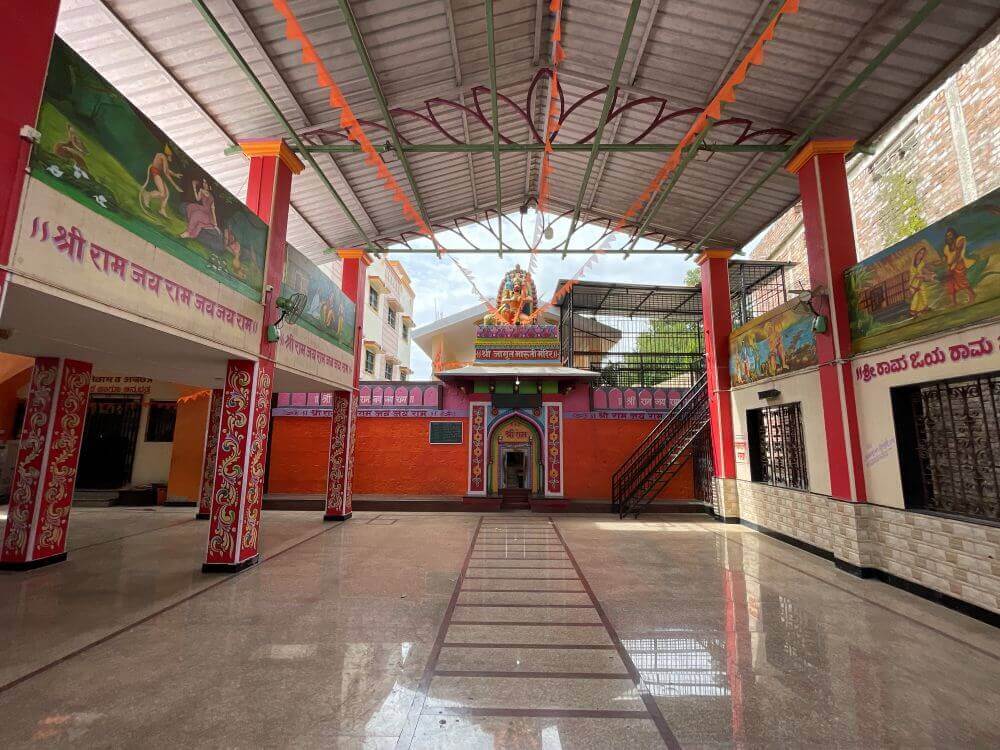
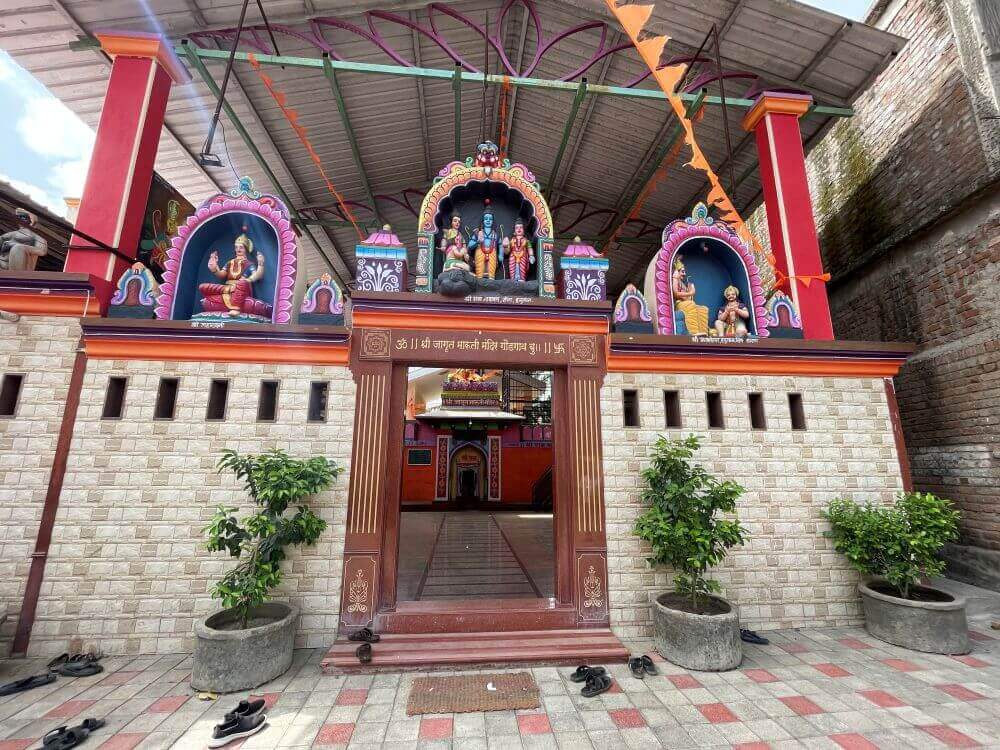
Samarth established 11 temples, including the Pratap Maruti and Das Maruti at Chaphal, as well as the Pargaon Maruti, Masur Maruti, Shahapur Maruti, Battis Shirale Maruti, Shinganwadi Khadicha Maruti, Manpadale Maruti, Majgaon Maruti, and Bahe Borgaon Maruti. Apart from these, it is a popular belief that Samarth also established Maruti idols at Takali, Sajjangad, Shivtharghal, Miraj, Mahabaleshwar, Wai, Tembhu, Shirgaon, Sinhagad, Thanjavur, and the famous Badrinath temple in the Himalayas. Locals believe that the Hanuman idol at the Gaudgaon temple was also installed by Samarth. This Jagrut Maruti temple is located in the center of Gaudgaon Bk. village. The temple is said to be 400 years old. There are two perimeter walls around this temple. One enters the temple courtyard through the gateway in the first wall. In the niche above this gateway are the idols of Shriram, Lakshman, Sita, and Maruti. To the right of this niche is the idol of Mahalakshmi, and to the left are the idols of Virbhadreshwar and Hanuman. A tin shed has been erected as a pavilion for the convenience of devotees from this gateway to the entrance of the second fortification. The entrance to the second fortification has pillars. Above the entrance, on the balcony, is a large idol of Maruti holding a mace. Shriram and Lakshman are seated on his shoulders.
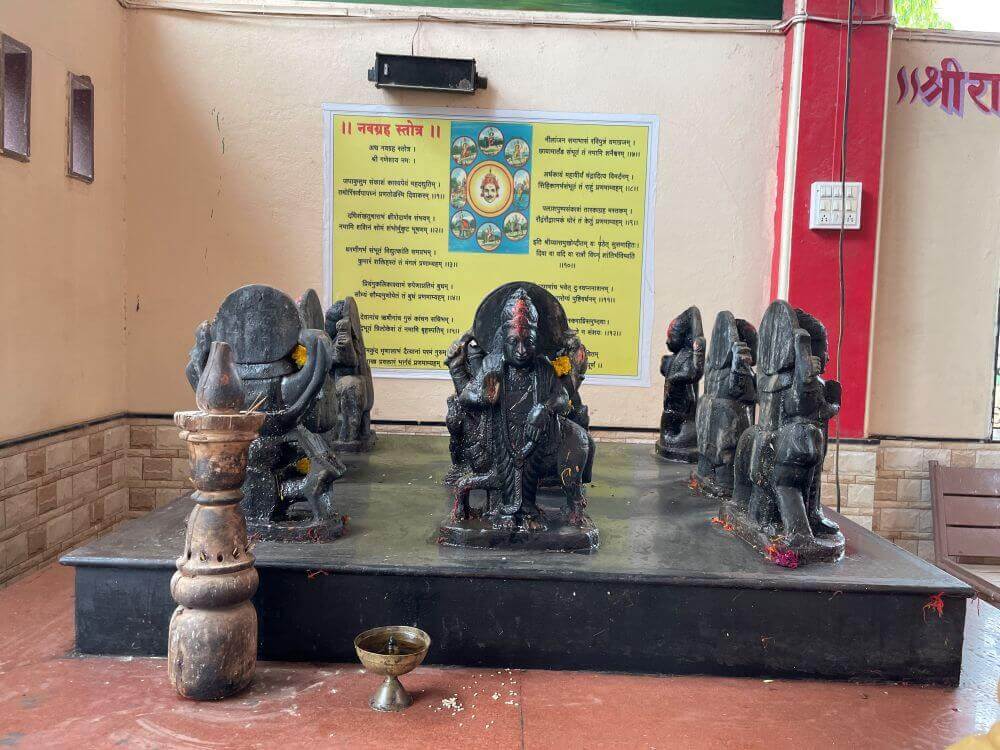
Through this entrance, one enters the main hall (Sabhamandap) of the temple. There are corridors on both sides of the hall. The stone walls here contain idols of the Navagrahas (nine planets). It is said that when Samarth Ramdas Swami was consecrating the Maruti idol, he had intended to install the Navagrahas in the courtyard in front of the idol, but it was not done at that time. The Trust Committee has fulfilled Samarth Ramdas Swami’s incomplete resolve by installing these idols. Ascending five steps from the Sabhamandap, one enters the Antarala (antechamber). A queue system has been arranged in the Antarala for the convenience of devotees. The entrance and door frames of the sanctum sanctorum are covered with brass sheets, featuring intricate carvings including peacock motifs. On the lintel of the entrance are the idols of Shriram, Lakshman, Sita, and Maruti. Inside the sanctum, the idol is on a Vajrapitha (diamond pedestal) and is smeared with vermilion. Since the face of the mace-bearing Maruti is turned to one side, only one eye is visible. The tail of the Shendi-wearing Maruti encircles his body. To the left of this idol is a Shiva Linga. The brass sheet surrounding the idol is intricately carved. The temple is built in the Hemadpanti architectural style.
Hanuman is considered an ‘Ichha-Devata’ (a deity who grants wishes). It is said that if a Hanuman temple faces south, it is even more ‘Jagrut’ (manifest). This temple in Gaudgaon is exactly that. Therefore, there is a crowd of devotees here on Tuesdays and Saturdays. To avoid the afflictions of Shani (Saturn), Hanuman is worshipped. For this reason, the number of devotees coming to this Jagrut Maruti temple is very large. The Hanuman Jayanti festival here is unique. Along with religious and cultural programs, wrestling matches are also organized during this festival. Special programs are also organized at this temple on Shani Amavasya. Devotees can take darshan of this Jagrut Maruti every day from 6 AM to 10 PM.
This sacred temple stands as a testament to deep spiritual devotion, ancient architectural grandeur, and rich local cultural traditions.
The sanctum sanctorum houses the divine idol consecrated according to ancient Vedic traditions, surrounded by serene courtyards and traditional temple architecture.
Navratri, Maha Shivratri, Annual Temple Jatra & Deepotsav
Compare and book flights, secure top-rated local hotels near the temple, hire reliable guides, and rent cars instantly.
Extend your pilgrimage by visiting other highly sacred temples located nearby.


Add ₹999 more to unlock FREE SHIPPING!
Your sacred cart is currently empty.
Shop Photo FramesFill in your delivery details below to place your order.
Add comment