
Add ₹999 more to unlock FREE SHIPPING!
Your sacred cart is currently empty.
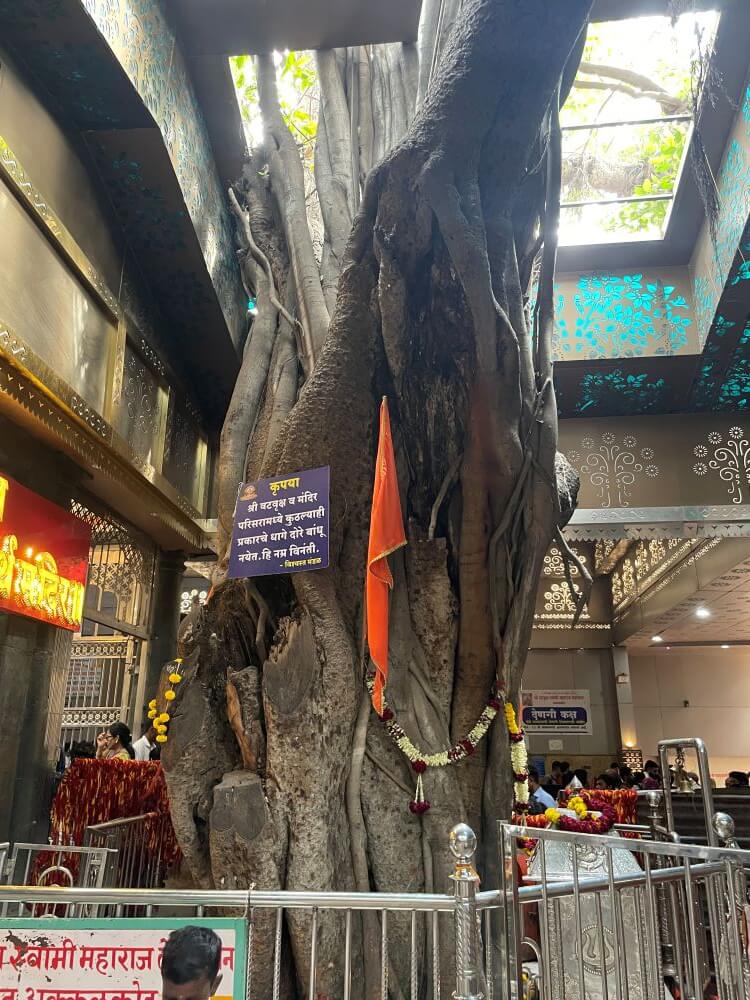
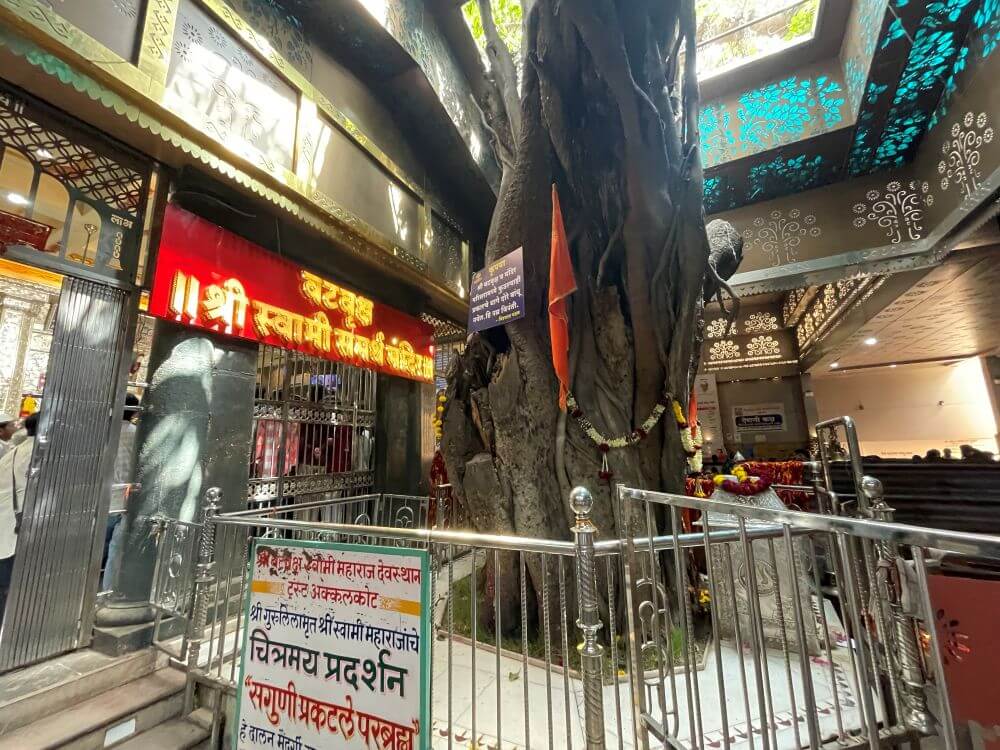
Shop Photo FramesThe worship of Dattatreya, described by the Puranas and Upanishads as the upholder of the Varnasrama Dharma, the ideal of the Guru principle, and the teacher of Yoga, has been practiced since ancient times. In the fifteenth century, due to the divine personality of Narasimha Saraswati, it took the form of a tradition (Sampradaya). Sripada Srivallabha is considered the first avatar of Dattatreya. Narasimha Saraswati is the second avatar, and Swami Samarth of Akkalkot is considered the third avatar of Dattatreya. The famous Vatavruksha (Banyan Tree) temple, located at the spot where He used to sit and meditate under a banyan tree in Akkalkot, is a place of faith for billions of devotees across the country.
The early life of Swami Samarth, in whom countless devotees have the faith that ‘Swami will make the impossible possible,’ remains unknown. In the ‘Shri Swami Charitra Saramrita,’ there is a legend that when the second avatar of Dattatreya, Narasimha Saraswati, concluded His incarnation in the year 1458, He went to the Kardali forest of Srisailam in Andhra Pradesh. He performed penance there for 350 years. During that time, an anthill formed around Him. One day, a woodcutter’s axe accidentally fell on this anthill. Swami Samarth appeared from that anthill. From there, He traveled via Calcutta, Jagannath Puri, and Kashi to the banks of the Godavari, and in the year 1838, He appeared in Mangalwedha. The text ‘Swami Lilamrita’ states: ‘In the year 1760, for the salvation of the world, Swami appeared in Mangalwedha as the direct avatar of Dattatreya.’ Thereafter, He manifested in Akkalkot on the Ashwin Shuddha Panchami of the year 1779 (1857). However, according to some, Swami appeared in Akkalkot on Chaitra Shuddha Dwitiya, April 6, 1856.
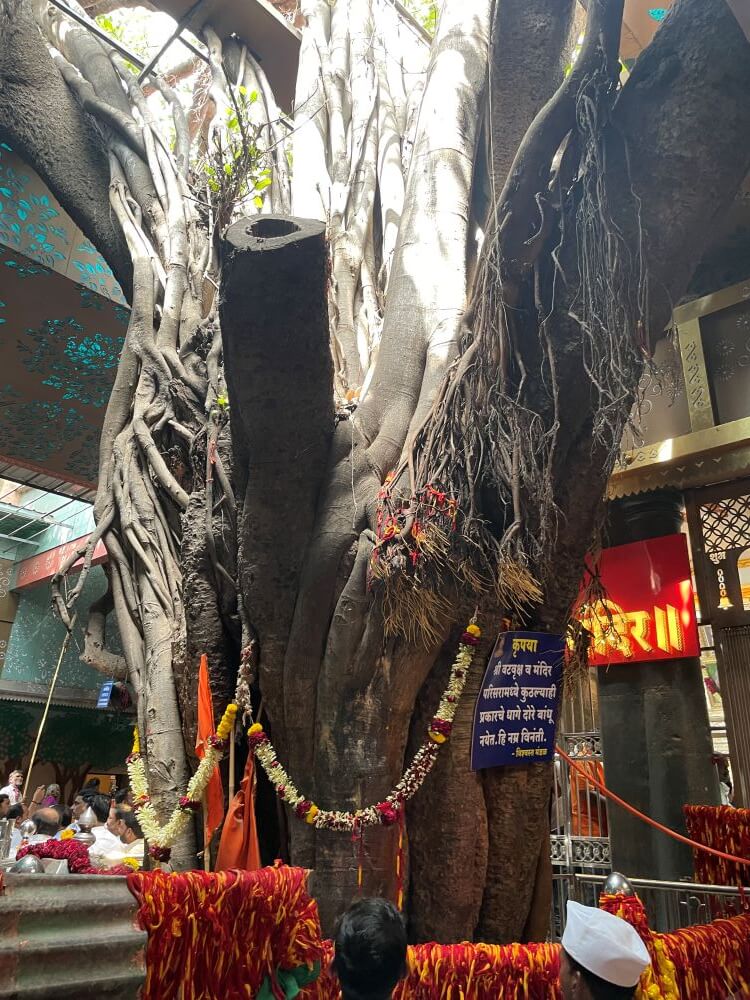
Information regarding Swami Samarth’s early life is unavailable. However, He once said, ‘We are Yajurvedi Brahmins. Our name is Narasimhabhan. Kashyapa Gotra. Our zodiac sign is Pisces…’ During His lifetime, He blessed many. Through the assurance, ‘Do not fear, I am behind you,’ He gave courage to many. His promise was, ‘I myself bear the burden of those who worship Me with single-minded devotion.’ Swami Samarth avoided rituals and superstitions, teaching common people the glory of chanting the Divine Name. He resided in Akkalkot for about 20 years. For much of that time, He sat under this banyan tree, meditating and preaching to devotees. He performed many divine plays (Leelas) under this tree. Many stories of His miracles and experiences are told. He resolved the problems and sorrows of many devotees while sitting right here. In the year 1878, on Chaitra Vadya Trayodashi, He took Samadhi here. Devotees believe that Swami still dwells here in a conscious form and that the experience of His words, ‘I have not gone, I am alive,’ is felt here. This banyan tree, which enjoyed the proximity of Swami, stands proudly here. A temple was later built near this very banyan tree. It is known as the Vatavruksha Swami Maharaj Devasthan.
The construction of the current Vatavruksha temple was carried out by Swami’s disciple, Jotiba Pande. Jotiba served Him for 15 years while Swami was present and for 41 years after His Samadhi. Before Swami took Samadhi, Jotiba asked Him, ‘What will happen to me?’ To this, Swami replied, ‘You hold onto the roots of the banyan tree. I am always under the banyan tree. As soon as you remember Me, I am near you.’ Accordingly, Jotiba served Swami continuously. Swami’s temple is adjacent to the banyan tree. The idol of Jotiba is also present here along with Swami. The temple structure consists of a Sabha Mandap (assembly hall) and a Garbhagriha (sanctum sanctorum). It is the custom to visit the banyan tree before having the Darshan of Swami.
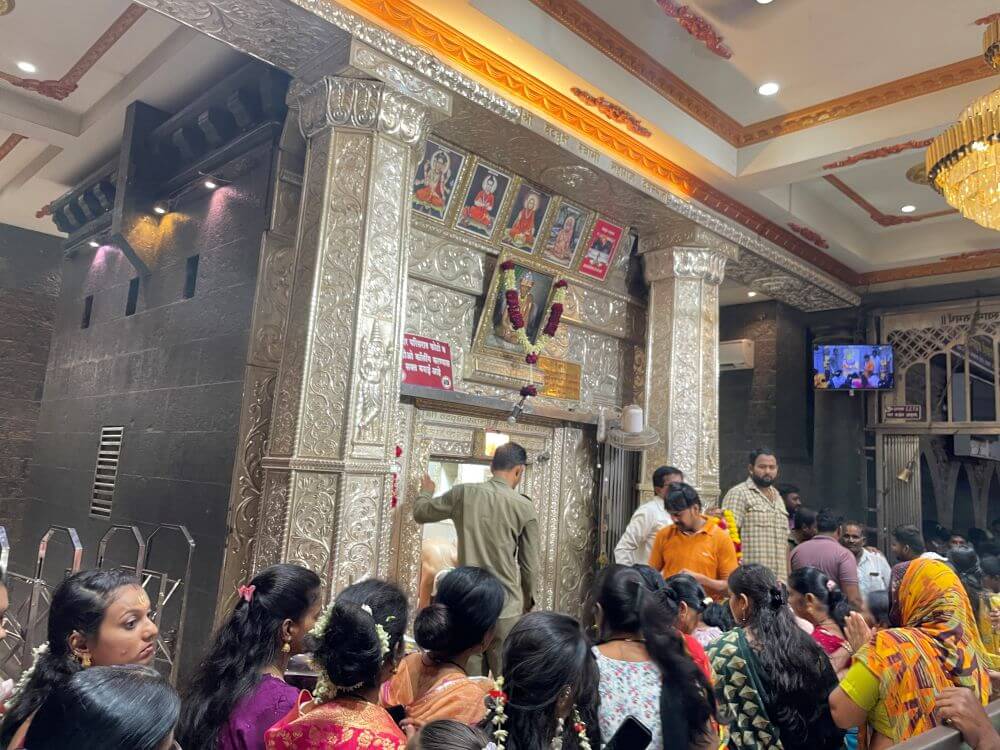
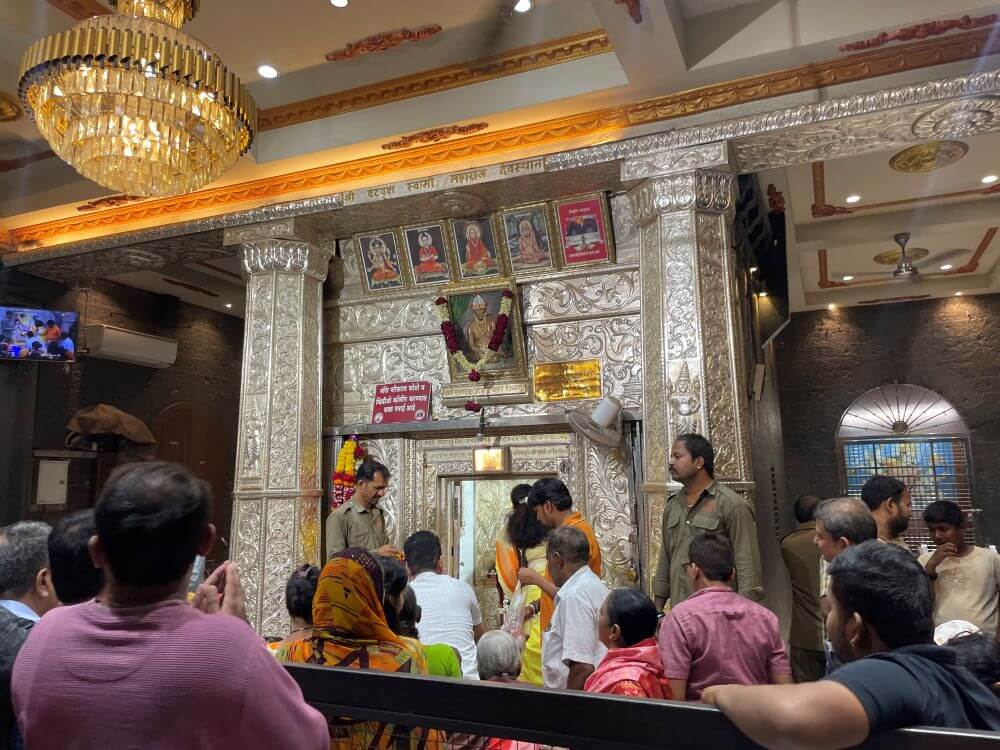
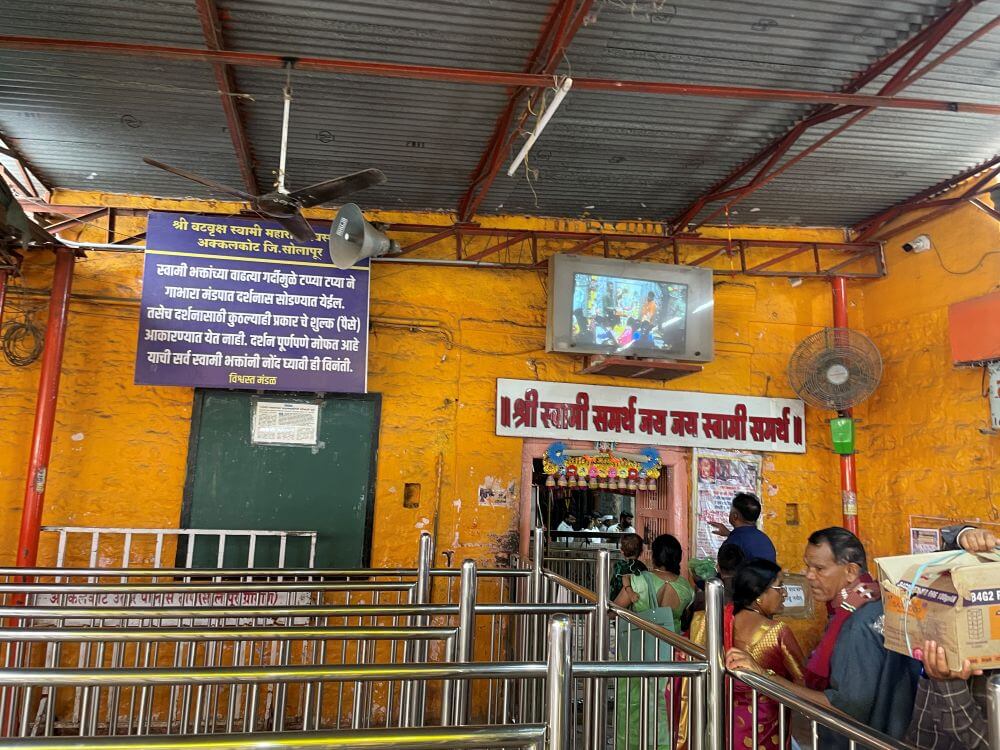
In the Sabha Mandap, there is an arrangement of a queue for the convenience of devotees. From here, one can have the Darshan of Swami Samarth’s Samadhi in the Garbhagriha. The entrance of the stone-built Garbhagriha and the two pillars beside it are covered with silver sheets. These pillars are carved with images of gatekeepers and floral designs. The door frames of the entrance are also intricately carved. At the lintel, there is an idol of Ganpati, and above it is a large image of Swami Samarth. Above this image, four portraits are placed: Shri Dattatreya, Sripada Srivallabha, Narasimha Saraswati, Swami Samarth, and the Nirguna Padukas of Swami Samarth. In the Garbhagriha, on a silver pedestal, lies the Samadhi of Swami Samarth, topped by a white marble idol of the Maharaj.
In the temple adjacent to this Garbhagriha are the Padukas (footprints) and an idol of the Maharaj. It is the experience of devotees that when one places their ear to these Padukas, the sounds of many musical instruments can be heard. Nearby is Swami’s Shejghar (resting chamber). It contains Swami’s bed and many of His belongings. The museum located here provides a pictorial view of Swami’s life. Many old photographs of Swami can be seen in this museum. In front of the main temple is the Jotiba Mandap. Parayans (recitations) and discourses are organized in this hall. In the Mandap premises, there is a unique image of Swami Samarth made by devotees from Jogeshwari, Mumbai, using 40,000 five-faced Rudrakshas.
Many festivals are celebrated throughout the year at the Vatavruksha Swami Maharaj Devasthan. These include Swami Samarth Prakat Din, Punyatithi, Vatpournima, Gurupournima, Kojagiri Pournima, Sripada Vallabha Punyatithi, Dnyaneshwar Maharaj Punyatithi, Dattajayanti, Narasimha Saraswati Jayanti, Gurupratipada, Ramdas Navami, Mahashivratri, and Tukaram Beej as the main festivals. Apart from these, Shri Ramnavami, Hanuman Jayanti, Gokulashtami, and Navratri festival are also held here. During the Swami Samarth Prakat Din festival, there is a cradle ceremony and a procession (Palkhi). Millions of devotees come to this temple for Darshan during these festivals. Thousands of devotees also visit every Thursday. Devotees can visit the temple and have the Darshan of Swami Samarth daily from 5:15 AM to 10:00 PM. Daily rituals include Kakad Aarti from 5:00 AM to 5:15 AM, Abhishek from 7:30 AM to 9:30 AM, Naivedya Aarti from 11:30 AM to 11:45 AM, and Shejarti from 7:45 PM to 8:45 PM. The temple committee provides free meals to visiting devotees in the Annachhatra every afternoon and night.
This sacred temple stands as a testament to deep spiritual devotion, ancient architectural grandeur, and rich local cultural traditions.
The sanctum sanctorum houses the divine idol consecrated according to ancient Vedic traditions, surrounded by serene courtyards and traditional temple architecture.
Navratri, Maha Shivratri, Annual Temple Jatra & Deepotsav
Compare and book flights, secure top-rated local hotels near the temple, hire reliable guides, and rent cars instantly.
Extend your pilgrimage by visiting other highly sacred temples located nearby.


Add ₹999 more to unlock FREE SHIPPING!
Your sacred cart is currently empty.
Shop Photo FramesFill in your delivery details below to place your order.
Add comment