
Add ₹999 more to unlock FREE SHIPPING!
Your sacred cart is currently empty.
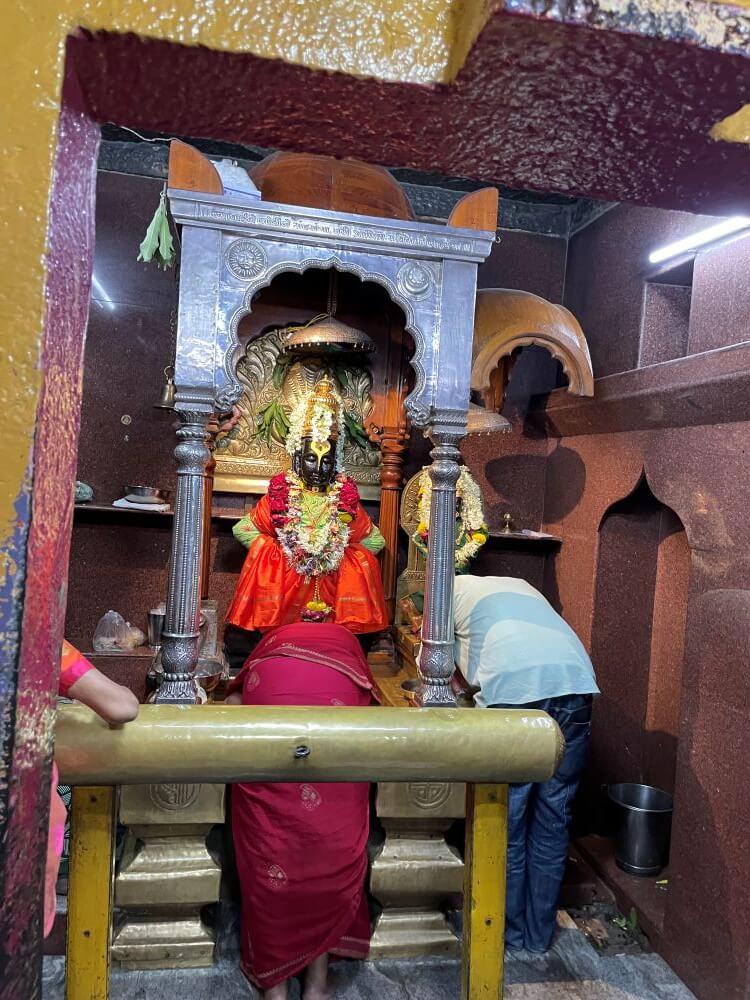
Shop Photo FramesThe Takpithe Vithoba Temple is located near the Vitthal Temple of Pandharpur, the presiding deity of all Maharashtra. Although the temple is simple and small, there is a remarkable resemblance between the idol of Vithuraya here and the idol in the main temple. During the Ashadhi Ekadashi pilgrimage, there is a massive crowd at the main temple, making it difficult for everyone to have darshan of Vithoba there. Consequently, many devotees seek darshan of Takpithe Vithoba. This temple narrates the unique story of the bond between a simple female devotee who lovingly fed Vithuraya ‘Takpith’ (buttermilk and flour) and Vithoba, who, pleased by her devotion, came to her very doorstep.
The legend of the temple states that Ramabai from Paithan city was married into the Mahajan family residing in Pandharpur. She had a deep love for devotion to Vitthal from the beginning. Having arrived in the city of Vithuraya himself, she was able to have darshan of Vithuraya every day. She would carry butter from her home for Vithuraya daily. It is said that Vithuraya would eat the butter she brought with his own hands. (Since then, even today, there is a tradition of offering a lump of butter to the Vitthal in the main temple every morning.) Her husband, Namdev, saw Ramabai leaving with butter from the house every day; angered, he left directly for Kashi to take Sannyas. It was the custom in their household that a wife should not eat until her husband had eaten. As a result, Ramabai began to observe fasts. For many days, she had not even eaten a grain of food.
As days passed, Ramabai’s health began to deteriorate. Seeing her condition, Vithuraya became restless. He took the form of a small child and went to Ramabai’s doorstep, saying, “Mother, I am very hungry, give me something to eat.” At that time, there was only stale buttermilk and flour made of parched grains in her house. She mixed these, placed them in a stone vessel, and held it before the child. However, the child said that he would only eat if she fed him the flour with her own hands. Ramabai yielded to the child’s insistence and brought the ball of flour near the child’s mouth. At that very moment, she saw the divine form of Vithoba in the child. Realizing that Vithoba himself, for whom she went to the temple every day, had come to her doorstep, her joy knew no bounds. She fed Vithoba the Takpith with her own hands and prostrated at his feet. Vithoba asked her to look towards the door. Her husband, Namdev, was standing there. Seeing this entire spectacle, Namdev held Ramabai’s feet and apologized. Thereafter, both of them had darshan of Vithoba and requested that the Lord stay here forever and eat the Takpith from her hands. Vithoba agreed to reside here in a partial form. Since then, this Vithoba has been famous as Takpithe Vithoba.
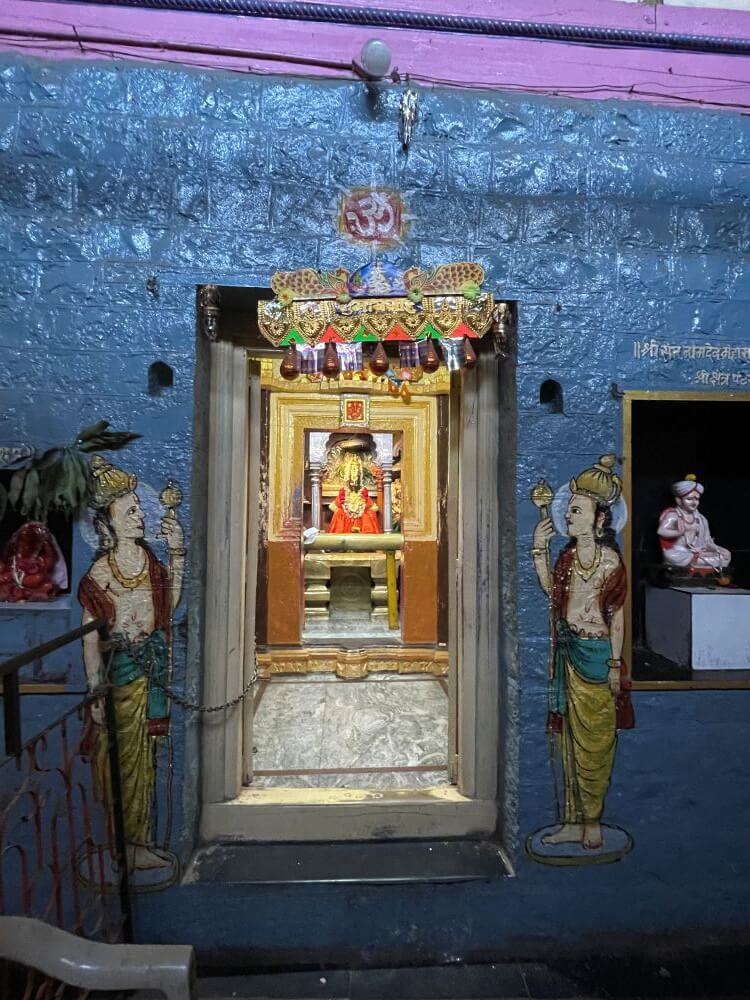
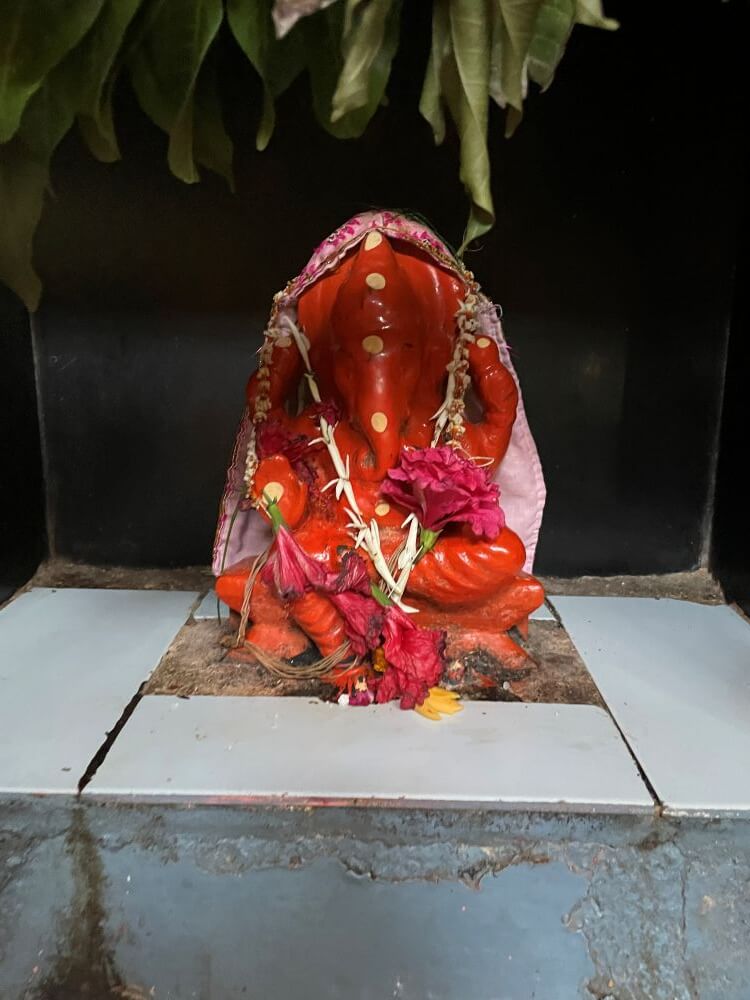
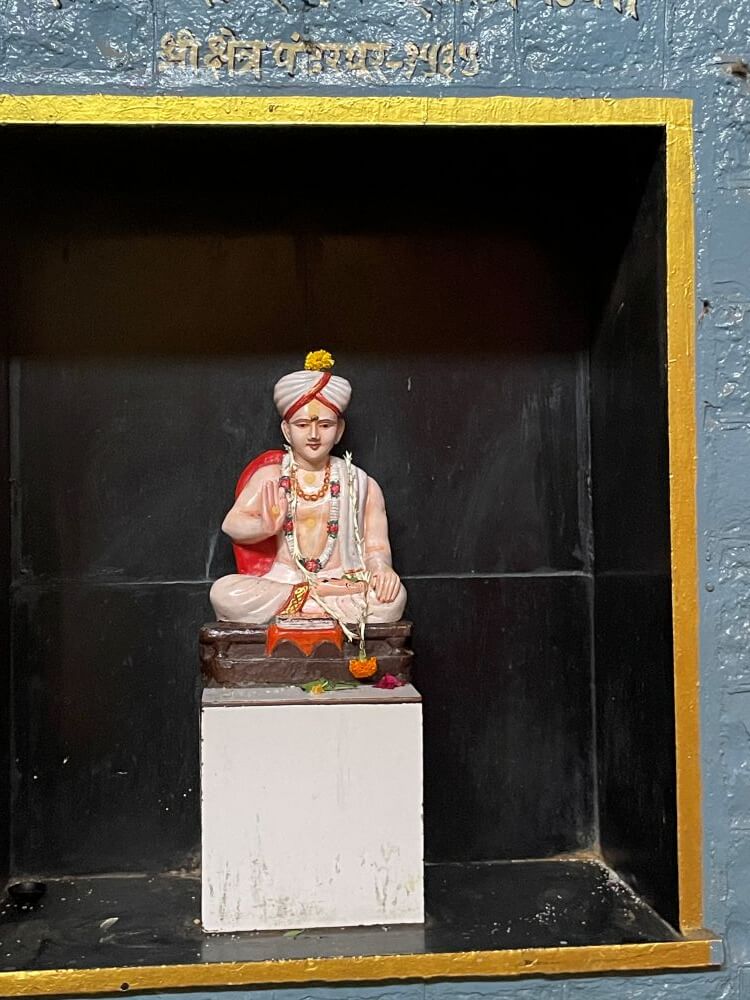
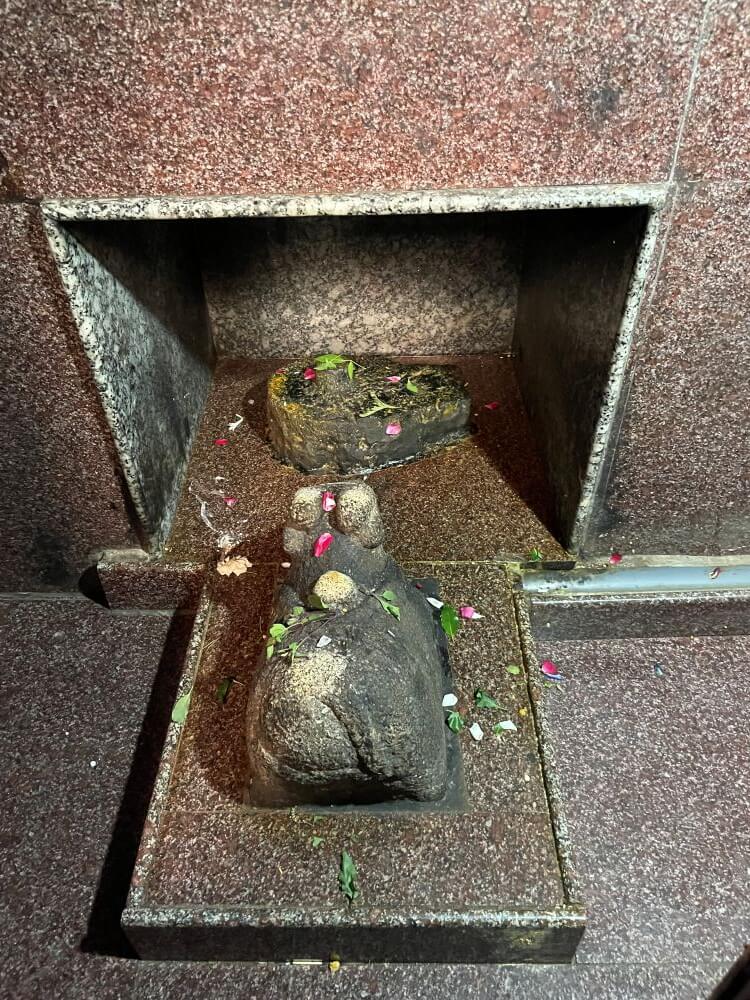
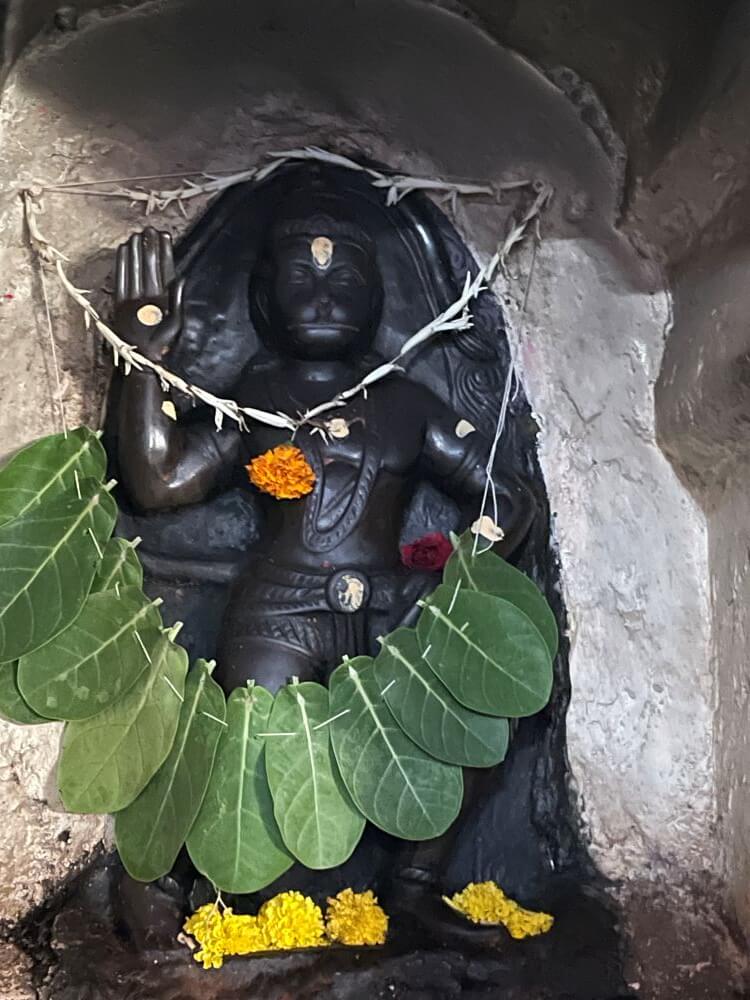
The Takpithe Vithoba Temple is located near the western gate of the Vitthal Temple in Pandharpur. The place where this temple stands was formerly the Mahajan Wada, which has been converted into a temple. The entrance of this temple is like an old mansion. There are stone platforms on both sides of the temple entrance with guardian sculptures. At the base of the door frame is a Kirtimukh, and at the lintel is an idol of Ganpati. The entrance of this two-story temple has carvings of Nagas on the brackets. The temple structure consists of a Sabha Mandap (assembly hall), Antaral (vestibule), and Garbhagriha (sanctum sanctorum). Upon entering the Sabha Mandap from the entrance, one sees a stone Nandi and a Shiva Linga in front. In the Sabha Mandap, on a large pedestal, there are three shrines: Saint Ramabai in the center, Maruti on the right, and a Vishnu-form idol on the left. All three idols are made of black stone. In this stone and wooden structure, there are niches in various places containing idols of Ganpati, Saint Dnyaneshwar, Nrusimha, Shri Dattatreya, and other deities. The Sabha Mandap has wooden pillars and a balcony above them.
There are paintings of gatekeepers on both sides of the entrance to the Antaral. One enters the Garbhagriha from the Antaral. The entrance to the Garbhagriha has pillar branches on the sides. The lower part of these pillar branches is flat, and the upper part has some artistic work. At the lintel of the entrance is an idol of Ganpati, and above it, on the upper frame, is an ornate arch sculpture. In the Garbhagriha, on a high pedestal, inside a shrine, is the black stone idol of Vithoba and an idol of Rukmini beside it. Both these idols are adorned with crowns, garments, and jewelry. The idol of Vithoba here appears similar to the idol in the main temple of Pandharpur. There is an inscription in this temple: ‘Shri Vitthaldev Rukminivallabh Shake 1540 Kalayukt Nama Samvatsare Ashwan Sudh Padiva Ovori Sampurna.’ According to this, the Shri Vitthal idol here was in the basement sanctum. The work on the gallery where the inscription is written was completed in Shake 1540, i.e., 1618 AD.
Daily rituals are performed in this temple just as in the main Vitthal temple. These include Kakad Aarti at 5 in the morning, Dhuparti at 7 in the evening, and Shejarti at 9 at night. On the Shukla Ekadashi of every month, Kirtans are organized here, and during Chaturmas, Bhagavata Katha is organized from 4 to 5 in the evening. A Bhagavata Saptah is also held in the month of Bhadrapada. From the Ashwin Vadya Dwitiya, a Harinam Saptah is organized here in memory of Haribhau Mahajan. Apart from this, festivals like Krishna Janmashtami and Datta Jayanti are also celebrated with enthusiasm. Devotees can have darshan of Takpithe Vithoba in this temple every day from 5 in the morning to 12 in the afternoon and from 4 in the evening to 10 at night. During the period of Ashadhi and Kartiki Wari, the temple is open for devotees from 5 in the morning to 10 at night.
This sacred temple stands as a testament to deep spiritual devotion, ancient architectural grandeur, and rich local cultural traditions.
The sanctum sanctorum houses the divine idol consecrated according to ancient Vedic traditions, surrounded by serene courtyards and traditional temple architecture.
Navratri, Maha Shivratri, Annual Temple Jatra & Deepotsav
Compare and book flights, secure top-rated local hotels near the temple, hire reliable guides, and rent cars instantly.
Extend your pilgrimage by visiting other highly sacred temples located nearby.


Add ₹999 more to unlock FREE SHIPPING!
Your sacred cart is currently empty.
Shop Photo FramesFill in your delivery details below to place your order.
Add comment