
Add ₹999 more to unlock FREE SHIPPING!
Your sacred cart is currently empty.
Shop Photo FramesThere are nine sacred tirthas (holy water bodies) in Pandharpur, a place considered even more supreme than Vaikuntha. In the Chandrabhaga River, in front of the Pundalik Temple, lies the Lohadand Tirth; near the Haridas Gate is the Kundal Tirth; and near Gopalpur are the Sangam Tirth, Venu Tirth, and Gunja Tirth. One kilometer away from Gopalpur is the Yam Tirth, and eight kilometers from the Vitthal Temple is the Panchganga Tirth, where the five rivers Tunga, Sati, Suni, Kirti, and Bhringari converge. To the south of the Pundalik Temple is the Vishnupad Tirth, and to the west of the Vitthal Temple lies the Padmatirth, which houses the famous temple of Goddess Padmavati.
This temple of Goddess Padmavati is situated within a lake. An inscription on the floor of the temple’s assembly hall (sabhamandap) states that the lake and the temple were constructed by Sardar Yashwantrao Pawar in the year 1778. According to legend, when Lord Mahadev and Goddess Parvati were traveling on Nandi to have darshan of Lord Vitthal, Parvati became thirsty. Mahadev struck the ground with his trident, creating the lake from which the Ganga emerged. Parvati drank the water from this tirth to quench her thirst and sat there to rest. Due to the beautiful lotus flowers in the lake, it came to be known as Padmatirth and the Goddess as Padmavati.
Another legend associated with this tirth is that Nivruttinath, Dnyandev, Sopan, and Muktabai set out on a pilgrimage to enlighten Namdev. Lord Pandurang came to this tirth to see them off, and it was here that He placed Namdev’s hand into Dnyaneshwar’s hand. This tirth is also mentioned in the Kakar Aarti composed by the saint-poet Kanha Haridas.
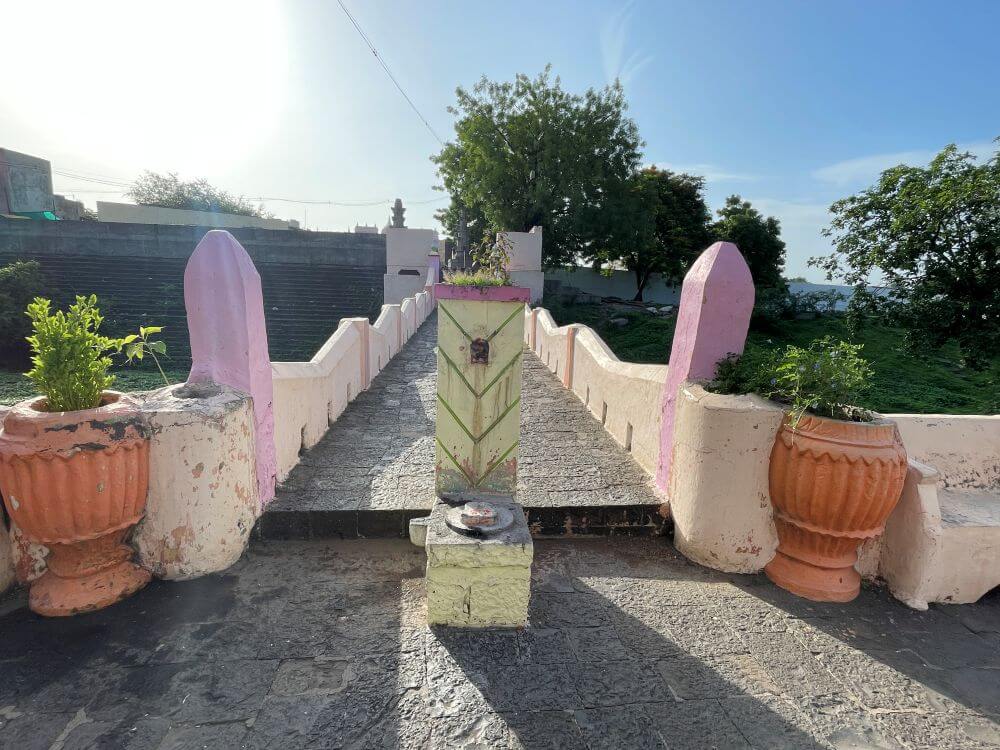
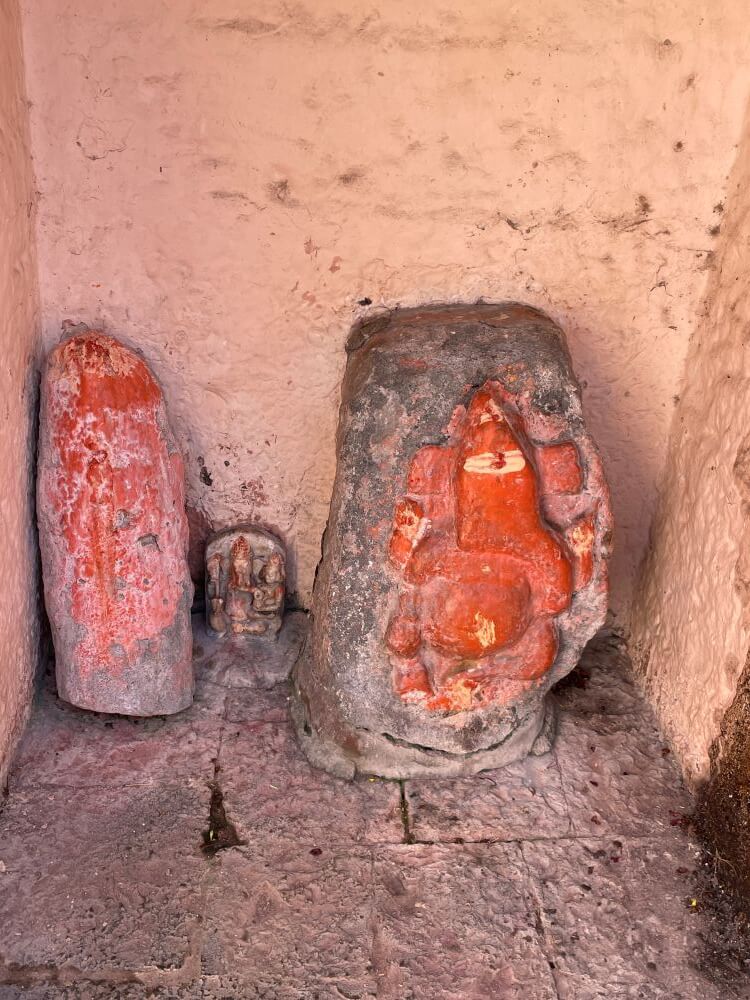
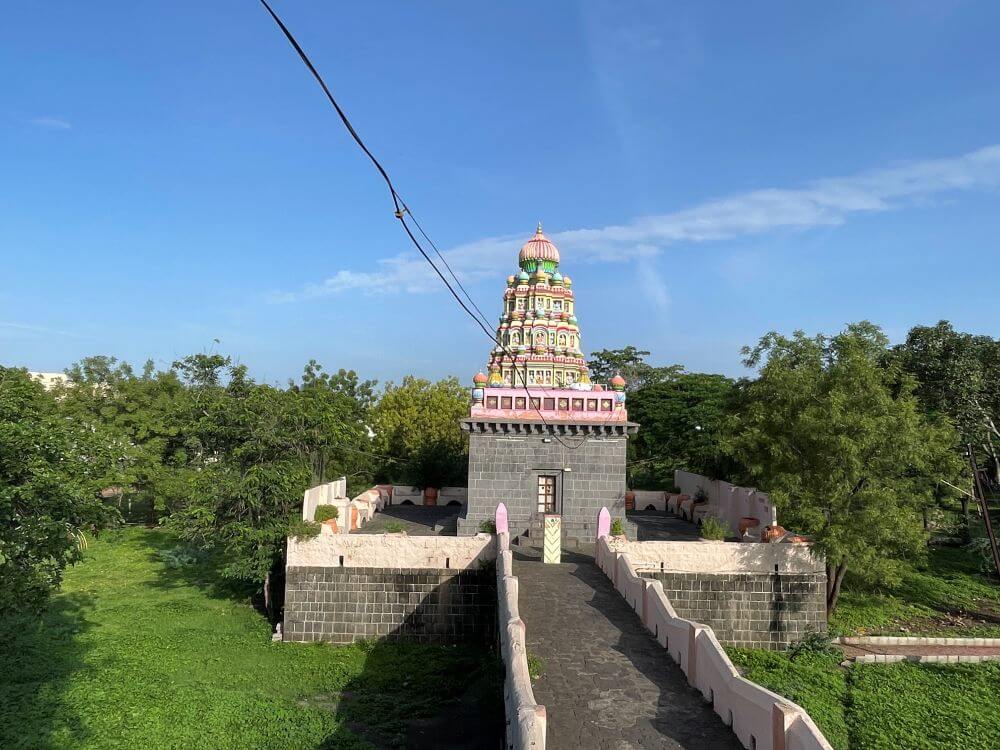
The area to the west of the Vitthal Temple was once a hill, but due to extensive construction over time, the hill no longer exists. In the vast, flat ground here lies the lake known as Padmavati Tirth. There are steps on all four sides to descend into the lake. In the center of the lake, on a high platform, stands the temple of Goddess Padmavati. A stone bridge connects the bank of the lake to the temple. At the starting point of the bridge, there are two pillars on both sides with latticed gates. On either side of these pillars are two small shrines; the one on the left houses a Shiva Linga, and the one on the right houses an idol of Lord Ganesha. On the bank of the lake, in front of the bridge, there are octagonal lamp towers (deepmalas) on two platforms on the left and right sides. Since the bank of the lake is higher than the bridge, there are steps to descend onto the bridge. The bridge and the temple platform are enclosed by safety railings. Large earthen pots (ranjans) are placed within the safety railings around the temple; it is said that these were designed to prevent floodwaters from entering the temple.
The temple structure consists of an assembly hall (sabhamandap) and a sanctum sanctorum (garbhagriha). One enters the assembly hall through the main entrance after climbing three steps from the courtyard. The lintel of this entrance features an image of Ganesha, and the architrave features a Kirtimukh. The entrance has ornate wooden doors. In the center of the tiled floor of the assembly hall, there is a circular inscription raised about four inches from the ground. According to this inscription, Sardar Yashwantrao Pawar constructed the lake and the temple on the day of Vaishakh Shuddha Panchami in 1778 and dedicated it to Goddess Padmavati. The enclosed assembly hall has two additional doors on the left and right sides.
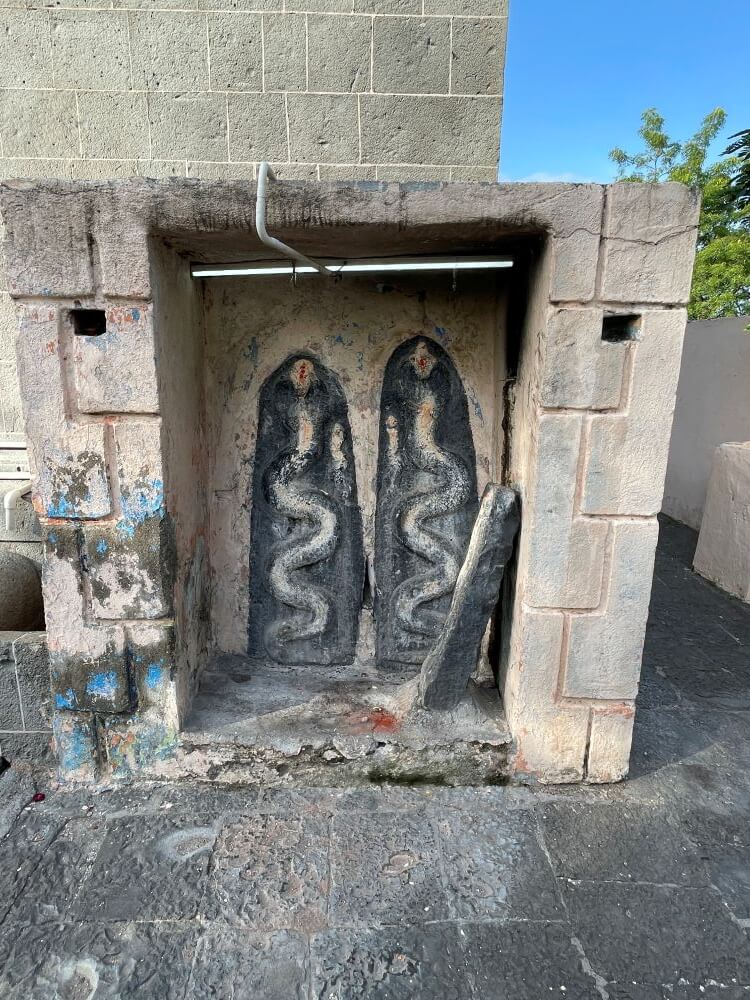
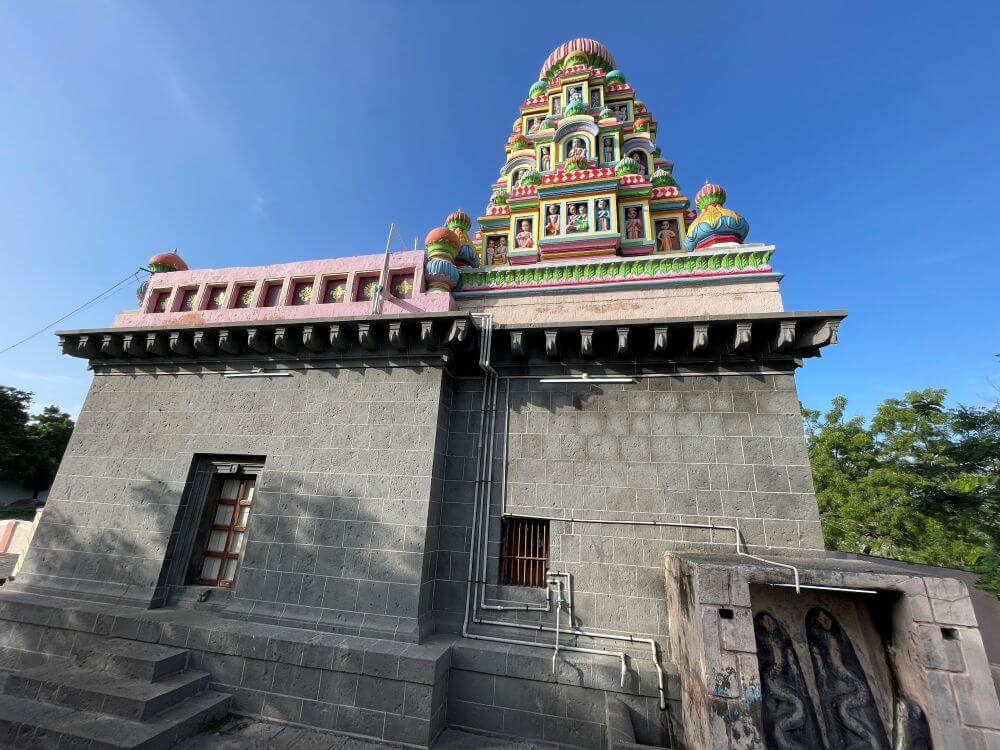
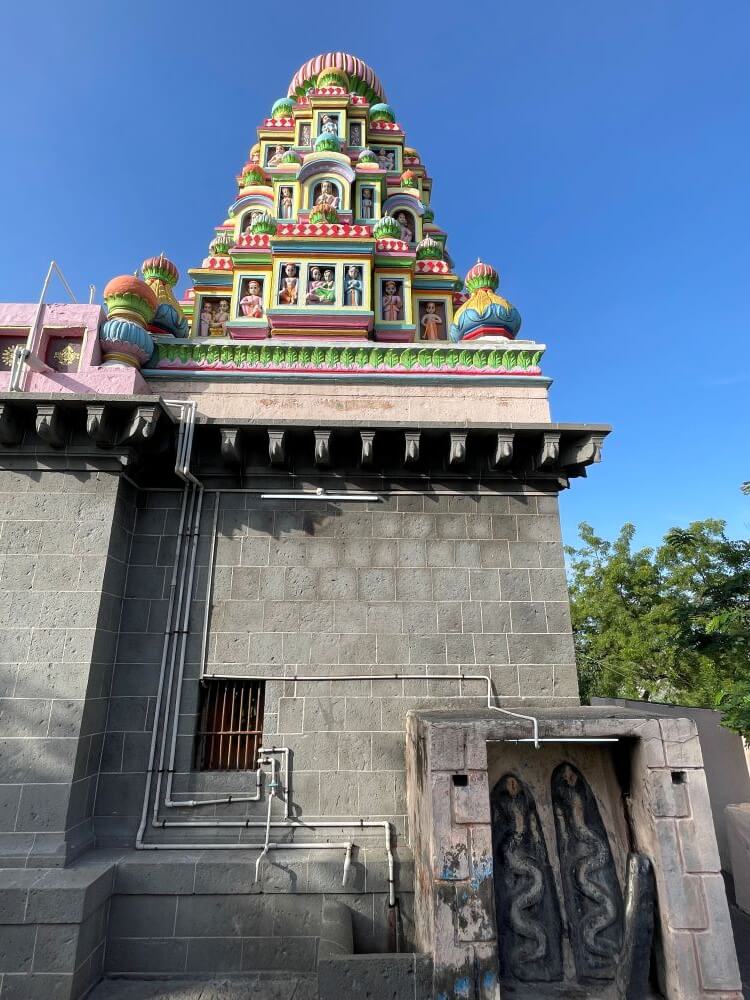
Further ahead is the entrance to the sanctum sanctorum, which is designed similarly to the entrance of the assembly hall. The sanctum has ventilators for light and air. The ceiling of the sanctum is supported by walls, and brass bells are hung from it. Inside the sanctum, on a diamond-shaped pedestal (vajrapitha), is the vermilion-smeared idol of Goddess Padmavati in the form of a stone (tandala), housed within a stone shrine with four ornate pillars. The idol is adorned with various garments and ornaments, and the Goddess is decorated with flowers daily. The roof of the temple has safety railings on all four sides. At the four corners of the railings are stacked amalakas topped with kalashas. The roof of the sanctum features a four-tiered square shikhar in the Dravidian style. Each tier of the shikhar contains about twenty niches (devkosthas) housing idols of various deities. All these niches are topped with dome-shaped roofs, amalakas, and kalashas. The dome-shaped top of the main shikhar is crowned with a stupika and a kalasha. Behind the temple, in the wall niches (mandovar), there are two large serpent stones (nagshilas). A garden has been developed on the bank of the Padmavati lake, which also contains an ancient well.
Sharadiya Navratri is celebrated as the main annual festival here. During these ten days, crowds of devotees gather for the darshan of the Goddess. Thousands of devotees from Maharashtra, Karnataka, and various parts of the country visit during this time to seek the Goddess’s blessings and fulfill their vows. Devotees offer the Goddess a traditional kit of blouse piece and coconut (khan-naral), as well as sarees and auspicious ornaments. Devotees arriving in Pandharpur for the Ashadhi and Kartiki Wari make it a point to visit this temple.
This sacred temple stands as a testament to deep spiritual devotion, ancient architectural grandeur, and rich local cultural traditions.
The sanctum sanctorum houses the divine idol consecrated according to ancient Vedic traditions, surrounded by serene courtyards and traditional temple architecture.
Navratri, Maha Shivratri, Annual Temple Jatra & Deepotsav
Compare and book flights, secure top-rated local hotels near the temple, hire reliable guides, and rent cars instantly.
Extend your pilgrimage by visiting other highly sacred temples located nearby.


Add ₹999 more to unlock FREE SHIPPING!
Your sacred cart is currently empty.
Shop Photo FramesFill in your delivery details below to place your order.
Add comment