
Add ₹999 more to unlock FREE SHIPPING!
Your sacred cart is currently empty.
Shop Photo FramesKole, the village with the highest population in Sangola taluka, is also historically significant. The village is famous for its thirteenth-century Hemadpanti Mahadev Temple and its erotic sculptures. The mithuna sculptures on the temple walls are a subject of curiosity for scholars. The village is also home to famous sites such as the Mhasoba Temple, Mhakubai Temple, Yesai Temple, Kolekar Maharaj Math, and Dr. Babasaheb Ambedkar Asthi Vihar. The village houses an ancient and famous temple of Goddess Lakshmi. This Goddess is the presiding deity (Gramadevata) of Kole village.
Scholars state that this temple, built in the Hemadpanti architectural style, dates back to the thirteenth century during the Yadava dynasty. According to legend regarding this temple, when Goddess Parvati took the avatar of Goddess Kalika to destroy demons, she became blinded by rage and began destruction. Even after all the demons were slain, the Goddess’s anger would not subside. All the gods prayed to Mahadeva to do something to calm the anger of Goddess Kalika. Thereupon, Mahadeva prostrated himself before Goddess Kalika. As Goddess Kalika’s foot touched Mahadeva’s body, she calmed down. All the gods enshrined the pacified Goddess here and performed an abhisheka. Thereafter, this Goddess came to be addressed by the names Lakshmi or Mahalakshmi.
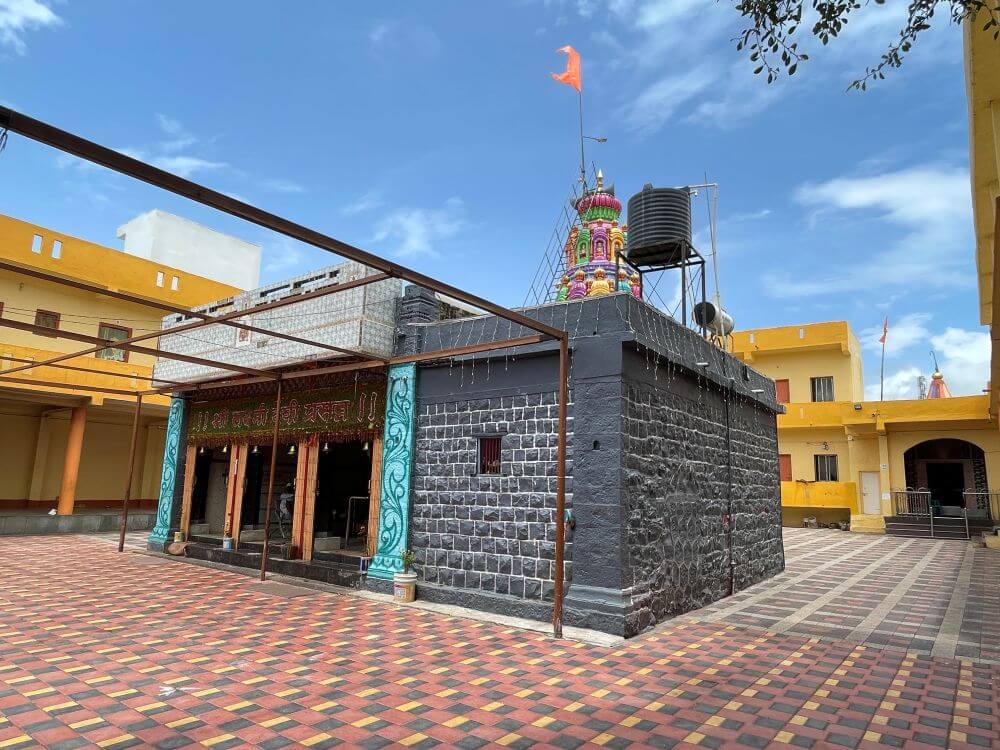
A grand welcoming arch stands at the entrance of the village where this temple is located. On the parapet of the arch, built of carved stone, there are three dome-like pavilions (meghadambaris). The roofs of the meghadambaris feature ornate shikharas. In front of the arch, facing the temple, is a spacious parking lot. The sturdy fortification wall of the temple features a double-storeyed gateway. Near the gateway, adjoining the fortification, are ancient hero stone (viragal) sculptures. The doorjambs of the gateway bear vertical lined carvings and a semi-circular torana above. The gateway has a railing parapet (bashingi kathada). The upper floor with a nagarkhana on it was built in recent times. Inside the gateway, there are guard rooms on both sides. In the paved courtyard of the temple, adjoining the fortification, are corridors on all four sides along with double-storeyed buildings for the pilgrim resthouse (bhaktaniwas). The courtyard houses the temple trust office, residences for attendants, and a hall for cultural programs. In front of the temple is a platform with lotus footprints (padmapaduka), followed by a yajnakunda. On the left and right sides of the courtyard are two platforms bearing lamp pillars (deepmalas).
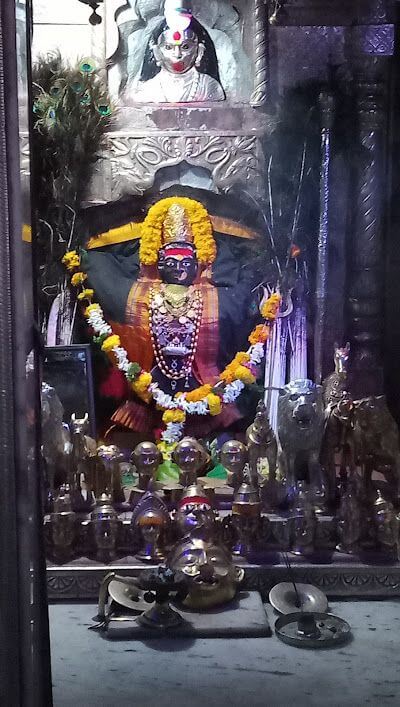
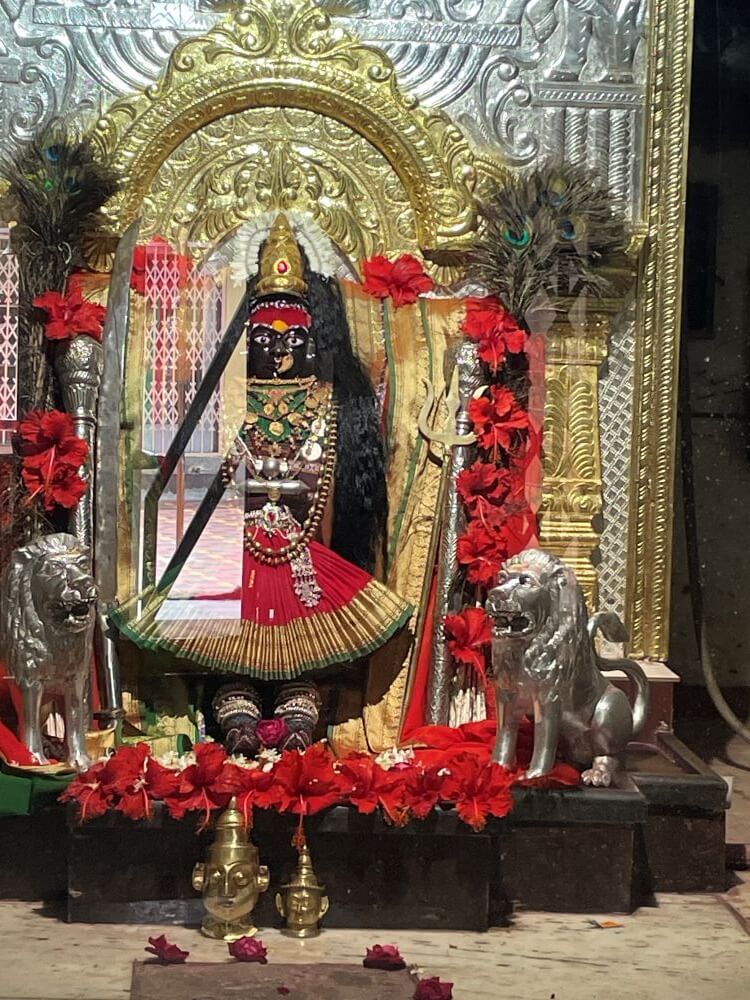
The temple structure consists of a sabhamandapa, antaraala, and garbhagriha. It appears that the sabhamandapa here was added to the original temple at a later date. On the front side of the enclosed sabhamandapa are three cusped arches resting on four pillars. There are seats in the sabhamandapa for devotees to sit. The antaraala is at a higher elevation than the sabhamandapa. One enters the antaraala by climbing five steps. Inside the antaraala, eight ornate pillars stand on square pillar bases (stambhapaada). The pillar shafts (stambhadandas) feature various geometric shapes such as squares, hexagons, octagons, and circles. At the top of the pillars are brackets (kani) and hands (hastas) above them. The octagonal ceiling has a circular carved pattern in the center. There are two chambers on the left and right sides of the antaraala. Among them, the chamber on the left houses the palanquin (palkhi) used during festive times, and the chamber on the right houses the divine resting bed (shayanmancha) of the Goddess. The doorway of the garbhagriha is five-fold (panchashakhia), featuring a foliage branch (parna shakha), floral branch (pushpa shakha), creeper branch (velbutti shakha), and pillar branch (stambha shakha). There are guardian deity (द्वारपाल) sculptures on both sides of the doorway. The lintel center (lalatbimba) features an image of Ganesha, and the lintel band (lalatpatti) is adorned with floral and leaf carvings. The threshold (mandarka) has a moonstone (chandrashila). The doorway has silver carved shutters. Inside the garbhagriha, on a vajrapitha, stands the black stone idol of Goddess Lakshmi. Power (shakti) sculptures are carved on the back slab. The Goddess wears a golden crown and various ornaments and garments on her body. A Trishula and a sword (khadga) are placed beside the idol. In front are a lion, horse, Nandi, and brass masks of various deities. On the back wall of the garbhagriha is a silver image of the Goddess.
The roof of the garbhagriha features a three-tiered circular shikhara. Each tier of the shikhara contains twelve shrine niches (devakoshthakas) housing images of various deities. Above the devakoshthakas are dome-shaped shikharas, topped with an amalaka and kalasha. A pillar structure with a pot motif (kumbhastambha) is designed between every two devakoshthakas. At the apex of the main shikhara is an amalaka, surmounted by a kalasha and a flag banner (dhvajapataka).
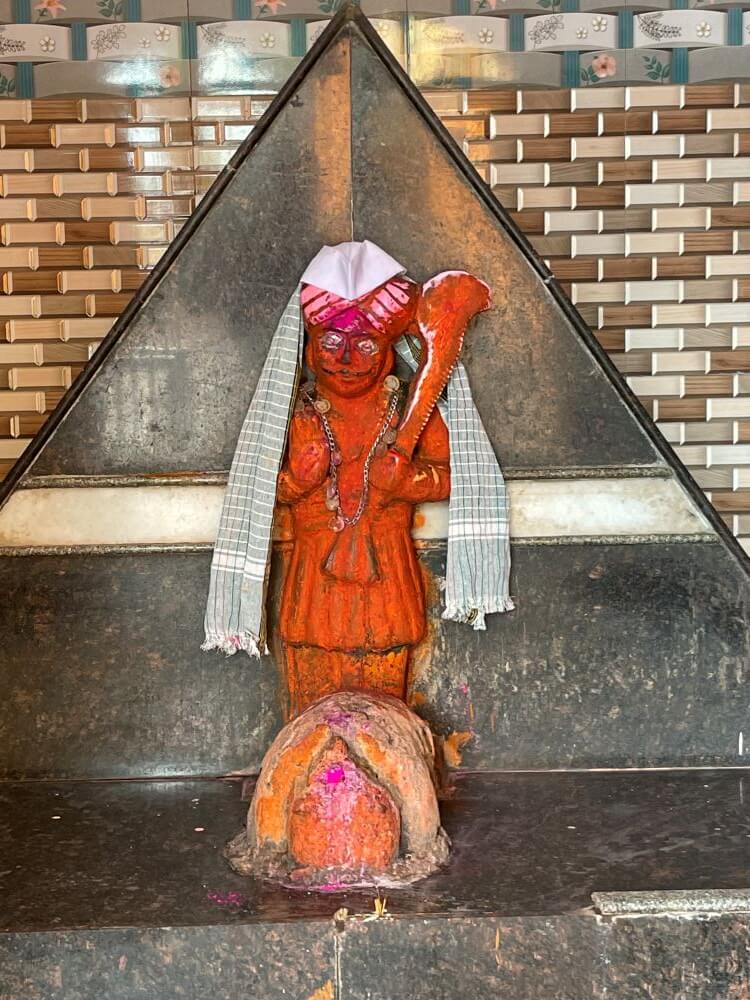
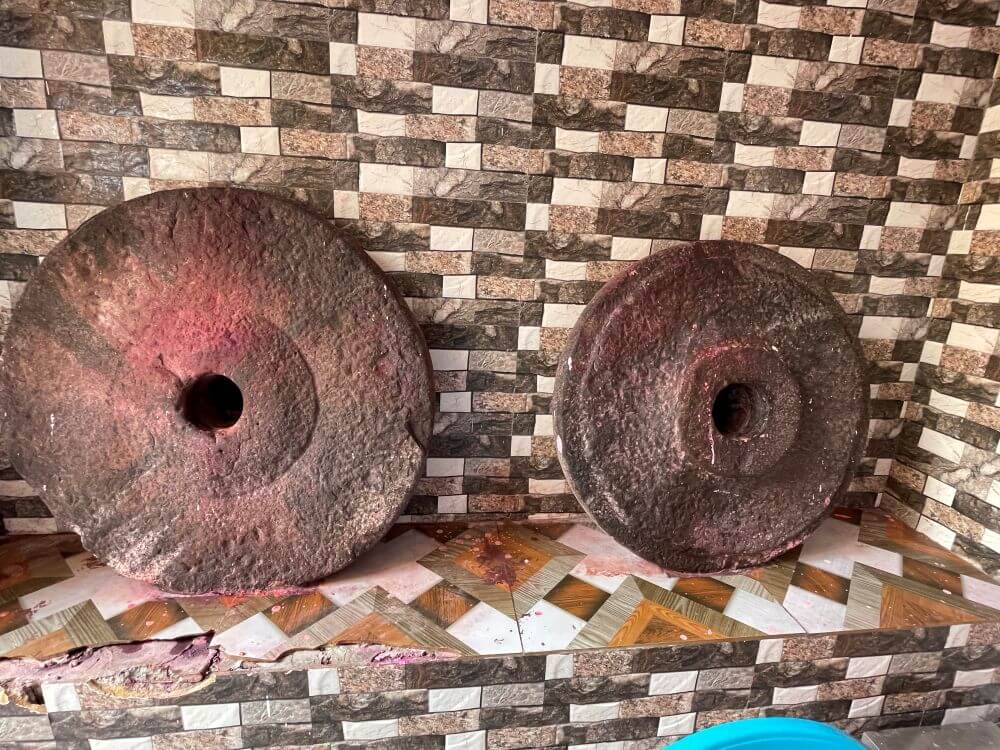
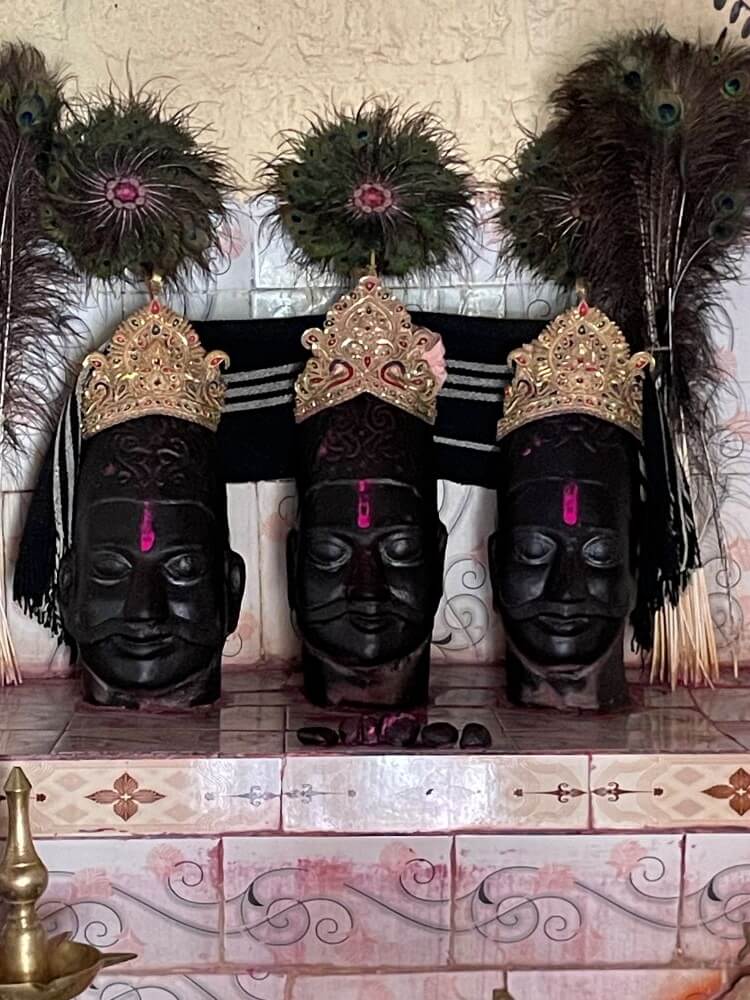
Adjacent to this temple is the Vir Devasthana. The structure of this temple consists of a sabhamandapa and a garbhagriha. In the enclosed sabhamandapa, along the left and right walls, are bench-seats for devotees to sit, and on the bench-seats is a stone mill for grinding lime in one place. In the garbhagriha, on a vajrapitha, is a two-armed stone idol of the deity smeared with vermilion (shendur). The deity holds a sword in its right hand and wears a turban (pheta) on its head. The roof of the garbhagriha has a dome-shaped shikhara and a kalasha.
Vaishakh Purnima, the main annual chariot festival (jatrotsava) of Goddess Mahalakshmi, is celebrated with great enthusiasm. The journey/festival begins on Vaishakh Shuddha Trayodashi with the formal invocation (sakade) offered to the Goddess in the presence of the hereditary village functionaries (manakaris). On the first day, the ritual food offering (naivedya) of the Mali and Ramoshi communities of the village is presented to the Goddess. On the second day, the priests of the Goddess, belonging to the Karhade community, present their naivedya and pray to the Goddess. On the third day, the naivedya of all villagers is offered, and the main festival commences. At midnight on the full moon (Purnima) day, the palanquin procession (chhabina) of the Goddess is taken out to circumambulate the village (gramapradakshina). This palanquin procession visits the ancient Mahadev Temple in the village and returns. Wrestling matches (kustyas) are organized on the day following the festival. A cattle fair for bulls is held for eight days on the occasion of the festival. For three days, shops selling various goods are set up, giving the surrounding area the appearance of a temporary marketplace.
During Sharad Navratrotsava and Shakambhari Navratrotsava, a massive crowd of devotees gathers at the temple. On these occasions, the Goddess is offered a blouse piece and coconut (oti), along with a saree and choli. Vowed offerings (navas) and ornaments are presented to the Goddess. All the festivals and celebrations of the year, such as Chaitra Padwa, Dasara, and Diwali, are celebrated at the temple. There is a special surge of devotees visiting the temple for darshan on Tuesdays, Fridays, Purnimas, Amavasyas, Ashtamis, and other auspicious days.
This sacred temple stands as a testament to deep spiritual devotion, ancient architectural grandeur, and rich local cultural traditions.
The sanctum sanctorum houses the divine idol consecrated according to ancient Vedic traditions, surrounded by serene courtyards and traditional temple architecture.
Navratri, Maha Shivratri, Annual Temple Jatra & Deepotsav
Compare and book flights, secure top-rated local hotels near the temple, hire reliable guides, and rent cars instantly.
Extend your pilgrimage by visiting other highly sacred temples located nearby.


Add ₹999 more to unlock FREE SHIPPING!
Your sacred cart is currently empty.
Shop Photo FramesFill in your delivery details below to place your order.
Add comment