
Add ₹999 more to unlock FREE SHIPPING!
Your sacred cart is currently empty.
Shop Photo FramesParanda Taluka in Dharashiv District holds great historical and religious significance. During the Chalukya period of Kalyani, Parimanda, known as Paranda, was an important administrative division. In ancient times, this region possessed significant political and commercial importance. Rich with the basin of the Sina River, Paranda Taluka is home to many ancient and famous temples. Alongside the Paranda Fort in the taluka, the six-armed dancing Ganesha in the fort’s Shiva temple, and the Kalbhairav temple at Sonari, the Shiva-Hanuman Temple in Paranda city is especially renowned.
This temple, built in the Hemadpanti architectural style, is approximately four hundred years old. The legend of the temple states that in ancient times, a devotee of Lord Maruti would sit here daily, absorbed in devotion. One day, Maruti was pleased with the devotee and asked him to seek a boon. The devotee requested that Maruti reside here permanently to alleviate the sorrows of the devotees who come for his darshan. Following the devotee’s plea, Maruti manifested here in the form of an idol, and subsequently, a temple was constructed.
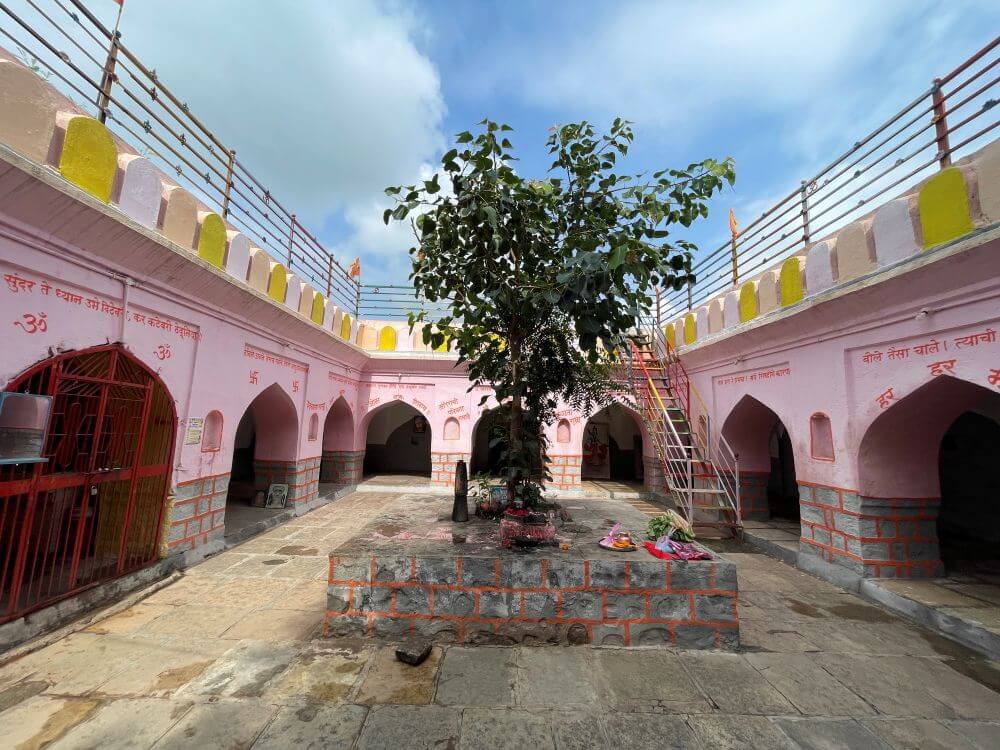
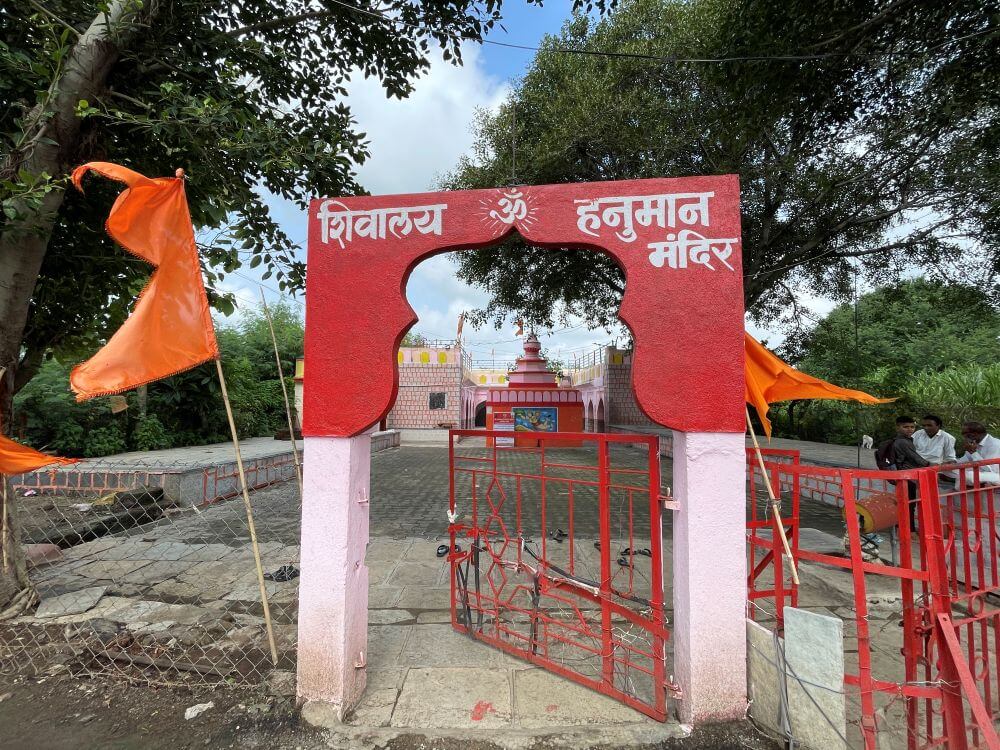
The temple, located along the road, features an iron-grilled arch. In the paved courtyard, there are platforms about two feet high on both sides, stretching from the entrance to the temple. During festival periods, various religious programs are performed on these stone-built platforms. Beyond the courtyard, one can see the mandovar (temple wall) of the Hanuman temple, which depicts Maruti carrying a mountain. In front of the Hanuman temple, there are eleven ancient stone-built cloisters (ovaris) on three sides of the courtyard. The structure consists of triangular arches resting on square pillars with a wall at the back. There are lamp niches in the arches of the cloisters. These cloisters are also used as a pilgrim residence and dharmashala.
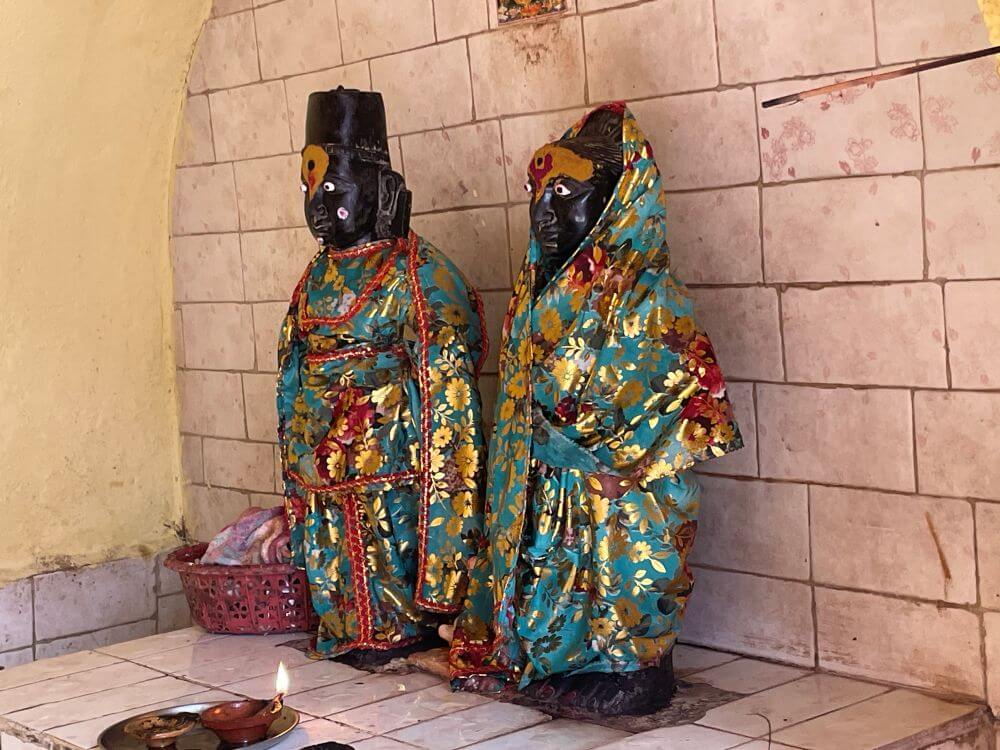
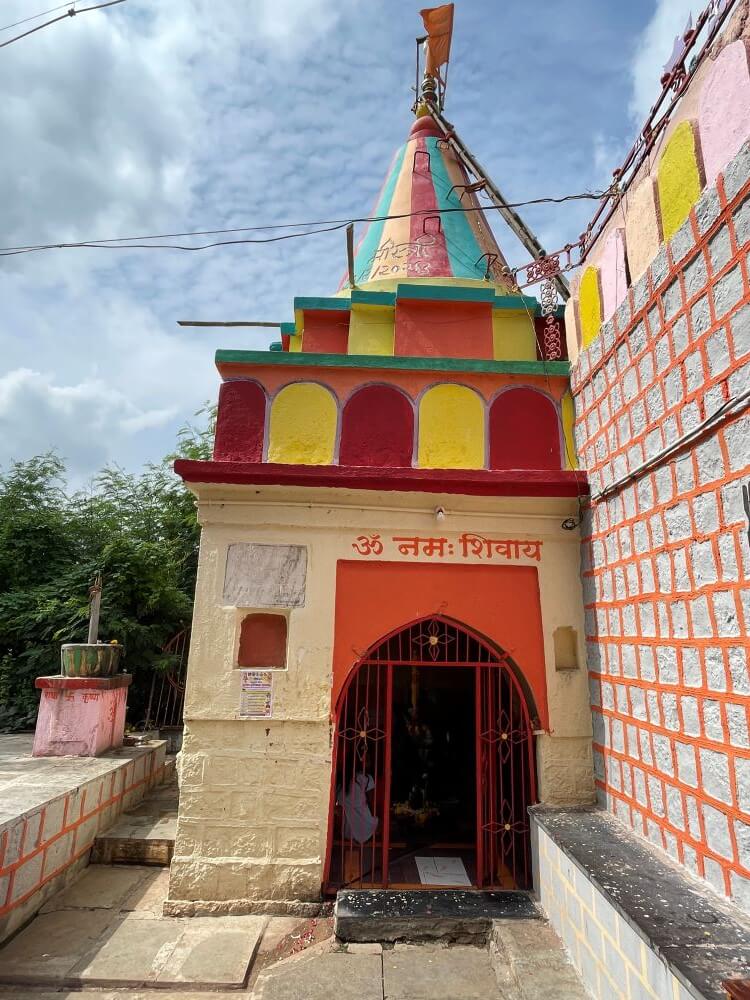
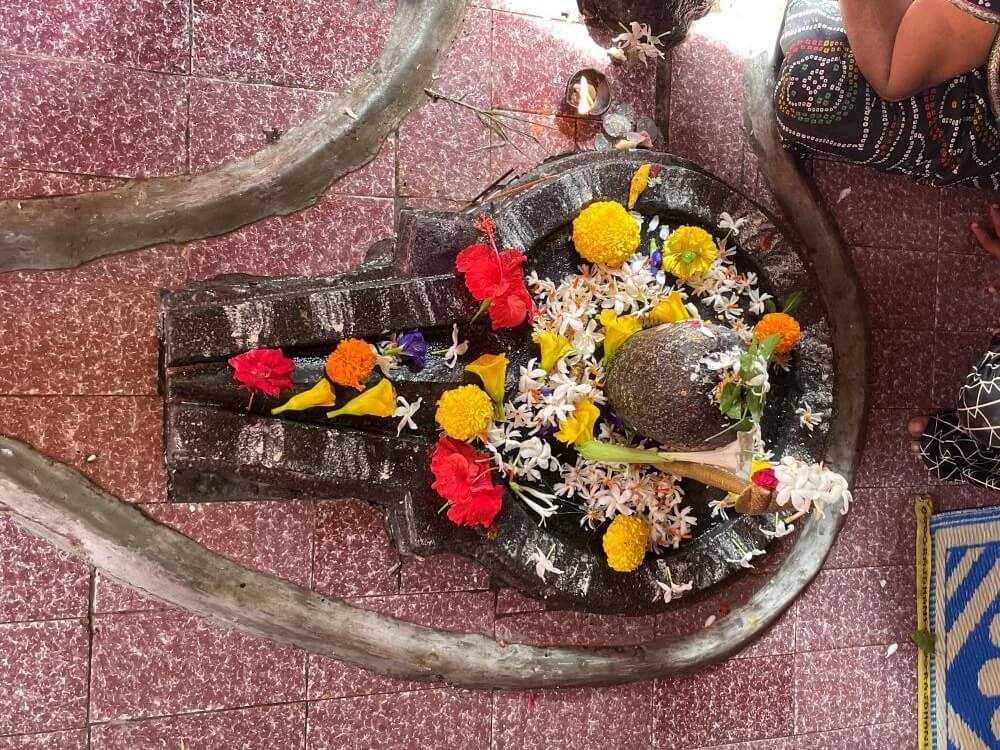
The last two cloisters on the right have been enclosed with walls. In one of these, there are black stone idols of Vitthal-Rukmini on a pedestal. Both idols are adorned with various garments, ornaments, and turbans on their heads. The second enclosed cloister serves as the temple office. Adjacent to the office is the Shiva temple. The Shiva temple has two entrances: one at the front and another on the right side, facing the platform. In front of the right entrance, there is a Tulsi Vrindavan on the platform. There are seats for devotees in front of the temple’s main entrance. Both entrances have iron-grilled doors. In the sanctum sanctorum, there is a Shiva Linga in the center and a black stone idol of Nandi facing it. A brass serpent holding a canopy over the Shiva Linga and a copper vessel for abhishekam are suspended from the ceiling.
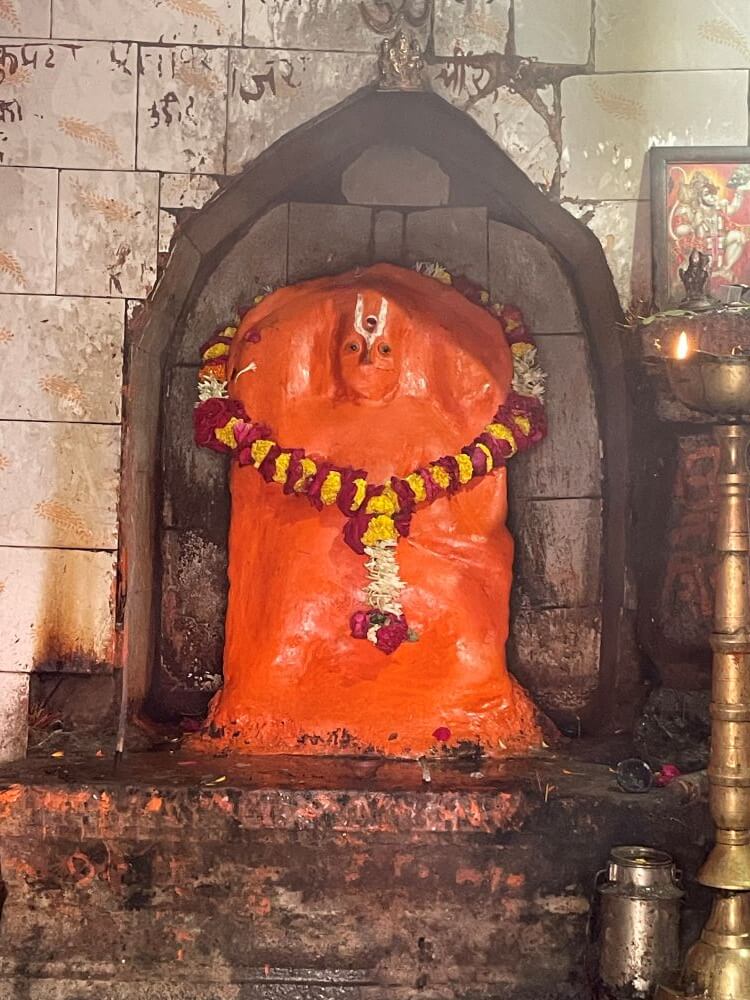
In the courtyard in front of the Hanuman temple, there is a large sacred tree in the center. There is also a Shiva Linga on the platform of this tree. The entrance to the Hanuman temple is narrow. Inside, there is a vermilion-smeared stone idol of Maruti on a pedestal. On both sides of the idol are square stone pillars with stone lamps (malta) on them. Behind the idol, there is a crescent-shaped arch on the back wall. The roof of the Hanuman temple features a decorative railing, and in the center, there is a four-tiered shikhara. The first tier of the shikhara is square, the second hexagonal, the third octagonal, and the fourth circular. At the pinnacle of the shikhara, there is an amalaka and a kalasha.
Chaitra Purnima, or Hanuman Jayanti, is the main annual festival celebrated here with great enthusiasm. During this time, the temple premises are decorated with flowers and illuminated with lights. The birth anniversary of the deity is celebrated in the Maruti temple by rocking a cradle. A palanquin procession of the deity is taken out in the temple premises. Hundreds of devotees participate in the palanquin festival amidst the sound of drums and the showering of gulal. During Mahashivratri, the month of Shravan, and Ashadhi and Kartiki Ekadashi, there is a large influx of devotees for darshan and to fulfill vows. Programs such as bhajans, kirtans, and mahaprasad are organized during all festivals. The number of devotees visiting the temple is higher on Mondays, Tuesdays, Saturdays, Ekadashi, Purnima, and Amavasya.
This sacred temple stands as a testament to deep spiritual devotion, ancient architectural grandeur, and rich local cultural traditions.
The sanctum sanctorum houses the divine idol consecrated according to ancient Vedic traditions, surrounded by serene courtyards and traditional temple architecture.
Navratri, Maha Shivratri, Annual Temple Jatra & Deepotsav
Compare and book flights, secure top-rated local hotels near the temple, hire reliable guides, and rent cars instantly.
Extend your pilgrimage by visiting other highly sacred temples located nearby.


Add ₹999 more to unlock FREE SHIPPING!
Your sacred cart is currently empty.
Shop Photo FramesFill in your delivery details below to place your order.
Add comment