
Add ₹999 more to unlock FREE SHIPPING!
Your sacred cart is currently empty.
Shop Photo FramesAt the dawn of the twelfth century of the Christian era, in the village of Jewali in Dharashiv district, stands a renowned temple dedicated to the great rebel saint, eminent Kannada poet, social reformer, and enlightened yogi, the Mahamanav Basaveshwara. Basaveshwara was the founder of the Lingayat, or Veerashaiva, sect, which held great influence in North Karnataka and South Maharashtra. Also known as Basavanna, Basaveshwara is revered as a devotee of Bhagwan Shankara and an incarnation of Nandi. Like many other temples, here too, Basaveshwara is worshipped in the form of Nandi.
According to the biographical work, ‘Makers of Indian Literature – Basaveshwara’ (H. Tipperudraswamy, translated by Rohini Tukdev, Sahitya Akademi, two thousand three), Basaveshwara was born in the year one thousand one hundred and thirty-one in the village of Ingaleshwar-Bagewadi in the Bijapur district of Karnataka, into a distinguished Brahmin family. However, some scholars suggest his birth year as one thousand one hundred and five. His father, Madiraj, also known as Madaras, was the head of the Bagewadi Agrahara. Basaveshwara’s mother was named Madalamba. She was a devout worshipper of Nandi, the village deity of Bagewadi. It is said that Madalamba once had a dream in which Mahadev commanded Nandi to take incarnation for the welfare of humanity. Accordingly, Nandi assumed a form of light and entered Madalamba’s womb. Thereafter, Madalamba became pregnant. Thus, Basaveshwara is considered an incarnation of Nandi.
After Basaveshwara’s birth, he received the auspicious Linga Diksha from the great Shaiva saint Jatavedamuni, also known as Ishanya Guru, at Kudalasangama. As his Upanayana, or sacred thread ceremony, had already been performed through Lingadharana at birth, he opposed the traditional Munj. However, when his father insisted on the Munj, he left home. He was eight years old at that time. From there, he went to the study center of Jatavedamuni at Kudalasangama. Jatavedamuni was a guru of the Kalamukha sect of Shaivism. Basaveshwara received his religious education from him. At the earnest request of his revered Guru, Basaveshwara entered into matrimony in his youth. His maternal uncle, Baladeva, served as the royal treasurer for Bijjala, a chieftain of the Kalachuri dynasty. Basaveshwara was wed to Baladeva’s daughter, Gangambika, and also to Nilambika, who was considered Bijjala’s sister. Following his marriage, he resided in Bijjala’s capital, Mangavada (present-day Mangalwedha). In due course, Bijjala rebelled and seized control of the Chalukya kingdom of Kalyana. At Bijjala’s insistence, Basaveshwara accepted the esteemed position of minister (treasurer) in his kingdom. During this period, he undertook profound religious and social work. Basaveshwara performed the significant task of opening equal social and religious opportunities to all, without discrimination based on caste, creed, or gender. He liberated women from the shackles of religious constraints. He vehemently opposed the ritualistic practices prescribed in the Vedas. By critiquing the worship of hundreds of deities, he propagated the principle of monotheism. Basaveshwara, the revered prophet of the Veerashaiva Dharma, attained ‘Lingaikya’ (passed away) in the year एक हजार एकशे सदुसष्ट.
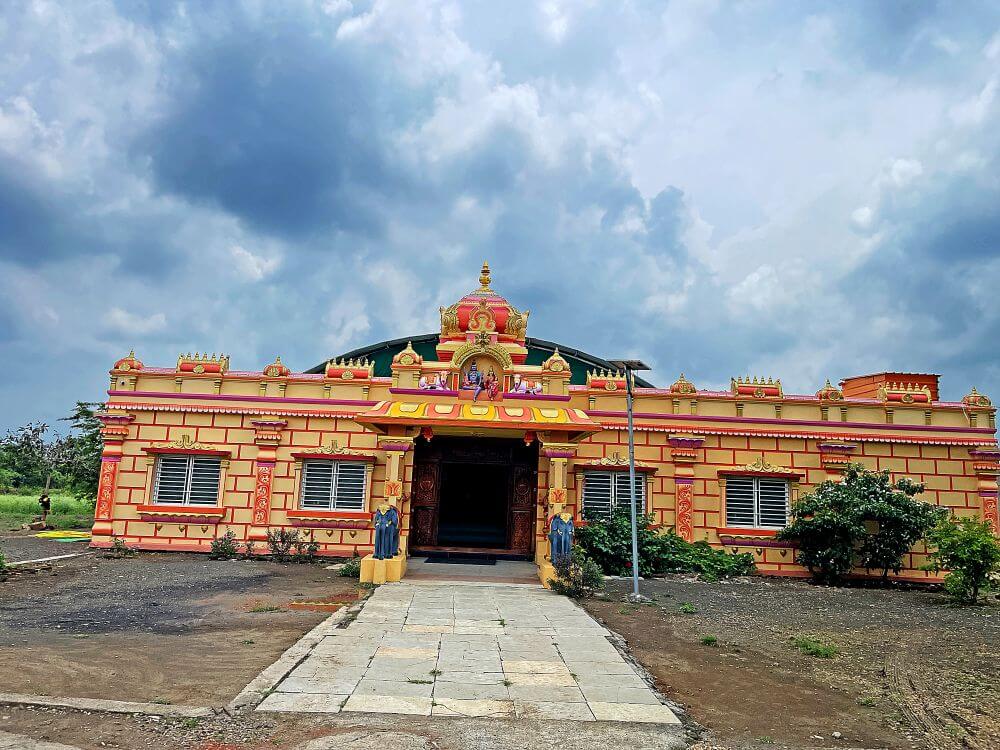
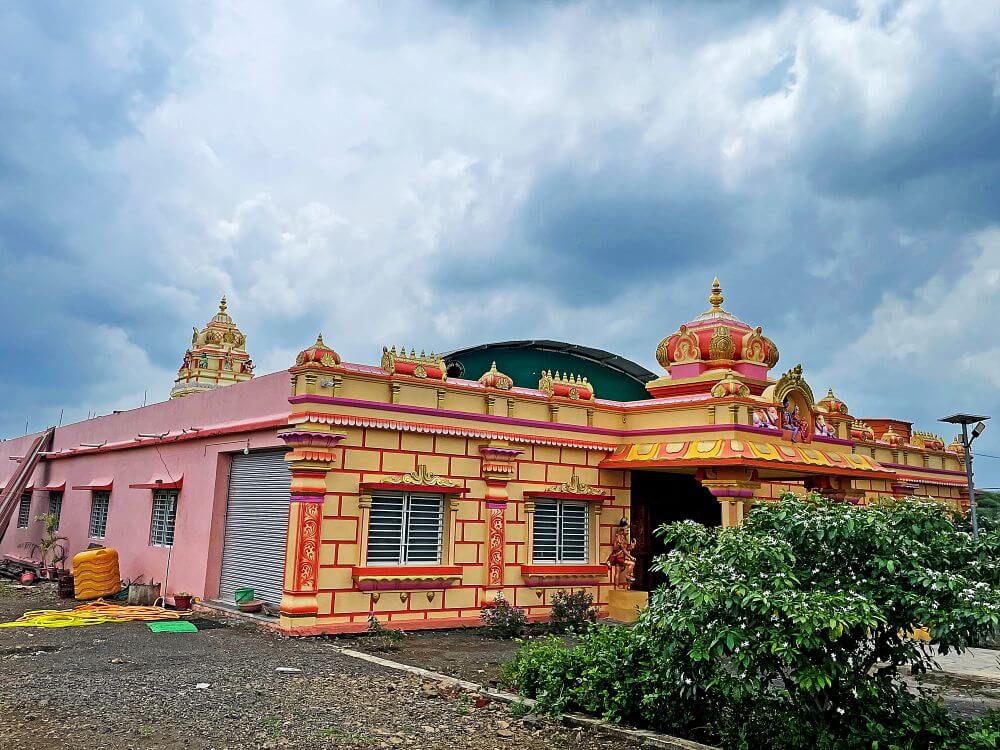
On the Lohara-Achler road, at Jevali, there stands a temple dedicated to Basaveshwara in the form of Nandi. According to the villagers, this sacred shrine is तीनशे years old. In front of the entrance to the temple, which is fortified by strong ramparts, there is a large well and a dhwajastambha (flagpole). One enters the temple courtyard through an arched gateway in the fortified wall. On both sides of this gateway are raised platforms. In the spacious courtyard, at the very centre, stands the temple dedicated to Mahatma Basaveshwara. Along the inner side of the fortified wall are many cloisters. During festivals, these cloisters are used for performing religious rituals.
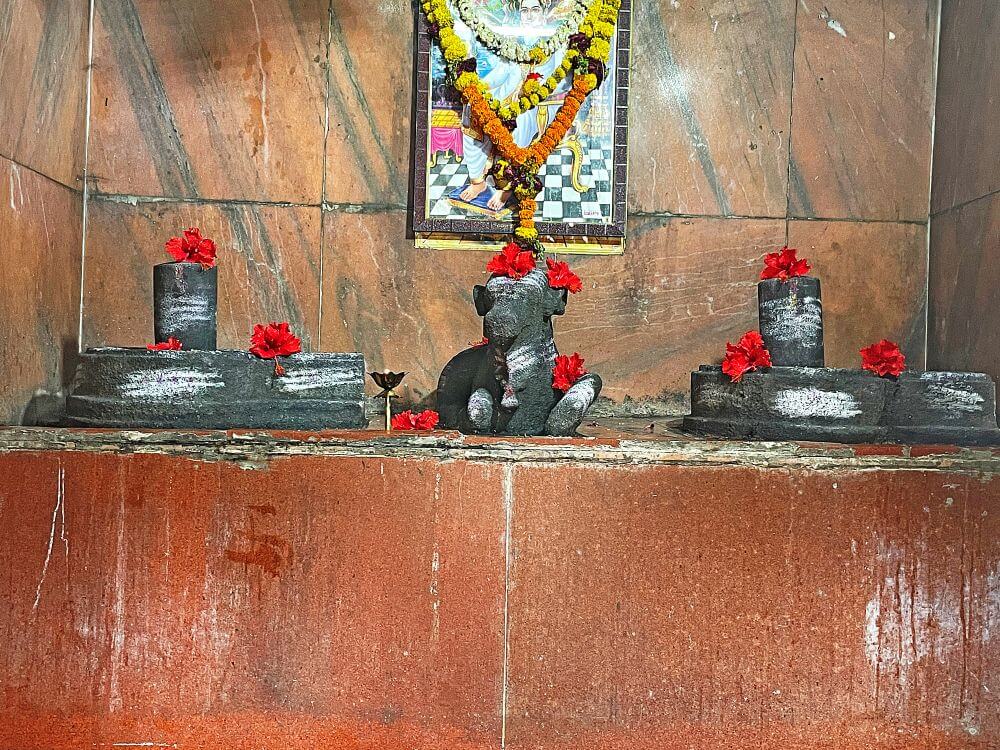
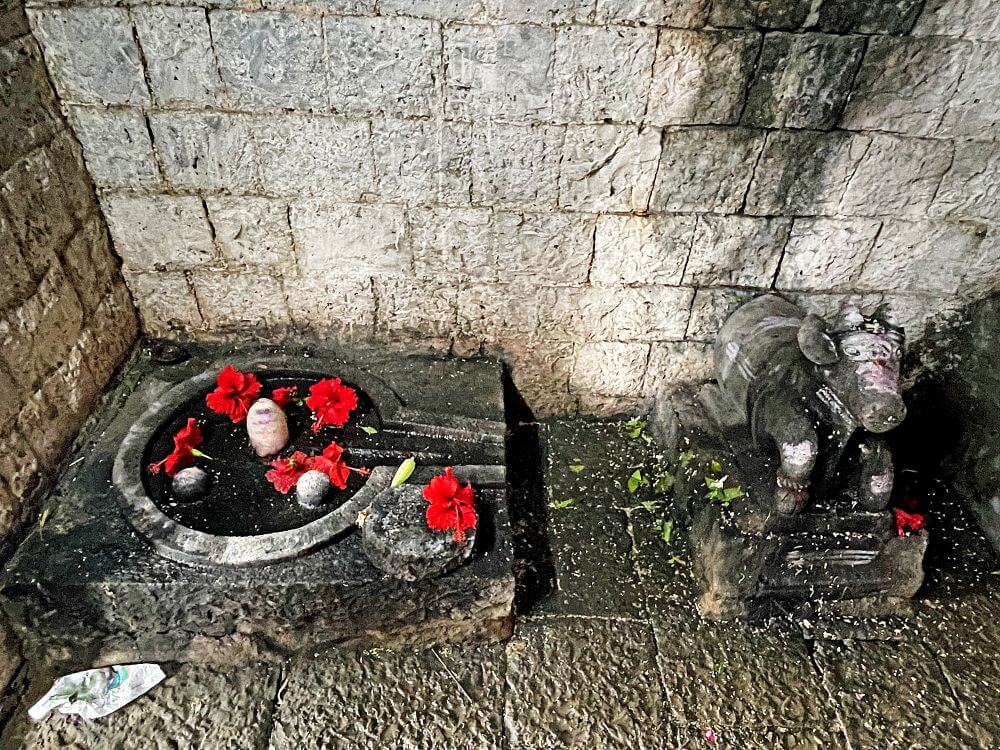
This two-storied temple, built in the Hemadpanti style, stands upon a high plinth. One ascends four steps to reach the plinth of the temple. From here, leaving the circumambulatory path, the temple structure begins. One enters the temple through a narrow doorway. Close to the doorway, on the Vajrapitha, there are two Shiva Lingams on either side, and in the centre, a large idol of Nandi carved from a single stone. On the wall behind the Nandi idol is a large image of Mahatma Basaveshwara. On the upper floor of this two-storied temple, there are three arched windows on each of the four sides. Another temple of a similar kind is located within these cloisters. Its structure is also like that of this temple. Upon entering through a small doorway, one finds a Nandi idol between two Shiva Lingams on the Vajrapitha there. The temple within the cloisters has a small spire.
A grand Yatra is held at this temple for three days starting from Akshaya Tritiya. On the first day of the Yatra, in the early morning, a Panchakalasha Puja is performed for the Shiva Lingam and Nandi in the temple. Thereafter, a traditional procession of many livestock and bullock carts from the surrounding areas is taken out through the village. The procession of bullock carts is a major attraction of this Yatra. At this time, the bulls are adorned just like for the Bail Pola festival. After this procession returns to the temple premises from the village, a district-level animal exhibition is organised here. During this event, awards are given to outstanding bullock carts. Another unique feature of this Yatra is that, as per tradition, hundreds of people run over burning embers. Thousands of devotees are present here to witness this spectacle. Akshaya Tritiya is celebrated as the birth anniversary of Mahatma Basaveshwara. On this occasion, during the festival here, the prestigious Basavaratna Award, considered an honour in literature, is presented every year by the Basaveshwara Yatra Committee. This innovative initiative has been started by the villagers here to preserve and promote the ideological legacy of Mahatma Basaveshwara.
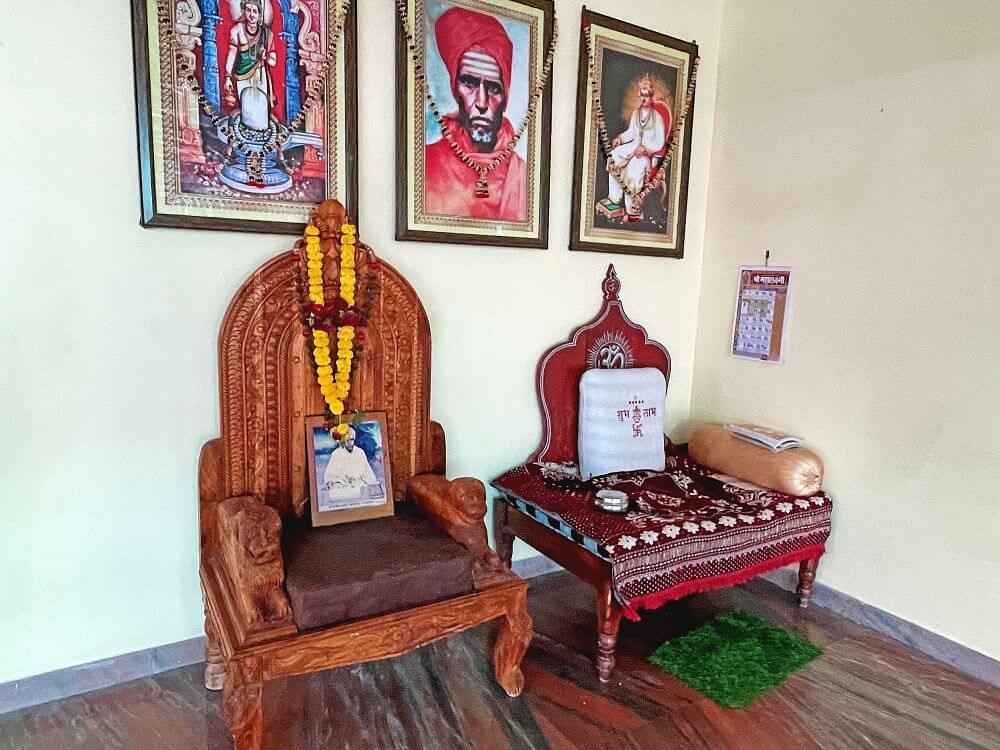
This sacred temple stands as a testament to deep spiritual devotion, ancient architectural grandeur, and rich local cultural traditions.
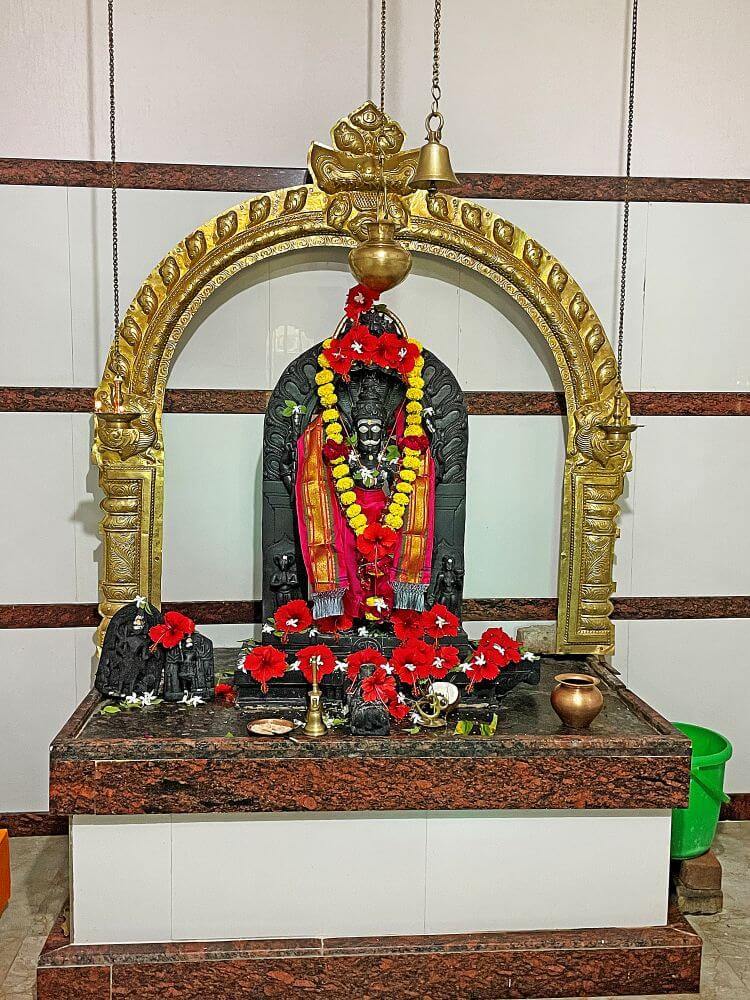
The sanctum sanctorum houses the divine idol consecrated according to ancient Vedic traditions, surrounded by serene courtyards and traditional temple architecture.
Navratri, Maha Shivratri, Annual Temple Jatra & Deepotsav
Compare and book flights, secure top-rated local hotels near the temple, hire reliable guides, and rent cars instantly.
Extend your pilgrimage by visiting other highly sacred temples located nearby.


Add ₹999 more to unlock FREE SHIPPING!
Your sacred cart is currently empty.
Shop Photo FramesFill in your delivery details below to place your order.
Add comment