
Add ₹999 more to unlock FREE SHIPPING!
Your sacred cart is currently empty.
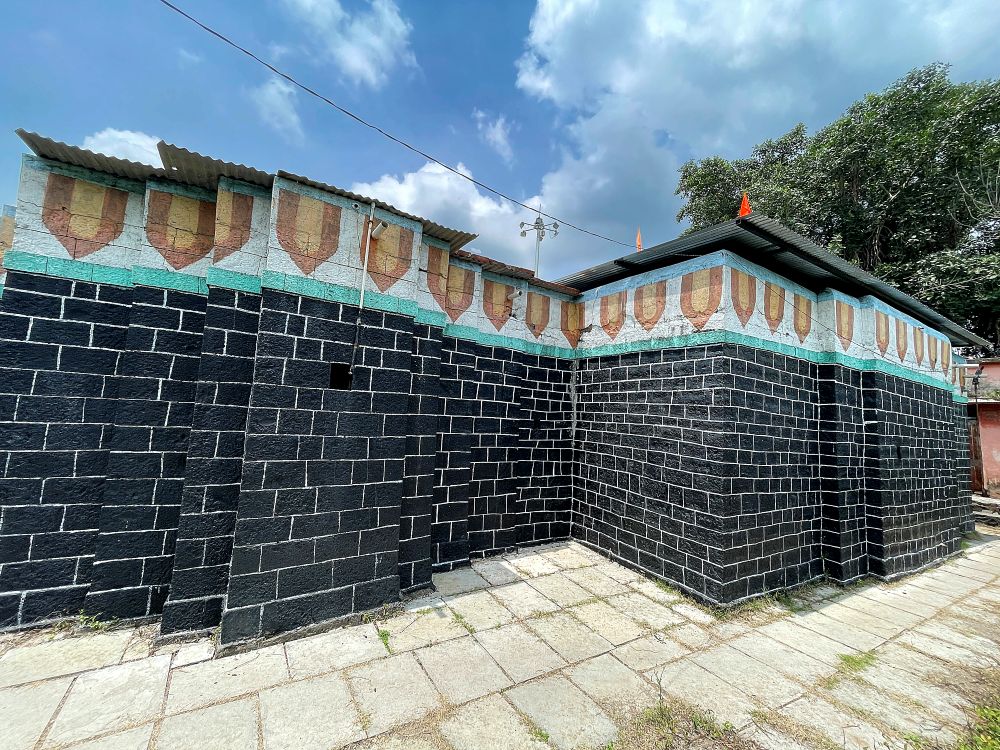
Shop Photo FramesThere is an ancient and famous temple of Lord Mahadeva in the taluka town of Lohara in Dharashiv district. It is believed that the Shiva Linga in this temple, known as the Nilkantheshwar Temple, was installed by Lord Shri Rama himself. Devotees hold a deep faith that even today, sounds of sculpting work can be heard from the temple at night, and fine stone fragments are found on the ground in the morning. A grand fair is held here on the third Monday of the month of Shravan. This festival is included among the important fairs of the district.
This temple, built of stone in the Hemadpanti architectural style, is said to date back to the Yadava period. According to the Shiva Purana, when the Devas and Asuras churned the ocean using Mount Meru as the churning rod and the serpent Vasuki as the rope, the Halahala poison emerged along with many gems. The influence of this poison threatened to destroy all life. At that time, all the gods prayed to Mahadeva to save them from this catastrophe. Mahadeva consumed the Halahala poison and saved the entire earth. Due to the effect of the poison, Mahadeva’s throat turned blue, and since then, the Lord has been known as Nilkantha. Temples of this Nilkantheshwar are found all over the country.
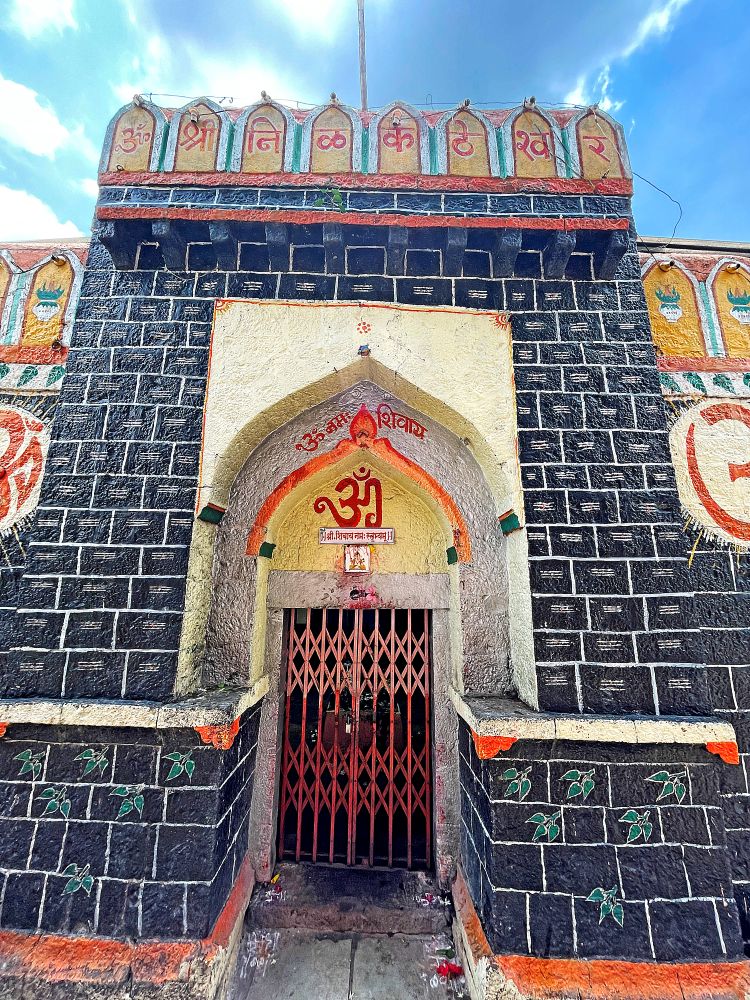
Legend has it that while Lord Shri Rama was in exile, he worshipped Mahadeva or installed Shiva Lingas at many places. This temple in Lohara is said to be one of them. The temple structure consists of a Sabha Mandapa (assembly hall), Antarala (vestibule), and Garbhagriha (sanctum sanctorum). In front of the entrance to the Sabha Mandapa, there are seats for devotees. In the courtyard, there are some ancient stone sculptures, Veergal (hero stones), and Shiva Lingas. On both sides of the entrance, there are platforms for guards, and there is a triangular arch above the entrance. The door frames feature vertical carvings, and there is an image of Lord Ganapati on the lintel. The entrance is small, about four feet high. It is said that such small entrances were designed so that devotees would bow down while entering.
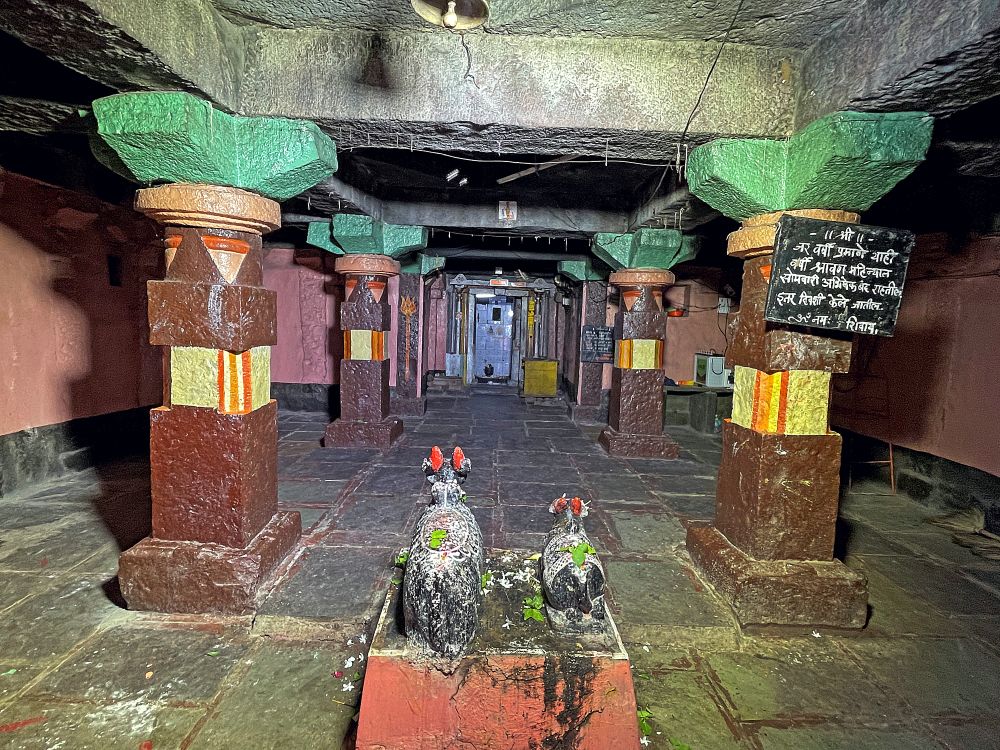
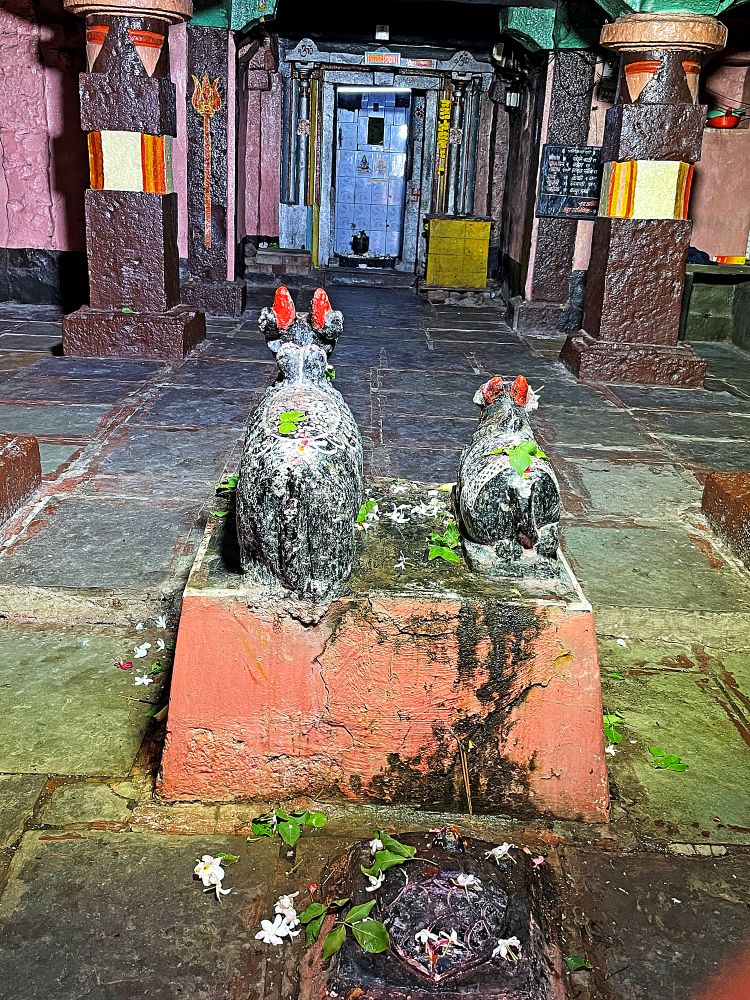
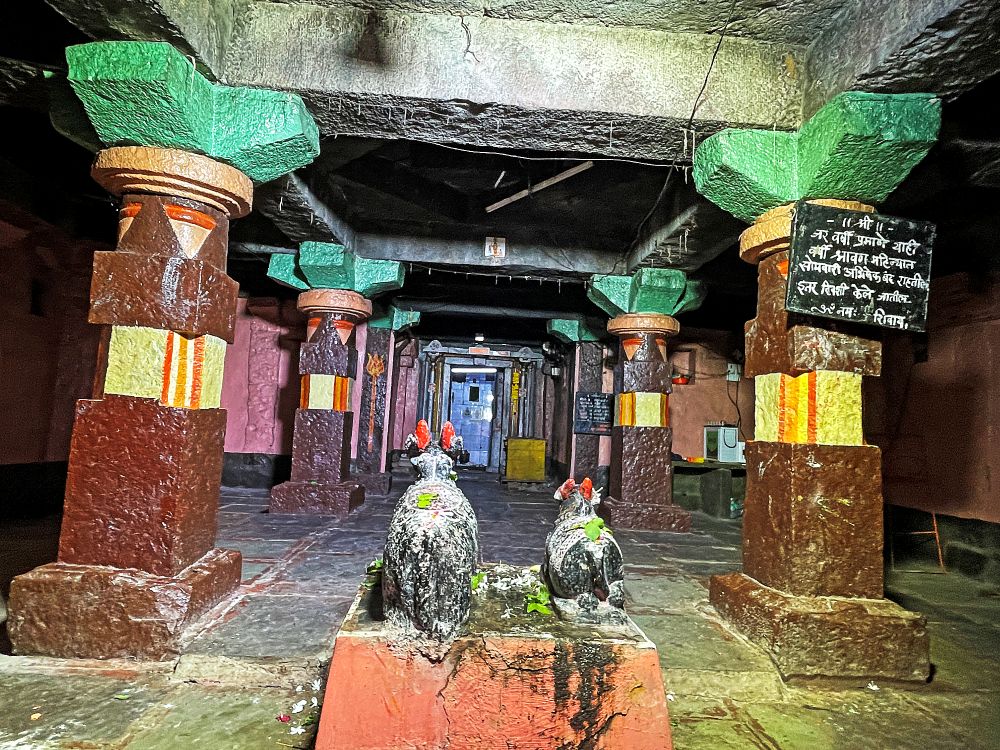
The Sabha Mandapa has four rows of four ornate square pillars each. All pillars stand on a base. At the top, there are circular moldings, followed by brackets and beams. The octagonal ceiling features fine craftsmanship with a circular design in the center. The enclosed Sabha Mandapa has vents for ventilation. On the floor of the Sabha Mandapa, in front of the entrance, there are two Nandi sculptures made of black stone on a pedestal. One of them is ancient, and the other was offered as a vow. It is said that once, a prominent villager lost his prized bull. He made a vow to Nilkantheshwar that if his bull was found, he would install a Nandi at the Lord’s doorstep. After the villager’s bull was found, he offered the second Nandi at the Lord’s doorstep to fulfill his vow.
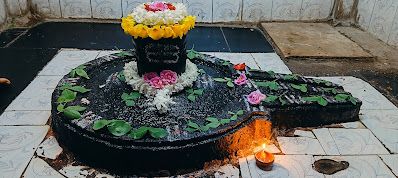
In front of the Nandi platform, amidst the four pillars, there is a square stone stage a few inches high. In the past, dance and musical performances were presented on this stage. Beyond this is the entrance to the Antarala. There is a tortoise sculpture on the floor of the Antarala. The Antarala has four ornate pillars in the walls and a circular design in the center of the ceiling. On the sides, there are partially carved sculptures of Nagas, Parvati, and Ganapati. The Antarala has windows for ventilation. Beyond this is the entrance to the Garbhagriha. On the lower right side of the entrance, there is a relief sculpture of a Naga guardian. The door frames have vertical carvings, and the pillar branches feature lotus flower designs. There is an image of Lord Ganapati on the lintel and a torana carving on the upper frame. Inside the Garbhagriha, there are two ornate pillars on both sides of the entrance. In the center of the Garbhagriha floor is the Shiva Linga. There is a small hole in the stone of the Shiva Linga. It is said that on the third Monday of Shravan, the Ganga manifests through this hole. The Garbhagriha has windows for ventilation.
The annual fair is celebrated in the temple on the third Monday of Shravan. Every Shravani Monday, Mahashivratri, Vaikuntha Chaturdashi, and other festivals are celebrated with great enthusiasm. During these times, religious programs such as Bhajans and Kirtans are organized in the temple. Devotees gather here in large numbers every Monday, on Purnima (full moon), and Amavasya (new moon).
This sacred temple stands as a testament to deep spiritual devotion, ancient architectural grandeur, and rich local cultural traditions.
The sanctum sanctorum houses the divine idol consecrated according to ancient Vedic traditions, surrounded by serene courtyards and traditional temple architecture.
Navratri, Maha Shivratri, Annual Temple Jatra & Deepotsav
Compare and book flights, secure top-rated local hotels near the temple, hire reliable guides, and rent cars instantly.
Extend your pilgrimage by visiting other highly sacred temples located nearby.


Add ₹999 more to unlock FREE SHIPPING!
Your sacred cart is currently empty.
Shop Photo FramesFill in your delivery details below to place your order.
Add comment