
Add ₹999 more to unlock FREE SHIPPING!
Your sacred cart is currently empty.
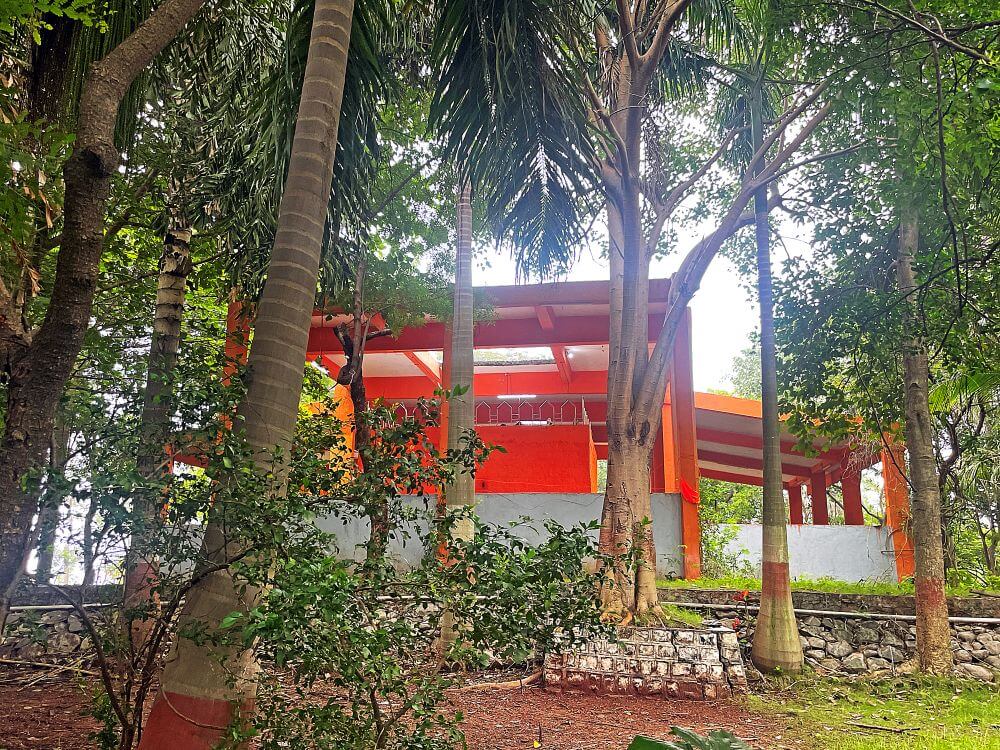
Shop Photo FramesWhen the concept of God began to take root in society, the practice of worshipping stones under an open sky emerged. The Shani Dev temple at Shani Shingnapur is a prime example of this. Even after the development of architecture, many temples were built with open roofs, keeping certain legends in mind. One such ancient and famous open-roofed temple is the Hatladevi Temple, located in the hills of Khanapur village near Dharashiv. Devotees believe that the awakened Goddess here fulfills their prayers.
Hatladevi is considered a form of Goddess Parvati and is regarded as one of the 64 Yoginis. Most Yogini temples are built in a circular shape with an open roof. Since it is believed that Yoginis are nature deities who travel through the sky, no roof is built over these temples. Experts believe that such Yogini temples began to be constructed after the seventh century. The villagers of Khanapur estimate that this temple is four to five hundred years old. Many attempts have been made to put a roof over this temple, but the villagers say that it blows away on its own. Because of this, it is known as an open-roofed temple.
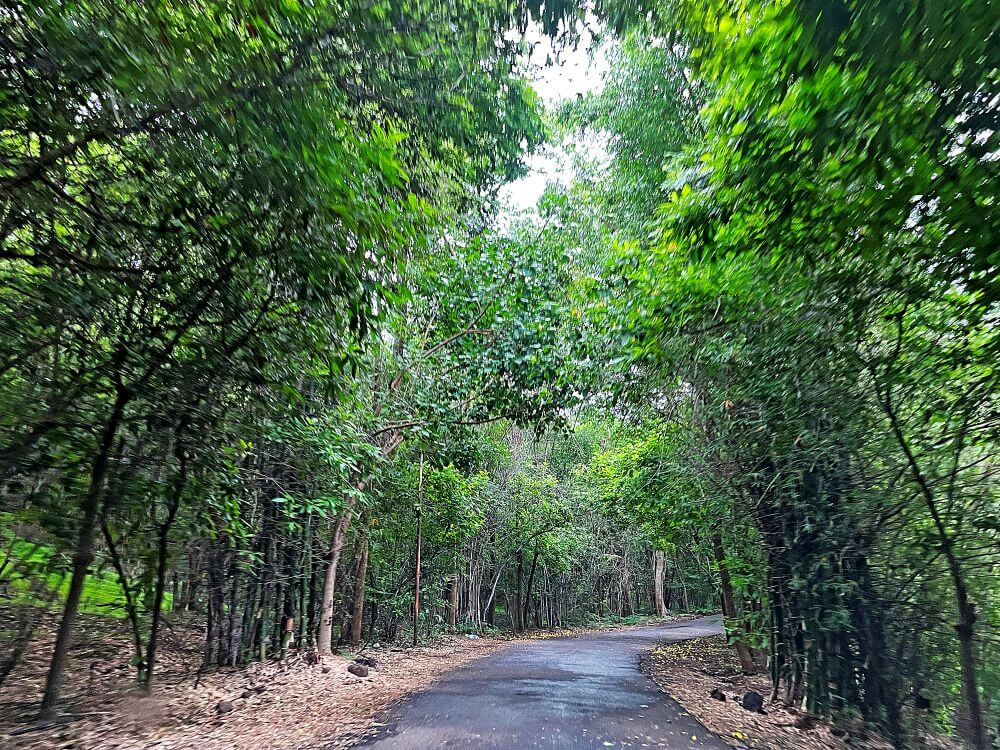
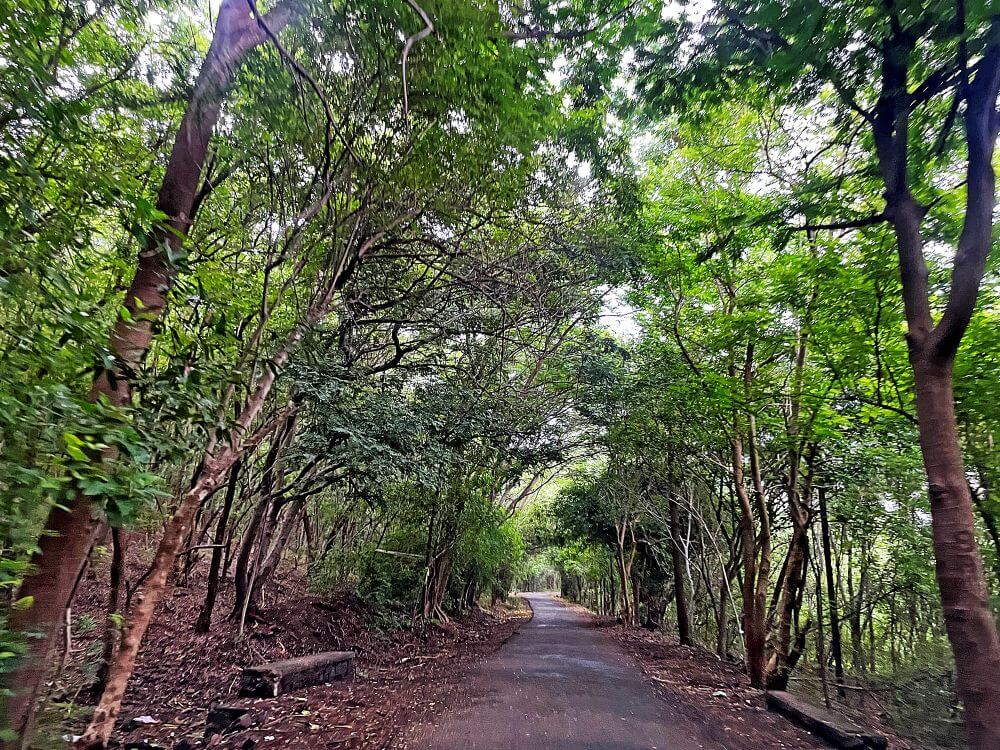
On the road leading to this temple situated on the hilltop, there is the first welcome arch. The arch features circular ornate pillars on both sides of the road with a triangular beam on top. The pillars have vertical fluted carvings. There is a paved road about two kilometers long from the arch to the base of the temple. Since this entire area falls under the jurisdiction of the Forest Department, there is dense foliage on both sides of the road. There is a spacious parking lot at the base of the temple. From here, one can reach the temple via a stone-carved staircase and a paved path. Along this path, boards with various instructions and social messages have been placed by the Forest Department.
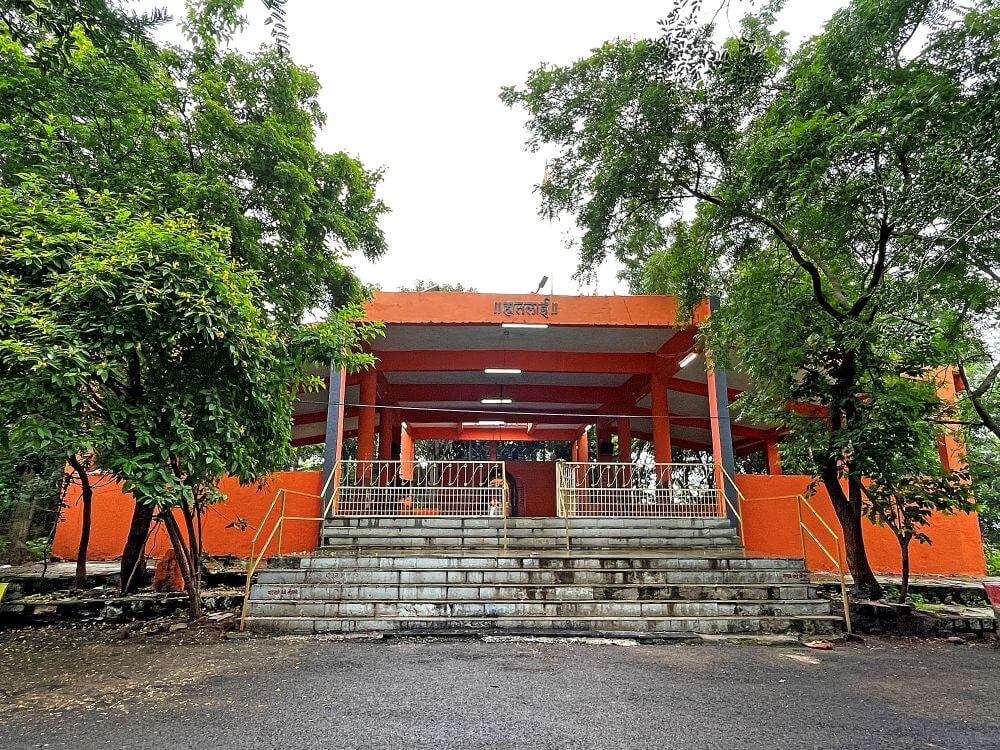
In front of the temple is a spacious courtyard surrounded by a natural fortification of dense trees. There are seats in the courtyard for devotees to sit. The temple structure consists of a Sabhamandap (assembly hall) and a Garbhagriha (sanctum sanctorum). Since the Sabhamandap is at a higher level than the courtyard, one enters it by climbing eight steps.
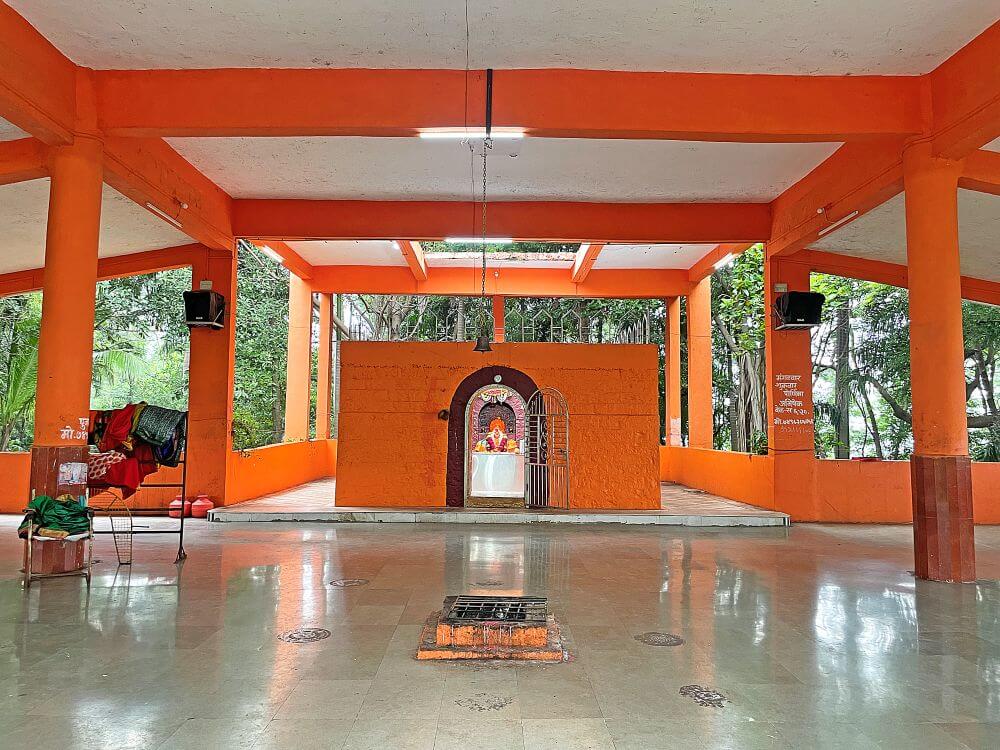
Further ahead is a semi-open Sabhamandap. The Sabhamandap has four rows of four pillars each. It has a railing on the outer side. The square pillars on the outer side are embedded in the railing, which also serves as seating (Kakshasana). The four central pillars in the Sabhamandap are circular. There are beams on the pillars and a roof above them. In the center of the floor, there is a Yajna Kund (sacrificial fire pit).
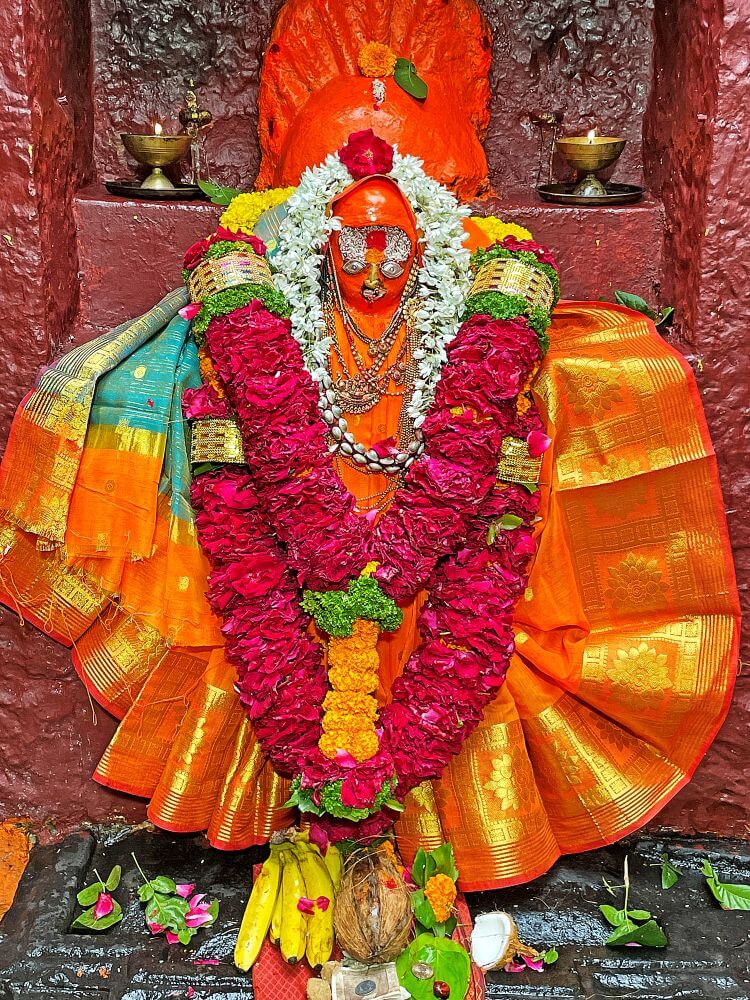
Further ahead, on a raised platform, is the Garbhagriha. Excluding the sanctum itself, there is a roof only over the circumambulation path (Pradakshina Path). The walls of the Garbhagriha are made of stone and are open to the sky. The door frames of the Garbhagriha are covered with granite slabs, and there is an image of Lord Ganesha on the lintel. The floor of the Garbhagriha is a few inches higher than the outer platform. Inside, on a Vajrapitha (throne), is the vermilion-smeared stone idol of Hatladevi. Adorned with a silver crown, silver eyes, garments, and various ornaments, the idol looks beautiful. There is a silver umbrella behind the idol. There is a circumambulation path around the exterior of the Garbhagriha.
The Sharadiya Navratri festival is the main annual event celebrated here with great enthusiasm. During these ten days, programs such as Abhishekam, Bhajans, and Jagaran (night vigils) are organized. Thousands of devotees from the surrounding areas come to seek the blessings of the Goddess on this occasion. The temple is bustling with devotees every full moon, Tuesday, and Friday. The Palkhi (palanquin) procession of the Goddess is celebrated on Vaishakh Purnima. Devotees can visit the temple daily from 5:00 AM to 8:00 PM. Abhishekam is performed in the temple at 6:30 AM every Tuesday, Friday, and full moon day.
This sacred temple stands as a testament to deep spiritual devotion, ancient architectural grandeur, and rich local cultural traditions.
The sanctum sanctorum houses the divine idol consecrated according to ancient Vedic traditions, surrounded by serene courtyards and traditional temple architecture.
Navratri, Maha Shivratri, Annual Temple Jatra & Deepotsav
Compare and book flights, secure top-rated local hotels near the temple, hire reliable guides, and rent cars instantly.
Extend your pilgrimage by visiting other highly sacred temples located nearby.


Add ₹999 more to unlock FREE SHIPPING!
Your sacred cart is currently empty.
Shop Photo FramesFill in your delivery details below to place your order.
Add comment