
Add ₹999 more to unlock FREE SHIPPING!
Your sacred cart is currently empty.
Shop Photo FramesKnown by various names such as Jogeshwari, Yogeshwari, and Jogalai, the Goddess is a manifestation of the primordial energy, Adi Shakti. The Jogeshwari Devi temple at Ambejogai is one of the 51 Shakti Peethas in India. A large number of devotees visit this Goddess for her blessings. However, for those unable to undertake long pilgrimages, the Goddess herself reaches out to them. This is why many sub-shrines (Upapeethas) of the main Shakti Peetha have been established. In this same manner, the ancient and famous Jogeshwari Devi temple in Sanja village of Dharashiv district is considered a sub-shrine of the Jogeshwari Devi of Ambejogai. It is the firm belief of the devotees that the awakened (Jagrut) Goddess here fulfills their vows.
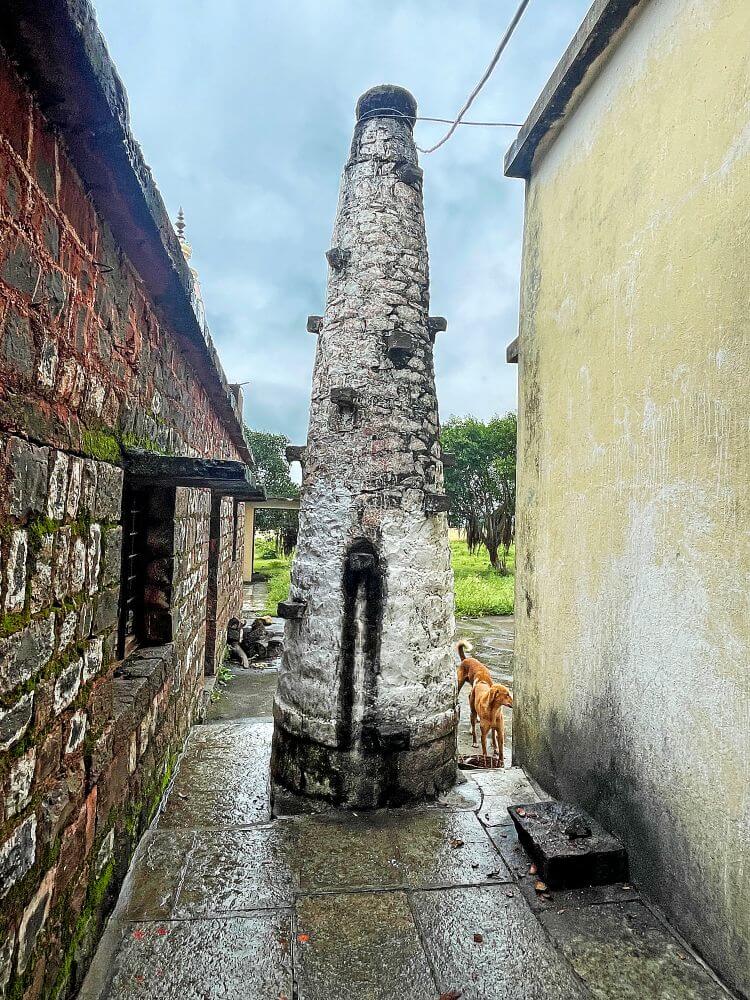
It is said that this temple dates back about five hundred years. The ancient stone lamp pillars (Deepmalas) in the temple premises confirm its antiquity. The legend of this temple is that a villager was a staunch devotee of the Goddess. He used to travel on foot twice a year to Ambejogai to seek the Goddess’s blessings. As he grew old, it became impossible for him to continue these pilgrimages. Therefore, he prayed to the Goddess to come to his village. The Goddess agreed to follow her devotee to his village on the condition that he must not look back. However, as they neared the village, the devotee looked back, causing the Goddess to remain stationed at that very spot in the form of stone. Later, the villagers built a temple at this site.
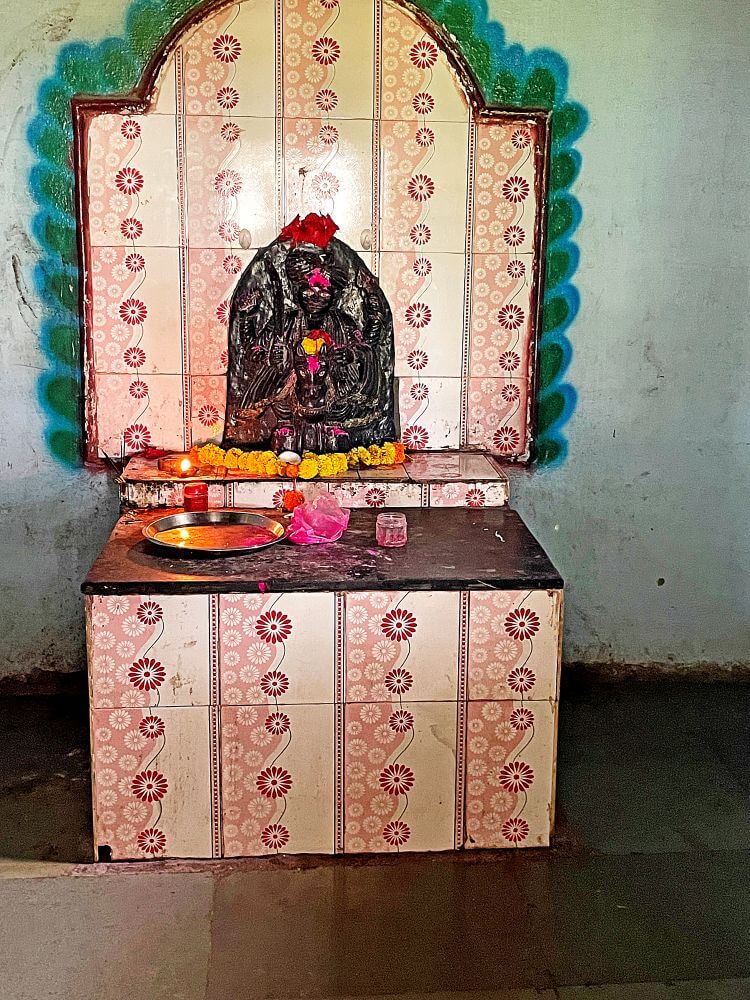
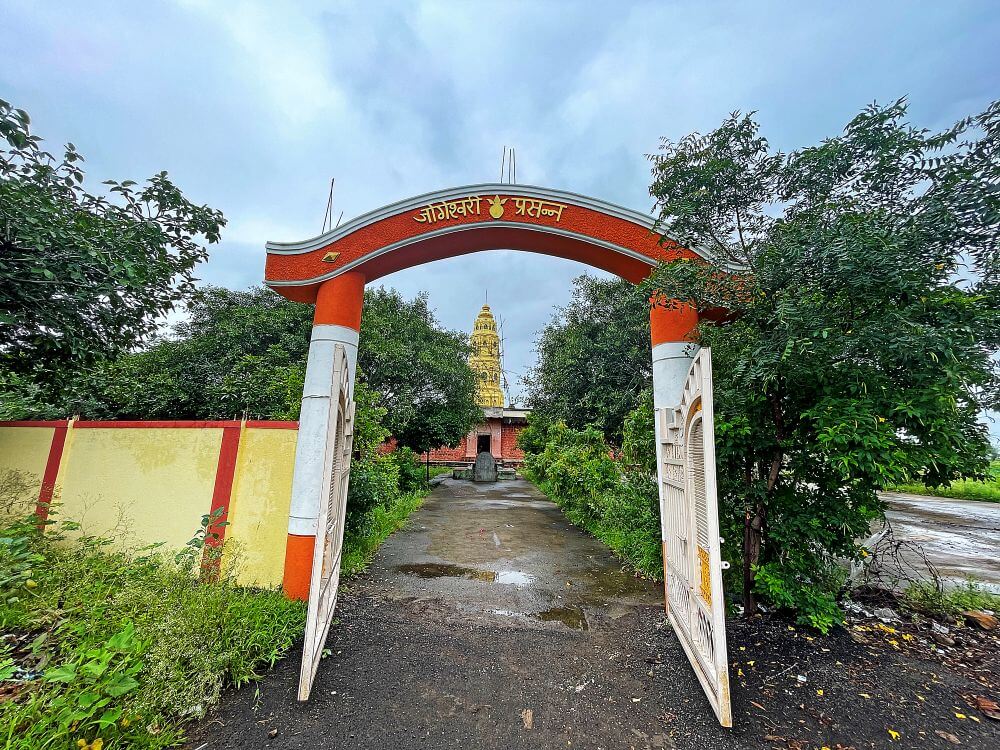
The temple, located a short distance from Sanja village, is surrounded by a boundary wall. One enters the temple courtyard through a welcoming arch in the wall. The arch features two circular ornate pillars on either side, topped by a semi-circular beam. A cement-concrete path leads from the arch to the temple, flanked by trees on both sides. On the platform in front of the entrance to the main hall (Sabhamandap), there is a sacrificial fire pit (Yajnakunda). A small niche near the entrance of the Yajnakunda houses an idol of a local deity.
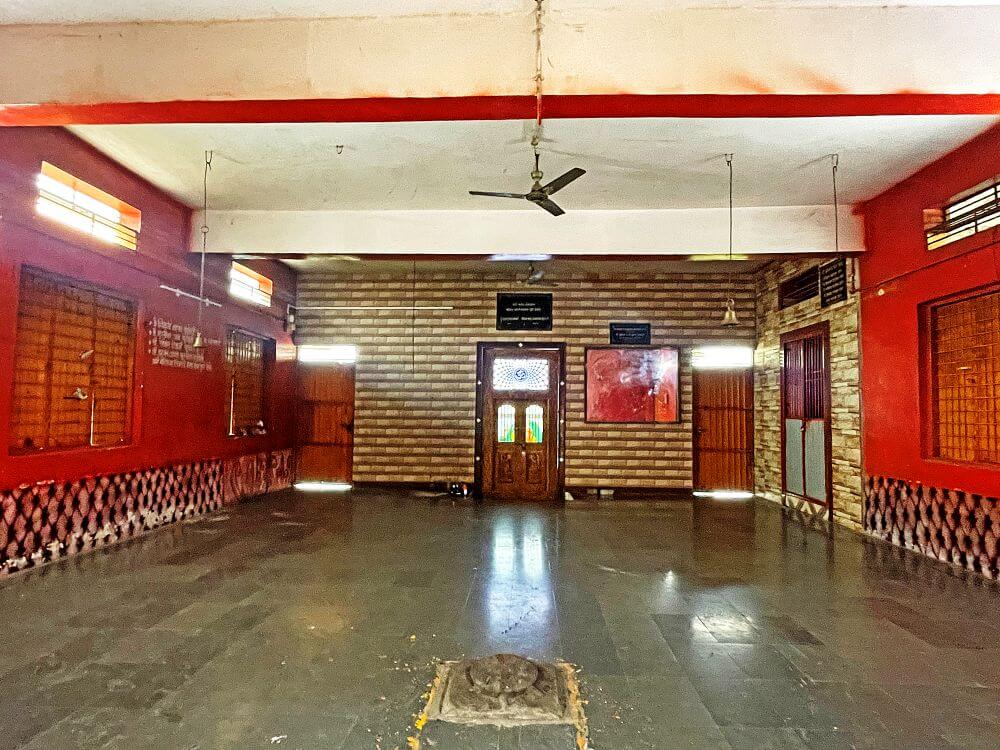
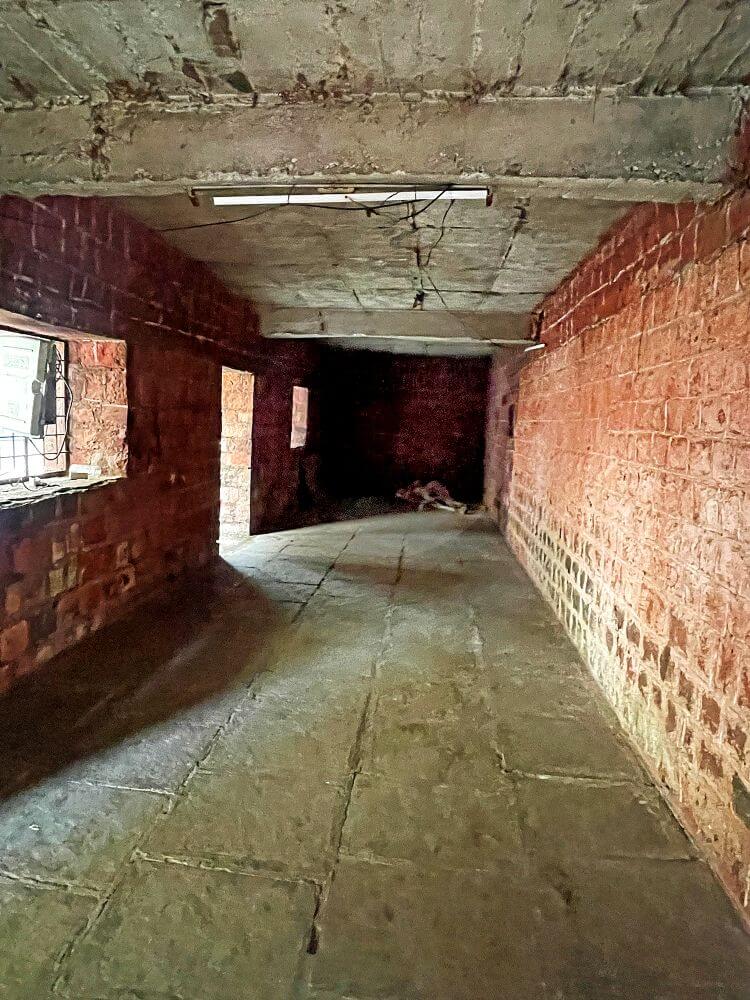
The temple structure consists of a Sabhamandap (assembly hall), an Antarala (vestibule), and a Garbhagriha (sanctum sanctorum). There are raised platforms on both sides of the entrance along the front walls of the Sabhamandap. During the festival season, devotees known as Joginis and Jogtes sit on these platforms to perform the ‘Jogwa’ ritual. Being at a higher elevation than the courtyard, the entrance to the Sabhamandap has five steps. The door frames are adorned with vertical carvings, and the arch on the lintel features an idol of Lord Ganesha. The enclosed Sabhamandap has vents for light and air. There is a second entrance to the Sabhamandap on the side facing the Antarala. In front of this entrance, between the Sabhamandap and the Antarala, there is an open space of about four feet, where an ancient stone lamp pillar stands. Beyond this is the Antarala. A tortoise sculpture (Kurma) is placed in front of the entrance to the Antarala. Inside the Antarala, there is a lion sculpture on a central platform. The Antarala is enclosed, and brass bells offered by devotees hang from its ceiling. Near the wall is the Goddess’s bed (Shayanmanch). It is the belief of the devotees that every night after the Shejarti (final night prayer), the Goddess goes to sleep. From the Antarala, there are doors on both sides leading to the circumambulation path around the Garbhagriha.
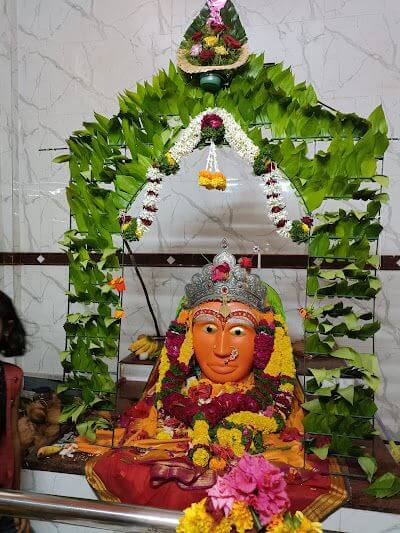
Above the entrance to the Garbhagriha, there is an idol of Lord Ganesha, flanked by sculptures of elephants holding flower garlands in their trunks. Inside the Garbhagriha, the face of the Goddess is installed on a Vajrapitha. Adorned with a silver crown, silver eyes, a nose ring (Nath), and various garments and ornaments, the idol appears beautiful. The roof of the Garbhagriha features a five-tiered Shikhara (spire). The first tier at the bottom is square and has 16 niches on all four sides, with pillar carvings at the corners. The second, third, and fourth tiers of the Shikhara are octagonal, each containing eight niches. The fifth tier consists of two Amalakas stacked one above the other, topped by a finial (Kalash) and a flag.
Adjacent to the temple are the shrines of the deities Jyotiba and Bhairoba. Both temples consist of a Sabhamandap and a Garbhagriha and feature tall Shikharas on their roofs. The temple courtyard houses ancient stone sculptures, memorial stones (Virgal), and Shiva Lingas.
The Sharadiya Navratri festival is the main annual event celebrated here with great enthusiasm. During these ten consecutive days, programs such as Bhajans, Kirtans, music, Mahaprasad, Jagaran, and Gondhal are organized. A large fair (Yatra) is held on the seventh and eighth days of Navratri. Thousands of devotees arrive to seek the Goddess’s blessings and fulfill their vows. A temporary market is set up in the area for the fair. Millions of rupees are transacted through the sale of worship materials, food items, clothing, and household goods. Additionally, festivals like Dussehra, Diwali, Chaitra Padwa, and Sharad Purnima are also celebrated at the temple. The temple remains crowded with devotees on Tuesdays, Fridays, full moon days (Purnima), and new moon days (Amavasya).
This sacred temple stands as a testament to deep spiritual devotion, ancient architectural grandeur, and rich local cultural traditions.
The sanctum sanctorum houses the divine idol consecrated according to ancient Vedic traditions, surrounded by serene courtyards and traditional temple architecture.
Navratri, Maha Shivratri, Annual Temple Jatra & Deepotsav
Compare and book flights, secure top-rated local hotels near the temple, hire reliable guides, and rent cars instantly.
Extend your pilgrimage by visiting other highly sacred temples located nearby.


Add ₹999 more to unlock FREE SHIPPING!
Your sacred cart is currently empty.
Shop Photo FramesFill in your delivery details below to place your order.
Add comment