
Add ₹999 more to unlock FREE SHIPPING!
Your sacred cart is currently empty.
Shop Photo FramesAgriculture and animal husbandry are the primary sources of income for the rural community. In this society, which considers mountains, trees, rivers, animals, and birds as venerable, along with the main deities like Ganpati, Mahadev, and Parvati, divinity is also bestowed upon and worshipped in deities such as Waghoba, Jhoting, Chedoba, Nagoba, Bahiridev, the Sun and Moon, Gavlidev, and Gavdevi. One such ancient and famous temple of Kalamdev is situated on a hill in the village of Echale in Nandurbar taluka. The three-day annual fair held in the month of Margashirsha is very famous. Devotees from Nandurbar as well as neighboring Gujarat and Madhya Pradesh come here for darshan during this time.
The legend of the temple states that the primordial deity Mahadev, through his mantras and power, created five deities—Kalamdev, Changalkhultan, Punpachya, Vanarashi, and Dhurkata—and instructed them to reside in five different places on Earth. Among them, Kalamdev, meaning the ‘Dark Mahadev,’ came to reside on the Vrujamal hill near Echale village in Nandurbar taluka. Upon learning that the deity had arrived, his devotee Pavba came here and began performing rituals and worship. One day, the deity ordered Pavba to build a temple at this spot. Pavba expressed his inability to build the temple, saying he was devoid of wealth. The deity then told him that he would find the necessary wealth for the construction beneath the stones on the hill. When Pavba searched there with the help of laborers, he found sufficient wealth. He then began the construction of this temple.
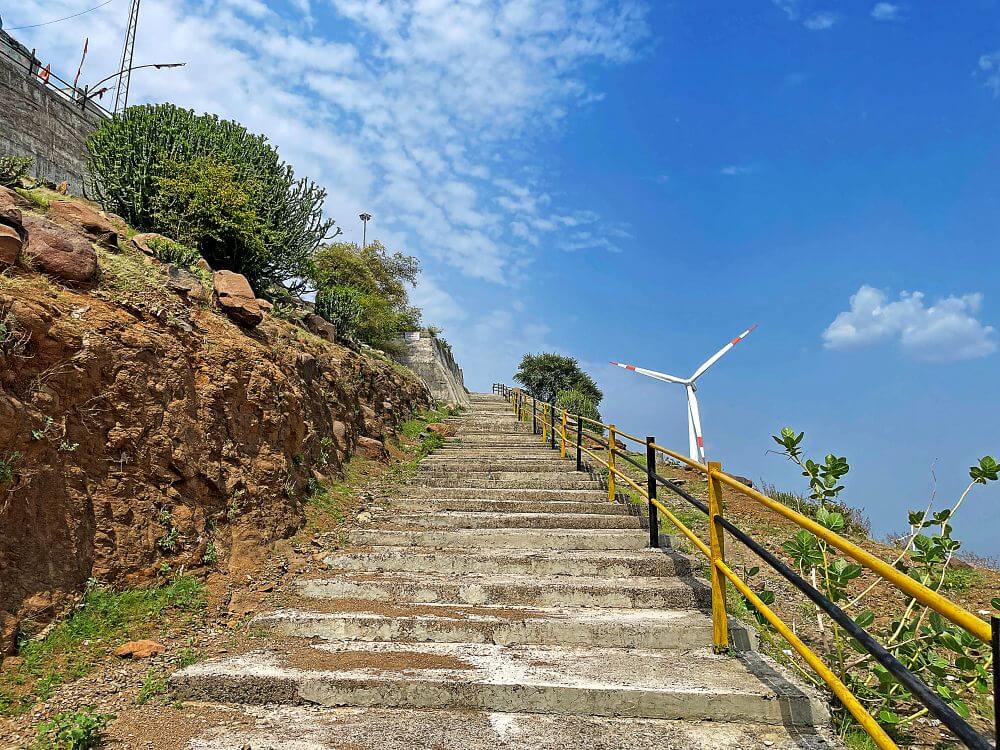
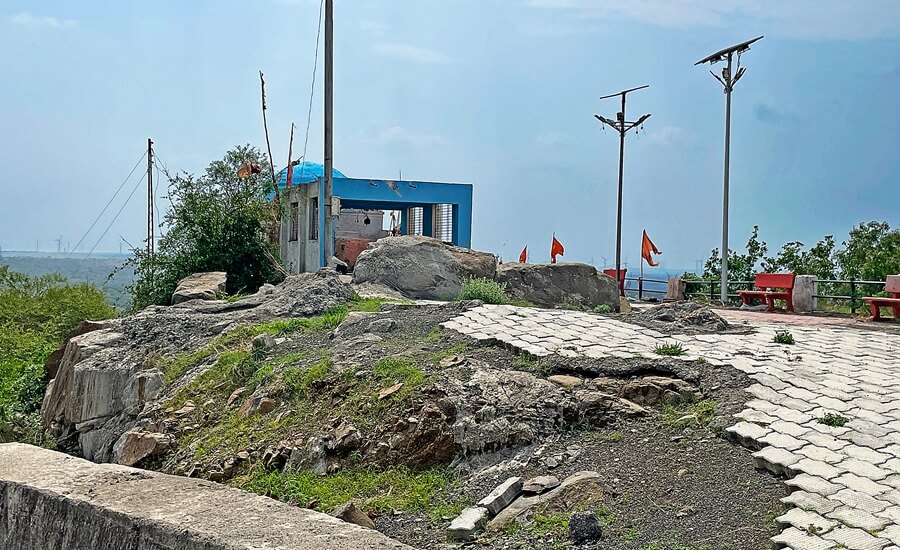
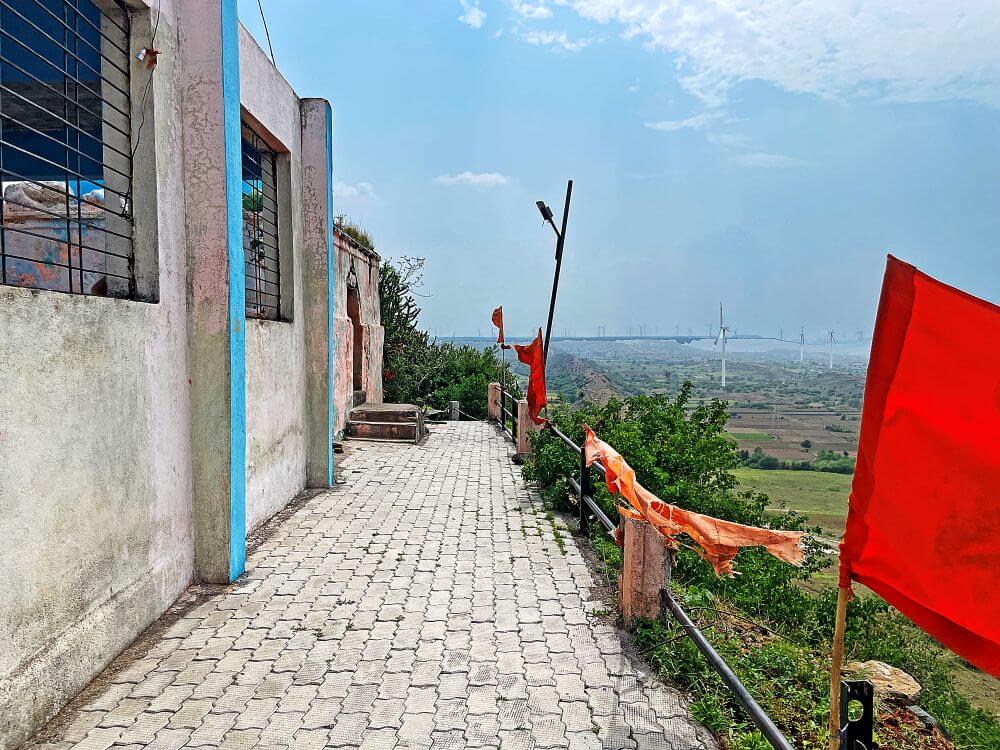
The ancient temple of Kalamdev is situated on a high hill. Vehicles can reach the road at the foothills of the mountain. The temple’s administrative building is located near these foothills. Facilities for devotees are provided here during the fair and at other times. From here, one enters the temple courtyard on the hilltop by climbing a dirt path and 105 steps. Iron railings are installed on both sides of this courtyard for safety. Beyond this is a sabhamandap (assembly hall) with walls on two sides and a roof overhead. This hall was built in recent times and has windows in its walls.
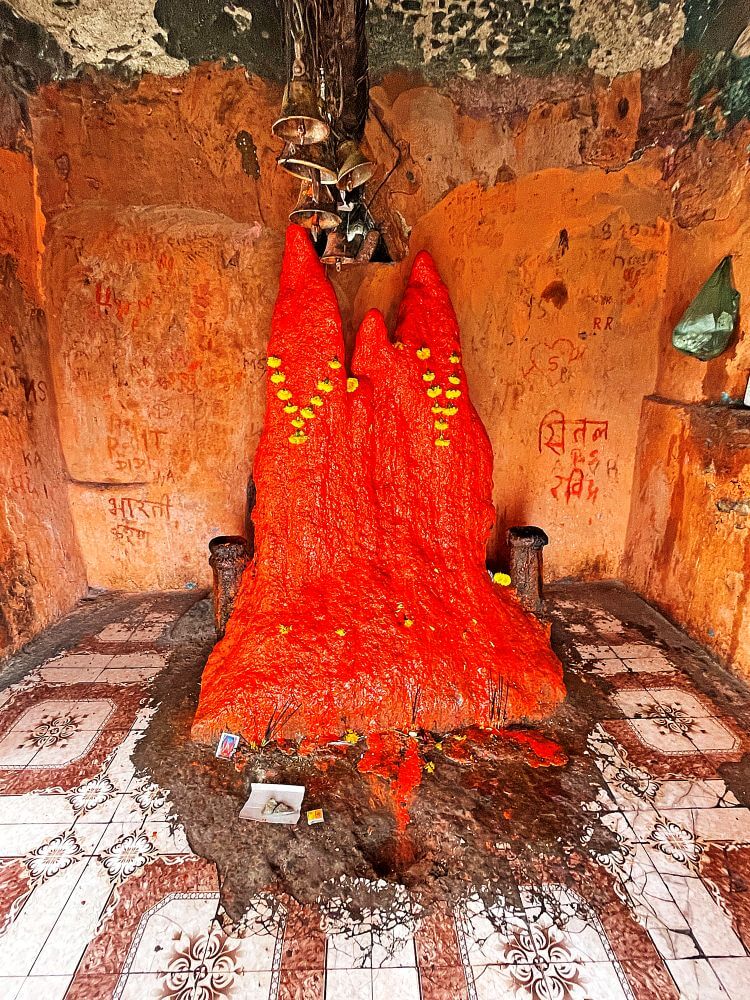
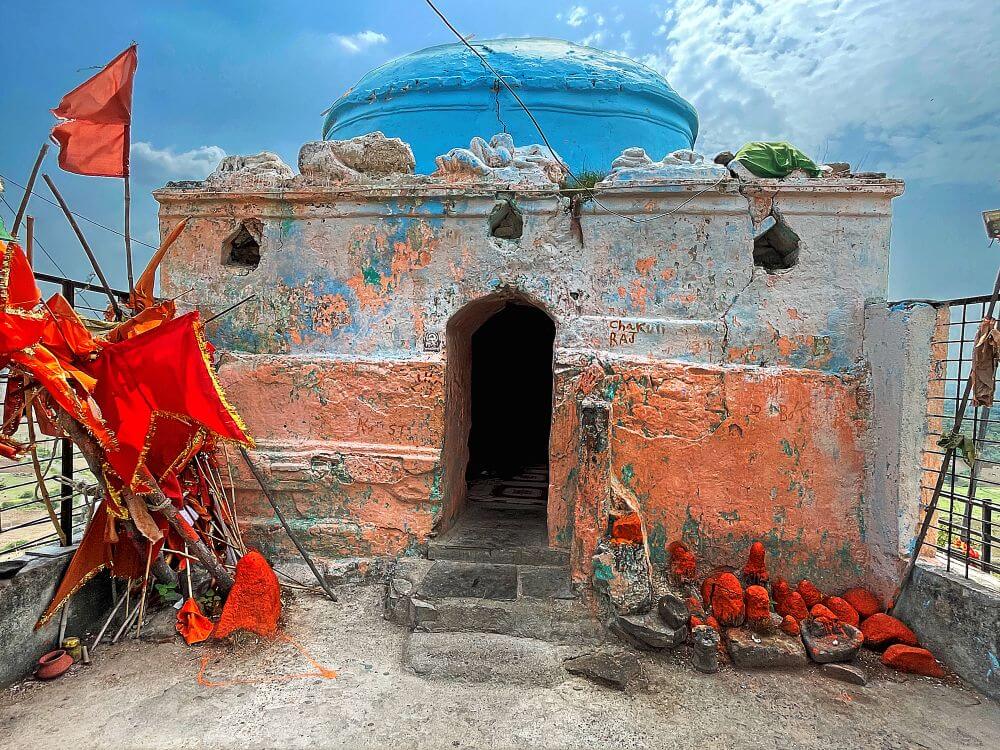
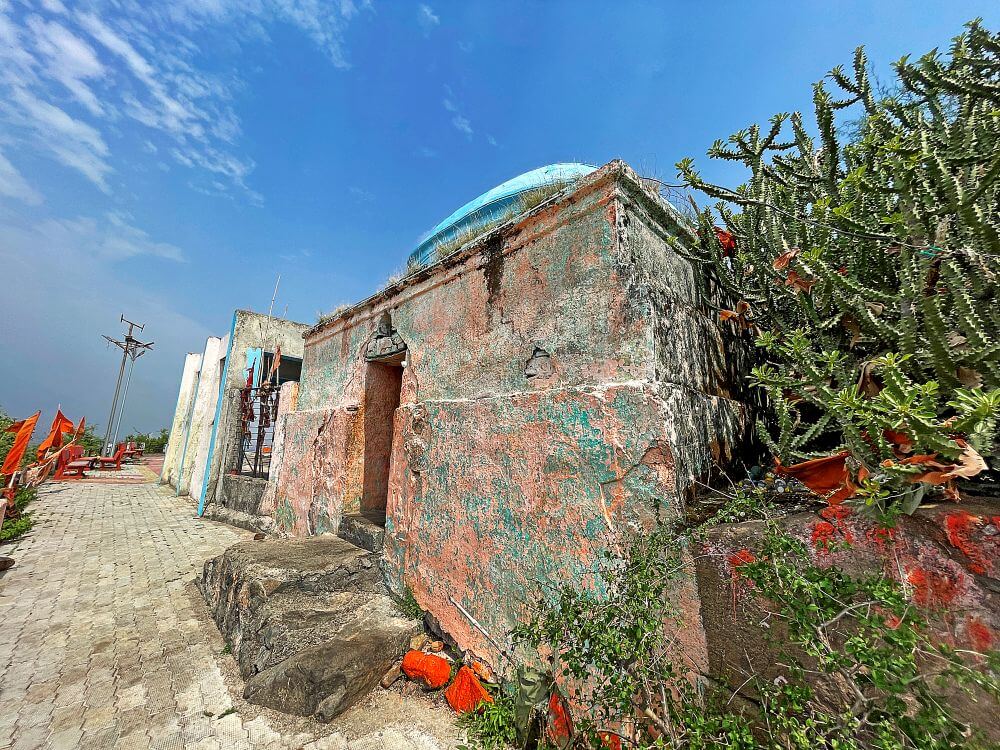
Further ahead is the small sanctum sanctorum (garbhagriha) of the temple. Although the shrine is very ancient, the temple’s construction is of a very simple style. In front of the entrance to the sanctum is a stone for breaking coconuts, and there are lamp niches in the front wall. Inside the sanctum is the swayambhu (self-manifested) stone idol of Kalamdev, smeared with vermilion. Currency coins and notes are stuck all over the deity’s body. On both sides of the idol are ancient stone lamps that remain lit continuously. There are two lamp niches each on the left and right walls of the sanctum. There is an entrance on the right side to exit the sanctum. The roof of the sanctum features a dome-shaped shikhara topped with a kalash.
At some distance behind the temple, there is a narrow cave in the mountain cliff. The stones near the mouth of this cave are smeared with vermilion. Here, the prasad of shira (semolina pudding) prepared by the devotees is offered. This offering is referred to as ‘Kadhai.’ It is a tradition to place the shira on a tree leaf, top it with a flower, and offer the leaf before the deity.
The three-day annual fair is celebrated with great enthusiasm starting from Margashirsha Shuddha Panchami, which is referred to as Nag Panchami or Nag Diwali in the tribal community. During this time, thousands of devotees from Nandurbar district as well as the states of Gujarat and Madhya Pradesh come for the deity’s darshan and to fulfill their vows. On this occasion, coconuts, ‘Kadhai’ (semolina shira), as well as roosters and goats are offered to the deity. Amidst the sound of drums and cymbals, the Dev-Rishis perform dances, and songs are sung in praise of the deity and for the well-being of their clans. During the three-day fair, the area takes on the appearance of a marketplace with stalls selling food items, household goods, tools, agricultural implements, and clothing.
This sacred temple stands as a testament to deep spiritual devotion, ancient architectural grandeur, and rich local cultural traditions.
The sanctum sanctorum houses the divine idol consecrated according to ancient Vedic traditions, surrounded by serene courtyards and traditional temple architecture.
Navratri, Maha Shivratri, Annual Temple Jatra & Deepotsav
Compare and book flights, secure top-rated local hotels near the temple, hire reliable guides, and rent cars instantly.
Extend your pilgrimage by visiting other highly sacred temples located nearby.


Add ₹999 more to unlock FREE SHIPPING!
Your sacred cart is currently empty.
Shop Photo FramesFill in your delivery details below to place your order.
Add comment