
Add ₹999 more to unlock FREE SHIPPING!
Your sacred cart is currently empty.
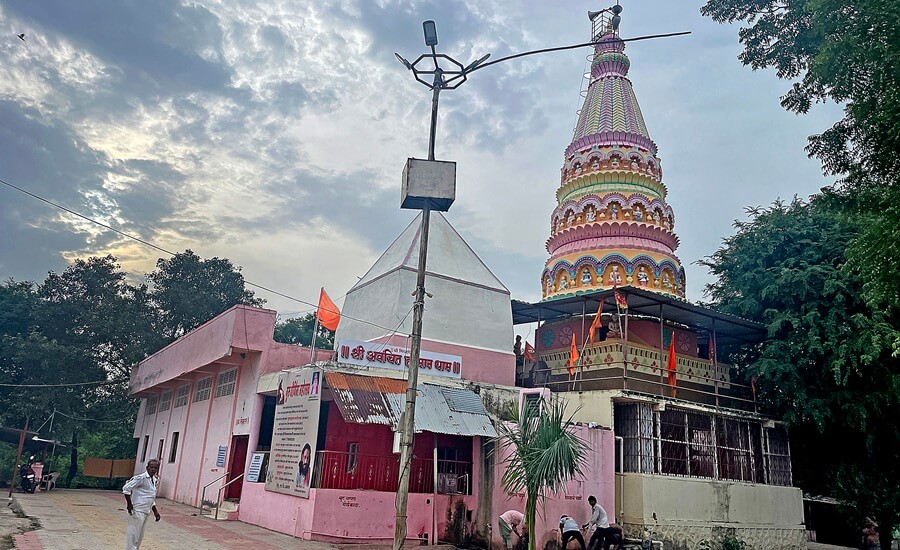
Shop Photo FramesThe Awachit Hanuman Mandir in Ridhur village, situated on the banks of the Tapi River in Jalgaon district, is a renowned ancient temple in Khandesh, including Jalgaon. In earlier times, this temple was built in the Hemadpanti style. Devotees firmly believe that Lord Hanuman here is a living deity, who grants boons and fulfills the desires of His devotees. A unique feature of this Hanuman murti is that it is entirely covered with a coating of butter. Due to this, the shrine is famous throughout Khandesh as ‘Loni Hanuman’ (Butter Hanuman). It is said that no matter how intense the summer heat, the butter on this murti never melts.
The legend of this temple states that in ancient times, the dairy business flourished in this area. Local cowherds would bring their cattle here to graze. There was a banyan tree at this spot, and the cattle would graze around it. One day, Lord Hanuman appeared in a vision to a cowherd, saying, ‘I am beneath the banyan tree; if you search there and consecrate Me, the village will prosper.’ The cowherd informed the villagers about this vision. However, the landowner of the plot where the banyan tree stood objected to the digging, so no excavation could take place. A few days later, Lord Hanuman Himself appeared in a vision to the landowner, revealing His presence beneath the banyan tree. Subsequently, when they excavated the spot, the murti of Hanuman was discovered.
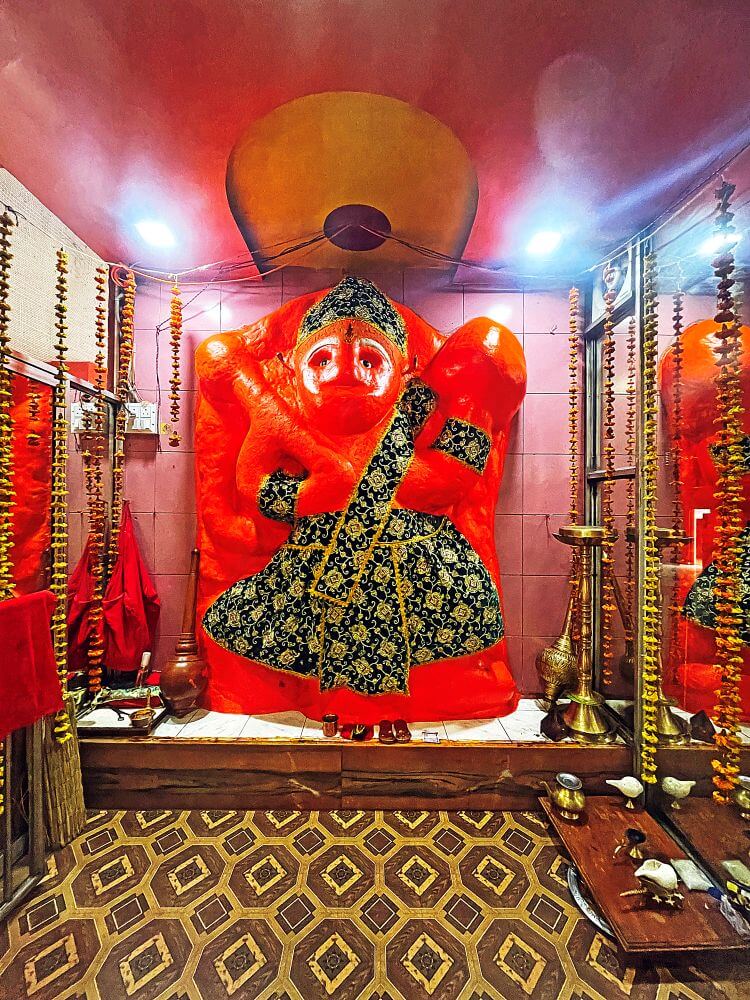
The villagers built a small temple on the same spot and consecrated the murti there. As Lord Hanuman appeared suddenly (awachit), He came to be known as ‘Awachit Hanuman’. According to this legend, the temple stands near the banyan tree even today. This Hanuman is also known by the name ‘Loni Hanuman’. The legend behind this name is that a guest had come to Ridhur village to visit his relatives. Suddenly, the guest’s cow stopped giving milk. This caused him great worry. The guest came to the temple to have darshan of Awachit Hanuman, and after his darshan, he prayed to Hanuman, saying, ‘O Lord, if my cow starts giving milk again, I will bring butter from that milk and offer it to You.’ The very next day, the guest’s cow began to give milk. After some days, the guest returned to his relatives in Ridhur village. He thought of going in the morning to offer a ball of butter to Hanuman and then went to sleep. But that very night, the house where he was staying suddenly caught fire. In a short while, all the belongings in the house were consumed by the flames. However, the butter, hanging from the ceiling in a pot, remained untouched. Thereafter, the butter was offered as Naivedya to Awachit Hanuman. Since then, it has become a tradition to apply sindoor-mixed butter to the deity on Purnima and Amavasya. It is said that once the butter is applied, it never melts, no matter how hot the summer. As a result, layers upon layers have accumulated, and the original two-and-a-half-foot-tall murti has now grown to seven feet in height and similarly in width. Many devotees apply a coating of butter to this Hanuman after their vows are fulfilled. This is why this Hanuman is famous as ‘Loni Hanuman’.
In the year one thousand nine hundred and eighty-four, Swami Madhavdas, who came from Kolgaon in Ahilyanagar, transformed this area. He had served in the army. After experiencing some divine revelations, he left his work, embraced asceticism, and went to Gujarat. There, he found his Guru and, while traveling, arrived in Jalgaon. In Jalgaon, he learned about this temple. From then on, he began to serve Lord Hanuman here with regularity. After the renovation that took place a few years ago, the temple has acquired its present form.
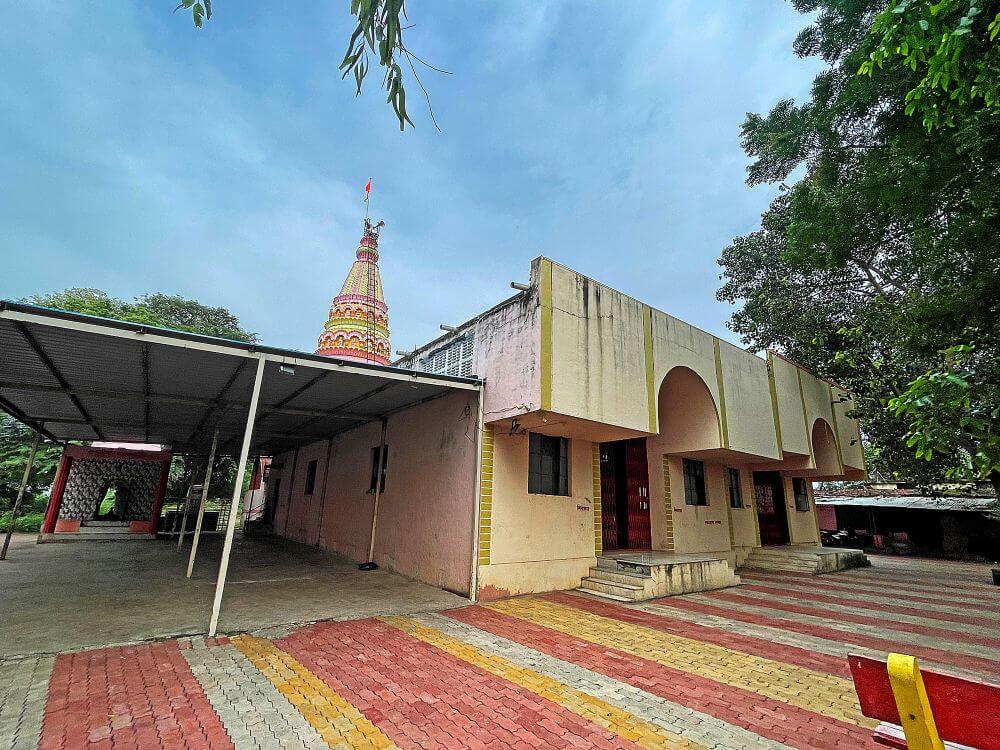
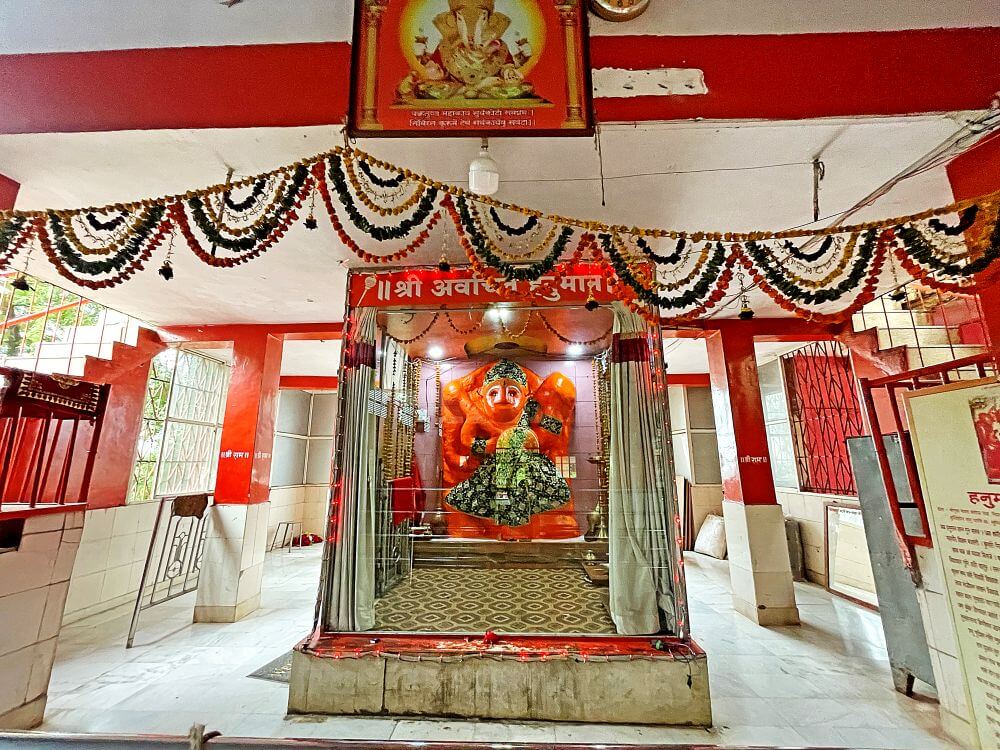
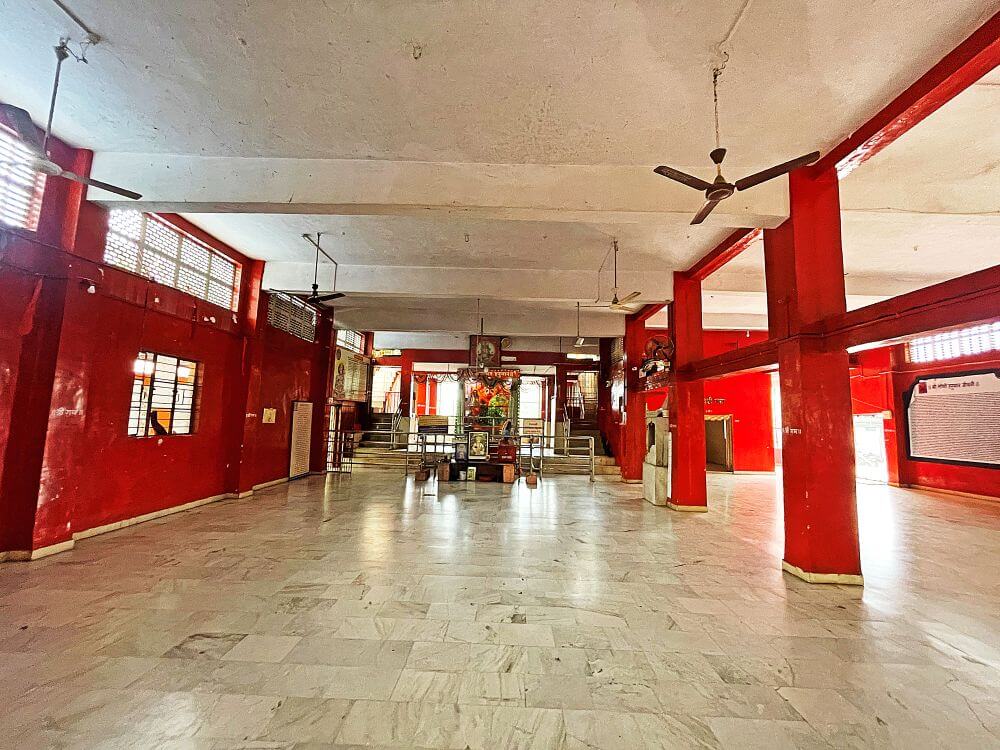
The spacious temple courtyard is paved everywhere with paver blocks. The structure of the Awachit Hanuman Mandir comprises a Garbhagriha (sanctum sanctorum) with a Sabhamandap (assembly hall), Antarala (vestibule), and Pradakshina Marg (circumambulatory path). The enclosed Sabhamandap here is spacious. The Antarala here is at a higher level than the Sabhamandap. Within the Antarala, beyond the Pradakshina Marg, is the Garbhagriha. On the Vajrapitha in this Garbhagriha is a sindoor-anointed murti of Hanuman, approximately seven feet tall. In one hand of this murti is the Dronagiri mountain, and in the other, a mace. A silver crown adorns His head, and the deity’s eyebrows and eyes are also made of silver. It is said that this murti is entirely made of butter. The murti that was found during excavation after the ancient vision is now kept in a sealed underground chamber beneath the temple.
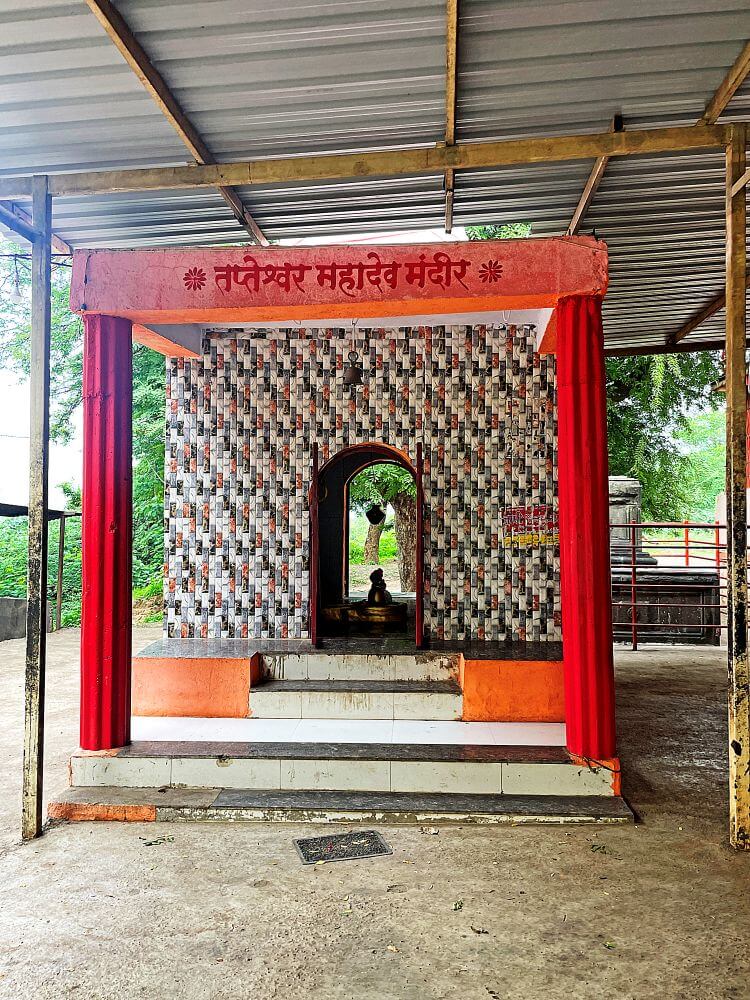
In addition, within the temple complex and its vicinity, there are separate temples dedicated to Ram Darbar, Kalbhairav, Ekadashi Mata, and Tapteshwar Mahadev. In the rear part of this temple is the samadhi of a Swami named Bhajanpuri. This samadhi is said to be seven hundred and fifty years old. On the day of Hanuman Jayanti, a grand festival is celebrated in this temple. At this time, Hanuman is adorned with a traditional garment called a Chola. Before being draped, this garment is soaked in sindoor and jasmine oil. Thereafter, a ritualistic puja of Hanuman is performed. Bhajans, Kirtans, and Jagars are held. Mahaprasad is distributed to the devotees who attend.
This sacred temple stands as a testament to deep spiritual devotion, ancient architectural grandeur, and rich local cultural traditions.
The sanctum sanctorum houses the divine idol consecrated according to ancient Vedic traditions, surrounded by serene courtyards and traditional temple architecture.
Navratri, Maha Shivratri, Annual Temple Jatra & Deepotsav
Compare and book flights, secure top-rated local hotels near the temple, hire reliable guides, and rent cars instantly.
Extend your pilgrimage by visiting other highly sacred temples located nearby.


Add ₹999 more to unlock FREE SHIPPING!
Your sacred cart is currently empty.
Shop Photo FramesFill in your delivery details below to place your order.
Add comment