
Add ₹999 more to unlock FREE SHIPPING!
Your sacred cart is currently empty.
Shop Photo FramesThe sacred pilgrimage site of Badrinath, nestled in the divine land of Uttarakhand as part of the Char Dham Yatra, is situated in the Chamoli district of Uttarakhand, on the banks of the Alaknanda River. It is believed that when Bhagwan Vishnu was seated there in penance, Devi Lakshmi took the form of a Badari, or a jujube tree, to shield Him from the sun. Thus, this holy place came to be known as Badrinath. The original temple of Badrinath, dedicated to Bhagwan Vishnu, was constructed by Adi Shankaracharya in the eighth century.
A renowned temple of this very Badrinath is located in Bahadurpur, in Parola taluka of Jalgaon district. This temple, famous as Prati Badrinath Dham, is the revered village deity and a sacred place of faith for thousands of devotees in the surrounding area.
The legend of the temple states that a Brahmin family, who had migrated from Uttar Pradesh, resided in the village of Bahadurpur. Approximately एकशे वर्षांपूर्वी, the couple Ramlal Mishra and Kalavatibai from this family embarked on a Chardham pilgrimage. While on their pilgrimage, after having darshan of Shri Vishnu at Badrinath, they The couple was deeply moved. Gazing upon that enchanting murti of Bhagwan Vishnu, Shri Ramlal felt a profound yearning to touch His lotus feet. He humbly requested the pujaris there for permission to do so. However, the pujaris firmly declined his request. This saddened Shri Ramlal greatly. Due to not being able to touch the Lord’s feet, he could not sleep until late into the night.
The divine form of Śrī Viṣṇu was constantly before their eyes. Around dawn, Badarīnārāyaṇa Himself appeared to them in a dream vision, saying, “I am pleased with your devotion, and I shall fulfill your wish. I am ready to come with you to your village. There, perform My Prāṇapratiṣṭhāpanā according to the scriptural injunctions. In this way, I shall always be near you.”
Awakening with a start, Ramlal ji recounted the divine vision to his wife. Both were overcome with immense joy. They immediately set out for their village, Parola. Upon arriving here, they shared the sacred vision with the villagers. The villagers, too, resolved to assist them. Shri Ramlal Mishra commenced the construction of a temple on his own land. He commissioned the sacred murtis of the Badrinath Panchayatana from the revered artisans, Shri Govindram Uderam of Rajasthan. These divine forms were then consecrated and installed in Bahadurpur on Jyeshtha Shukla Dashami, Thursday, the twelfth of June, nineteen hundred and twenty-four. According to the records here, the expenditure for these holy murtis at that time was one thousand, two hundred and twelve rupees, and for the temple, it was nineteen thousand, one hundred and ten rupees.
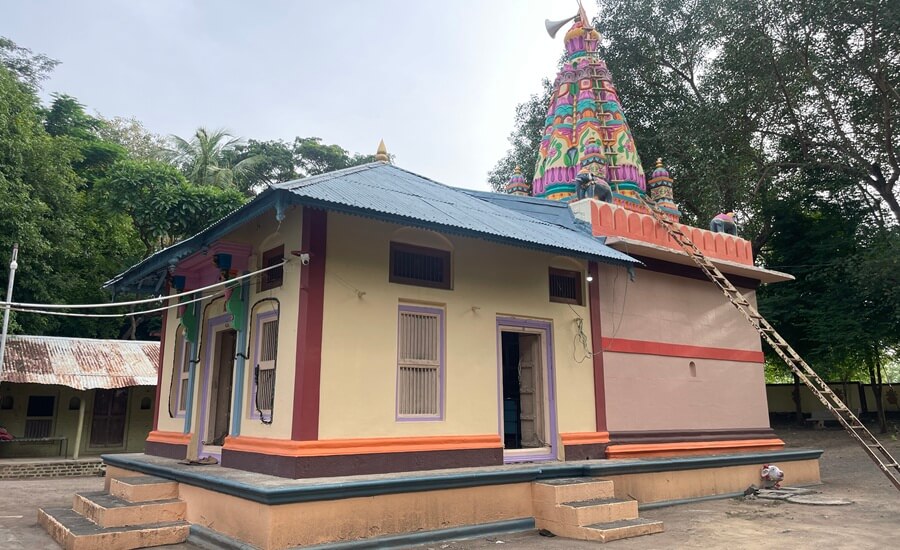
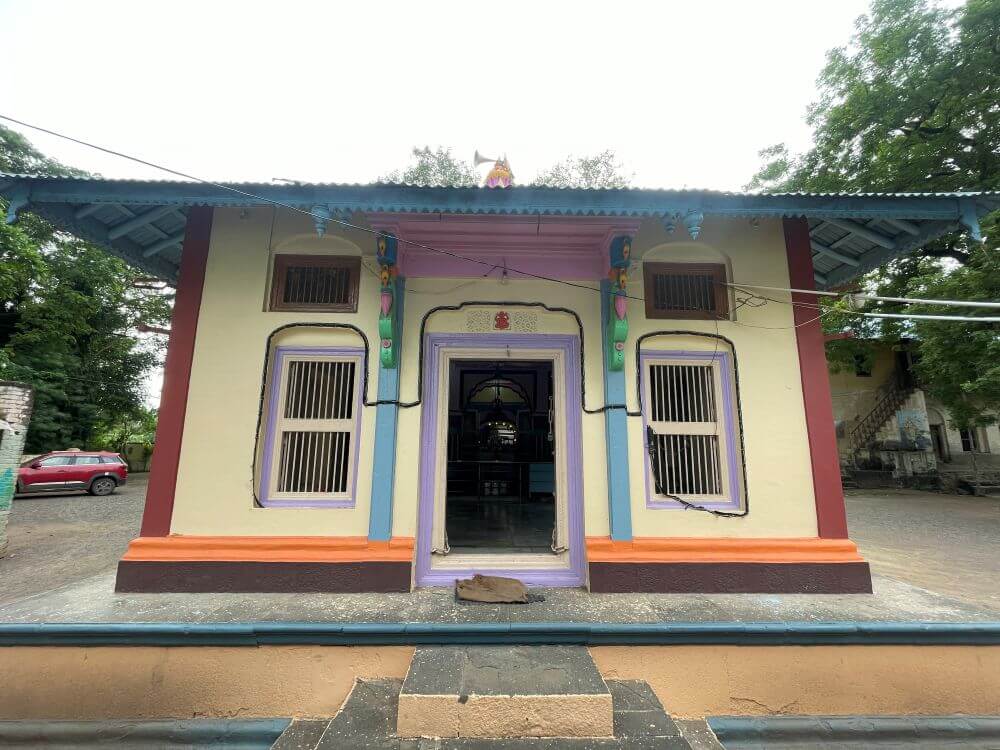
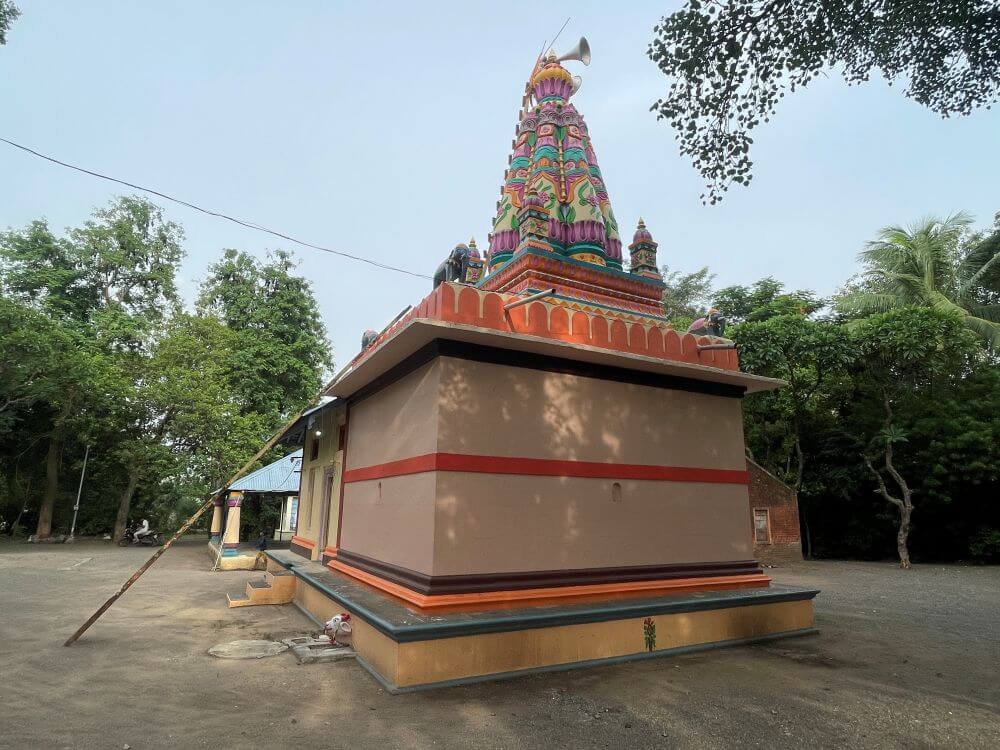
Upon entering through the main doorway of this temple, situated at the outskirts of Bahādarapur village, one steps into the courtyard. The path from the entrance to the temple is flanked by tall trees on both sides, making the area feel serene and beautiful. This temple of Śrī Badarīnārāyaṇa stands on an adhiṣṭhāna (plinth) of one and a half to two feet in height. The temple itself is built on the inner side of the adhiṣṭhāna, leaving space for a pradakṣiṇā patha (circumambulatory path). The temple’s structure comprises a sabhāmaṇḍapa (assembly hall), an antarāḷa (vestibule), and a garbhagṛha (sanctum sanctorum). On the lalāṭabimba (lintel) of the temple’s wooden entrance, there is an idol of Śrī Gaṇeśa. This entrance leads into the sabhāmaṇḍapa. To exit this enclosed sabhāmaṇḍapa, there are also doorways on both the left and right sides.
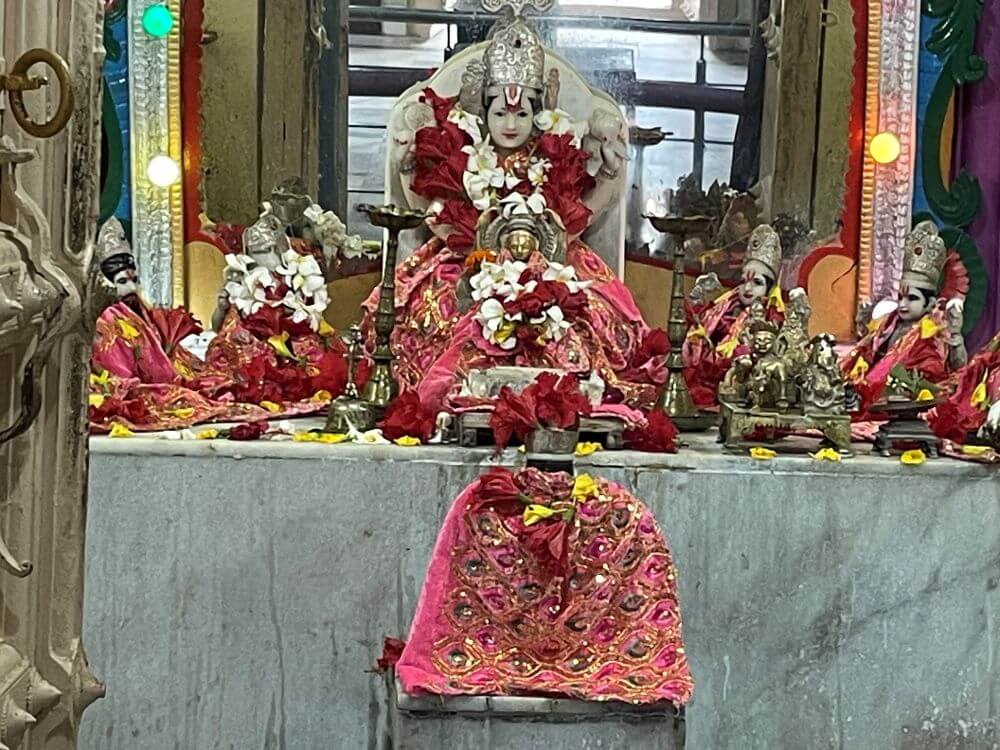
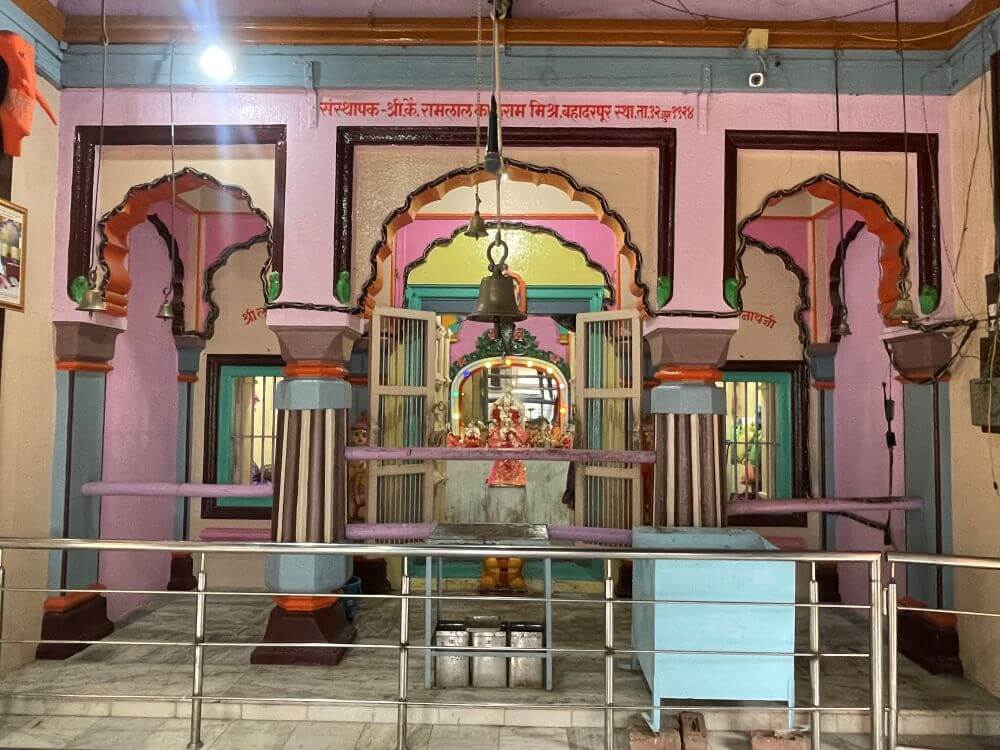
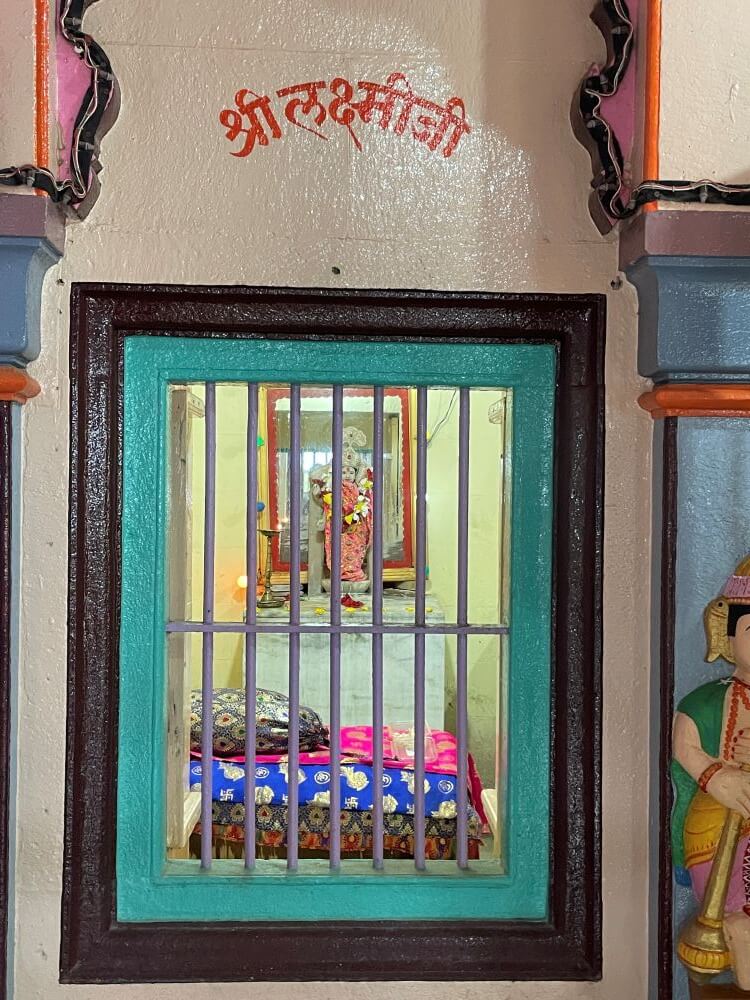
In the antarala, which is slightly elevated above the sabhamandapa, there are three arches connecting four pillars. Through the central arch, one can behold the Badri-Narayana Panchayat enshrined on the vajra-pitha within the garbhagriha. Alongside the murti of Badri-Narayana, there are murtis of Narada, Nara-Narayana, Lakshmi, and Kubera. Adjacent to this main garbhagriha, on both sides, are sub-garbhagrihas. In one of these, Devi Lakshmi is enshrined, and in the other, Bhagavan Kedarnath resides. Additionally, there are marble sculptures of Ramlal, the paramount devotee of Badri-Narayana and founder of this sacred temple, and his revered wife.
The temple’s assembly hall is covered by a tin shed, with a small spire gracing its centre. The main spire, which rises above the sanctum sanctorum, is adorned with miniature replicas of spires. At each of the four corners of this spire stand four smaller spires and elephant sculptures. The hall in front of the temple hosts numerous religious and auspicious ceremonies. A yatra is held here for four days, commencing from Kartik Shuddha Trayodashi. On Chaturdashi, the Rathotsava, or chariot festival, is celebrated. This festival has been observed since the year एक हजार नऊशे अठ्ठावीस. The day after Poornima, a Mahaprasada programme is held. Many devotees from across the district and married daughters from the surrounding area reverently attend this yatra.
This sacred temple stands as a testament to deep spiritual devotion, ancient architectural grandeur, and rich local cultural traditions.
The sanctum sanctorum houses the divine idol consecrated according to ancient Vedic traditions, surrounded by serene courtyards and traditional temple architecture.
Navratri, Maha Shivratri, Annual Temple Jatra & Deepotsav
Compare and book flights, secure top-rated local hotels near the temple, hire reliable guides, and rent cars instantly.
Extend your pilgrimage by visiting other highly sacred temples located nearby.


Add ₹999 more to unlock FREE SHIPPING!
Your sacred cart is currently empty.
Shop Photo FramesFill in your delivery details below to place your order.
Add comment