
Add ₹999 more to unlock FREE SHIPPING!
Your sacred cart is currently empty.
Shop Photo Frames. Bhairava, an fierce and formidable manifestation of Lord Shiva, is fundamentally a folk deity. Bhairava is considered a principal attendant (gana) of Bhagwan Shankara. Furthermore, the southern face of the Panchamukhi Shiva is also known as Bhairava. He is the family deity (kuladaivata) for many in Maharashtra. Consequently, there are numerous Bhairavnath temples across the state. However, the Bhairavnath Temple at Pangare is unique for its custom of devotees pulling twelve bullock carts with their hair during the annual yatra. This tradition has been observed for hundreds of years. Every year, a massive crowd gathers at Pangare for this yatra.
In some scriptures, Bhairavnath is regarded as the son of Kali Mata. In many places, He is also revered as a Kshetrapala, the protector of a sacred space. In ancient Shiva temples, Bhairava is invariably present in some form. In olden times, it was believed that one had to seek Bhairava’s permission before having darshan of Shankara, and only if He assented would the darshan of Shiva be granted. In many Devi temples, Bhairava also appears as a guardian or doorkeeper. If Shakti is worshipped without including Bhairava, it is considered fruitless. Bhairava is associated with a dog or rides upon one, hence He is called Shvashva (one whose steed, or vehicle, is a dog). According to Shaiva Agamas, there are eight classes of Bhairava. Their eight principal forms are called ‘Ashtabhairava’. In villages, Bhairavnath is enshrined under various names such as Kalbhairavnath, Kalbhairi, Bahirinath, Bhairi(nath), Bhairoba, and so forth.
This Hemadpanthi style temple of Bhairavnath in Pangare is ancient. According to information received from the temple priests, this temple was renovated long ago by Punyashlok Ahilyabai Holkar. Even after that, signs of periodic improvements to the temple are visible. It is said that previously this was a Mahadev temple, and the original abode of Bhairavnath was one and a half kilometres uphill from this temple. Once, after a devotee received a divine vision, two stones were found in this temple as a sign of Bhairavnath’s presence. These very stones were then consecrated in the temple as Bhairavnath and Jogeshwari. However, even now, in the month of Ashadha, Bhairavnath’s palanquin goes to the original site to seek an oracle (kaul). Only after receiving it does it return to this temple. This tradition is observed every year. The present idols of Bhairavnath and Jogeshwari seen in the sanctum sanctorum of this temple were installed at a later time.
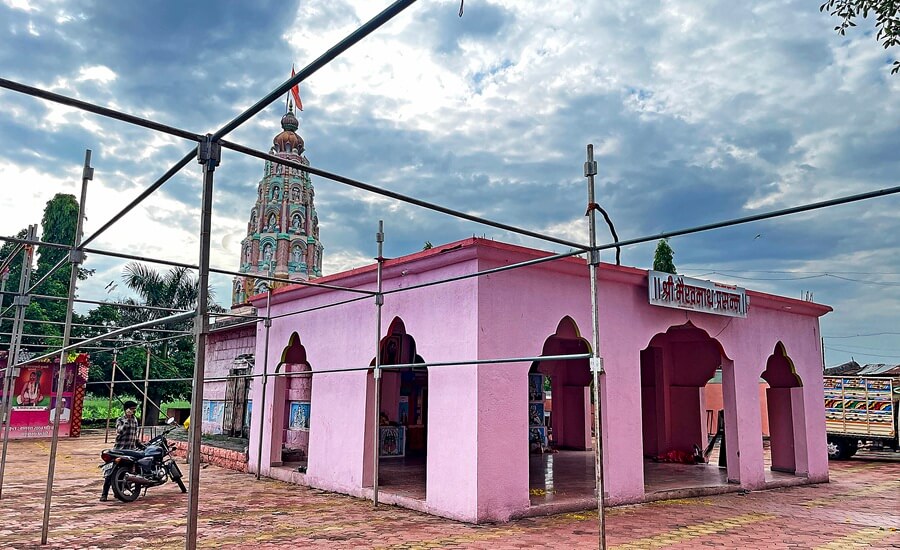
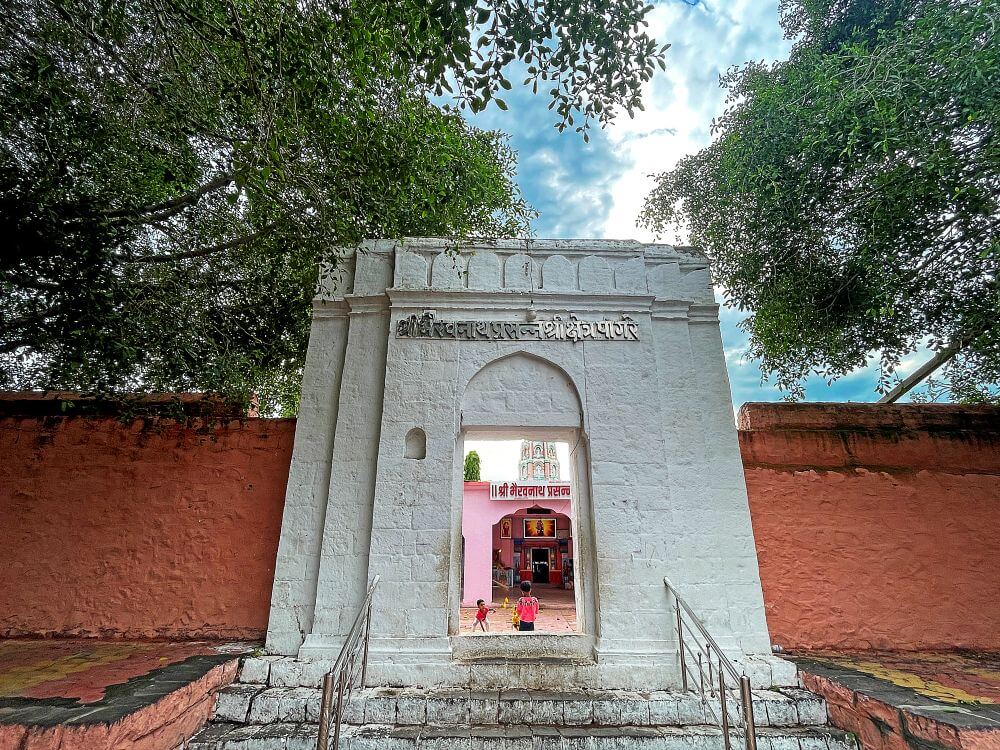
This Bhairavnath temple is located in the central part of Pangare village. Surrounding the temple is a high compound wall with a fortress-like entrance. After ascending a few steps, one enters the temple courtyard through this gateway. Within the courtyard, inside the compound wall, there are two stone lamp towers (deepmalas). Additionally, there are some Sati-shilas (memorial stones for Sati) and Viragals (hero stones). To the left of the entrance, there are alcoves (ovaryas) in the wall. Twelve bullock carts are kept in these alcoves. It is said that during the festival, all these bullock carts are connected to each other, and specific individuals pull them with their hair.
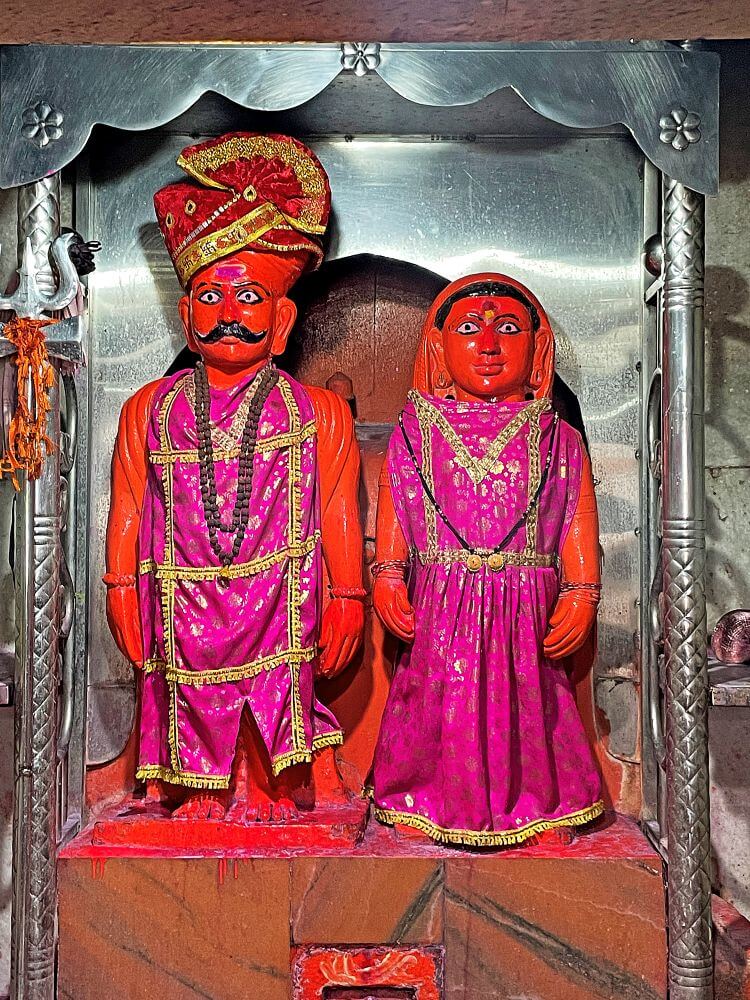
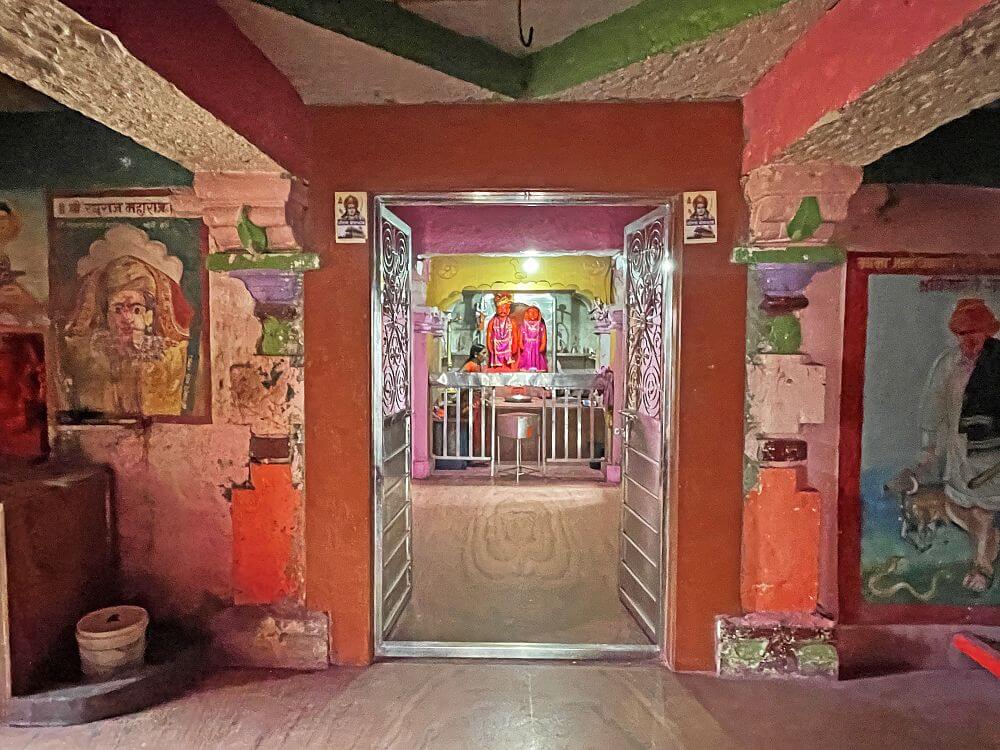
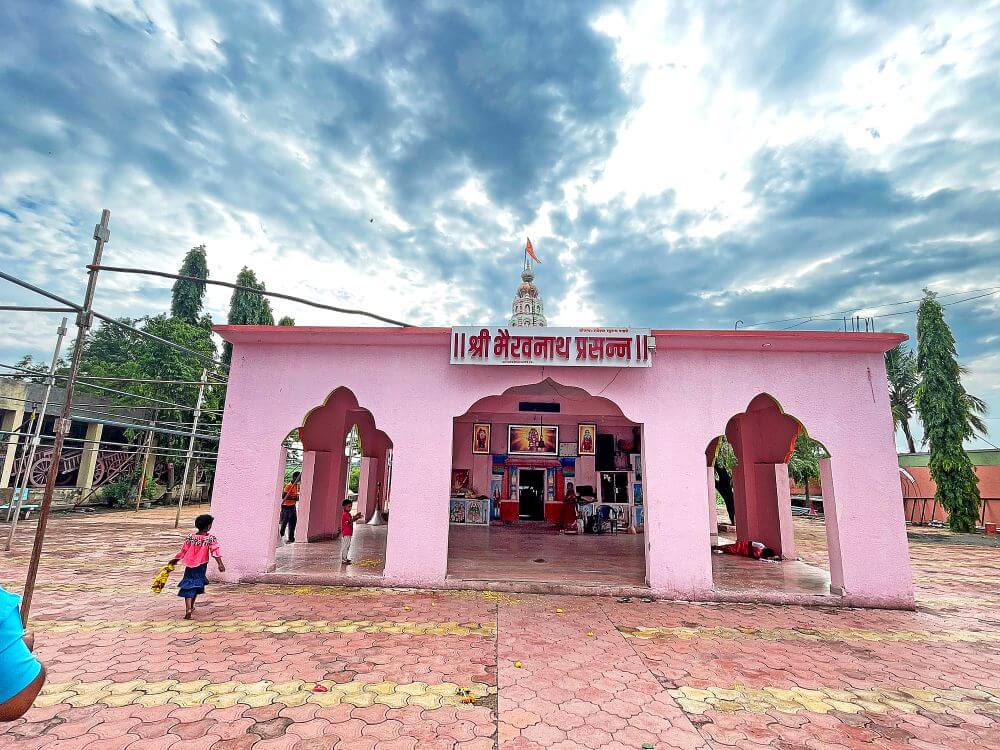
The temple’s structure comprises a Mandapa, Sabhamandapa, Antarala, and Garbhagriha. The Mandapa here appears to have been built in front of the original temple at a later period. On the facade wall of the Sabhamandapa, there are doorkeeper sculptures on both sides of the entrance. At the base of the pillar branches of the entrance, welcoming figures (svagatika) and doorkeeper sculptures are carved. A Ganesha idol is on the Lalatabimba (lintel). In the Devakoshtha (niche for deities) of the Sabhamandapa, there is an idol of Ganapati, and here is a wooden horse, which is Bhairavnath’s vehicle. During the festival, the deity’s procession takes place on this very horse. In the Garbhagriha, on the Vajrapitha, there are standing idols of Bhairavnath and Jogeshwari. Bhairavnath, with His resolute eyes and imposing moustache, wears a turban (pheta) on His head. Devi Jogeshwari has a veil (padar) on Her head and a mangalsutra around Her neck.
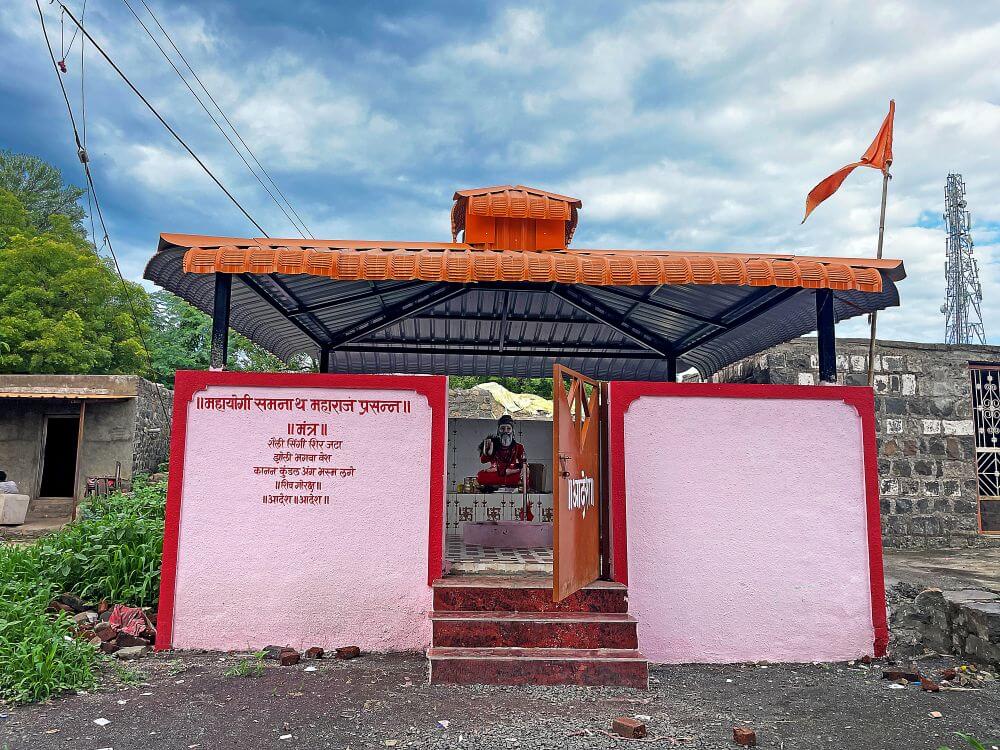
The shikhara (spire) above the Garbhagriha is five-tiered. All these tiers feature Devakoshthakas containing idols of various deities, saints, and sages. At the apex of the shikhara are two amalakas surmounted by a kalasha (finial). Behind the temple is the temple of Malinbai from Indapur. In front of the main temple gate are the samadhi sthanas (final resting places) of Lingnath Gosavi Davari Maharaj, who attained samadhi in the year १७९८ CE, as well as Mahayogi Somnath and Mugajibaba.
The main yatra held at this temple is known in the region as the ‘Bullock Cart Pulling Yatra’. Its main festival falls on Chaitra Pournima, which is Hanuman Jayanti. Prior to this, ghats (sacred pots) are installed in the village for nine days. Fasting is observed for these nine days. The two individuals responsible for pulling the carts during this yatra seclude themselves in a room for these nine days before the yatra, to avoid contact with anyone. On the day of the yatra, they pull these twelve bullock carts with their hair. Small children from the village are seated on these bullock carts. Devotees from not only the surrounding region but also from other states attend this yatra.
This sacred temple stands as a testament to deep spiritual devotion, ancient architectural grandeur, and rich local cultural traditions.
The sanctum sanctorum houses the divine idol consecrated according to ancient Vedic traditions, surrounded by serene courtyards and traditional temple architecture.
Navratri, Maha Shivratri, Annual Temple Jatra & Deepotsav
Compare and book flights, secure top-rated local hotels near the temple, hire reliable guides, and rent cars instantly.
Extend your pilgrimage by visiting other highly sacred temples located nearby.


Add ₹999 more to unlock FREE SHIPPING!
Your sacred cart is currently empty.
Shop Photo FramesFill in your delivery details below to place your order.
Add comment