
Add ₹999 more to unlock FREE SHIPPING!
Your sacred cart is currently empty.
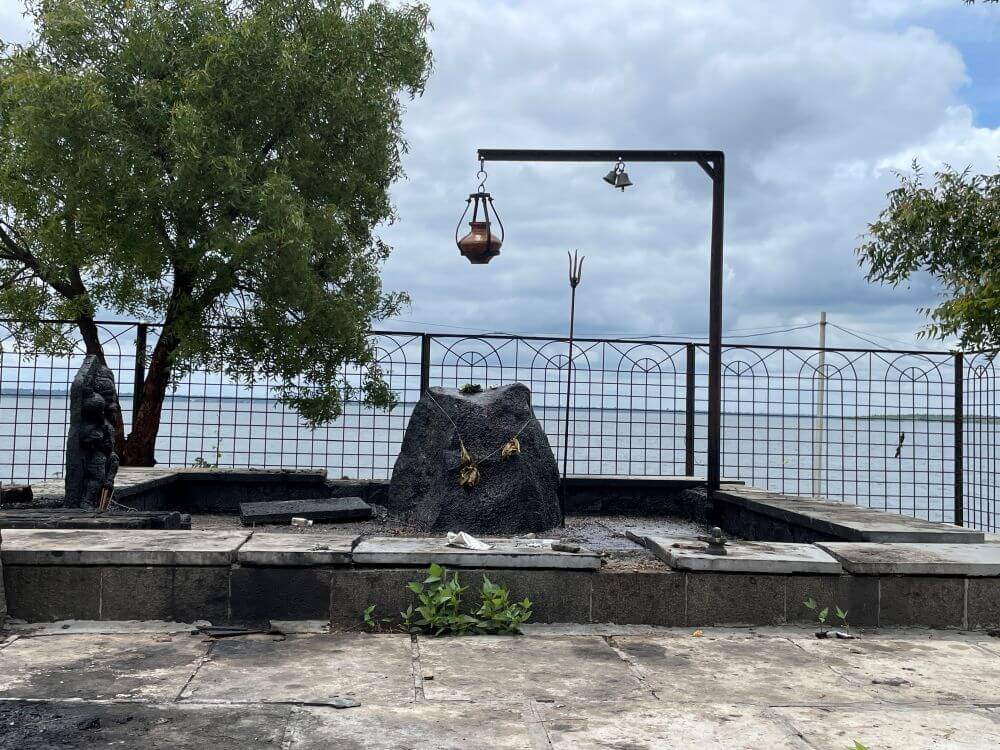
Shop Photo FramesThe Bhima River originates from Bhimashankar, the abode of Lord Mahadeva. Countless temples of Lord Shiva were built along this river as it flowed through various villages. It is believed that with the addition of the Linga temple at Chikalthan, the number of these temples reached one crore (ten million). Hence, this temple is known as Kotlingeshwar. Due to the Ujjani Dam, the original temple became submerged, so a few years ago, the villagers built a new temple on the riverbank, three kilometers away from the original site. Since then, many festivals and rituals that were celebrated in the original temple are now observed in this new temple.
This temple was originally built on the banks of the Bhima River in 1642. The legend of the temple states that there was once a shrine of Nath Maharaj at Mhaswad. A young girl used to serve the Maharaj there. After some time, she decided to return to her home. Pleased by her devotion, the Nath asked her to seek a boon. She requested, “Wherever I am, I should be able to see the face of my God.” The Nath granted her wish and said, “Your God will follow you to your village, but do not look back.” As the girl was heading home, she reached the banks of the Bhima River, which was in high flood. A voice from behind her said, “Cross the river; I am right behind you.” Relying on that faith, she stepped into the river. Overcoming the strong current, she reached the other shore. To see if the God following her had also managed to cross the turbulent waters, she looked back. The God was indeed behind her, but because she had looked back, He refused to proceed further. A temple was then built at that very spot, which is the Kotlingeshwar Temple.
When this ancient temple was submerged under the dam water, the villagers prayed to the Deity. It is said that in the summer of the year following the dam’s construction, the water level receded, and the temple emerged again. Overjoyed, the villagers relocated the idols from that temple to a new site about three kilometers away. The temple premises are spacious. With the dam water on three sides and lush greenery surrounding the temple, the atmosphere here is serene.
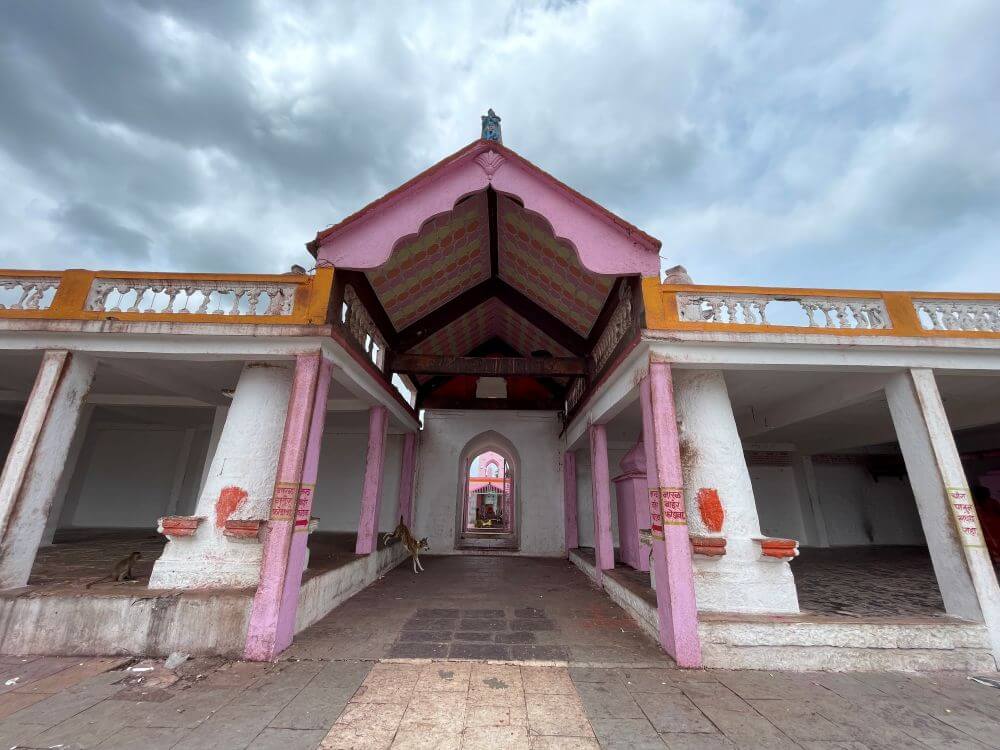
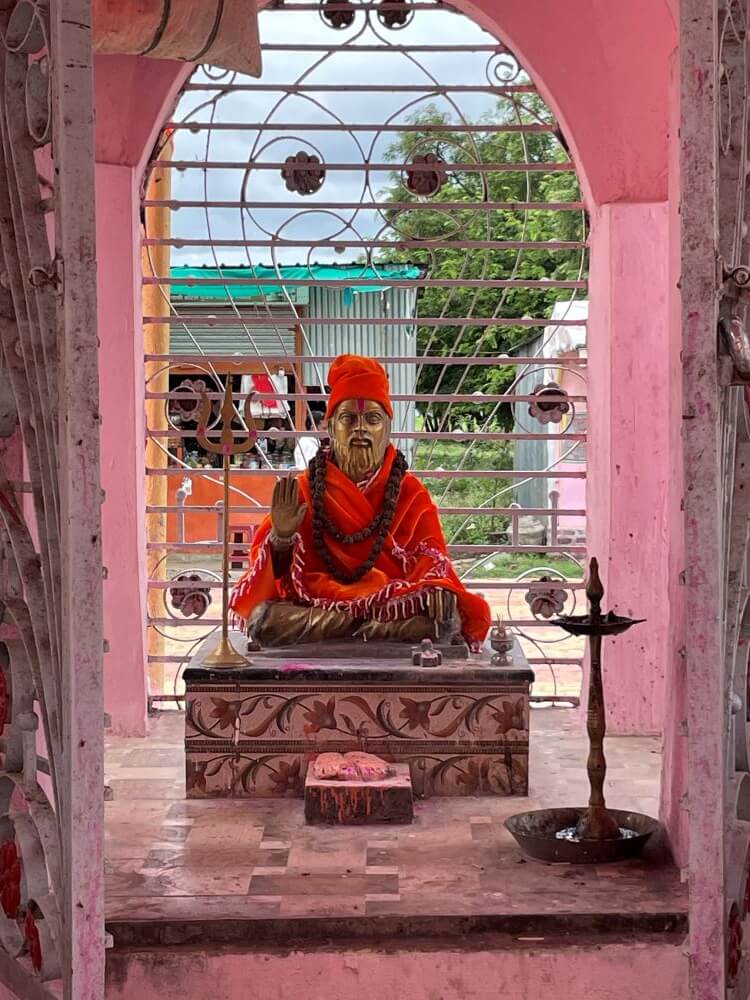
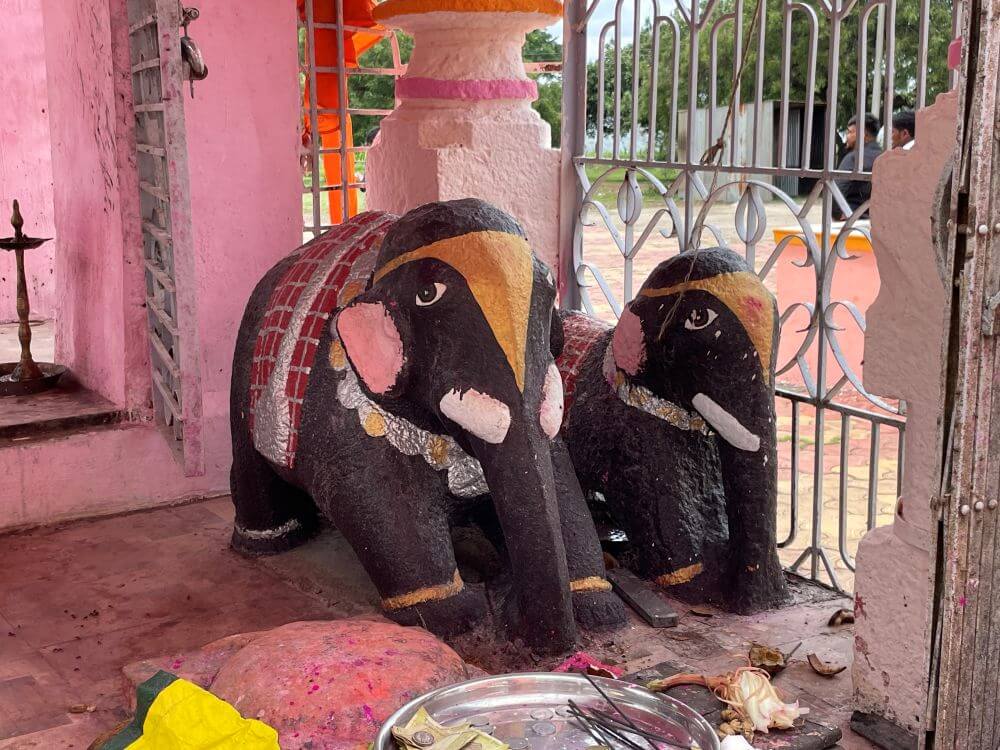
The fortification wall surrounding the temple features many arched alcoves (ovaris) on the outer side. The entrance to the temple is a three-story gateway built into this fortification. Opposite the entrance is a small temple containing a statue of a sage and sacred footprints (padukas). Additionally, there are sculptures of elephants and Nandi. One enters the temple courtyard through the arched gateway, which has guard rooms on the inside. There are also alcoves along the inner side of the fortification, adjacent to which stand two lamp towers (deepmalas). On the right side, there is a second multi-story entrance to the courtyard. In the center of the courtyard stands the stone-built Kotling Temple, which consists of a assembly hall (sabhamandap) and a sanctum sanctorum (garbhagriha). On the walls flanking the entrance to the assembly hall, there are two hero-stone (virgal) sculptures. Above the entrance, there is a Kirtimukh, and a statue of Lord Ganesha is placed at the lintel position.
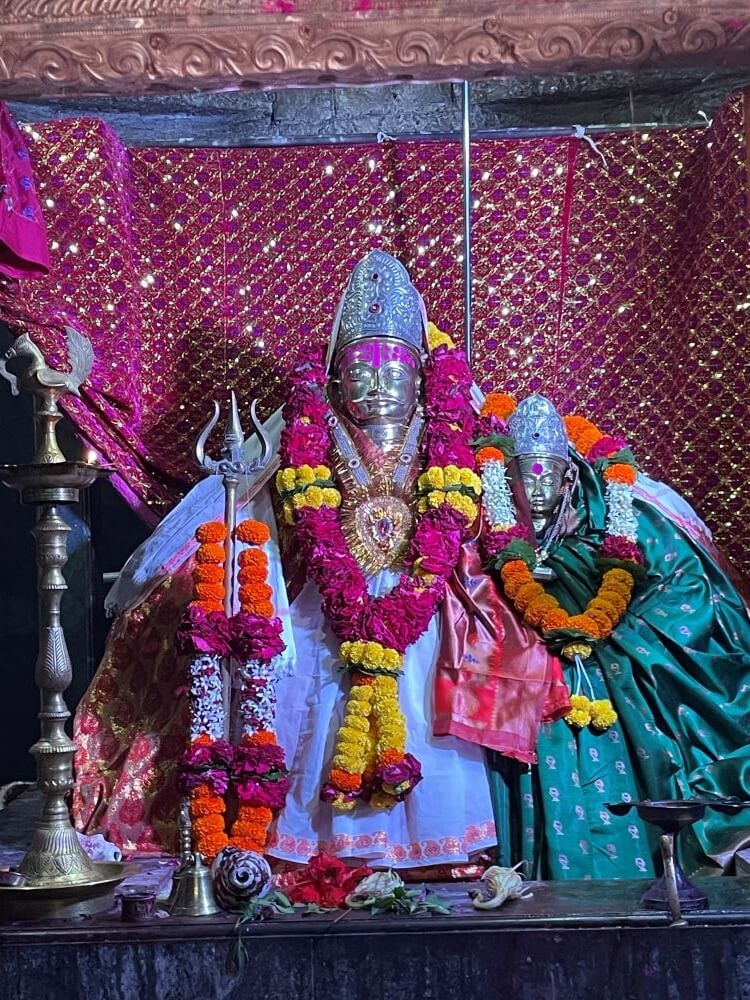
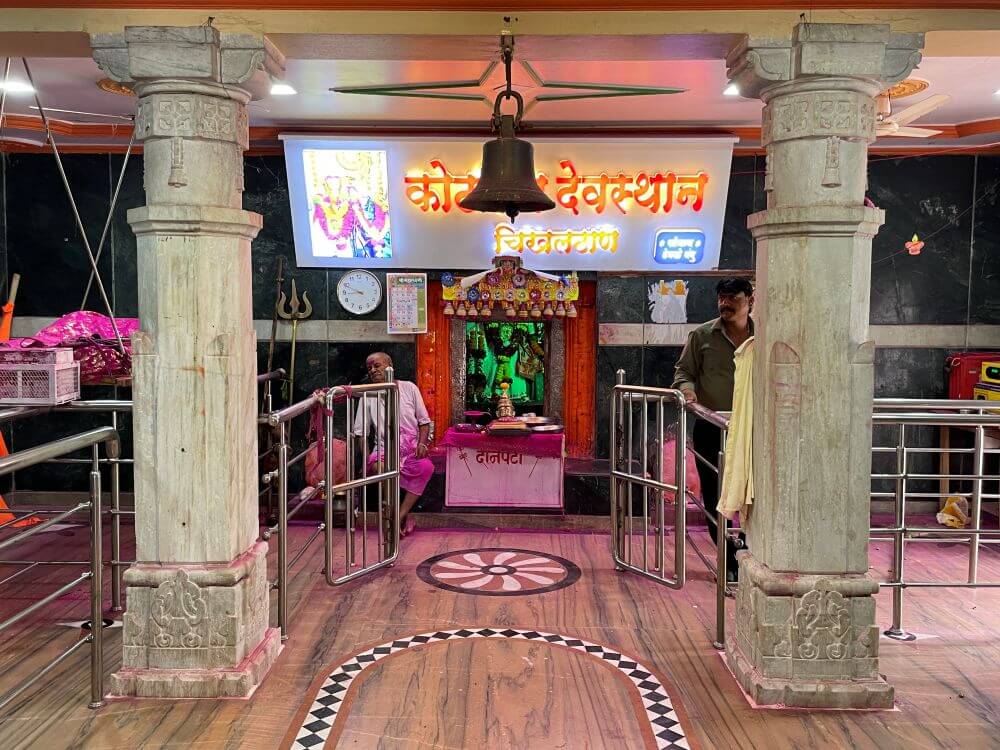
Through the entrance, one enters the enclosed assembly hall of the temple. Arrangements for queues have been made to manage the crowd of devotees. In the sanctum, the idols of Kotlingeshwar and Goddess Jogeshwari are placed on a diamond-studded pedestal (vajrapitha). Both idols are adorned with silver masks and crowns. Since the entrance to the sanctum is small, devotees must view the deities from the assembly hall itself. There is a tradition during the festival period where children, whose births were granted through vows to Kotlingeshwar, are gently dropped from the balcony of the assembly hall. They are caught safely by the Ghadsi and Salkari (temple attendants) standing below. The spire (shikhar) above the sanctum has ten tiers; the first three tiers feature intricate pillar carvings, while the remaining tiers are adorned with niches for deities. At the pinnacle of the spire are two amalakas and a kalash.
A grand fair (yatra) is held here every year on Chaitra Vadya Ashtami. A few days before the fair, the festival begins with the ‘Dev-Pardh’ (divine hunt) ritual, during which the Deity symbolically goes hunting and returns the next day. This is followed by the oil-anointing ritual. This is considered a very important day, as the entire village begins a period of religious observance (vrat). During this time, non-vegetarian food is forbidden in the village. Villagers do not cut their hair, beards, or nails, and agricultural work is also suspended. This observance continues until the day of the Deity’s wedding. The full moon day on which the wedding takes place is called ‘Ambil Pournima,’ because after the wedding procession returns to the temple, ‘Ambil’ (a traditional porridge) is distributed as prasad, marking the end of the villagers’ fast. Eight days after Ambil Pournima, on Chaitra Vadya Ashtami, the Deity’s procession (chhabina) takes place. On this same day, the twelve village artisans (balutedars) offer a grand feast (mahaprasad) to the village.
Lakhs of devotees attend this festival. In the past, there was a tradition of firing cannons during the festival. Later, fireworks were added, and people began making special vows for them. The entire night would be illuminated with fireworks, which became a major attraction for devotees. However, after an explosion of firework materials in 1994, restrictions have been placed on the fireworks display.
This sacred temple stands as a testament to deep spiritual devotion, ancient architectural grandeur, and rich local cultural traditions.
The sanctum sanctorum houses the divine idol consecrated according to ancient Vedic traditions, surrounded by serene courtyards and traditional temple architecture.
Navratri, Maha Shivratri, Annual Temple Jatra & Deepotsav
Compare and book flights, secure top-rated local hotels near the temple, hire reliable guides, and rent cars instantly.
Extend your pilgrimage by visiting other highly sacred temples located nearby.


Add ₹999 more to unlock FREE SHIPPING!
Your sacred cart is currently empty.
Shop Photo FramesFill in your delivery details below to place your order.
Add comment