
Add ₹999 more to unlock FREE SHIPPING!
Your sacred cart is currently empty.
Shop Photo FramesThe village of Kem in Karmala Taluka is renowned for its high-quality vermilion. Known as Kshemavati Nagari, the name of this place evolved into Kshem in common parlance, which eventually corrupted into the name Kem. King Kshem of this Kshemavati Nagari was cured of a severe ailment by the water of a sacred pond located here. The King built seven temples in this very area to house the Saptalingas discovered in that holy pond. One of the principal temples among these is the Uttareshwar Temple. The fair of this Uttareshwar, the presiding deity of Kem, is considered the largest in the entire Taluka.
There is a legend regarding how the production of Kumkum began in the Kem region. According to this, the Queen, overjoyed by the recovery of King Kshemaraja from his ailment, decided to perform Japa of Mother Parvati. She would regularly perform this Japa in the vicinity of this very Kunda. One day, while her Japa was in progress, Mother Parvati herself appeared. The Queen prostrated at the feet of the Goddess. Embracing the Queen, the Goddess applied Kumkum to her forehead as a symbol of Saubhagya. The Kumkum kept falling into the Queen’s cupped hands, which she held out to prevent it from spilling onto the ground. Even when her hands were full, the Kumkum did not cease. The Goddess performed this miracle to signify that this Kumkum, being a symbol of Saubhagya, would become the true identity of this place. It is said that since then, Kem has always remained at the forefront of Kumkum production.
The legend regarding the founding of the city of Kshemavati, the mother of Kshem, is that King Kshem was the son of King Chandrasen of the city of Ujjain. Chandrasen handed over his kingdom to his son and had him married to the daughter of a Chakravarti king. However, after this wedding ceremony, King Kshem’s body suddenly A foul odor began to emanate. Blood and pus started to ooze from it. A Trikaldarshi Sadhu Maharaj, who had arrived for the wedding, realized what was happening. He explained that this was the result of a curse from a past life. As a remedy, he advised King Kshem to bathe in the Saptalinga Kunda located in the southern direction. The King began his journey toward the south, but he could not find the Saptalinga Kunda. In his search, the King reached Malwadi, also known as Malvadi, in Karmala. While heading south from there, he saw a spring. As soon as he put his hand into the stream to drink its water, the ailment in the King’s hand vanished.
Seeing this miracle, the King was overjoyed. He instructed his servants to enlarge the spring. During the excavation carried out for this purpose, seven Shiva Lingas were discovered there, one after another. Then, the King constructed a large sacred pond there and bathed in it, and his ailment was cured. Thereafter, the King decided to establish the city of Kshemavati at this place. Of that city He installed these seven Lingas found in the Kunda in the surrounding area. The temple in the North was named Uttareshwar, the one in the South was named Dakshineswar, and the temple situated in the center was named Madhyameshwar. The temples built at the other four locations were named Ghuteshwar, Rameshwar, Kameshwar, and Shankareswar. This is mentioned in the scripture Uttareshwar Mahatmya.
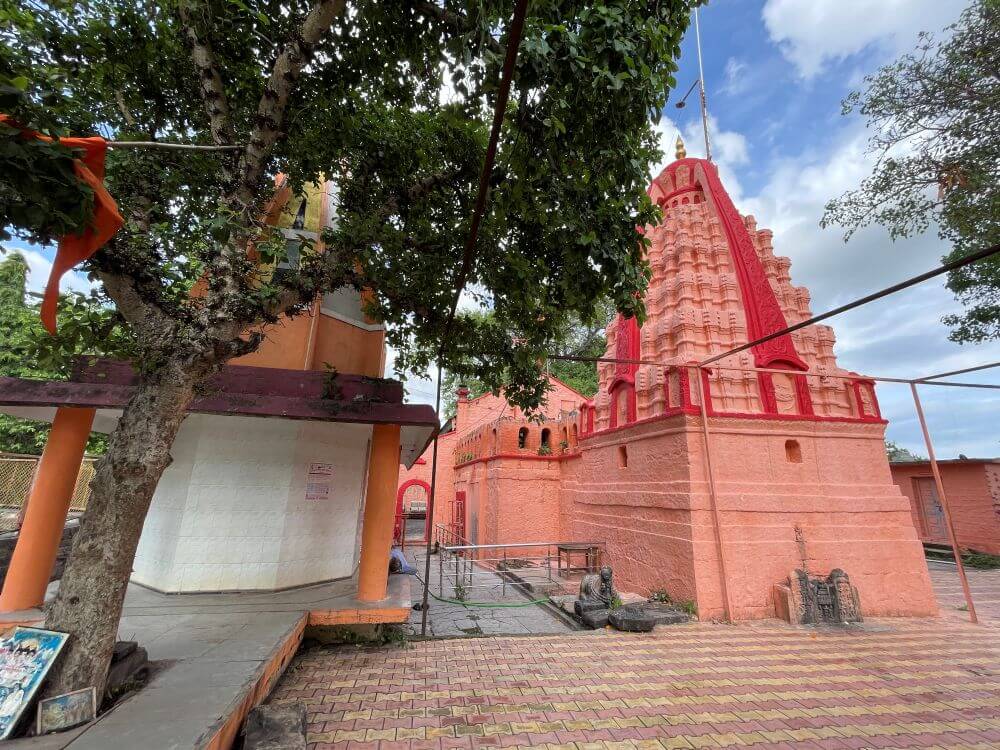
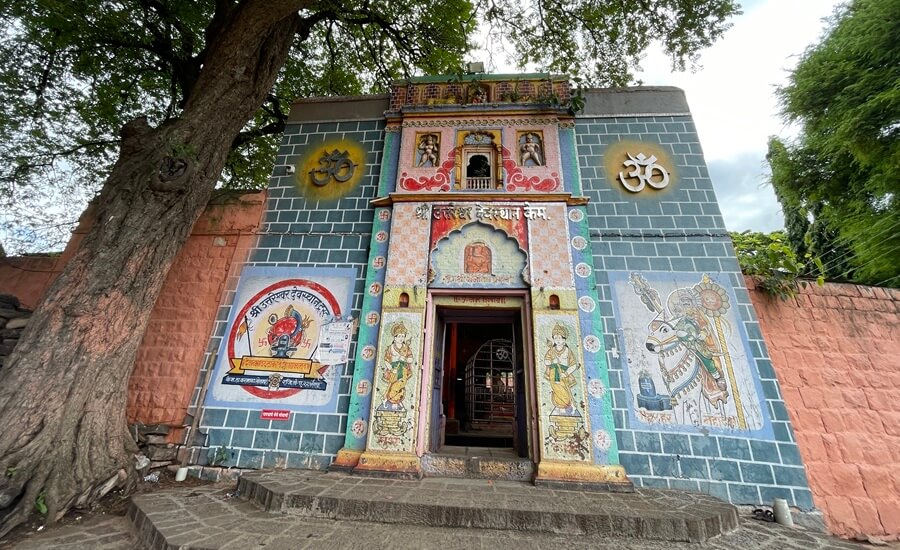
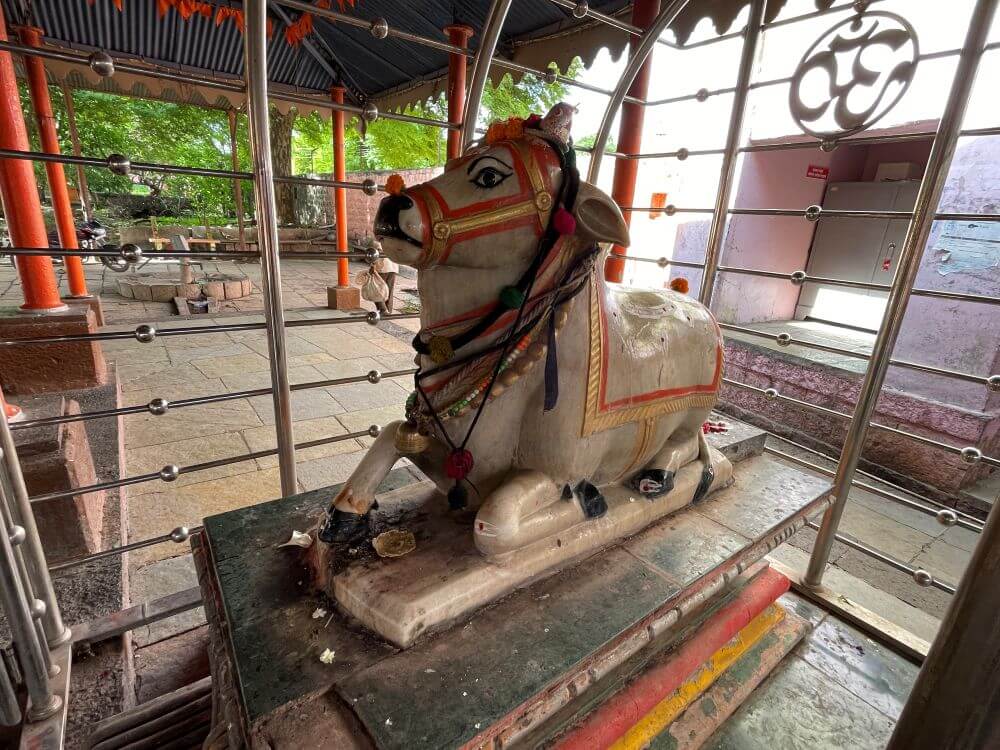
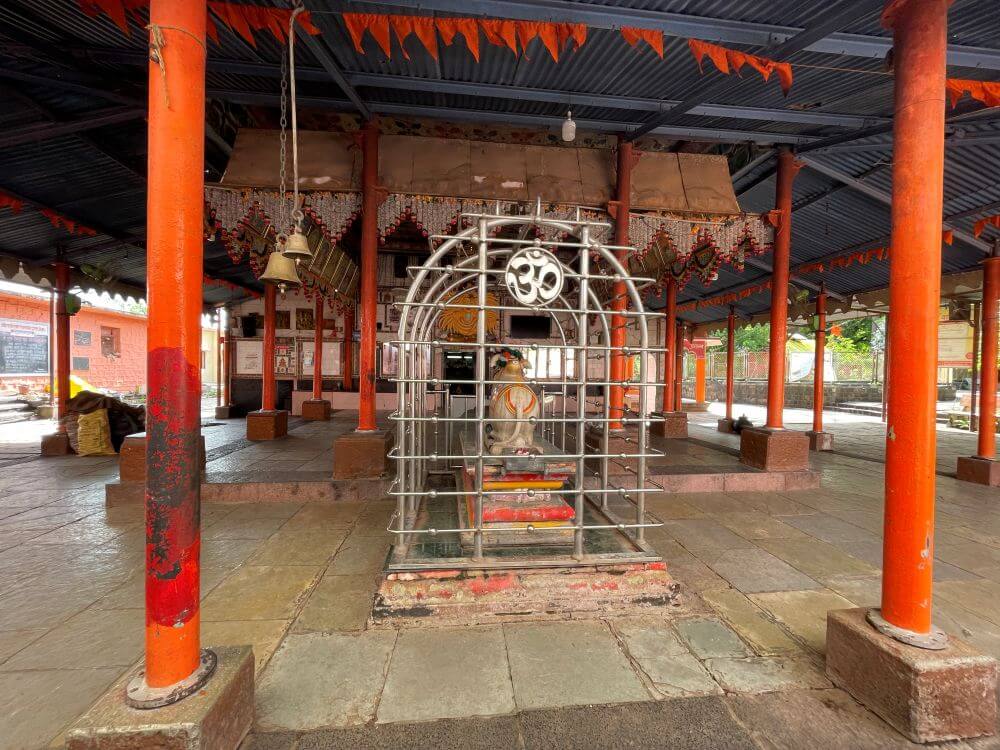
Situated in the heart of Kem village, this temple features a grand entrance arch. One enters the temple courtyard through the main gateway of this arch. In the niches located on this entrance, there are two idols of Hanuman facing each other. Along the inner side of the compound wall surrounding the temple, there are several pillared corridors. The structure of the temple consists of an open pavilion, a main assembly hall, an intermediate chamber, and the sanctum sanctorum. In the pavilion here, there is a pristine white Nandi placed on a raised platform. It appears that this pavilion was built at a later period in front of the original temple. On the upper part of the ceiling of the temple’s main entrance, there are idols of deities such as Ganapati, Garuda-Hanuman, and Shankar-Parvati in the niches. Lord Ganapati is enshrined on the central lintel.
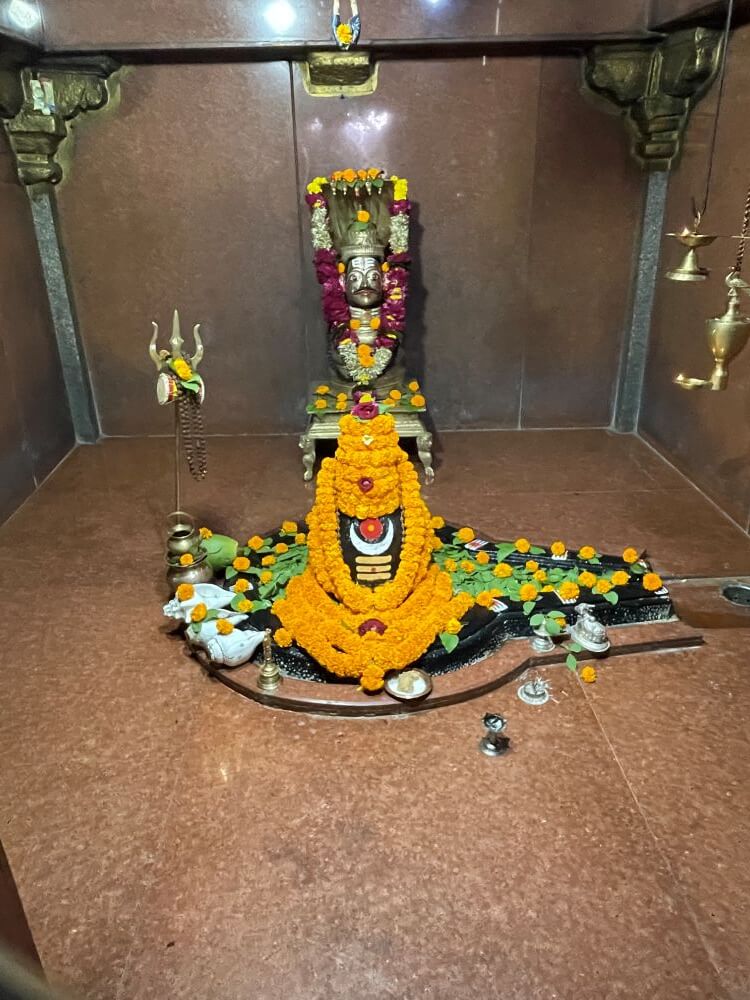
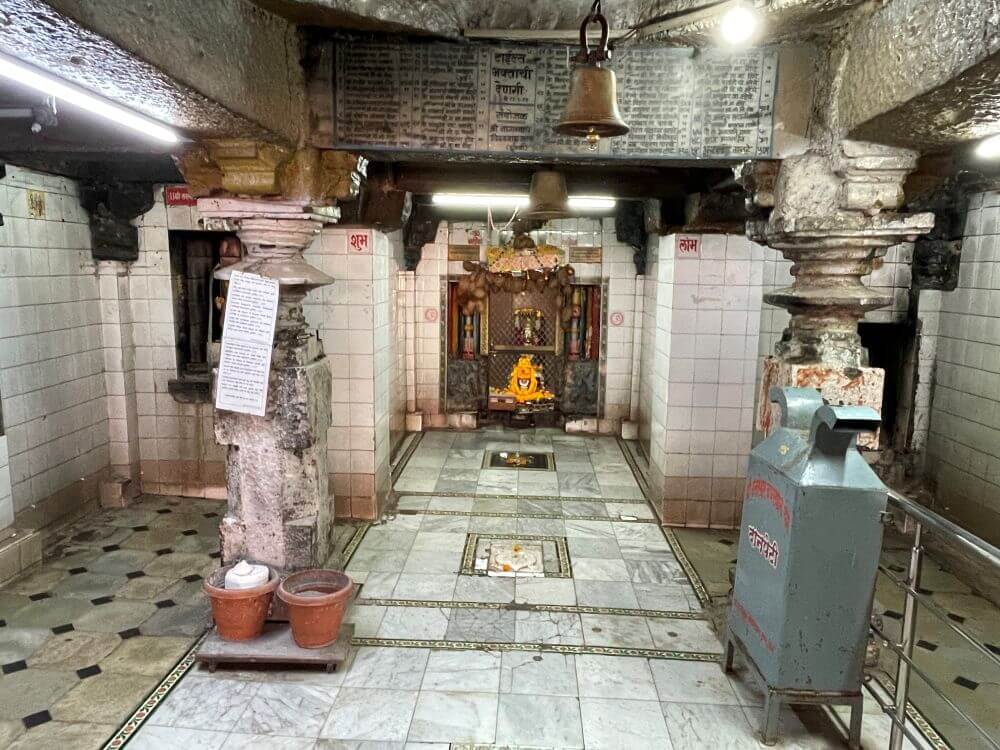
The assembly hall (Sabhamandapa) of this temple, built in the Hemadpanti architectural style, is enclosed. There are two tortoise idols (Kachhapa) here; one is made of marble, while the other is metallic. In the niches (Devakoshtakas) here, there are idols of Lakshmi-Vishnu and Ganapati. In the vestibule (Antarala), near the entrance of the sanctum sanctorum (Garbhagriha), there are relief sculptures of elephants and guardian deities (Dwarapalas). The threshold of the sanctum sanctorum and all these sculptures are covered with silver plating. Inside the sanctum sanctorum, there is a Shiva Linga carved from a single piece of black stone. Behind this Linga, there is a mask that is adorned upon it during festive occasions.
The temple premises are spacious. The large stepwell mentioned in the legends is also located here. Its construction is in the form of a Pushkarani-Kund. There are entrances on two sides to descend into it. From there, one can go down the steps to reach the water of the stepwell. Apart from this, the premises include small temples such as the Dattatreya temple with marble idols, the Hanuman temple with a large idol carved out of black rock, and the Nrusimha temple. At the back of the temple There are some hero stones (viragals), ancient idols, and Shiva lingas.
Throughout the year, many festivals and celebrations are observed at the temple. These include Gudi Padwa celebrated on Chaitra Shuddha Pratipada, the Mrig Nakshatra Chandan Uti ceremony, Nag Panchami, Vijayadashami, Shri Dattatreya Janmotsav, Makar Sankranti, Dnyaneshwar Maharaj Sanjeevan Samadhi ceremony, Tukaram Beej, Eknath Shashthi, and other such days and festivals. On the first Monday of Shravan, the deity is taken on a procession through the village in a palanquin, and on the third Monday, the Saptalinga Brother-Meeting palanquin ceremony of the surrounding five-village region takes place. The Mahashivratri Yatra is the largest festival at this temple. This festival lasts for five days.
The festivities commence on Mahashivratri with the Laghurudra Abhishek. During this time, a procession of the deity is carried out on a Panchadhatu Nandi. This procession, which departs after midnight, enters the village through the eastern gateway. The deity’s palanquin visits all seven Lingas located within and around the village. An Aarti is performed at each location. The procession then exits through the gateway and returns to the temple at dawn, at the time of sunrise. However, a specific tradition is observed: the palanquin does not enter the temple until the sun’s rays fall directly upon the Pindi in the sanctum sanctorum. Special Dindis from Chikalthan and Bitargaon also arrive on this occasion. The following day, a wrestling competition is held in the village. This competition also holds a great tradition, for which wrestlers from far and wide come to participate.
The Halgi played during the festivals of this village became famous due to Nagraj Manjule’s film ‘Fandry’. Somnath Avghade, the lead actor of that film, is a resident of this very village. The village of Kem and the Halgi are mentioned in that film. Somnath’s father, Laxman Avghade, is also a Halgi player, and his Halgi musical troupe is famous in the surrounding area. There is a large trade of turmeric, kumkum, and other related products in Kem village. Four to five tons of kumkum and turmeric are produced in the village every day and are sent to many places across the country. As a result, many people in the village have found employment.
This sacred temple stands as a testament to deep spiritual devotion, ancient architectural grandeur, and rich local cultural traditions.
The sanctum sanctorum houses the divine idol consecrated according to ancient Vedic traditions, surrounded by serene courtyards and traditional temple architecture.
Navratri, Maha Shivratri, Annual Temple Jatra & Deepotsav
Compare and book flights, secure top-rated local hotels near the temple, hire reliable guides, and rent cars instantly.
Extend your pilgrimage by visiting other highly sacred temples located nearby.


Add ₹999 more to unlock FREE SHIPPING!
Your sacred cart is currently empty.
Shop Photo FramesFill in your delivery details below to place your order.
Add comment