
Add ₹999 more to unlock FREE SHIPPING!
Your sacred cart is currently empty.
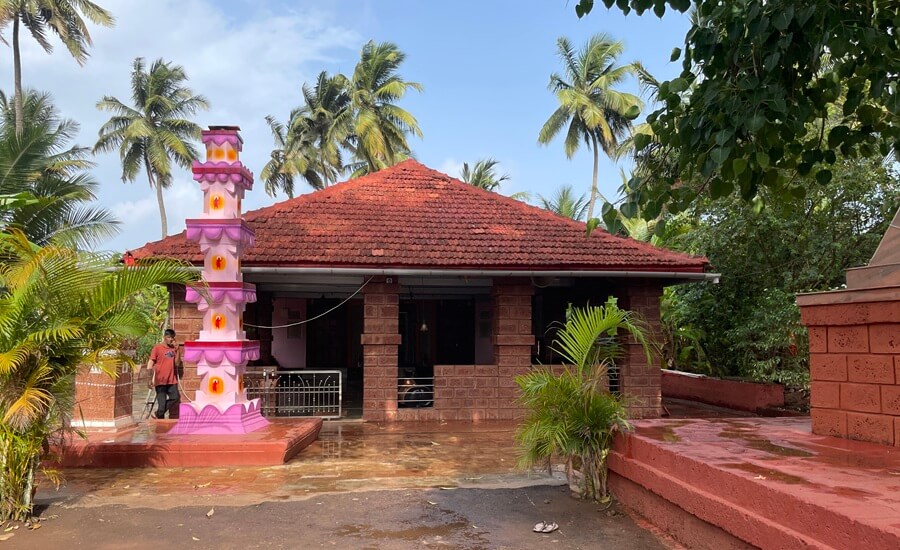
Shop Photo FramesShrivardhan Taluka in Raigad district is blessed with a rich historical heritage. Because of this, many centuries-old temples still stand majestically in this region. Like other temples, the ancient Jivaneshwar Temple here is a place of great reverence for the surrounding area. It is considered a Swayambhu (self-manifested) abode of Lord Shiva. While traveling from Shrivardhan city towards Diveagar, Jivana Bandar is located at a distance of three kilometers. In ancient times, it was a major center for water transport. It is said that the temple derived the name ‘Jivaneshwar’ from this. The intricately carved wooden pillars in this temple are a unique feature.
It is said that the Jivaneshwar Temple is about 700 to 800 years old. In ancient times, trade was conducted through the Jivana Bandar here. The legend of the temple states that many years ago, while a farmer was plowing his field in this area, the plowshare got stuck in the ground. It would not budge despite his efforts. When the farmer dug up the ground at that spot, he found a Shiva Linga . Because the plowshare had struck it, the Shiva Linga had begun to bleed. Believing this to be a divine miracle, the villagers installed the Shiva Linga right there and built a small temple. Later, an Antarala (vestibule) and eventually a Sabhamandapa (assembly hall) were constructed in front of this small temple. There is a record of the temple being renovated in the year 1977.
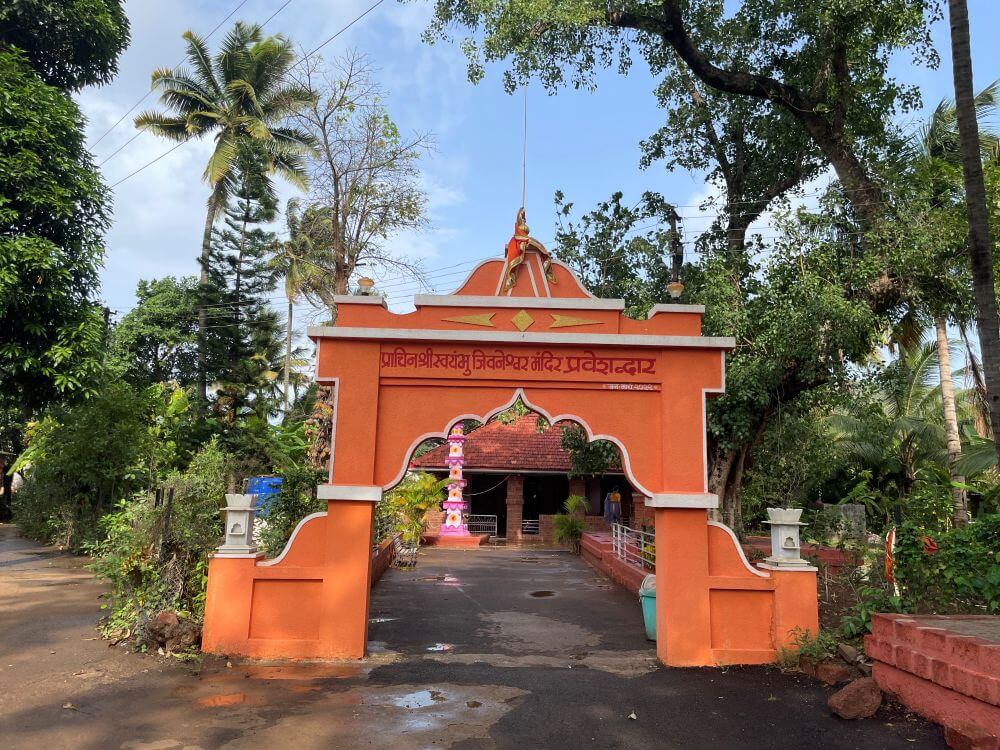
Located along the road from Shrivardhan to Jivana Bandar, the temple is situated in a spacious area away from the hustle and bustle of the city, in a serene environment. There is a welcome arch in the boundary wall surrounding the temple. The arch features square pillars on both sides and a decorative architrave (Bashingi Mahirap) on the cornice above. There are seats attached to the pillars for devotees to sit. Upon entering through the arch, the gardens on both sides of the pathway in the courtyard catch one’s attention. Along with ornamental plants, these gardens contain various medicinal herbs. There is a second welcome arch on the path leading from the courtyard to the temple. It has square pillars on both sides, a decorative architrave on the beam above, and semi-pillars connected by semi-arches on the sides of the pillars. There is seating arranged for devotees on the path leading from here to the temple. Further to the right, there is a platform built of laterite stone around a Peepal tree. There is a small Maruti temple on this platform. In front of the temple, there is a Pushkarani (stepped tank) built of carved stone with steps to descend into it.
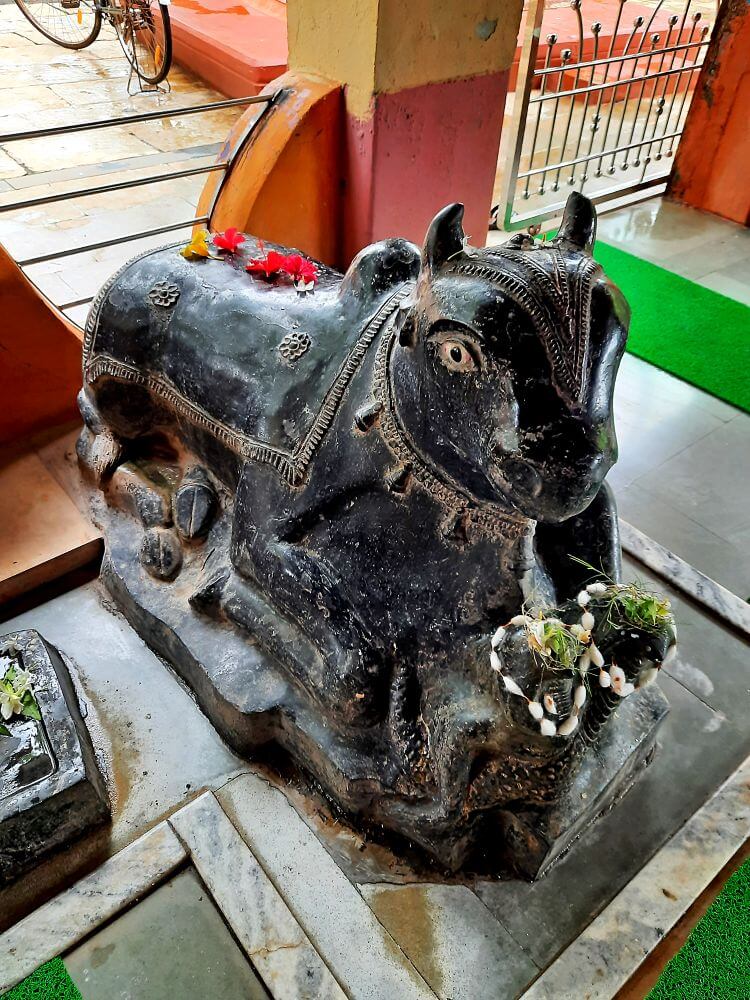
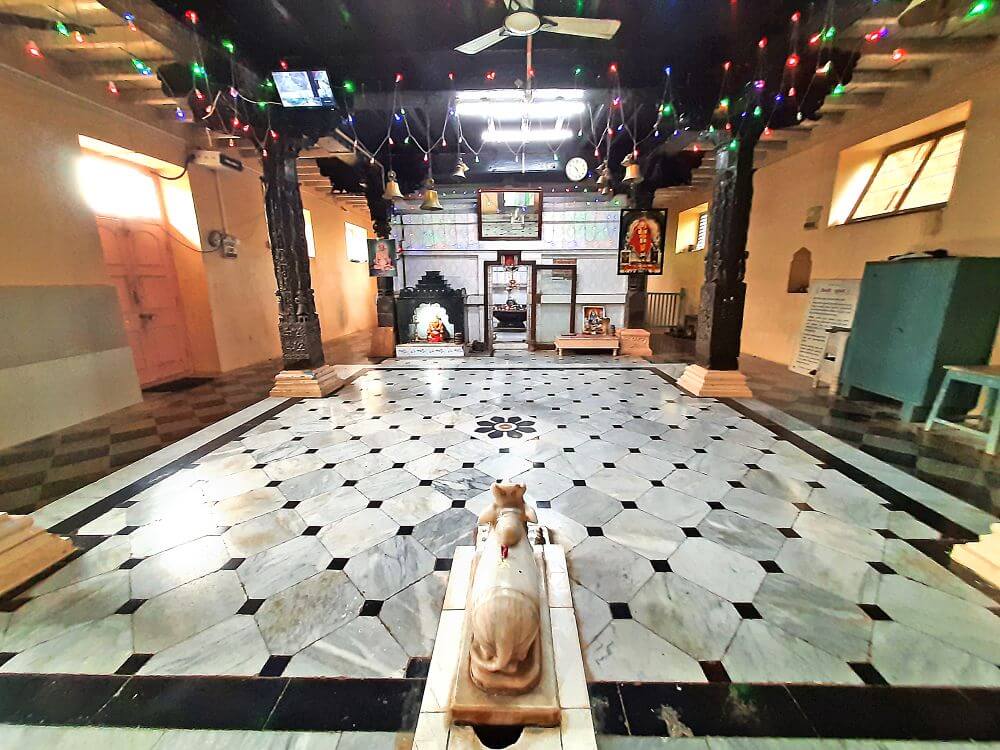
Like many temples in Shrivardhan, the Jivaneshwar Temple resembles a traditional tiled-roof house. In front of the temple, there are a Tulsi Vrindavan, two lamp towers (Deepmala), and two wells. The water from one of these wells is used exclusively for worship rituals. Near the entrance of the temple, there is a colossal Nandi. Further ahead is the Sabhamandapa with a tiled roof. In the semi-open Sabhamandapa, there are stone benches (Kakshasana) for devotees to sit. Twelve square pillars are erected on the outer side of the Sabhamandapa within these benches. These pillars support the beams, which in turn hold the tiled roof of the temple. Brass bells are hung from the ceiling.
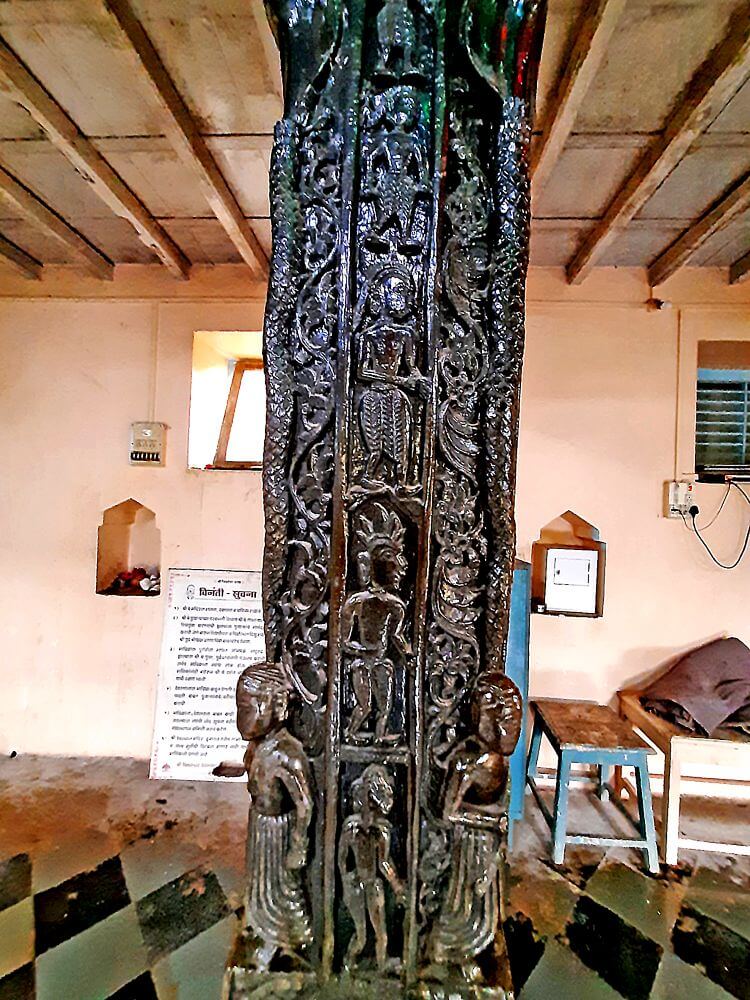
The wooden pillars in the Sabhamandapa feature exquisite craftsmanship. One can see carvings of a cobra with its hood spread and a mongoose holding its tail in its mouth; various gods, goddesses, and warriors; as well as animals and birds such as elephants, camels, horses, peacocks, and parrots. According to locals, these pillars originally belonged to the house of the wealthy Bhat-Peshwa family of Shrivardhan. Shrivardhan is the birthplace of Balaji Vishwanath Bhat, the first Peshwa of Chhatrapati Shahu Maharaj. His family held the Deshmukhi rights of Shrivardhan and surrounding villages. Balaji Vishwanath had a large mansion here. After it was demolished, its pillars were used during the renovation of the Jivaneshwar Temple. Through this, this artistic memory of the Peshwa dynasty has been preserved here.
Further, there are three entrances facing the Antarala. There are three steps in front of the entrance to the Antarala, which is at a higher level than the Sabhamandapa. There are sculptures of Dwarapalas (gatekeepers) on both sides of the central entrance. The wooden door frames are carved with floral and leaf patterns. The entrance has ornate wooden shutters. Inside the Antarala, there is a statue of Nandi on a pedestal facing the entrance. The Antarala has two rows of four ornate wooden pillars each. The wooden pillars stand on stone bases. On some of these pillars, a mongoose holding a cobra’s tail is carved, while on others, a cow and calf are depicted. On some pillars, armed warriors, wheels, soldiers, and floral creepers are found carved. There are ventilators in the enclosed Antarala for air circulation. In the Antarala, to the left of the Garbhagriha (sanctum sanctorum), there is an idol of Ganesha in a niche attached to the front wall.
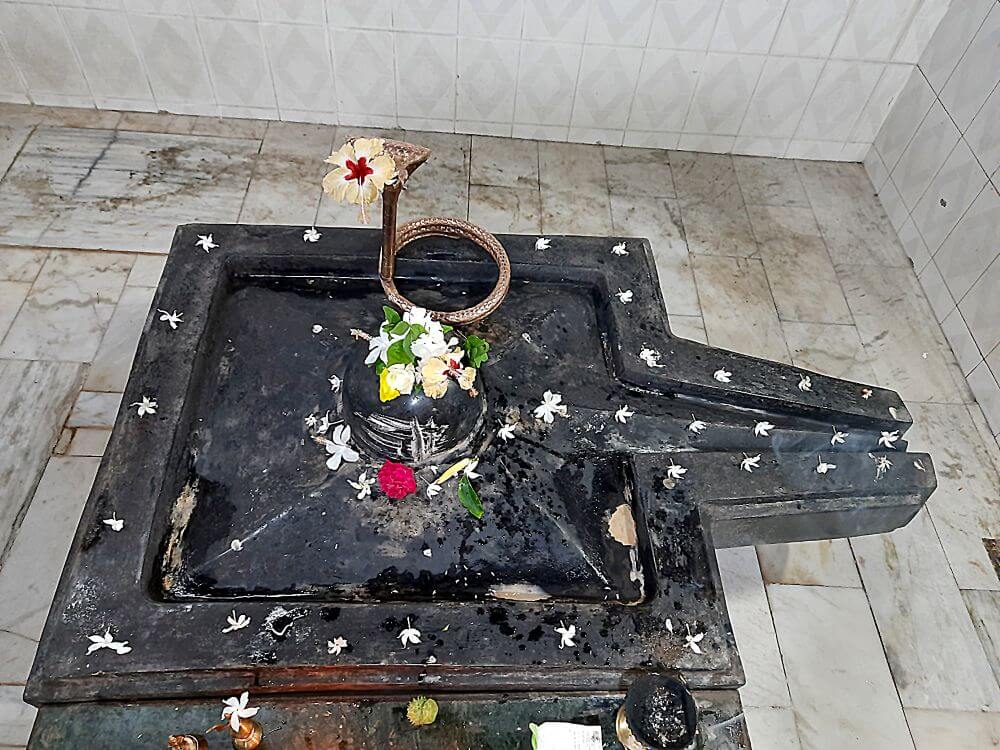
The door frames of the Garbhagriha feature vertical carvings, and there is a Ganesha sculpture on the lintel. In the center of the Garbhagriha floor, there is a five-foot-long and wide Swayambhu Shiva Linga. The uniqueness of the Shiva Linga here is that its Shalunka (base) is square. There is a copper cobra holding a canopy over the Shiva Linga. Before entering this Garbhagriha, it is mandatory for devotees to wear traditional attire (Sowala). Devotees who cannot wear Sowala can have Darshan of the Shiva Linga from the Antarala.
Mahashivratri is the main annual festival celebrated here with great enthusiasm. Programs such as Laghu Rudra, Bhajans, Kirtans, discourses, music, and Mahaprasad are organized on that occasion. Thousands of devotees come here for Darshan during the festival. There is a large crowd of devotees at the temple on Shravani Mondays, full moon days (Pournima), new moon days (Amavasya), Pradosh, and other auspicious days. Devotees can have Darshan of Jivaneshwar Mahadeva in this temple every day from 6:00 AM to 9:00 PM.
This sacred temple stands as a testament to deep spiritual devotion, ancient architectural grandeur, and rich local cultural traditions.
The sanctum sanctorum houses the divine idol consecrated according to ancient Vedic traditions, surrounded by serene courtyards and traditional temple architecture.
Navratri, Maha Shivratri, Annual Temple Jatra & Deepotsav
Compare and book flights, secure top-rated local hotels near the temple, hire reliable guides, and rent cars instantly.
Extend your pilgrimage by visiting other highly sacred temples located nearby.


Add ₹999 more to unlock FREE SHIPPING!
Your sacred cart is currently empty.
Shop Photo FramesFill in your delivery details below to place your order.
Add comment