
Add ₹999 more to unlock FREE SHIPPING!
Your sacred cart is currently empty.
Shop Photo FramesIn the Shaiva tradition, a person who achieves spiritual progress through self-realization, gains control over their consciousness, becomes one with Shiva, and attains divine powers is called a Siddha. Saint Dnyaneshwar referred to the Nath tradition as the Siddha Panth. Eighty-four Siddhas are mentioned in this tradition. The Lord of these Siddhas is Siddheshwar. The scripture ‘Kalpasamuha Samhita’ states, “Where there is Siddheshwar, there is Siddhi.” There are many such temples of Siddheshwar in Maharashtra as well as Karnataka. The Siddheshwar temple at Siddhanath is one of the ancient temples among them.
A legend regarding this temple states that a supreme devotee of Siddheshwar named Havajipant Kulkarni lived in the village of Kalamadi in the Belagavi district of Karnataka. After he arrived at Siddhanath, the deity Siddheshwar manifested here for him. Over time, a large temple was built at this site. Siddheshwar is the village deity (Gramadaivat) of many villages. Local villagers say that this is likely why the village was named Siddhanath. Due to the influence of the Veerashaiva and Lingayat traditions, many temples of Siddheshwar were built in this region. There is an inscription in this temple, which indicates that the temple was built in the year 800 CE. A unique feature of this temple, built in the Hemadpanti style, is that there is not one, but three Nandi idols in the assembly hall (Sabhamandap).
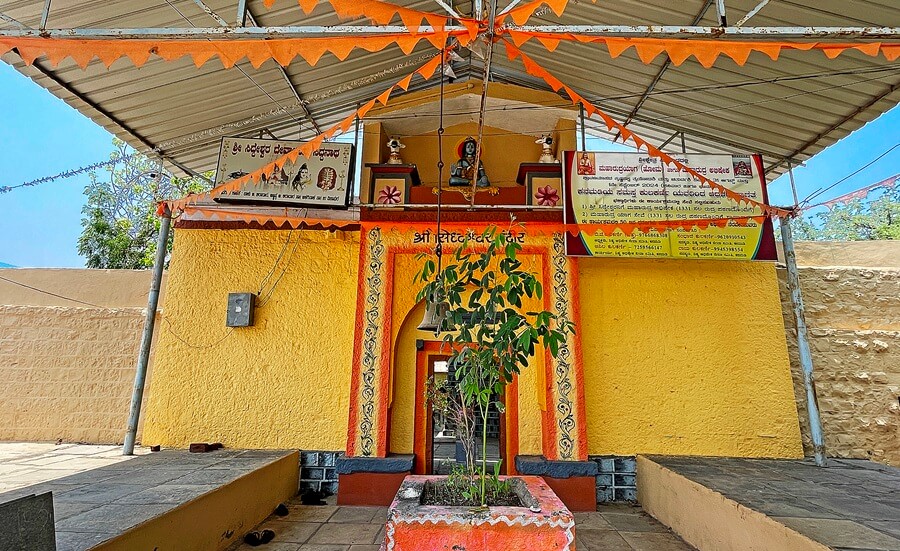
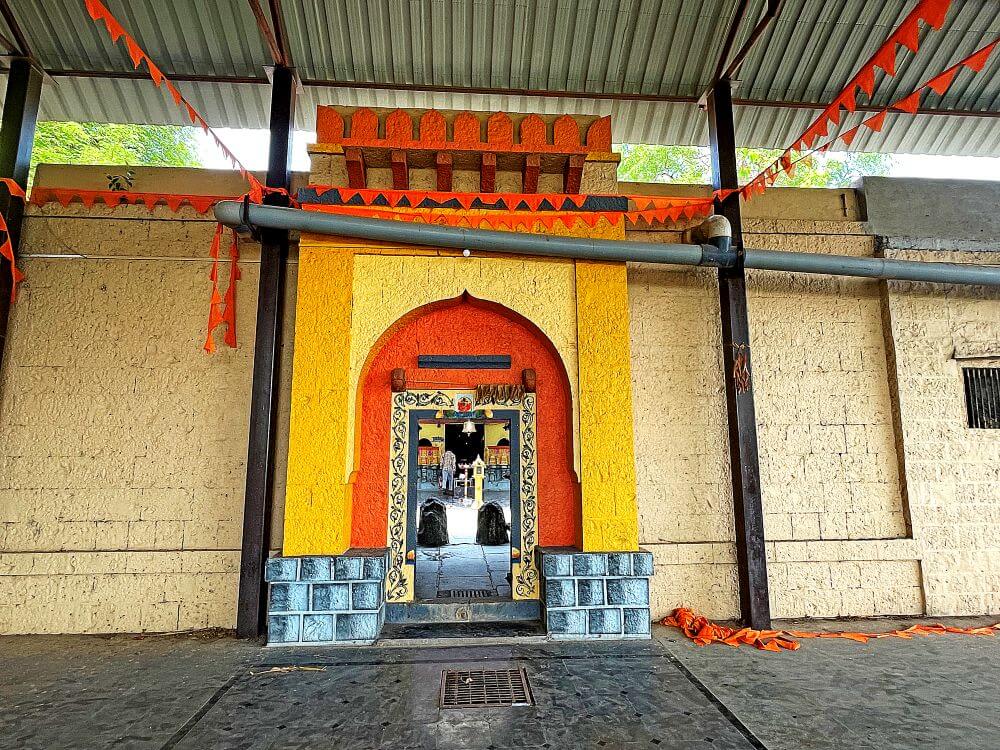
Located in the center of Siddhanath village on the Maharashtra-Karnataka border, this temple is surrounded by a ten-foot-high stone fortification. In front of the entrance in the fortification, there is a Tulsi Vrindavan and stone benches (Kakshasanas) nearby. There are two pillars on two platforms near the entrance. These pillars have carvings of leaves and flowers. These two pillars are connected to each other by an arched gateway. In the upper part of the entrance, there is an idol of Shri Shankar, with two lotus flowers on both sides and sculptures of Nandi above them. In the center of this entrance is an ancient stone pillar. From here, one enters the temple courtyard. There are cloisters (Ovaryas) on all sides of the temple inside the fortification.
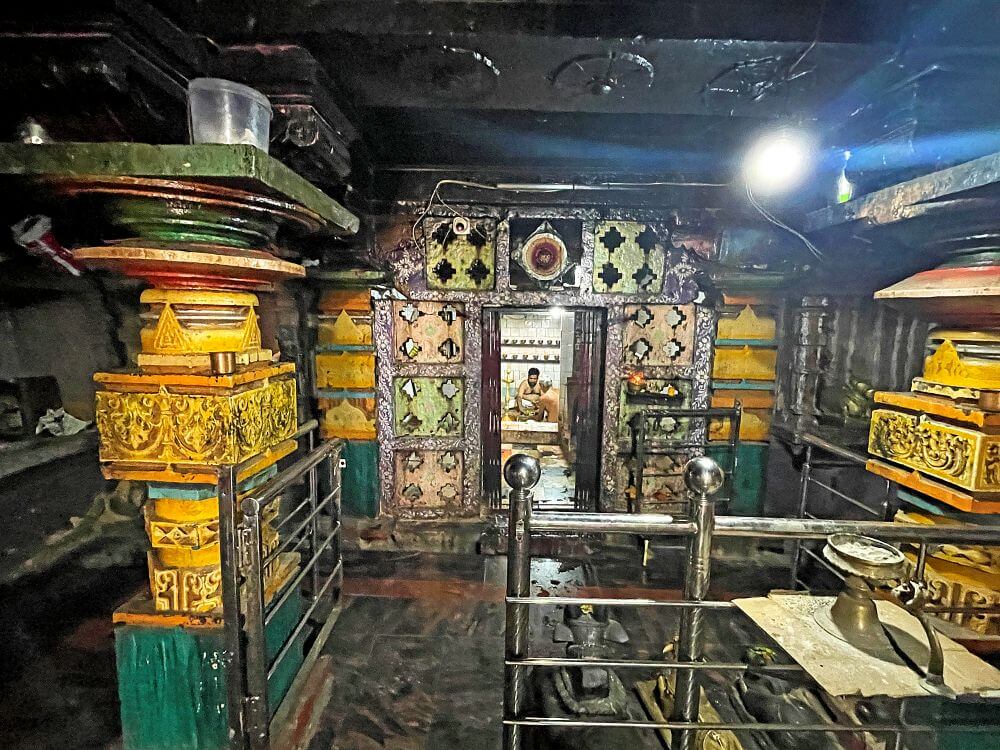
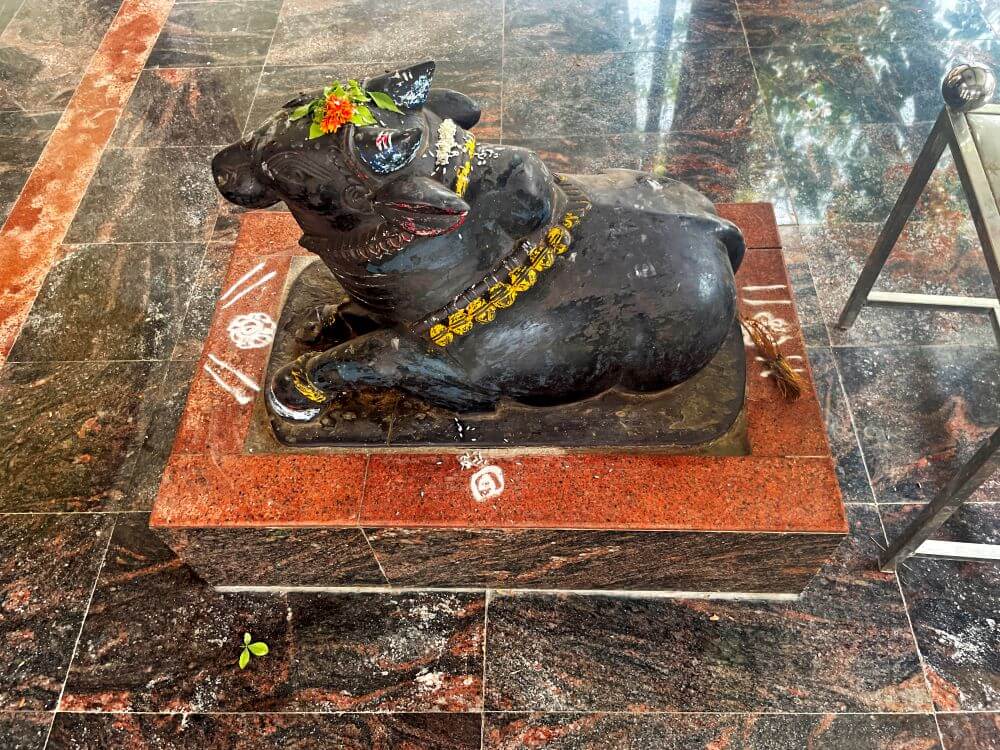
The structure of the temple consists of an assembly hall (Sabhamandap), an intermediate chamber (Antarala), and the sanctum sanctorum (Garbhagriha). All the pillars in the open-style assembly hall are connected to each other by arched gateways. Near the entrance of the fortification, on the inner side, there is a perpetual lamp (Nandadeep). Many devotees pour oil into it to fulfill their vows. Near this Nandadeep, there is a memorial stone (Virgal) and an ancient stone image of a serpent. In front of this, in the assembly hall, there is a stone platform with stones representing local deities. On both sides of the assembly hall, there are ancient lamp towers (Deepmalas). It appears as if the entire weight of one of these lamp towers is supported by elephant-head sculptures at the base. It seems that this assembly hall was built at a later period in front of the original temple. The original ancient temple is in the Hemadpanti architectural style. There is an idol of Nandi on a platform in the assembly hall, facing the entrance of the intermediate chamber. There are carvings on both sides of the front wall of the intermediate chamber.
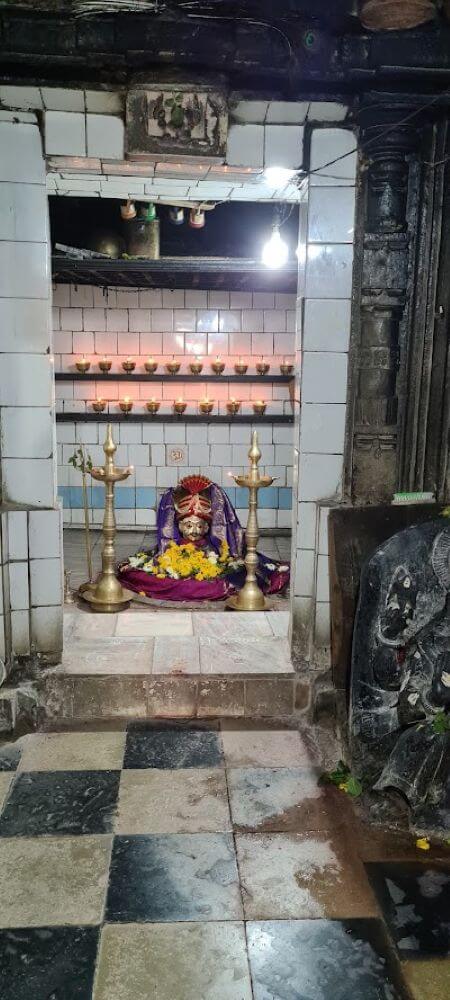
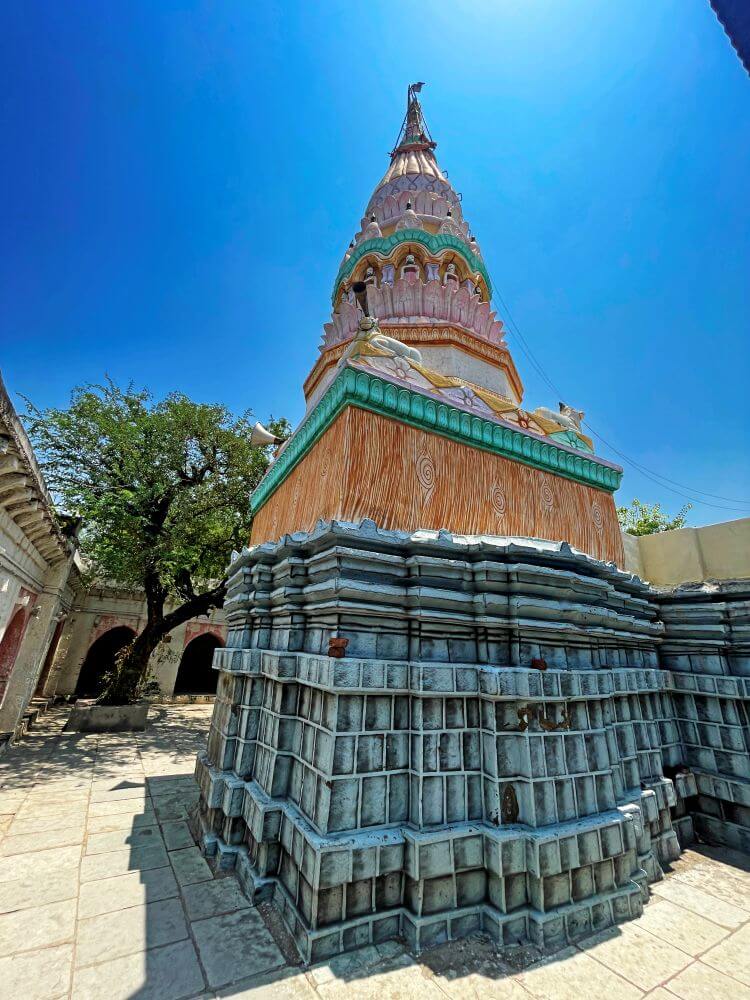
The stone pillars in the intermediate chamber are of various geometric shapes. They feature distinctive carvings. In the center of these pillars, on the floor, are three Nandi idols. From here, one enters the sanctum sanctorum through a stone doorway. In the center of the sanctum sanctorum, on the floor, is the Linga (Pindi) of Siddhanath. On the ceiling of the sanctum sanctorum, there is a decorative border (Bashingi Kathada) on all four sides. There are Nandi idols on all four sides of this border. The spire (Shikhara) of the sanctum sanctorum appears to be contained within a lotus flower, a feature of the unique carvings here. On this spire, there are many niches (Devakoshtakas) containing sculptures and small finials (Kalashas) above them.
There is a large crowd of devotees at this temple every Monday, as well as on the Mondays of the holy month of Shravan. During Shravan, Rudrabhishek is performed here by the Brahmin community, while on the last Monday of Shravan, a festival is celebrated in the temple by the Lingayat community. A major festival is also held here on Mahashivratri. Similarly, on the day of Vijayadashami, the palanquin of Siddheshwar departs from the temple. This palanquin first goes to the homes of the local Inamdar Brahmins and then to the Patil’s house. Since the deity came here because of Havajipant Kulkarni of Kalamadi, the people of this lineage are also given special honor here. Many Kulkarnis from Kalamadi come for this ceremony.
This sacred temple stands as a testament to deep spiritual devotion, ancient architectural grandeur, and rich local cultural traditions.
The sanctum sanctorum houses the divine idol consecrated according to ancient Vedic traditions, surrounded by serene courtyards and traditional temple architecture.
Navratri, Maha Shivratri, Annual Temple Jatra & Deepotsav
Compare and book flights, secure top-rated local hotels near the temple, hire reliable guides, and rent cars instantly.
Extend your pilgrimage by visiting other highly sacred temples located nearby.


Add ₹999 more to unlock FREE SHIPPING!
Your sacred cart is currently empty.
Shop Photo FramesFill in your delivery details below to place your order.
Add comment