
Add ₹999 more to unlock FREE SHIPPING!
Your sacred cart is currently empty.
Shop Photo FramesRenowned as a granter of boons (Varadayini), Shri Danamma Devi proved her divinity through numerous miracles and is regarded as a beacon of humanity. Born in the land of Maharashtra in the twelfth century, Danamma is recognized as a great Sharani in the Lingayat faith. She is also revered as an incarnation of Goddess Parvati. Rebelling against prevailing societal evils, dogmas, and regressive traditions, Danamma Devi has numerous temples dedicated to her across the country. Her sacred Samadhi is located in the village of Guddapur in Maharashtra, imparting the status of a holy Shrine of Faith (Shraddhapeeth) to the temple here.
The sacred narrative of Danamma Devi recounts that she was born in the twelfth century in the village of Umrani in Jath taluka. She was a contemporary of Mahatma Basaveshwara. Her original name was Lingamma. She was married to a devout Shivbhakta named Sangamnath from the village of Shunga. Later, both came to Guddapur, where they spent their lives engaging in selfless charity and guiding people on the path of righteous living. As Lingamma was constantly devoted to Annadana (offering food) and act of charity, Mahatma Basaveshwara named her ‘Danamma’, the name by which she came to be celebrated. Danamma received Shiva Deeksha from the revered Siddhayogi Siddharameshwar of Solapur. Later, participating in Basaveshwara’s ‘Anubhava Mantapa’, she engaged in daily Ishtalinga Sadhana. It is said that Basaveshwara held Danamma up as an ideal example in the Anubhava Mantapa to demonstrate how spiritual practice should be performed with supreme concentration.
The Anubhava Mantapa was akin to an ancient university in the Lingayat tradition, serving as a platform for democratic discourse. The participating ‘Sharanas’ shared their spiritual experiences and exchanged thoughts, which were then evaluated against personal realization to arrive at the ultimate Truth. When expressed in words, this Truth came to be known as Vachana literature. During Basaveshwara’s era, there were around three hundred to three hundred and fifty such Anubhava Mantapas, completely free from caste or gender discrimination. Basaveshwara served as the Prime Minister and Treasurer to King Bijjala of the Kalachuri dynasty, who had seized control of the Chalukya kingdom of Kalyan. Certain ministers adhering to Vedic orthodoxy in the court formed a faction against Basaveshwara, culminating in his tragic assassination. Subsequently, a campaign was launched against the Lingayat faith he established, leading to the persecution of many Lingayats and attempts to destroy Vachana literature. In this historical episode known as the Kalyan Counter-Revolution, Danamma’s valor shone brightly. Alongside her husband, she fought courageously against the imperial army and led the Sharani forces. Thereafter she traveled across India propagating the divine principles of Lord Basava. Owing to her intense penance, a aura of miraculous legends developed around her.
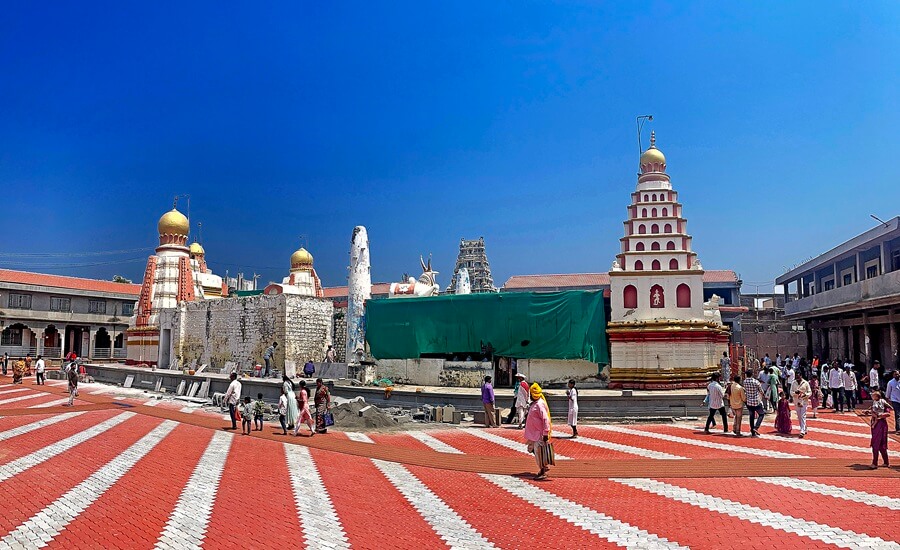
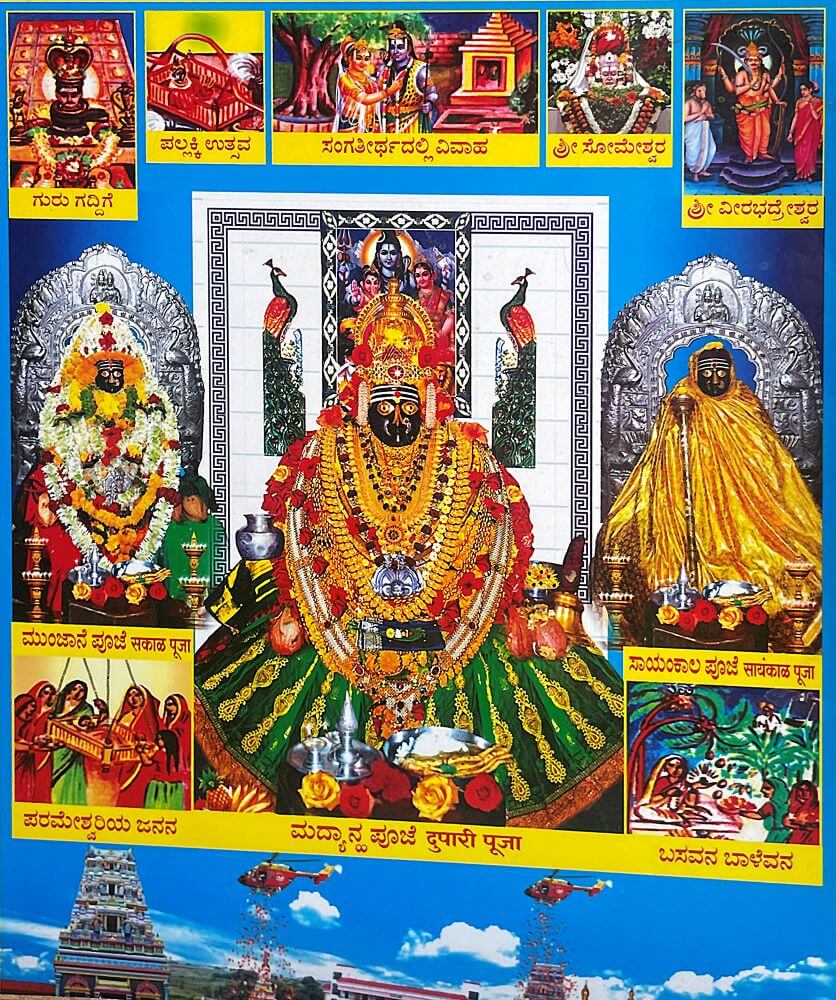
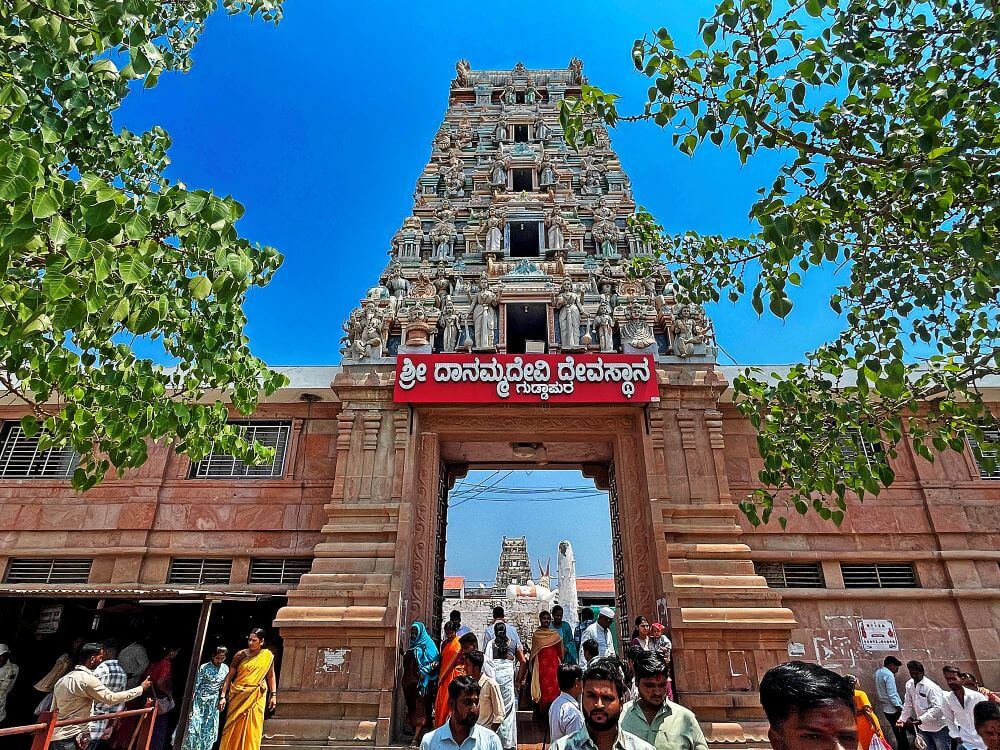
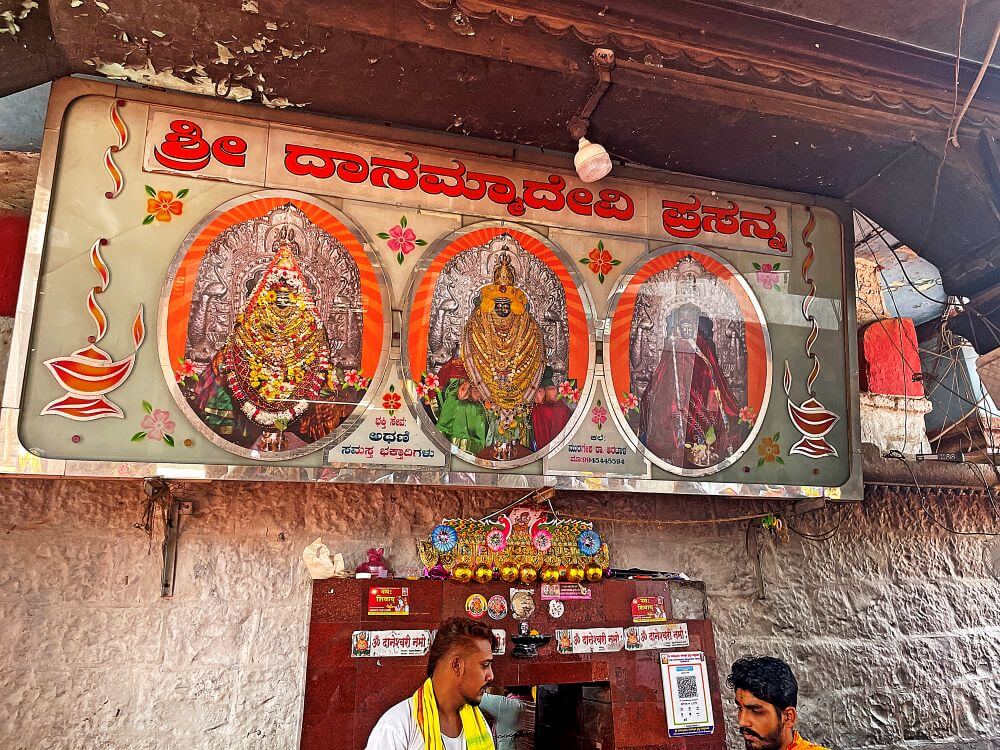
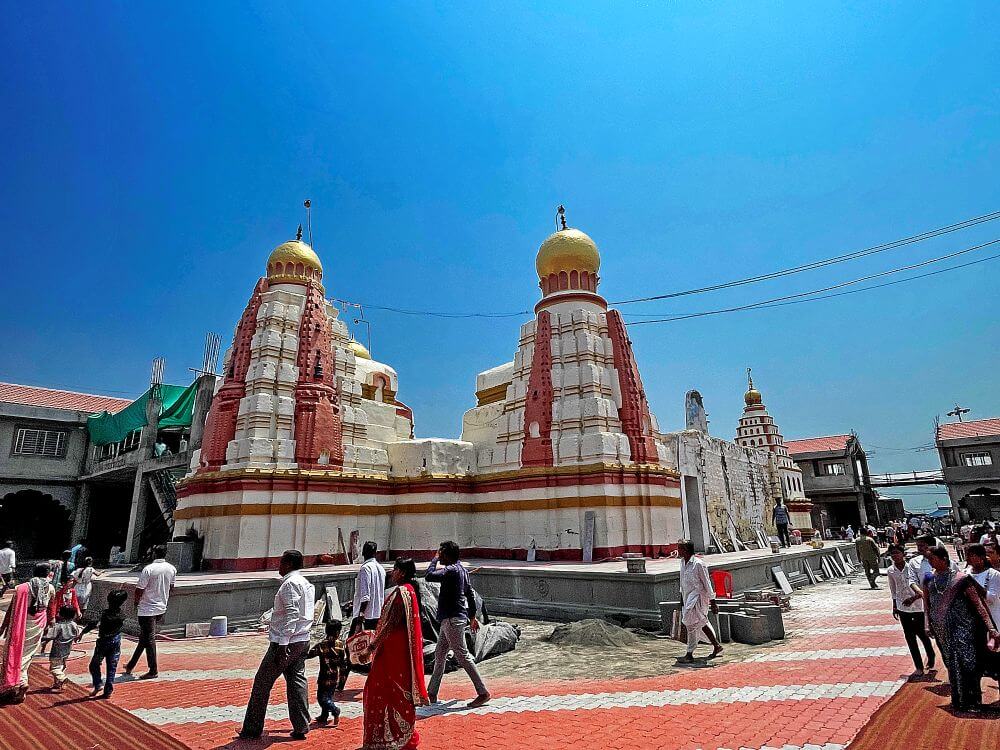
Inscriptional records at Vadpuri in Sangli district mention that the Yadava emperors Seunadeva Yadava and Mahadevaraya Yadava constructed a temple dedicated to the boon-bestowing Danamma Devi and granted a village as an inam (endowment) to it. Following her ‘Lingaikya’ (attainment of divine merger/nirvana) at Guddapur, a grand temple was erected here in the twelfth century. A unique feature of this shrine is that the Goddess is worshipped as a maiden (Kanya) at dawn, as a young maiden (Yuvati) in the afternoon, and as an elder (Vriddha) in the evening. The main welcome archway stands at the boundary of Guddapur, featuring raised platforms on either side of the road with crossbeams supported on two pillars each. The temple is situated one and a half kilometers from this arch. The temple complex is enclosed by a sturdy fortification constructed in red stone with a grand entrance gate. On both sides of the entrance are six-foot-wide carved pillars supporting a five-storeyed Gopuram (tower) above the balcony. Each story of the Gopuram features a central window (gavaksha) flanked by sacred sculptures of various deities, crowned by a majestic Shikhara and Kalash at the top. The entrance is fitted with carved wooden door leaves embellished with gleaming brass floral motifs. Passing through the grand doorway into the courtyard, two-story structures adjoin the rampart walls.
Ancient Deepamalas (lamp towers) stand majestically before the temple. The architectural layout comprises a Darshan Mandapa, Sabhamandapa, Antarala (vestibule), and Garbhagrihas (sanctums). A massive sculpture of Nandi atop the Darshan Mandapa immediately commands attention. Beyond lies the stone doorway of the ancient Sabhamandapa built in the classic Bhumija style of architecture. The door jambs (Dwarashakhas) feature carved Dwarapalas below and geometric patterns above, with a Shivpindi gracing the Lalatabimba (lintel). The entrance is embellished with silver cladding. The Sabhamandapa contains four rows of three square pillars each. The floor within the central four pillars is slightly elevated, featuring a raised platform with a finely carved black stone Nandi.
To the right within the Sabhamandapa is the first Antarala, leading to the entrance of a sanctum. Its door jambs feature delicate foliage designs, a Shivpindi on the Lalatabimba, and a Kirtimukha on the Mandaraka. Inside this sanctum rests a Mallikarjuna Shivlinga on the floor. Moving further lies the second Antarala and the carved entrance to another sanctum, housing a silver mask (Mukhavata) of Danamma Devi’s husband, Shri Sangamnath, resting upon a sacred Vajrapitha. Beyond this is the third Antarala and sanctum, enshrining an idol of Lord Veerabhadra on a Vajrapitha. The fourth Garbhagriha holds the sacred Padukas (footwear) of Mahatma Basaveshwara alongside a Shivlinga. Further ahead in the Palkhi Kaksha (palanquin chamber), the divine palanquin used during festive occasions is preserved. The sacred palanquin procession takes place every Monday and during all major festivals.
The temple vestibules feature four rows of four intricately carved pillars each. The bases and capitals of these pillars are square, while the shafts are crafted in diverse geometric forms including square, hexagonal, octagonal, and circular shapes. Brackets rest upon the capitals, supporting beams that hold the ceiling. Ahead lies the main entrance to the inner Garbhagriha (sanctum sanctorum). All three door jambs of this sanctum feature floral and foliage carvings, while an idol of Lord Ganesha and a Shivpindi adorn the Lalatabimba. The entrance is beautifully clad in silver, with the Utsavamurti (festival idol) of the Goddess resting upon the Mandaraka. From here, devotees partake in the sacred Darshan of Goddess Danamma. Inside the sanctum sanctorum, an idol of Danamma Devi carved from black stone is enshrined upon a Vajrapitha. The Goddess is grandly adorned in rich attire, fine jewelry, and fragrant garlands. The ornate halo (Prabhavali) behind the deity features Lord Shiva and Goddess Parvati at the center, flanked by peacocks and delicate floral scrollwork on both sides.
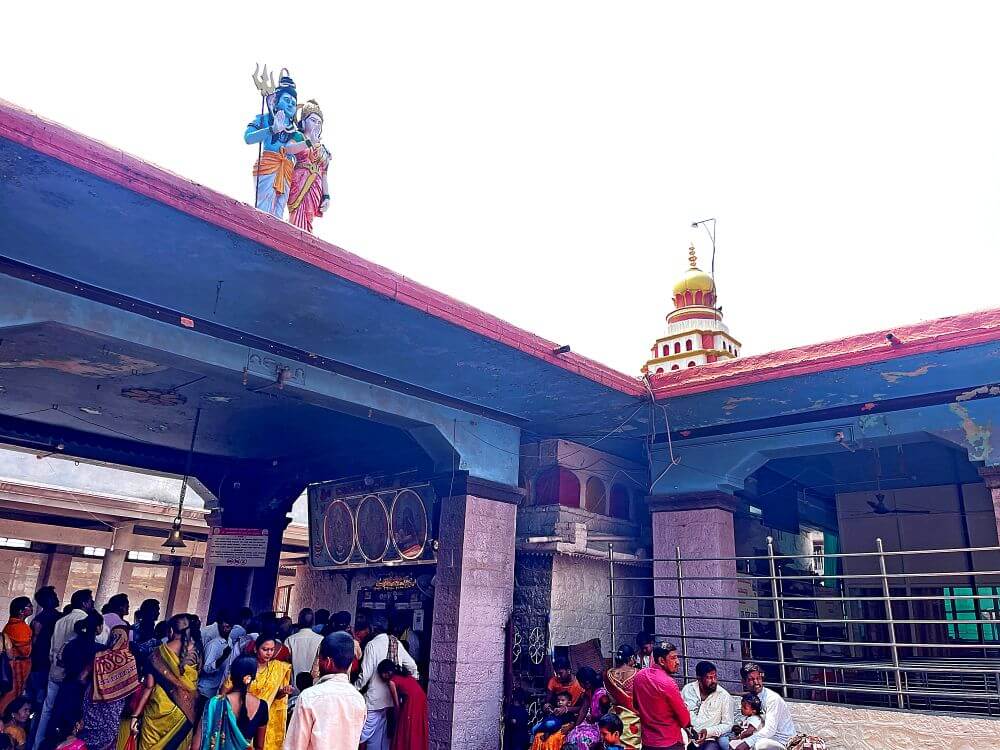
On the roof of the temple, there are a total of four spires (shikharas) – one above the Darshan Mandapa and three above the sanctum sanctorum (Garbhagriha). The spire above the Darshan Mandapa consists of six tiers. Each tier features twelve niches (devakoshtakas). At the top rests an Amalaka adorned with a Kalasha. The spires above the sanctum sanctorum are five-tiered. In the temple courtyard, there is a small kitchen where Puran Polis are prepared for the Goddess’s daily Naivedya. The adjacent room serves as a ration storage facility. Here, laddoos are prepared for the devotees’ prasadam, and the next room houses the Prasadam Sale Center. There is also a large kitchen in the courtyard, where hundreds of kilograms of Mahaprasadam are prepared daily for the ongoing Annakshetra (free meal distribution). Within the temple complex, there are eight Bhakta Niwas (pilgrim accommodation) buildings, comprising around 225 rooms equipped with all necessary amenities. The temple trust office is situated in a room in the courtyard premises.
Mahashivratri, Shravani Somwar, Shravan Amavasya, and Kartik Amavasya are the primary festival days of the Goddess, celebrated here with great joy and fervor. On these occasions, devotional programs such as Bhajans, Kirtans, Pravachans, and music performances are organized in the temple. A grand Palkhi (palanquin) procession of the Goddess is taken out. Thousands of devotees from Maharashtra, Karnataka, Andhra Pradesh, and other states arrive to seek the Goddess’s divine darshan and to fulfill their vows. There is a special rush of devotees on Thursdays and Sundays.
Located about seven kilometers from the temple is the Sangatirth Devasthan. It is said that the auspicious marriage ceremony of Goddess Danamma was solemnized here. The temple here features a continuous natural water spring.
This sacred temple stands as a testament to deep spiritual devotion, ancient architectural grandeur, and rich local cultural traditions.
The sanctum sanctorum houses the divine idol consecrated according to ancient Vedic traditions, surrounded by serene courtyards and traditional temple architecture.
Navratri, Maha Shivratri, Annual Temple Jatra & Deepotsav
Compare and book flights, secure top-rated local hotels near the temple, hire reliable guides, and rent cars instantly.
Extend your pilgrimage by visiting other highly sacred temples located nearby.


Add ₹999 more to unlock FREE SHIPPING!
Your sacred cart is currently empty.
Shop Photo FramesFill in your delivery details below to place your order.
Add comment