
Add ₹999 more to unlock FREE SHIPPING!
Your sacred cart is currently empty.
Shop Photo FramesIn the Sangli region, the names of rulers such as the Chalukyas, Shilaharas, Yadavas, Chhatrapati Shivaji Maharaj, and finally the Peshwas are prominent. During the Peshwa era, the Patwardhans held sway over Sangli and its surrounding princely states. The Patwardhan family were devout worshippers of Shri Ganapati at Ganapatipule in the Konkan. They constructed many grand temples dedicated to Shri Ganesha in the Sangli region, as well as several smaller shrines. It is said that the temple famously known as Bagetil Ganapati (Ganapati of the Garden) in Haripur, Miraj Taluka, was also built by the Patwardhan kings. Devotees firmly believe that this awakened Ganapati deity in the temple grants wishes and fulfills all desires.
According to ‘The Sangli State,’ a book published in १९१७ by Raobahadur D. B. Parasnis, the original ancestor of the Patwardhans, who were the rulers of the Sangli State, was Haribhat Balambhat. He was originally a village priest (Gramopadhye) from Kotavade village in Ratnagiri District. Due to poverty, he moved to Ganapatipule, where he performed penance to Shri Ganapati for twelve years, which transformed his circumstances. Through an acquaintance with Naro Mahadev, the minister of Senapati Santaji Ghorpade of Kolhapur, he came to Kapshi in the Ghat region and began serving as the family priest (Kulopadhye) for the Ghorpades. Haribhat had seven sons. Among them, Tryambak, Govind, and Ramchandra earned great renown in the Maratha Empire through their diplomacy and valor. Govind Hari, one of these sons, founded a small village near Miraj in memory of his father. This is the very Haripur.
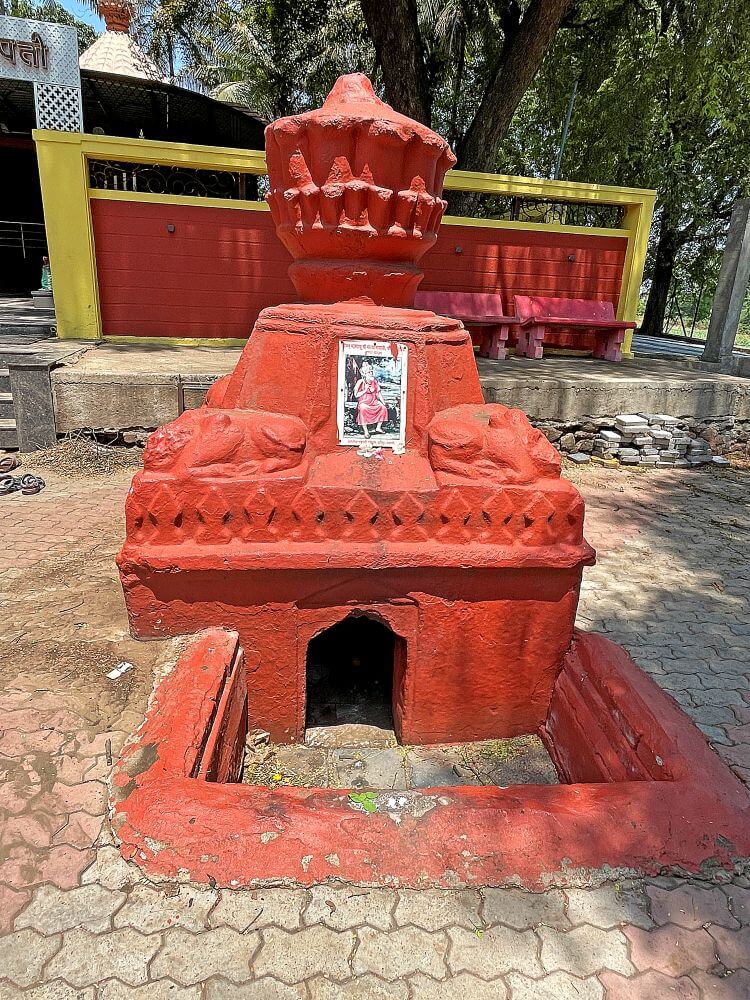
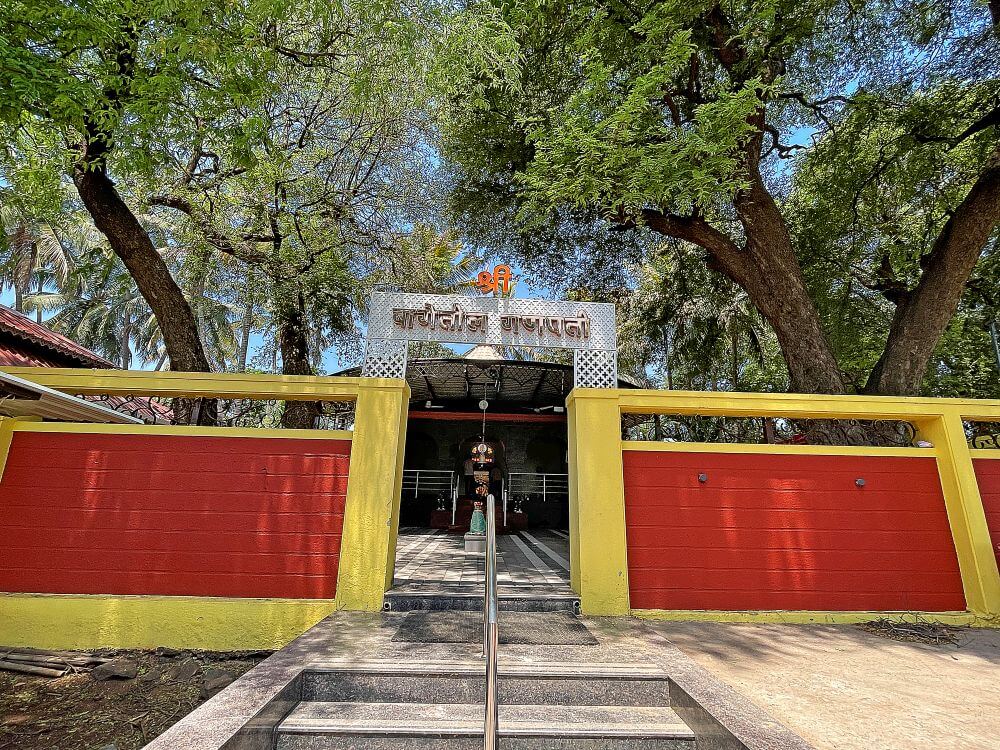
Witnessing Govind Hari’s capabilities, Peshwa Bajirao I enlisted him in military service in १७२८. Later, during the reign of Nanasaheb Peshwa (from १७४० to १७६१ CE), the Patwardhan chieftains received the jagirs of Mangalvedha, Kurundwad and Miraj. It was this Govind Hari Patwardhan who built the temple of his beloved deity, Shri Ganesha, at this very spot in Haripur, which was formerly known as Borvan (a forest of jujube trees). Due to the dense foliage here in earlier times, it came to be known as Bagetla Ganapati, or the Ganapati of the Garden. In front of the entrance to this temple, which is situated alongside the Sangli-Haripur road, there is an intricately designed small shrine (devli) dedicated to Shri Moraya Gosavi, a supreme devotee of Shri Ganapati. It has four walls and a domed roof. There is a hole in the front wall, just large enough for a hand to pass through, through which an oil lamp is lit inside.
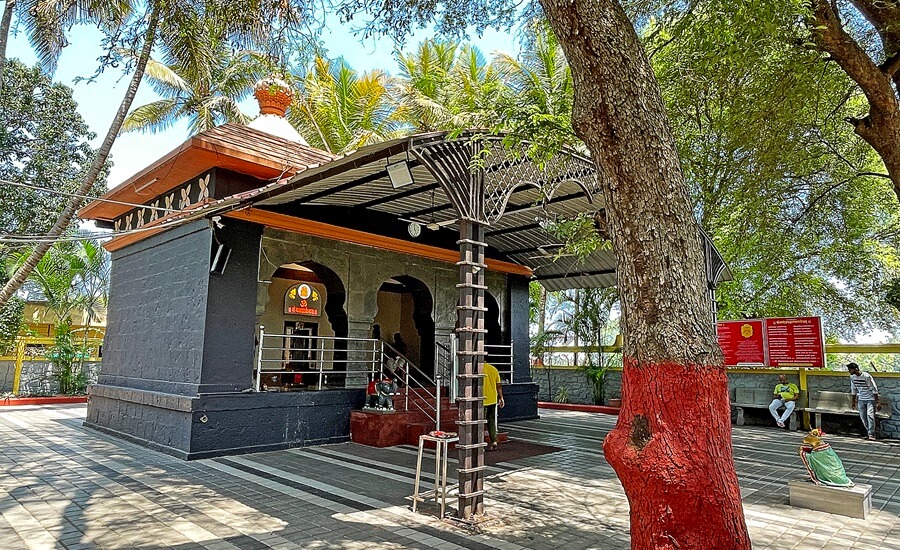
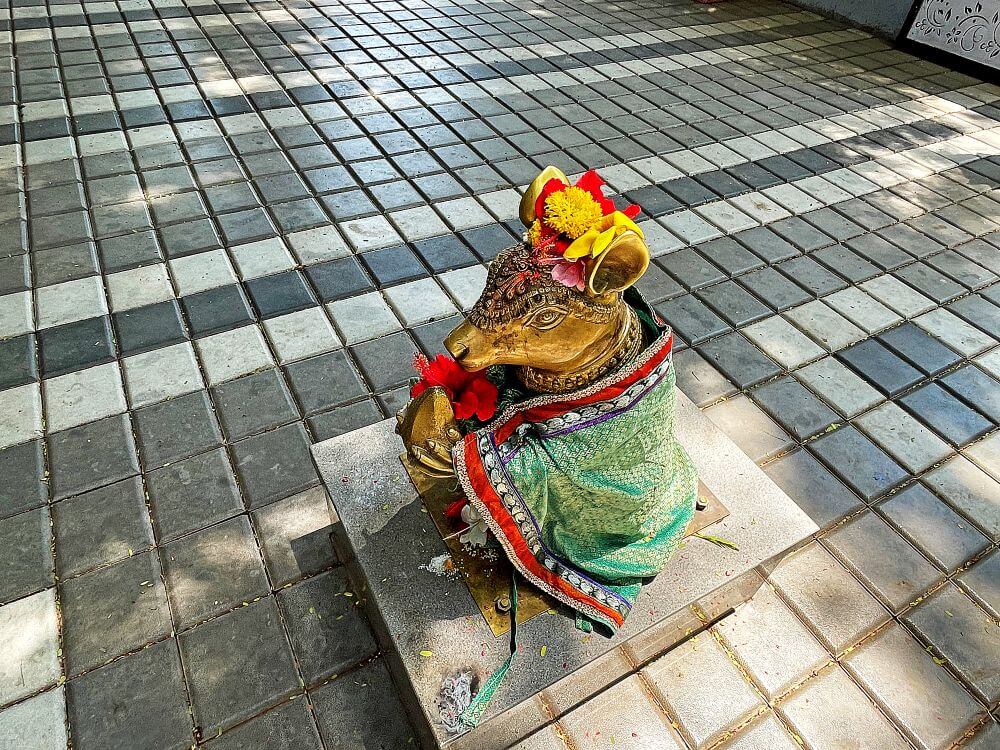
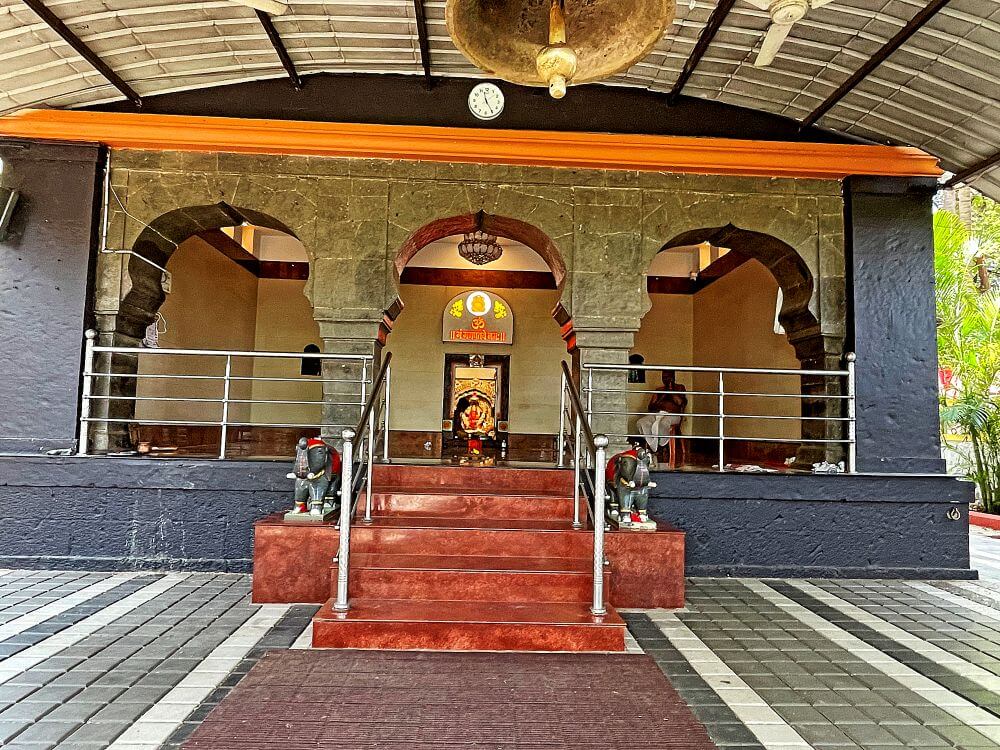
The Bagetla Ganapati temple is constructed of stone and built in the Hemadpanti architectural style. The temple has a compound wall and an entrance gate. The entrance gate features a simple arch and iron shutters. To reach the paved courtyard of the temple, which is elevated above the road, one must ascend five steps. Further on, there is an open sabhamandapa (assembly hall) with an asbestos cement sheet roof supported by four iron pillars. A brass bell hangs from the ceiling. In the sabhamandapa, on a vajrapeetha (pedestal), there is a brass idol of a mouse (mushak) holding a modak . This idol is said to be approximately three hundred years old. Further ahead, on the ground, there is a brass tortoise.
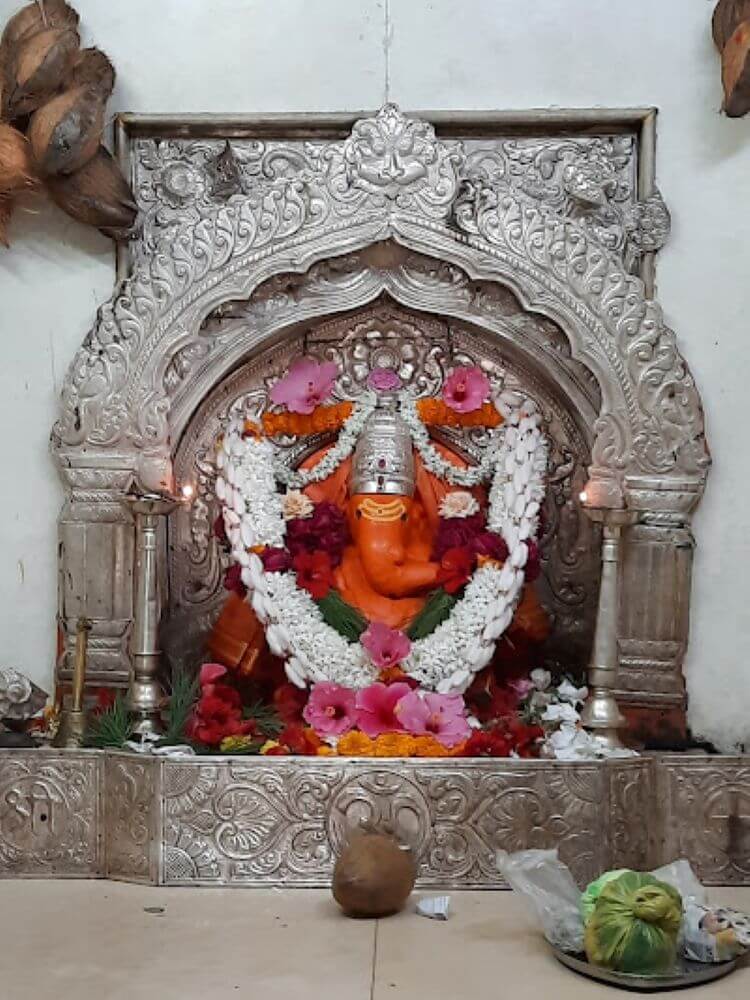
As the antarala (vestibule) is elevated above the sabhamandapa, one must ascend five steps to enter. On both platforms near the entrance to the antarala, there are sculptures of Gajraj (elephant kings). Inside the antarala, there are four intricately carved pillars, with cornices at their tops, and on the cornices are arch-shaped hastas (brackets). Beams rest on these hastas, and the roof rests on the beams. In the antarala, on the front wall of the garbhagriha (sanctum sanctorum), there are two deepakoshthakas (niches for lamps) on either side of the entrance. The doorframes of the garbhagriha feature lotus flower designs on both lower sides and leaf and flower patterns in the upper part. The image on the mandarka (lintel) is indistinct. On the lalata-bimba (central part of the lintel), there is an idol of Shri Ganesha. Inside the garbhagriha, on a vajrapeetha, within an intricately carved silver makhar (frame), stands a two to two-and-a-half-foot tall, four-armed, vermilion-smeared idol of Shri Ganesha with His trunk turned to the left. A silver crown adorns the deity’s head. The vajrapeetha is covered with silver plating, featuring an Om symbol in the center and leaf and flower patterns on both sides. Behind the idol is a silver prabhaval (halo). It has a Kirtimukha in the center and leaf and flower patterns on both sides.
On the roof of the garbhagriha, there are four miniature shikhara (spires) at each corner, with amalaka (finial) and kalasha (pot-finial) atop them. In the center is the main domed shikhara. It is crowned with an amalaka, kalasha, and a flag. All the shikhara feature lotus flower designs.
The five-day Ganesh Janmotsav (birth celebration of Shri Ganesha) is celebrated in the temple from Magh Shuddha Pratipada to Panchami. During this time, Shri Ganesha is placed in a cradle. On Pratipada, a Ganesha Yagya and Mahaprasad are organized. For five days, the temple hosts programs such as bhajan, kirtan, pravachan, and music. The Mahaprasad is prepared from grains donated by Ganesh devotees.
The Mahaprasad during the Maghi Utsav has a unique grandeur. At that time, three large earthen pots are filled with kheer (rice pudding). This requires seven sacks of wheat. To cook the kheer, the pots are placed on the stove at eleven o’clock at night. By dawn, it comes to a boil. Then wheat is added. With other ingredients for flavor, the kheer is ready by noon. By then, the devotees present are ready for the prasad. During this time, thousands of devotees from states like Maharashtra, Karnataka, and Goa come for darshan of the deity. The temple is bustling with devotees during the Bhadrapada Ganesh Utsav and on Sankashti Chaturthi every month.
This sacred temple stands as a testament to deep spiritual devotion, ancient architectural grandeur, and rich local cultural traditions.
The sanctum sanctorum houses the divine idol consecrated according to ancient Vedic traditions, surrounded by serene courtyards and traditional temple architecture.
Navratri, Maha Shivratri, Annual Temple Jatra & Deepotsav
Compare and book flights, secure top-rated local hotels near the temple, hire reliable guides, and rent cars instantly.
Extend your pilgrimage by visiting other highly sacred temples located nearby.


Add ₹999 more to unlock FREE SHIPPING!
Your sacred cart is currently empty.
Shop Photo FramesFill in your delivery details below to place your order.
Add comment