
Add ₹999 more to unlock FREE SHIPPING!
Your sacred cart is currently empty.
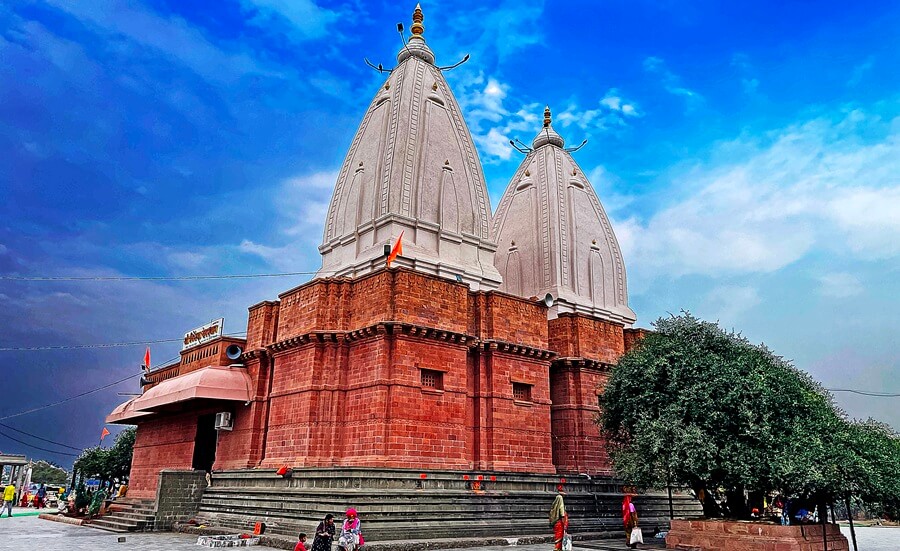
Shop Photo FramesIn Kavaṭhē Mahāṅkāḷ Tālukā, a drought-prone region of Sāṅglī district, lies the renowned shrine of Birōbā, revered as the family deity of the Dhaṅgar community. This sacred site is said to be exceedingly ancient. Known as a deity who grants wishes, it is a place of profound faith for millions of devotees. The Birōbā Yātrā, held here on Chaitra Shuddha Shaṣṭhī amidst a lavish showering of Bhaṇḍārā (turmeric powder) and the resounding beats of Dhaṅgarī ḍhōl and kaitāḷ (traditional drums and cymbals), is a grand festival. Over three lakh devotees attend this yātrā. This place, famous as Birōbāchē Ban (Birōbā’s Forest), is situated at the borders of three villages.
Birōbā, the revered deity of the Dhaṅgar community and an object of faith for people of all eighteen castes, is also known by the names Birdev, Virubā, Virōbā, Birappā, Virūpā, or Vīraṇṇā. In the preface to the text ‘Shrī Viṭṭhal Birdev Māhātmya Kathāsār,’ the great researcher Rā. Chiṁ. Ḍhērē states that many prominent royal lineages of the South emerged from the Gavaḷī-Dhaṅgar community. Under the patronage of these royal families, the glory of their original deities grew in many places. These deities assumed the forms and characters of gods revered by higher castes. Viṣṇu-Kṛṣṇa became Shrī Viṭṭhal. Mailārā became the Shiv-form Mallhārī, and in many places, Vīrabhadra became Birōbā. During the period of Vīrashaiva influence, when Dhaṅgar communities became Vīrashaiva, their Birappā assumed the form of Vīrabhadra, a deity in Shiva’s retinue.
The vibrant and famous Vīrabhadra shrine at Yeḍūr in North Karnāṭaka is the original seat of Birōbā, while the Vīrabhadra temple at Lēpākṣī, built in the later period of the Vijayanagara Empire and renowned worldwide for both its architecture and sculpture, is also an original seat of Birōbā. The birth story and glory of this Birōbā are described in the text ‘Shrī Viṭṭhal Birdev Māhātmya.’ Based on the narratives sung in Dhaṅgarī ōvyā (devotional verses) known as ‘Sumbarāṇ Māṇḍilaṁ,’ Birōbā devotees Dattātray Bōrgāvē and Viṭṭhal Ōmāpujārī composed this text. It recounts the legend that during Dakṣa’s yajña, Dākṣāyaṇī, or Pārvatī, immolated herself due to the insult to Shaṅkar. Enraged, Shaṅkar struck his matted locks, and from them, Vīrabhadra was born. Vīrabhadra severed Dakṣa’s head. At that time, Dakṣa’s wife pleaded with Vīrabhadra for mercy. She implored him to restore her husband to life. While contemplating how to revive him, Vīrabhadra saw a Dhaṅgar grazing sheep nearby. He decided to attach the sheep’s head to Dakṣa’s body. At that moment, the Dhaṅgar prayed to Vīrabhadra, saying, ‘Because you have taken avatar in a noble lineage, Shiva-blasphemers like Dakṣa consider themselves great. Please take avatar in our humble lineage and destroy the Shiva-blasphemers and evil ones.’ Vīrabhadra then told him that in Kaliyuga, he would be born into the Dhaṅgar lineage.
Later, Vīrabhadra, or Birdev, was born to Gaṅgāsuravaṅtī (Gaṅgā-Sarasvatī), the daughter of King Dhruvāit of Nāradapur. However, the son could not remain with his mother. Due to a river’s curse, he had to be placed in a cradle in the forest. The legend of that curse is that Gaṅgāsuravaṅtī’s father, believing his daughter was pregnant without being married, poisoned her food. But Birōbā, still in the womb, saved his mother from the poison. The remaining food was thrown into the river by Suravaṅtī’s maid, causing the aquatic creatures to die. The river cursed her, saying, ‘Because you killed my children, your son, once born, will remain far from you.’ Thus, Birōbā was placed in a cradle in the forest. There, Ekavvā and her younger sister considered the child their brother and raised him in Chiñchalī. As Akka (elder sister) became a mother, Ekavvā was named Māyakka. Her temple is near Bēḷgāv at Chiñchalī. Years later, Birōbā married his maternal cousin, but he did not find joy in domestic life. He performed penance and called Viṭṭhal as his brother. Together, they destroyed the demons who troubled the Dhaṅgars.
The legend about the deity’s location here is that when Birōbā came from Karnāṭaka to the hill at Ḍhālgāv, he looked south from the hill and saw Māyakka Devī and the Kṛṣṇā River. To the north, he saw the Chandrabhāgā. The deity was greatly pleased with this location and settled on the hill. Later, for his devotees, the deity descended from the hill into the ban (forest).
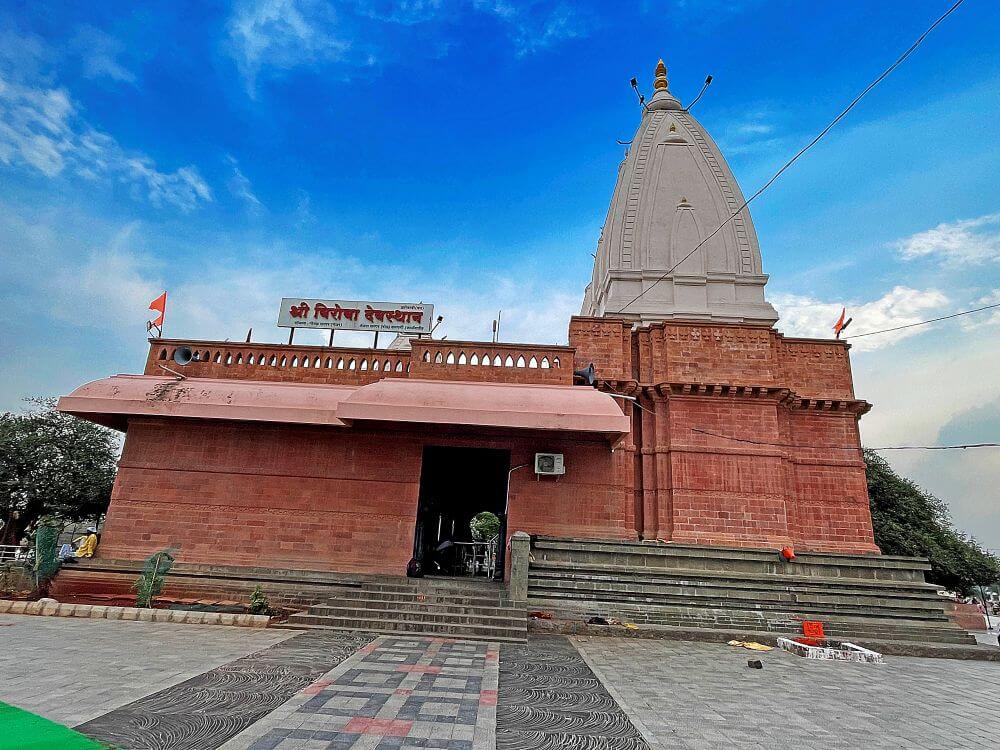
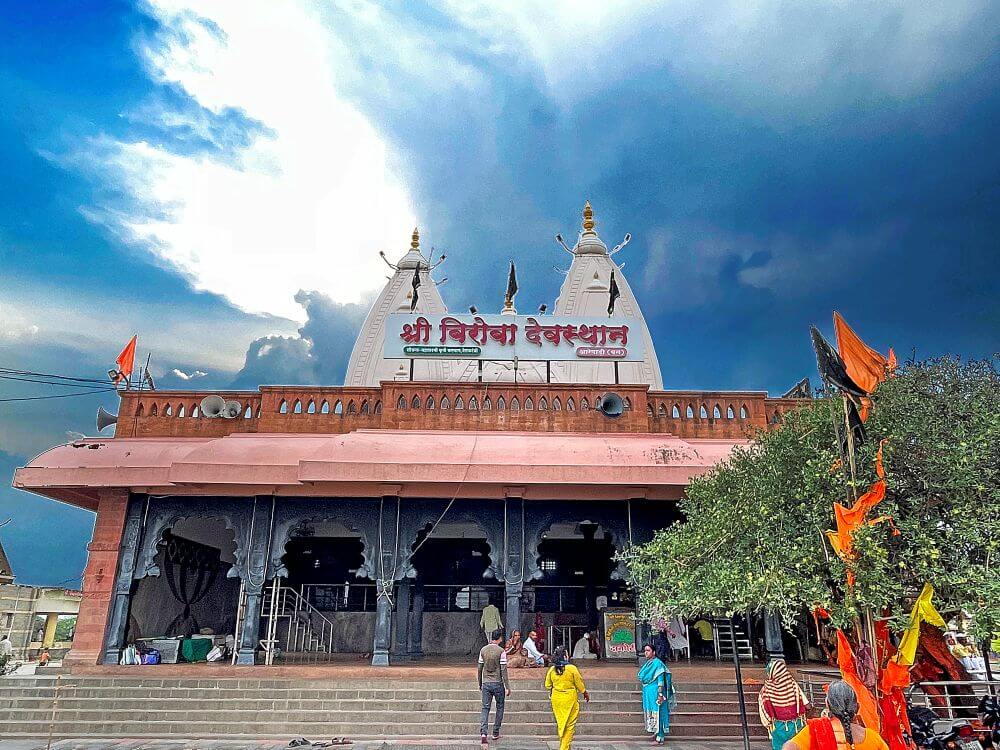
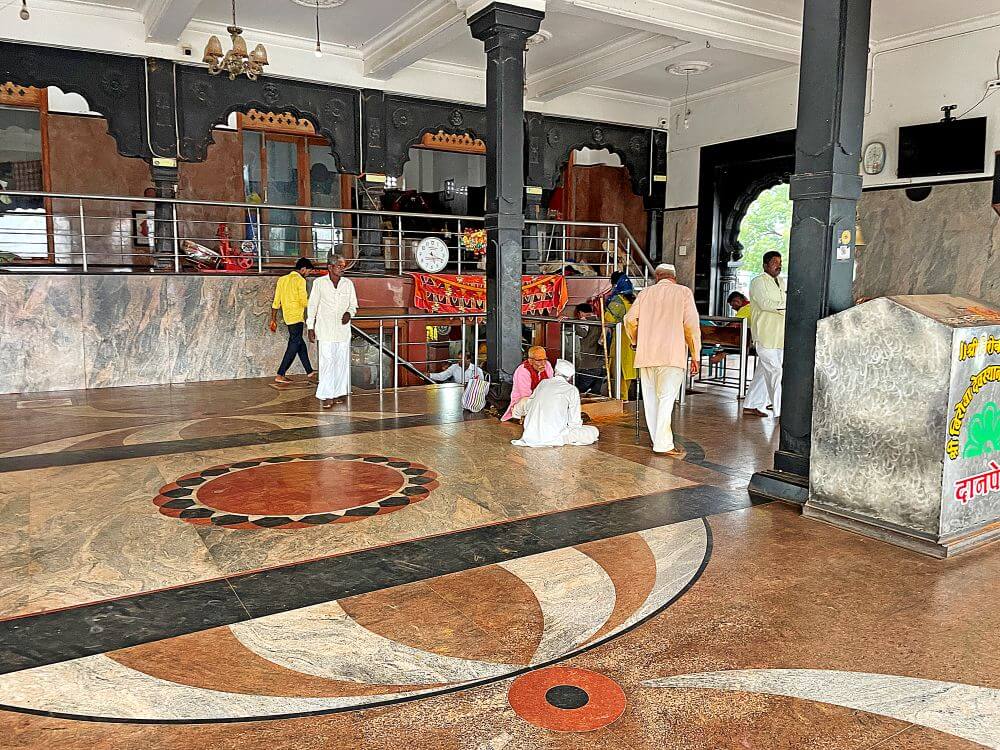
This shrine is situated in a spacious area at the confluence of three villages: Ārēvāḍī, Bilgāv, and Nāgaj. As one approaches the temple from the entrance in the compound wall surrounding it, a pillar is encountered. An eternal lamp burns on this pillar. Devotees have a tradition of offering oil to this lamp after their vows are fulfilled. Further on, in the area in front of the main temple, there is a Naṁdīmaṇḍap. Inside it, behind Naṁdī, are two horses, in front two sheep, along with several small and large Shivpiṇḍīs. In front of the temple stands a Banyan tree. Devotees who come for Birōbā’s darshan first worship this tree and then proceed to the temple for darshan. The temple’s structure consists of a Sabhāmaṇḍap (assembly hall) and below it (in the form of Pātāḷa) the Garbhagṛha (sanctum sanctorum). The Sabhāmaṇḍap here is open-sided and has wooden arches adorned with floral carvings on all four sides. From the Sabhāmaṇḍap, one must descend a few steps to reach the Garbhagṛha.
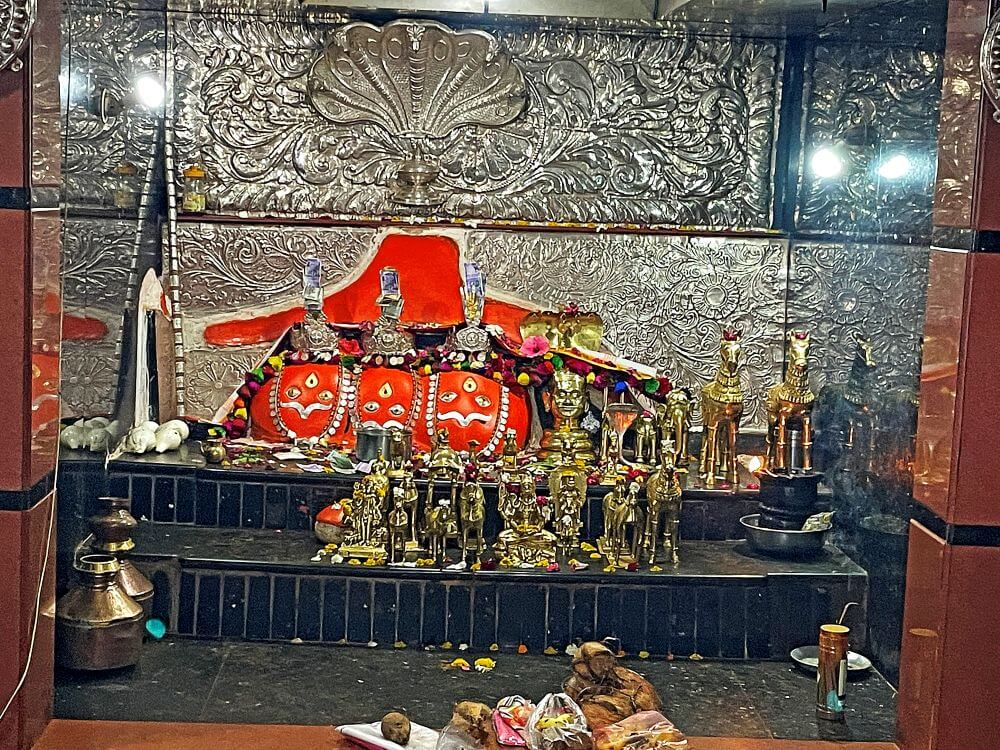
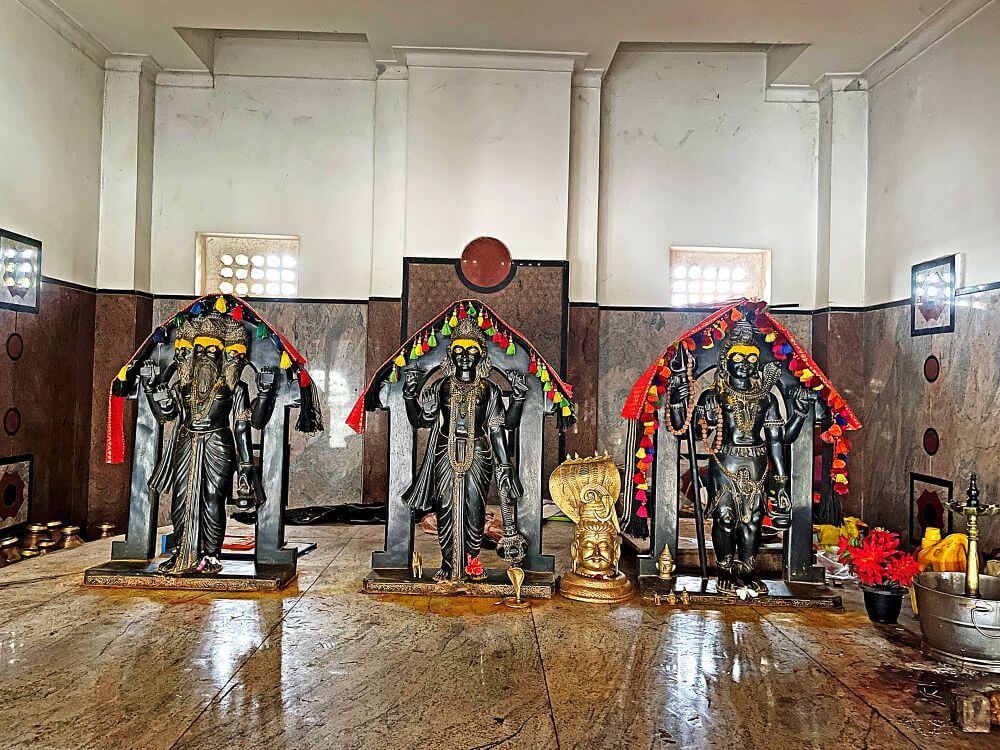
Devotees believe that Birōbā here is a living deity. In this Garbhagṛha, there are three deities adorned with vermilion: Gōpānā, Sūryābā, and Birōbā. Their garlands, eyes, moustaches, and tilaks are all made of silver, and silver serpents rest on their heads. On the backside, a silver sheet with the image of Shēṣanāg is affixed. In the upper part of the Garbhagṛha are black stone idols of Brahmā, Viṣṇu, and Mahēsh. To the right of Birōbā are temples of devotee Sūryābā and further on, his sister Māyakkā. Additionally, within the temple complex, there is also a temple dedicated to Birōbā’s wife, Kāmādevī. In the Dhaṅgarī ōvī style, the birth story of Birōbā and his mother Suravaṅtī is narrated. Along with this, stories about his wife Kāmādevī and sister Māyakkā are told through songs.
A grand yātrā takes place at the Birōbā Temple in the month of Chaitra. On the first day of the yātrā, a sweet offering (naivedya) is made to the deity. Five days before Guḍhī Pāḍavā, that is On Panchami Tithi, the traditional, revered offering of sweet naivedya arrives from Tasgaon. On Shashthi Tithi, a public offering of sweet naivedya is made. On Saptami Tithi, a goat is sacrificed, and that non-vegetarian naivedya is offered to Birōbā’s devotee, Sūryābā. It is said that Birōbā was a Lingayat, and therefore, non-vegetarian naivedya is not offered to Him. However, since Sūryābā partakes of non-vegetarian food, this offering is presented only to Sūryābā. There is also a legend associated with this. When Vīrabhadra severed the head of a ram and presented it to Mahādevā to be affixed to King Daksha, the shepherd asked, “What shall I do with the body of this ram now?” He was then told, “Give the ram’s body to My rākshasas to appease their hunger.” It is said that since then, this tradition of sacrifice has continued here.
During the yātrā period, the Birōbā Pālkhī departs from the temple at night. The Pālkhī circumambulates the temple until dawn, and then returns to the temple at dawn. During Navarātri, from Ghaṭasthāpanā until Dasahrā, similar Pālkhī ceremonies are organised. A large number of devotees gather here during the yātrā. At this time, traditional musical instruments, dances, and folk arts of the Dhangar community are presented. Additionally, thousands of devotees come here for darshan every Sunday and on Amāvasyā.
This sacred temple stands as a testament to deep spiritual devotion, ancient architectural grandeur, and rich local cultural traditions.
The sanctum sanctorum houses the divine idol consecrated according to ancient Vedic traditions, surrounded by serene courtyards and traditional temple architecture.
Navratri, Maha Shivratri, Annual Temple Jatra & Deepotsav
Compare and book flights, secure top-rated local hotels near the temple, hire reliable guides, and rent cars instantly.
Extend your pilgrimage by visiting other highly sacred temples located nearby.


Add ₹999 more to unlock FREE SHIPPING!
Your sacred cart is currently empty.
Shop Photo FramesFill in your delivery details below to place your order.
Add comment