
Add ₹999 more to unlock FREE SHIPPING!
Your sacred cart is currently empty.
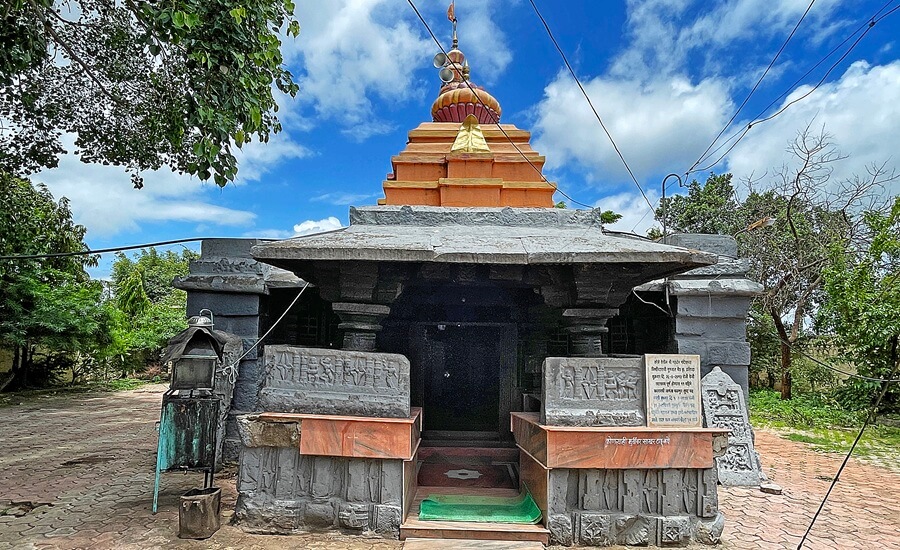
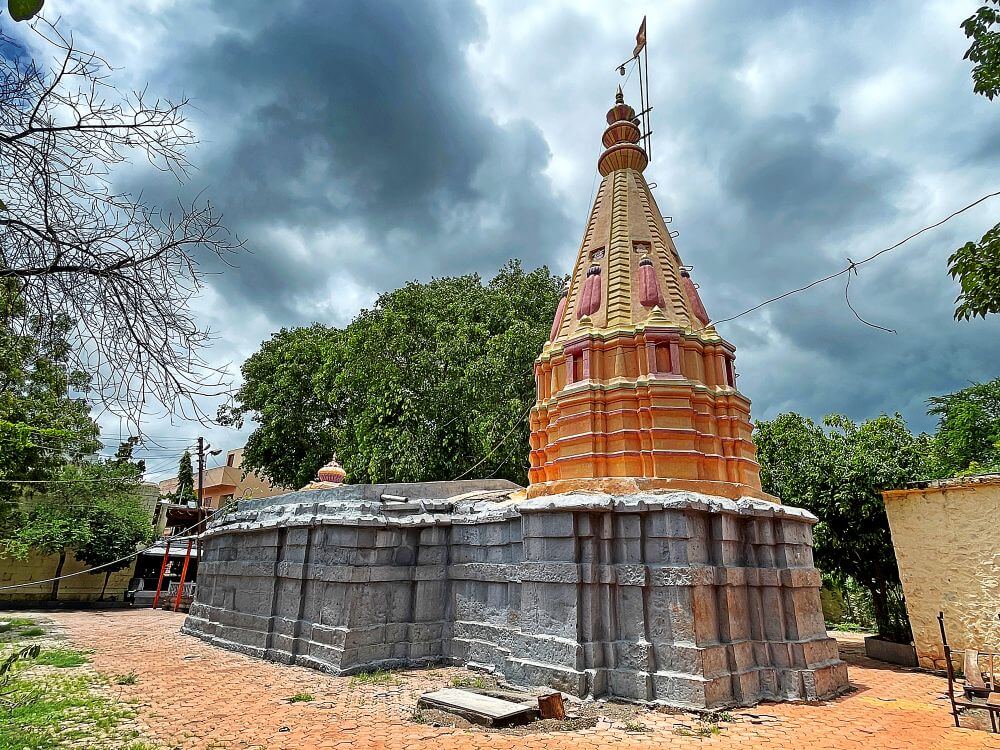
Shop Photo FramesThe ancient temples of Sangola taluka, which have witnessed the rule of the Chalukyas of Kalyan, the Yadavas of Devagiri, the Bahmanis, and the Marathas, include the Mahadeva Temple at Kole. Located in the village of Kole, which is known for its dairy production and handicraft industry, the Mahadeva Temple was built in the thirteenth-century Hemadpanthi architectural style. One of the unique features of this temple is its erotic sculptures (kama-shilpas). Due to the influence of the Shakta tradition, such sculptures can be seen in many temples, with the temple at Khajuraho being a world-famous example. Because of the large number of erotic sculptures in this Mahadeva Temple, it is also referred to as the Khajuraho of Solapur district.
Sangola, which is referred to in ancient inscriptions as ‘Sangoliya’, ‘Sangoli’, and ‘Sanghole’, was a part of the Mann Pargana during the historical period. Kole is a small village in this taluka. There is historical documentation that following the slaying of Afzal Khan, Netoji Parkar, acting on the orders of Chhatrapati Shivaji Maharaj, plundered the villages in this region, and Kole was among them. In the year 1146 CE, this region was under the rule of Jagadekamalla, the last notable king of the Chalukya dynasty of Kalyana. Following this, the rule of the Kalachuri dynasty came to power here. There is epigraphical evidence that in the thirteenth century, the Pandharpur and Velapur regions were ruled by the Yadava dynasty of Devagiri. Hemadri, also known as Hemadpant, was the finance minister, that is, the prime minister of the Yadavas. The temple architecture style propagated by him is known as the Hemadpanti style. The temple at Kole belongs to this very style.
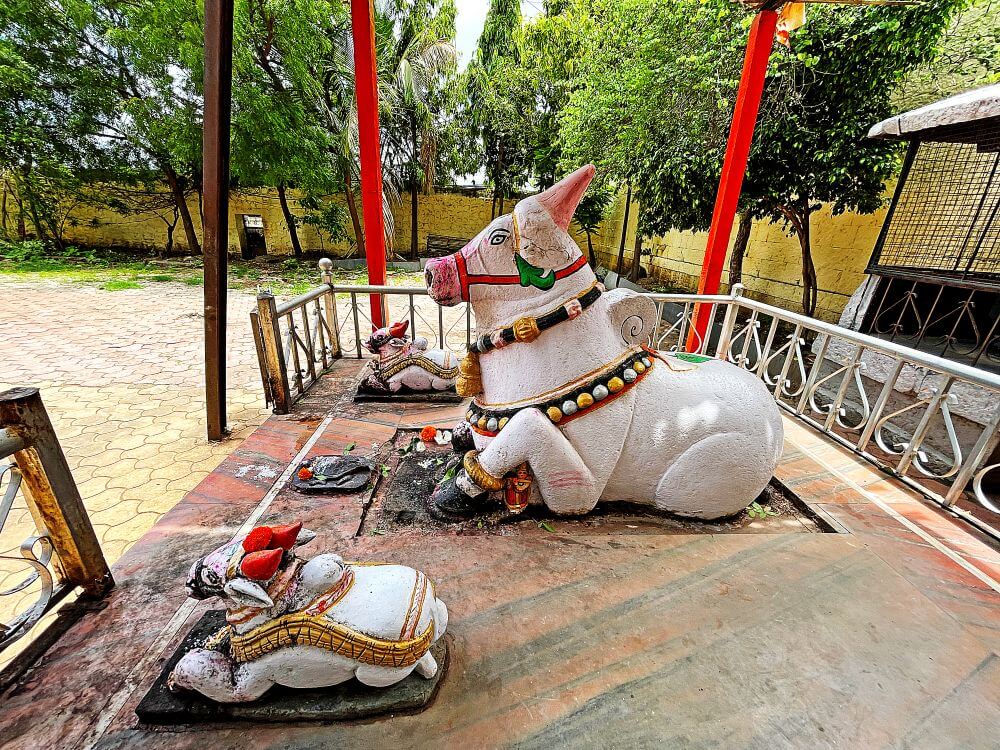
This ancient Mahadeva temple is located centrally in the village of Kole. Upon entering through the temple gateway, there is a semi-open sabhamandapa to the right. In the front section of this sabhamandapa, there are vermilion-anointed idols of Maruti and Ganesha. Besides this, there are black stone idols of Vitthal-Rukmini here. It appears that this assembly hall (sabhamandapa) was built at a later period in front of the original temple. One enters the temple courtyard through this assembly hall. At the entrance of this courtyard, there is a Hemadpanti-style pavilion structured like a Nandi mandapa. It features pillars and stone benches (kakshasanas). Ahead of this pavilion, in the courtyard, stands a large Nandi carved from a single monolithic stone on a raised platform. On both sides of this large Nandi, there are two smaller Nandi idols.
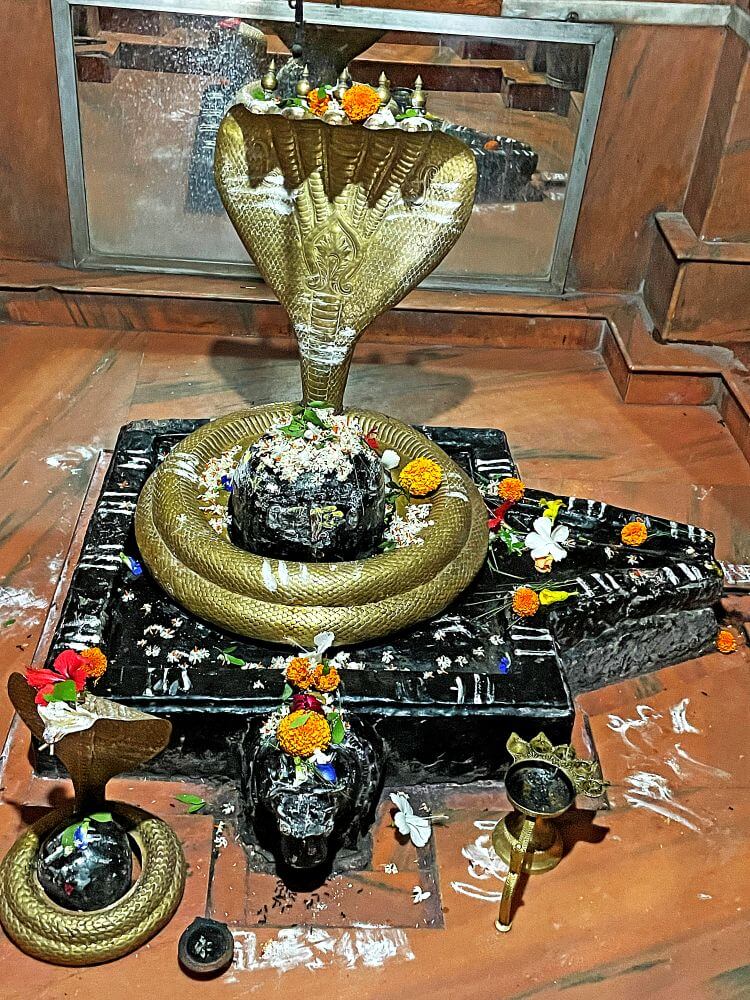
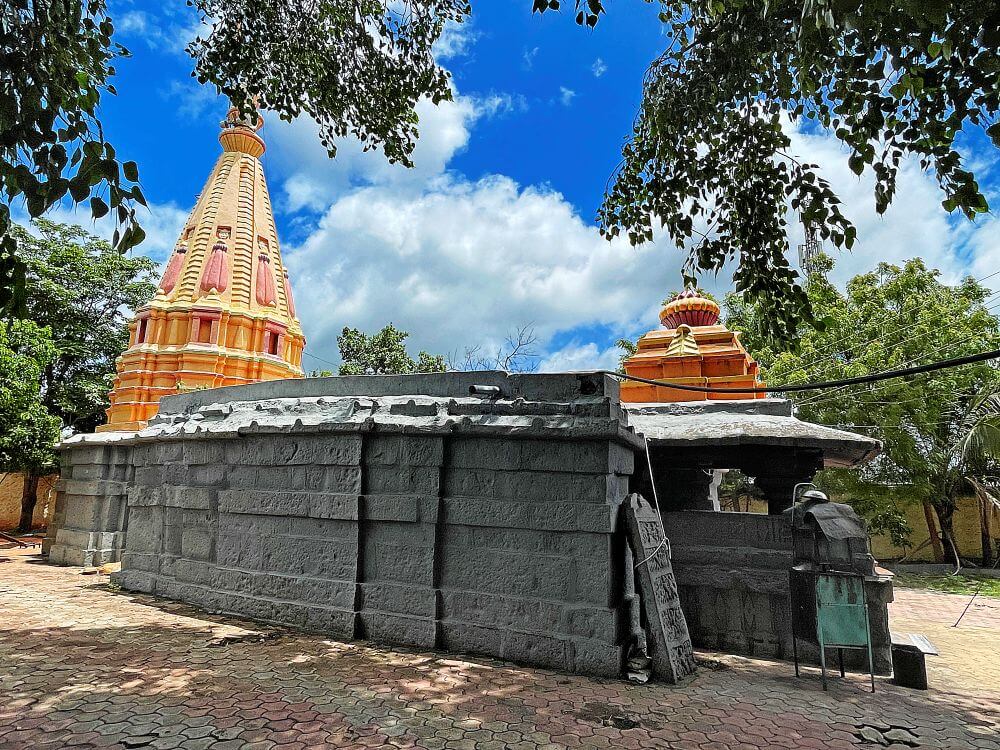
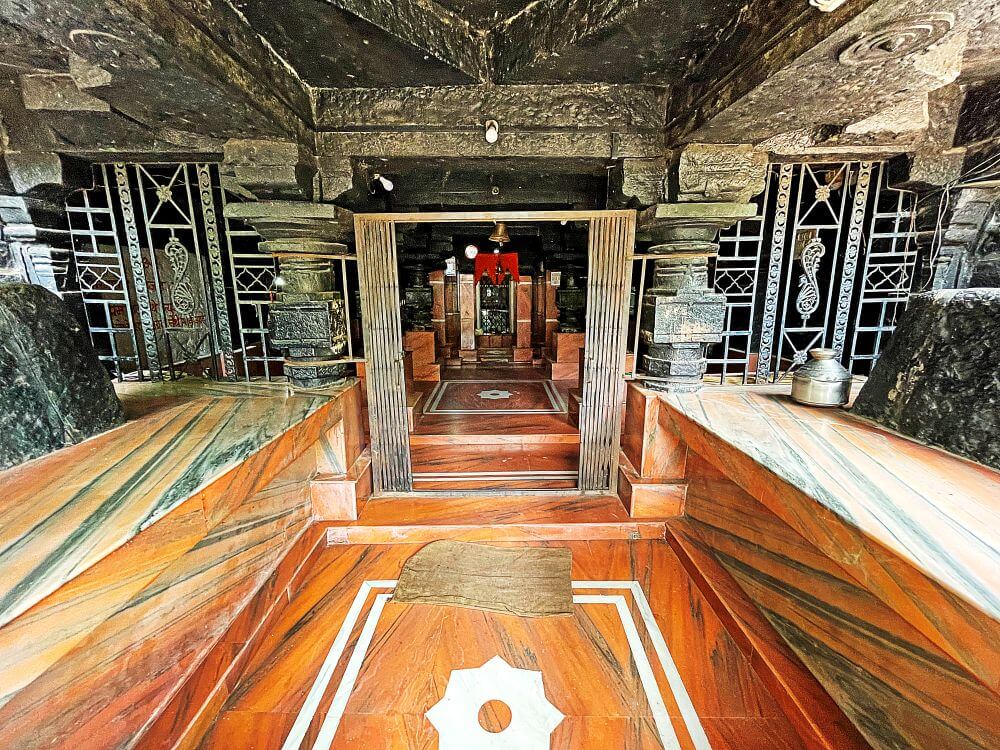
The architecture of this temple consists of the Mukhamandapa, Sabhamandapa, Antarala, and Garbhagriha. The Mukhamandapa and Sabhamandapa here are semi-open in nature, and their walls feature stone seating benches (Kakshasanas) for devotees to sit. Marble tiles were later installed on these stone Kakshasanas. The pillars here feature intricate carvings. In the niches (Devakoshthakas) of the Sabhamandapa, there are idols of Ganapati, Shivlinga, and Virabhadra. On the beams resting over the stone pillars in the Sabhamandapa Various sculptures are carved. On one lintel, a hand is carved, resembling that found on a Satisheela (memorial stone for a devoted wife). Bangles are visible on this carved hand. Beyond that is the entrance to the Antarala (vestibule) and the Garbhagriha (sanctum sanctorum). Artistic carvings are also adorning the doorjambs of this entrance. However, the Shivlinga in the small Garbhagriha here is characteristic and rare. The architecture of this ancient Shivlinga is such that it appears seated on the back of Nandi. On the front side of this Shivlinga, carved from a single piece of black stone, is the face of Nandi. Atop the square Shivlinga is a brass serpent with five hoods. It is said that this is the only Shivlinga of such architecture in Solapur district. Besides this main Shivlinga, there is another small Shivlinga in the Garbhagriha.
There are various erotic sculptures on the outer side of the Mukhamandapa. There are Sikharas on the Mukhamandapa and Garbhagriha of the temple. The main Sikhara features several small Sikharas. At the apex of the Sikhara, there are three Amalakas followed by a Kalasa. There are many ancient Viragals in the temple courtyard. Daily worship and Aarti are performed in this temple. Here, a large crowd of devotees gathers for Darshan every Monday, as well as on Shravani Somwar, Shivratri, Mahashivratri, and Ashadhi Ekadashi. On the occasion of Shravani Somwar, Prasada is distributed to the devotees here.
This sacred temple stands as a testament to deep spiritual devotion, ancient architectural grandeur, and rich local cultural traditions.
The sanctum sanctorum houses the divine idol consecrated according to ancient Vedic traditions, surrounded by serene courtyards and traditional temple architecture.
Navratri, Maha Shivratri, Annual Temple Jatra & Deepotsav
Compare and book flights, secure top-rated local hotels near the temple, hire reliable guides, and rent cars instantly.
Extend your pilgrimage by visiting other highly sacred temples located nearby.


Add ₹999 more to unlock FREE SHIPPING!
Your sacred cart is currently empty.
Shop Photo FramesFill in your delivery details below to place your order.
Add comment