
Add ₹999 more to unlock FREE SHIPPING!
Your sacred cart is currently empty.
Shop Photo FramesAccording to the mythological legend in ‘Devi Mahatmya’, the primordial nature Adimaya Bhagavati Mahalakshmi created two forms, Mahakali and Mahasaraswati, from Tamoguna and Sattvaguna, and instructed them each to create a suitable pair of male and female corresponding to their respective attributes. This subsequently led to the creation of the universe and existence. Thus, it is believed that just as Mahakali is the destroyer, she is also the universal mother and nurturer. A famous shrine of this Goddess in Sangli district is the ancient temple located at Kavathe Mahankal.
Kavathe Mahankal is considered a drought-prone taluka. However, devotees believe that due to the presiding village deity, Goddess Mahakali, the taluka is progressing. In the sanctum sanctorum of this temple, along with the Goddess, there is also a Shivalinga. Therefore, it is believed that this sacred place is a confluence of Shiva and Shakti. Here, Goddess Mahakali is also revered as Ambabai. The legend of this temple goes that while a person from the Dhangar community was bathing in the Ambika Kunda of the local Kamandalu River, he found the idol of Goddess Mahakali. As he was unable to perform the regular worship of the Goddess, he handed over the idol to the village Patil. Thereafter, the villagers together consecrated this idol on the banks of the river. The Sangli Gazetteer published by the British also mentions that the idol of Mahakali was found in the local Kunda.
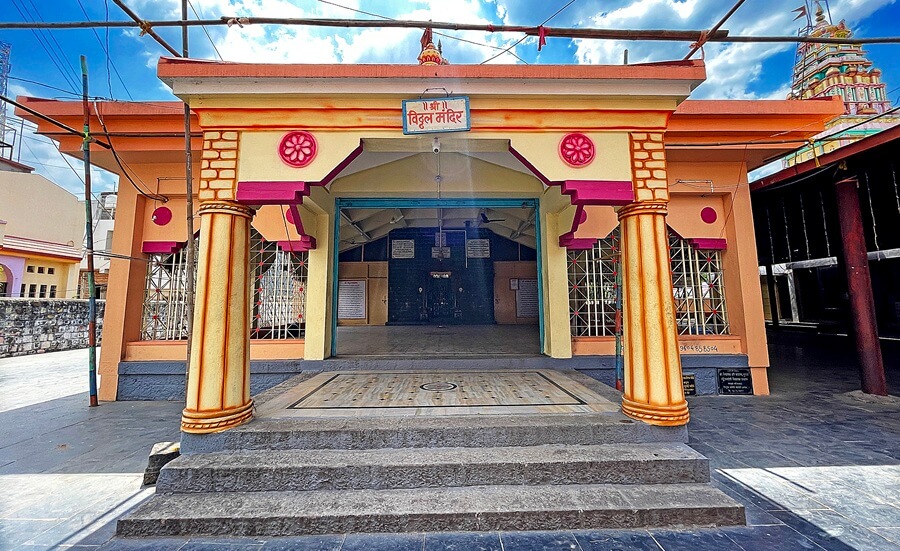
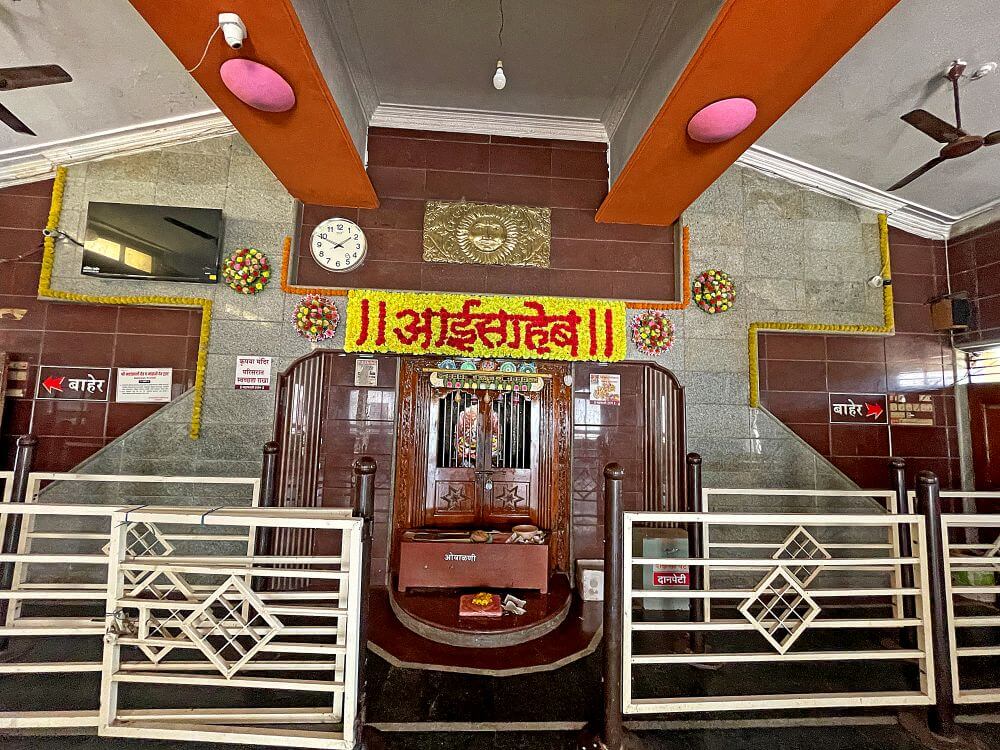
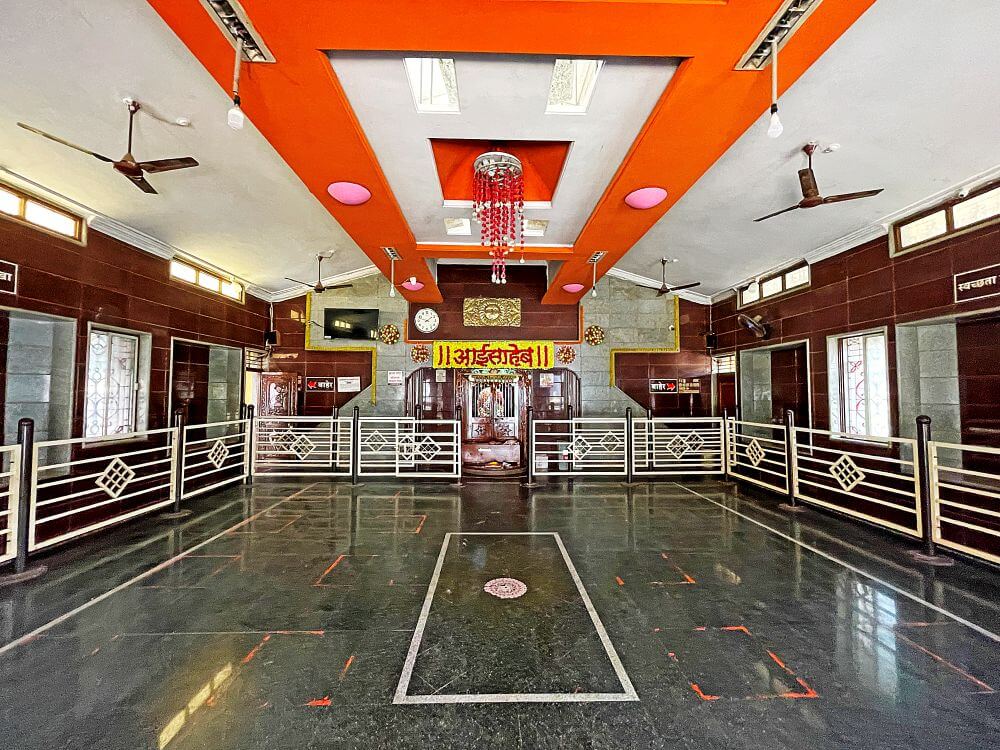
Villagers state that the period when the idol of Mahakali was found is between 1550 and 1600 CE. Recently, after renovation, this temple has acquired a modern appearance. As the village expanded, this temple is currently situated in the central part of the village. In front of the temple entrance, about 25 feet high There is a stone lamp tower (deepamal) made of black stone. The wooden frame at the entrance of the main temple features intricate carvings of lions, vyal (mythical beasts), and floral motifs. The temple architecture consists of a sabhamandap (assembly hall), antaral (vestibule), and garbhagriha (sanctum sanctorum). The sabhamandap is large and enclosed. Arrangements for the darshan queue have been made on the left and right sides. In the antaral, there is a tortoise placed on a semi-circular platform.
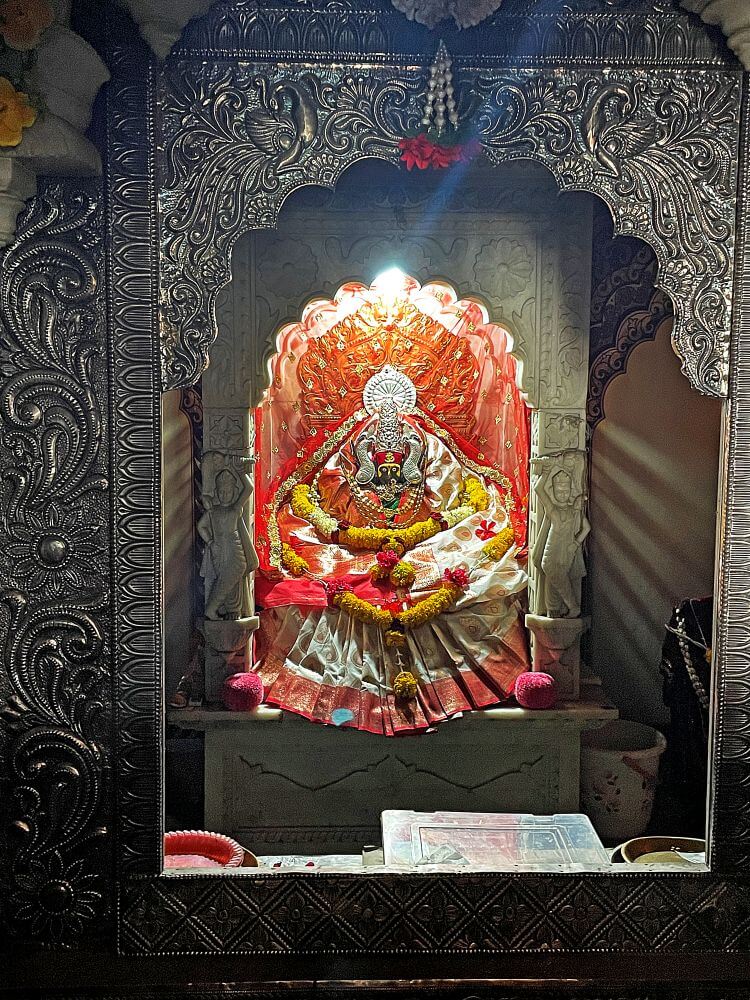
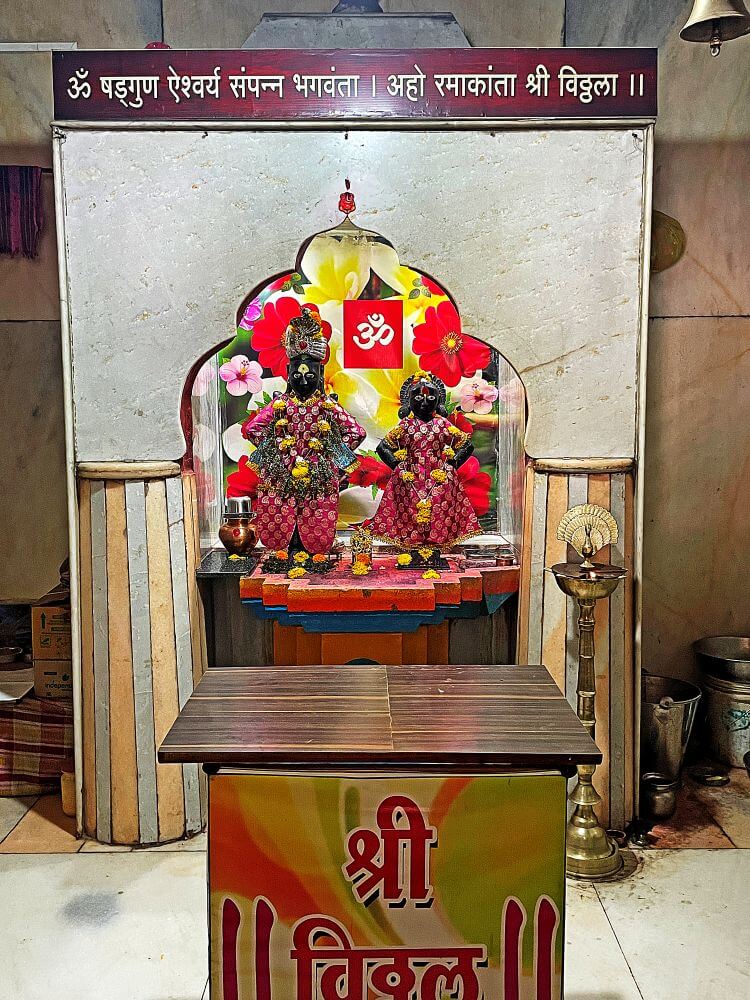
On the front wall of the sanctum sanctorum, there is a prominent sun-face (Surya-mukh) covered with a golden leaf. The wooden doorframes of the sanctum are adorned with intricate leaf and flower carvings. However, the doorframe of the sanctum features three to four distinct layers: first, a marble arch; then, an engraved frame covered with a silver sheet; and within that, another marble shrine-alcove (makhar) carved with guardian deities (dwarpalas) and floral motifs. Inside, the Goddess is seated upon a silver throne. The idol of the Goddess is made of black stone. With large, expressive eyes, a straight and graceful nose, a pearl nath (nose ring) in her nose, turmeric paste (malwat) on her forehead adorned with a prominent vermilion bindi, and embellished with gold and silver ornaments, this is the divine form of the Goddess. This Mahakali of Kavathe Mahankal and the Mahalakshmi of Kolhapur It is believed to be the sister of Tulja Bhavani of Tuljapur. Here, in the sanctum sanctorum itself, on one side, there is a large Linga of Mahadeva, with Nandi situated in front of it. Therefore, it is said to be a seat of Shiva and Shakti. Within the temple complex, there is a temple of Vitthal-Rukmini. Two spires of the temple are visible, adorned with various carvings along with niches depicting various deities.
Navaratrotsav is celebrated on a grand scale at this temple. Various religious programs are organized for nine days. The celebrations begin at dawn with the Kakad Aarti. Thereafter, many programs are organized such as Trikal Aarti, Kirtan, Bhajan, playing Pot, Dhangari Ovya, and Gondhali songs. After the Aarti at night, the Palkhi circumambulation takes place. On the day of Dasara, the Palkhi goes outside the temple. On this occasion, the Palkhi is carried at a running pace to loot gold (distribute gold leaves as a symbol of prosperity). In the village, floral carpets are laid along the Palkhi route. Many devotees come here to witness this grand ceremony. People of all castes—such as the Bhongale community, Mali, Teli, Gondhali, Chambhar, and Ramoshi—come together to celebrate this festival. On this occasion, the village Patil holds the privilege of fanning the Goddess, while the Mali community has the honor of carrying the Palkhi. The Sambal players here have also been offering their devotional service of playing the Sambal for generations. During the nine days of Navaratri, every community gets an opportunity to serve the Goddess. Known as a vigilant deity who fulfills the wishes of her devotees, thousands of people visit here for her Darshan.
This sacred temple stands as a testament to deep spiritual devotion, ancient architectural grandeur, and rich local cultural traditions.
The sanctum sanctorum houses the divine idol consecrated according to ancient Vedic traditions, surrounded by serene courtyards and traditional temple architecture.

Navratri, Maha Shivratri, Annual Temple Jatra & Deepotsav
Compare and book flights, secure top-rated local hotels near the temple, hire reliable guides, and rent cars instantly.
Extend your pilgrimage by visiting other highly sacred temples located nearby.


Add ₹999 more to unlock FREE SHIPPING!
Your sacred cart is currently empty.
Shop Photo FramesFill in your delivery details below to place your order.
Add comment