
Add ₹999 more to unlock FREE SHIPPING!
Your sacred cart is currently empty.
Shop Photo FramesThe main seat of Mother Kalika, the presiding deity of the Tantra path, is located at Kalighat in Kolkata. This is considered the 51st Shaktipeeth of the Goddess in India. Known as ‘Dakshinakali’, Mother Kalika is widely worshipped in Bengali society. In the Kolhapur and Sangli districts of Maharashtra, this goddess of power is worshipped in the form of ‘Kalamm’. Among the many temples of the Goddess here, one famous and ancient temple is located in the village of Kalamwadi in Walwa taluka. Devotees firmly believe that the awakened Goddess here fulfills their vows and rushes to answer the calls of her devotees.
This temple, built in the Hemadpanti architectural style, is said to date back to the thirteenth century. An inscription on the temple wall records that it was renovated in 1995. According to the legend associated with this temple, a devotee from this village used to regularly visit Udgiri, located in the dense forests of Shahuwadi taluka, to seek the blessings of the Goddess. Due to his old age, it became impossible for him to continue making the journey. He sat at the current location of the temple, calling out to the Goddess and praying for her to grant him darshan. Pleased by his devotion, the Goddess appeared before him. He then requested the Goddess to reside at this place permanently. In accordance with the devotee’s wish, the Goddess manifested here in the form of an idol. Later, a grand temple was built for the Goddess at this site.
According to another legend, in the past, trade in this area was conducted using bullock carts and horses. At that time, the Goddess arrived here from Udgiri (Shahuwadi) through the hoof of a bull and settled under a tamarind tree here. A Muslim chieftain was [ ] After experiencing the divine power of the Devi, he built a temple for her at this place.
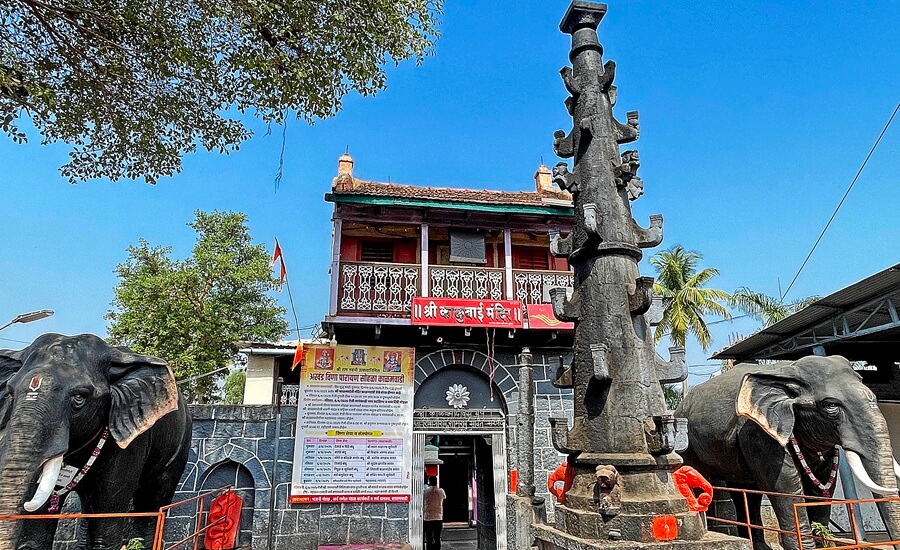
In front of the temple entrance, located in the heart of the village, stands a platform featuring a three-tiered circular stone lamp tower (Deepmala). At the base of the Deepmala, there are four elephant sculptures facing the four cardinal directions, and each of the three tiers is equipped with individual holders for lighting lamps. On the platform beside the Deepmala stands a stone pillar. Flanking the front of the Deepmala are distinctive elephant sculptures, which appear lifelike due to their form and color scheme. Beyond this lies the two-story temple entrance and the perimeter wall. The entrance features lamp niches on both sides, with a semi-circular arch above adorned with a relief carving of a lotus flower. Inside the entrance, there are guard rooms on both sides. The balcony of the Nagarkhana (drum house) on the upper floor of the entrance is supported by four wooden pillars and features a railing. Currently, the postal department office is housed within this Nagarkhana.
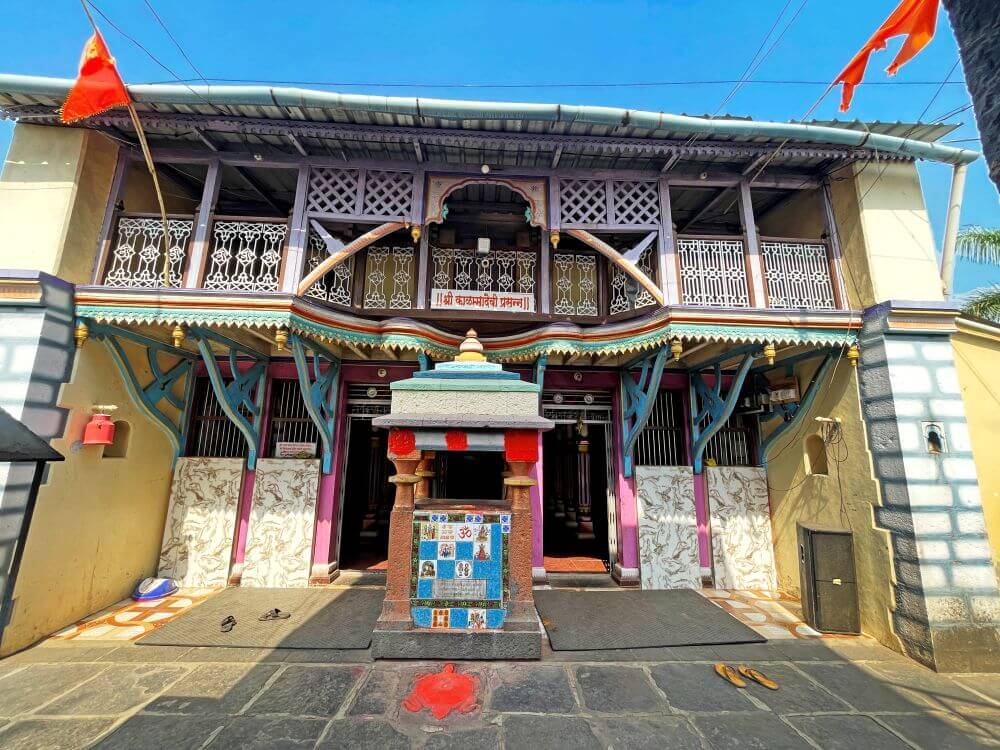
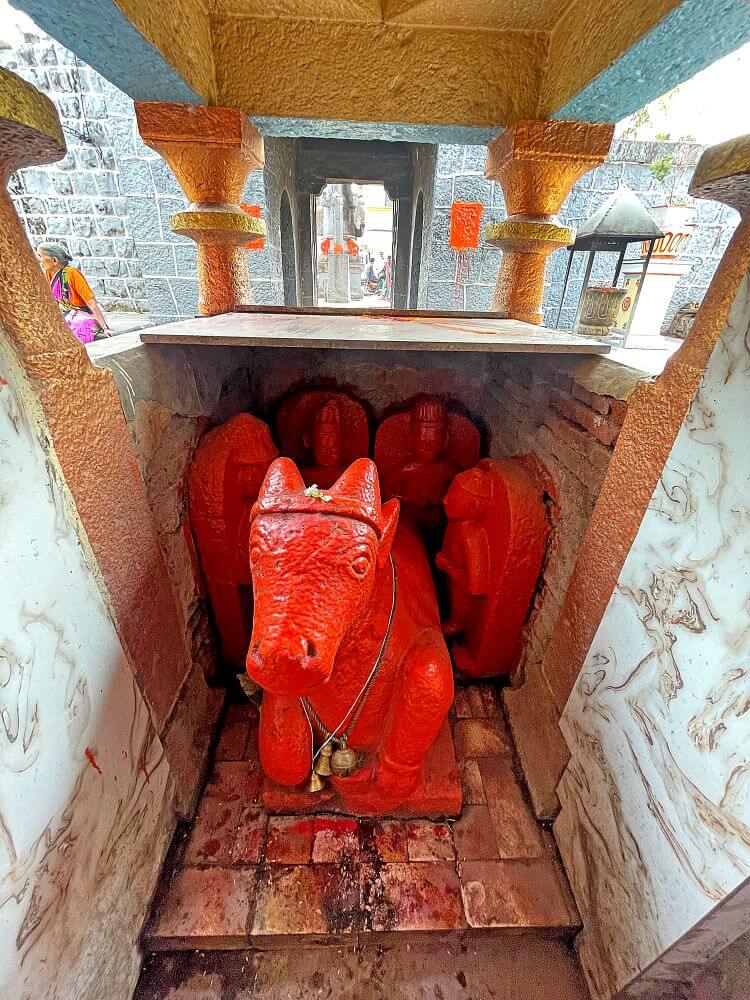
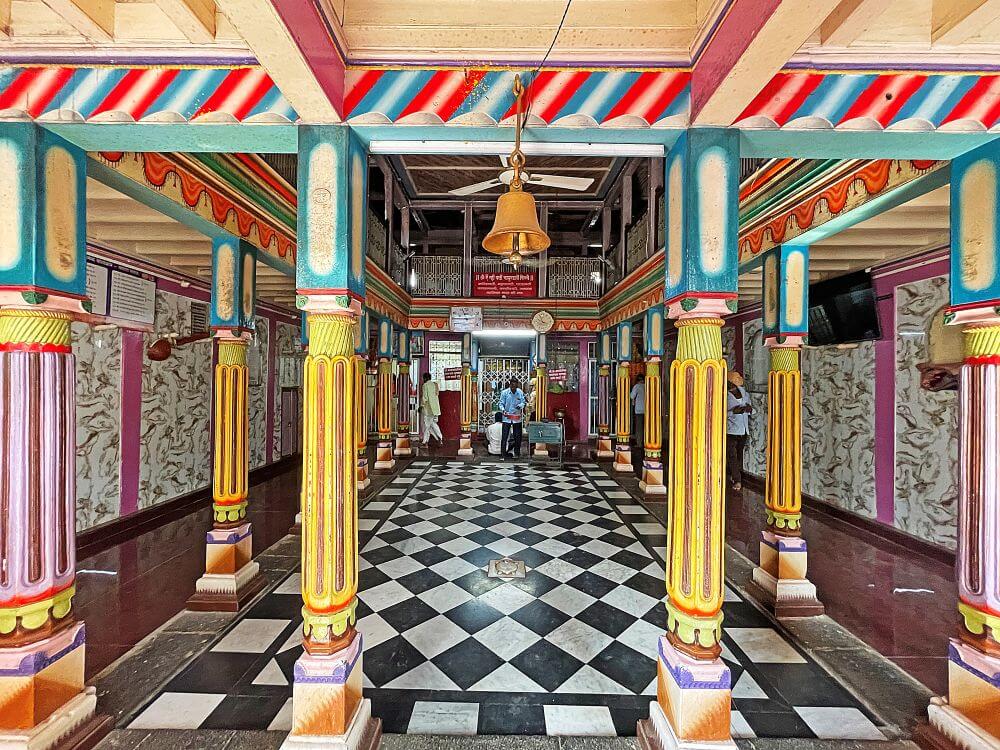
From here, one enters the temple courtyard. In front of the entrance to the temple’s two-story assembly hall (Sabhamandapa), there is a tortoise (Kurma) on the ground, followed by the Nandi Mandapa, which houses Nandi and several other ancient idols. The eight wooden pillars embedded in the entrance walls feature brackets that support the balcony of the upper floor. Inside the assembly hall, there are two pillars near the entrance, two in front of the sanctum sanctorum (Garbhagriha) entrance, and six intricately carved wooden pillars each on the left and right sides. All these pillars stand on square stone bases.
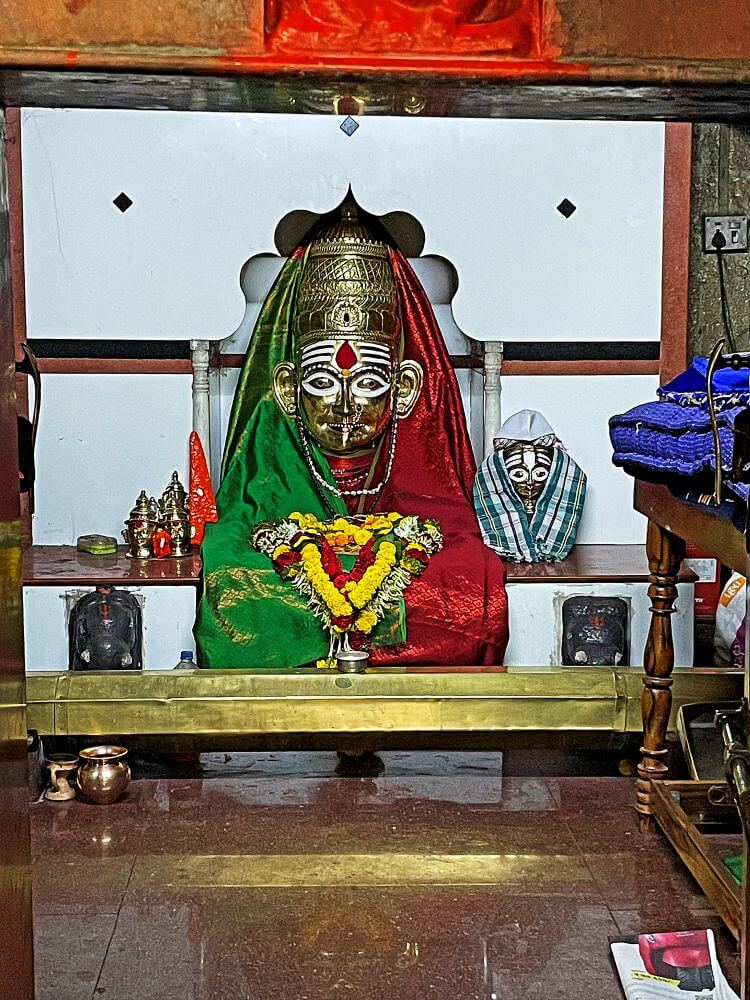
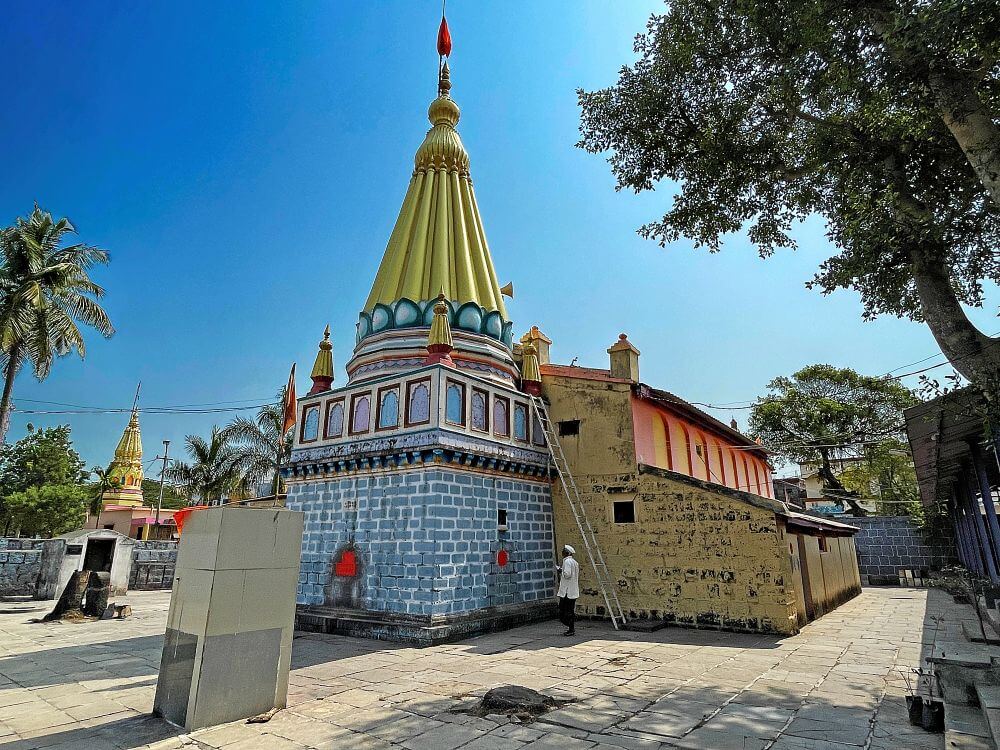
Further ahead, on the doorjambs of the sanctum sanctorum entrance, there are floral carvings, and an idol of Lord Ganesha is placed on the lalatabimba (lintel). At the base of the doorjamb, there is a kirtimukha. Outside the sanctum, to the left, are the idols of Ganesha, Maruti, and Vitthal-Rukmini, and to the right is a Shivling. Inside the sanctum, the idol of Goddess Kalamma is placed on a vajrapitha. The idol is adorned with a brass mask and fine garments and ornaments. Next to the idol is a large silver mask. The roof of the sanctum features a parapet, four small spires at the four corners, and a tall, tapering spire in the center. The spire is adorned with a lotus flower motif.
In front of the temple, there is a spacious assembly hall (sabhamandap) with a corrugated metal roof. Many religious and social events are celebrated here. Annual festivals such as Chaitra Padwa, Navratri Utsav, and Dussehra are observed at the temple. On Chaitra Padwa, the Panchang reading and the Bhaknuk (a traditional ritual of expressing predictions or forecasts) take place. On the day of Dussehra, the Goddess’s palanquin is taken in a procession to the nearby forest amidst the sound of Dhol-Tasha drums and the showering of gulal. During this time, the deities from all the surrounding villages arrive in palanquin processions to meet one another. The entire area resonates with the sound of 50 to 60 Dhangari drums. On the last Monday of Shravan, the Goddess’s palanquin is taken to Balkoba on the banks of the Krishna River to meet the deity.
This sacred temple stands as a testament to deep spiritual devotion, ancient architectural grandeur, and rich local cultural traditions.
The sanctum sanctorum houses the divine idol consecrated according to ancient Vedic traditions, surrounded by serene courtyards and traditional temple architecture.
Navratri, Maha Shivratri, Annual Temple Jatra & Deepotsav
Compare and book flights, secure top-rated local hotels near the temple, hire reliable guides, and rent cars instantly.
Extend your pilgrimage by visiting other highly sacred temples located nearby.
Add ₹999 more to unlock FREE SHIPPING!
Your sacred cart is currently empty.
Shop Photo FramesFill in your delivery details below to place your order.
Add comment