
Add ₹999 more to unlock FREE SHIPPING!
Your sacred cart is currently empty.
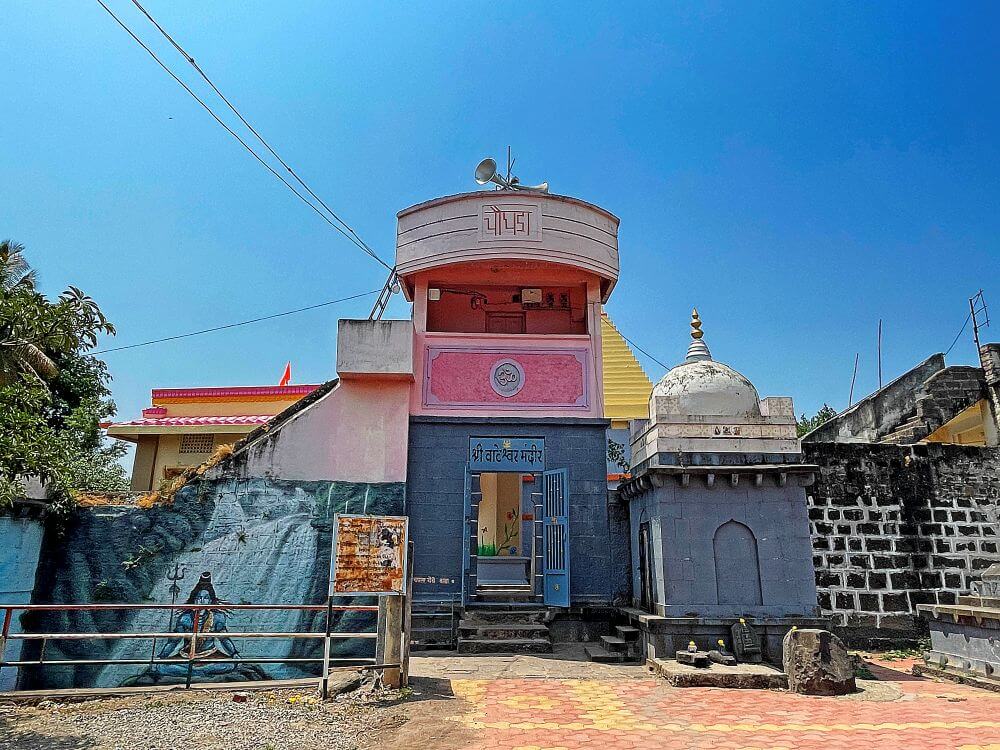
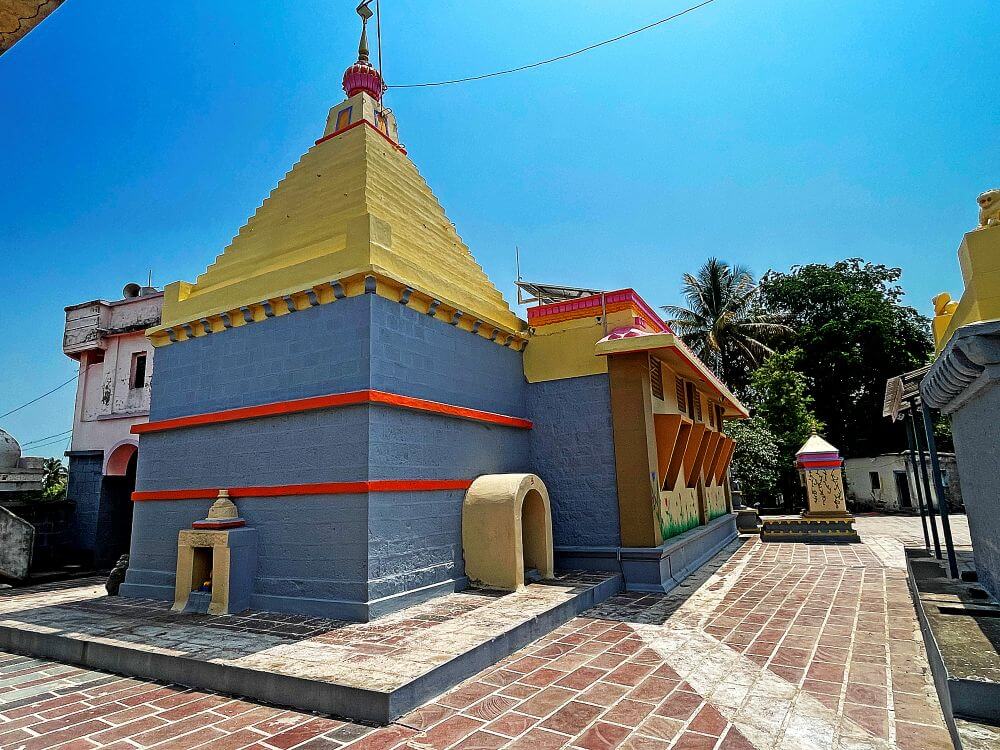
Shop Photo FramesSituated on the banks of the Bhogawati River, the ancient Vateshwar Mahadev Temple in Vategaon is renowned for its tradition of Kiranotsav (the festival of sun rays). Vateshwar is the presiding deity of Vategaon. According to local legend, the Shiva Linga in this temple was consecrated by the great yogi Changa Vateshwar. The Shiva Linga is shaped like a bowl (vati), hence it is called Vateshwar, and the village derived its name, Vategaon, from this. Built in the Hemadpanti architectural style, the temple has recently been renovated. Devotees believe that the presence of Vateshwar here is spiritually awakened.
According to the temple’s legend, the area along the Bhogawati River where the temple stands was once a sandy wasteland. A sage used to daily fashion a Shiva Linga out of sand, worship it, and immerse it in the river afterward. Once, he decided to leave the village. On that day, he fashioned and worshipped the Linga as usual, but when it was time for immersion, the Linga would not budge. Eventually, the sage departed without immersing it. The Linga that remained there was bowl-shaped. It is said that this sage was the great yogi Changa Vateshwar. Because he consecrated it, the Linga was named Vateshwar, which later evolved into the name Vateshwar.
Traditional hagiography states that the great yogi Changdev, also known as Changa Vateshwar, was once proud of his spiritual powers, which were humbled by Saint Dnyaneshwar when he made a wall move. Later, he became a disciple of Saint Muktabai. Notably, the great saint Visoba Khechar referred to Changa Vateshwar as his supreme guru in his work ‘Shatsthala’. Changa Vateshwar composed Abhangas, and his work ‘Tattvasar’ is well-known. According to a mention in this text, it was composed at Harishchandragad on Margashirsha Shukla 13, Sunday, Shake 1234 (1312 CE). The origin of the great yogi Changdev is unknown, but he first appeared at a village named ‘Changdev’ near the confluence of the Tapi and Payoshni rivers, located near Edlabad in the Jalgaon district. According to texts like ‘Bhaktavijaya’ and ‘Bhaktalilamrut’, Changdev used to perform penance in the forest near the village with his physical eyes closed, daily worshipping a self-fashioned earthen Linga. Two merchants from the nearby village of Varangaon were his disciples. Through Changdev’s grace, their business flourished, leading to arrogance. Once, when Changdev asked them to prepare an earthen Linga, they collected sand from the river and placed Changdev’s ghee bowl upside down over it. Changdev worshipped that very Linga. After worship, when he sat down to eat, he asked for his bowl. The disciples rushed to the river to retrieve it, but it would not move. Terrified, they begged for their guru’s forgiveness. This Linga later came to be known as Vateshwar. Although this event occurred at the village of ‘Changdev’, it has been incorporated into the local legends of Vategaon. Statues of Changdev have been installed in a small dome in the temple courtyard and in the main hall to keep his memory alive.
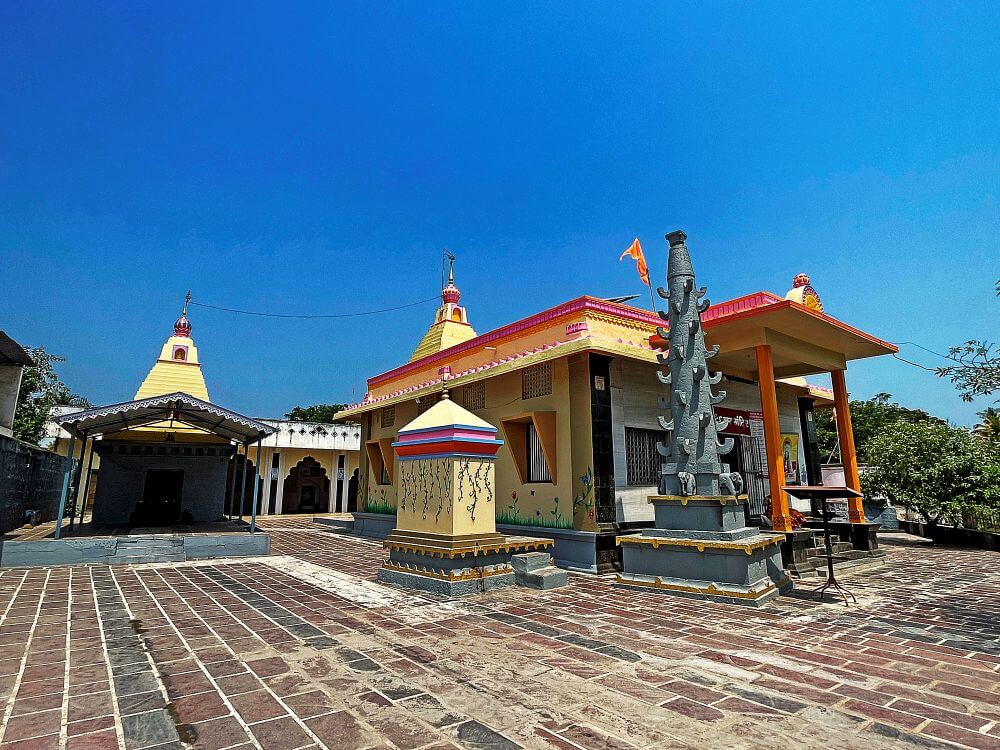
In the temple premises, there are two beautiful ghats facing each other, with a small bridge between them to cross the river. The east-facing temple is situated on the bank of the western ghat. The temple has a fort-like perimeter wall, which includes turret-like structures for hoisting flags. Descending a few steps from one of these turrets leads to a small space with a door approximately two feet in length and width. This is the meditation chamber (Dhyan Mandir). This underground meditation chamber is a unique feature of the temple.
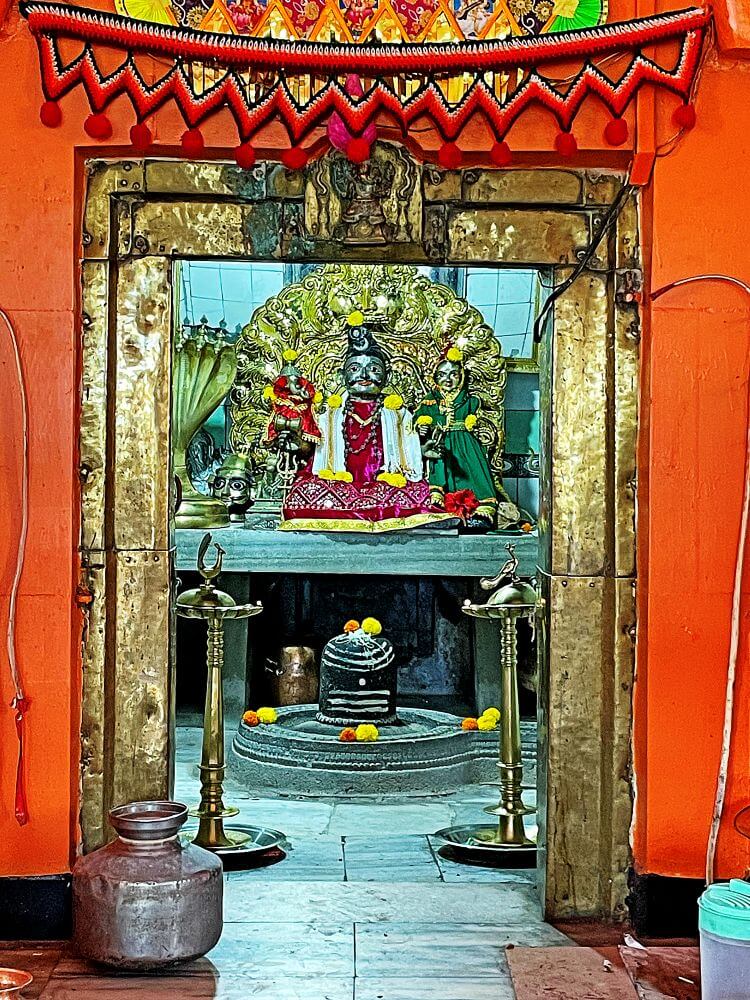
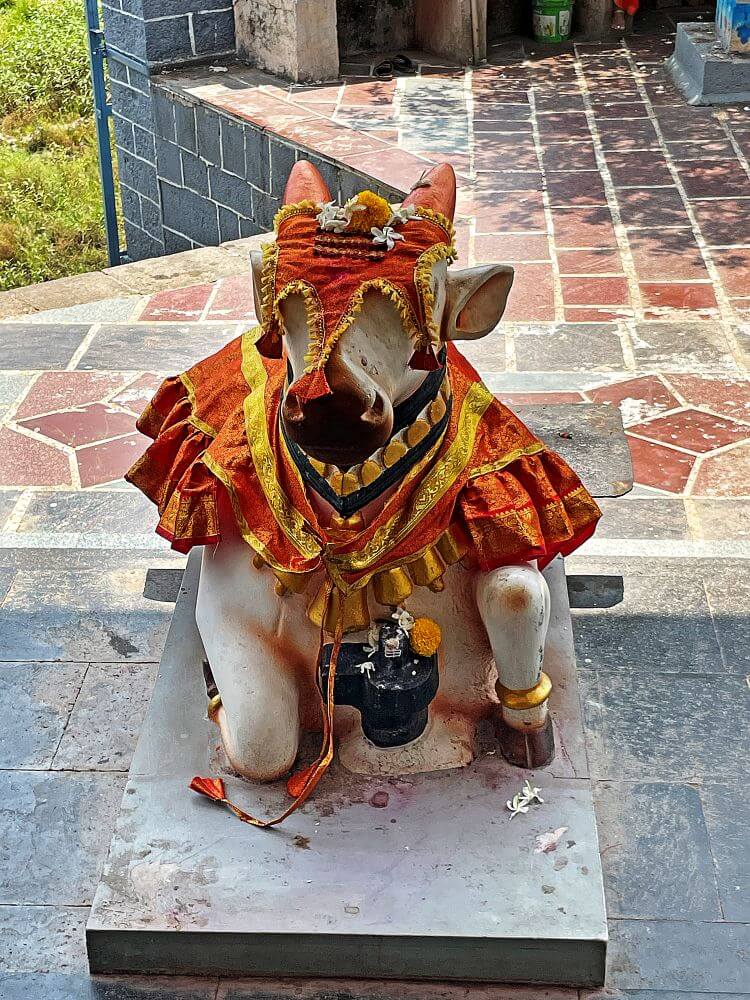
In front of the main temple stands a Tulsi Vrindavan and an ancient lamp tower (Deepmal). Four elephant sculptures at the base of this lamp tower give the impression that it is being held up by elephants. The temple structure consists of a porch (Mukhamandap), a main hall (Sabhamandap), an intermediate chamber (Antaral), and the sanctum sanctorum (Garbhagriha). In the center of the porch, there is a statue of Nandi on a pedestal. The door frames of the main hall are intricately carved, and there is a Ganesha idol on the lintel. The main hall is enclosed and features windows for air and light. In the intermediate chamber, on the front wall of the sanctum, there is an idol of Changdev in the left niche and an idol of Hanuman in the right. The door frame of the sanctum is covered with ornate brass sheets, and there is a Ganesha idol on the lintel. Inside the sanctum, there is a Shiva Linga and behind it, on a Vajra-pedestal, is the idol of Vateshwar. A Kirtimukh is carved on the halo behind this idol.
During the Kiranotsav, sun rays travel forty feet from the entrance of the main hall to fall directly onto the Shiva Linga in the sanctum. This ceremony is held in only a few select temples in Maharashtra, and this temple is one of them. The festival usually takes place over five days in the month of March, drawing thousands of devotees.
In the temple courtyard, there are separate shrines for Ganesha and Mahadev. In front of the Mahadev temple, there are three ancient Nandi statues. Near the Gomukh, from where the sacred water (Abhishek Tirtha) flows out, there are several ancient sculptures. Notable among these are a woman holding a small child and a Vishnu-like figure. It is said that one of these is likely Goddess Parvati and Lord Kartikeya. In such sculptures, Goddess Parvati (Uma) is often seen seated with Lord Kartikeya (Skanda) or Ganesha on her lap. The other is a standing idol of Vishnu, holding a conch, discus, mace, and lotus. There are two other female sculptures as well.
The wedding of Shiva and Parvati is celebrated in this temple during the Mrig Nakshatra. A large fair is held for Vateshwar on Tripurari Purnima. Festivals also continue from Kojagiri Purnima to Kartik Purnima.
This sacred temple stands as a testament to deep spiritual devotion, ancient architectural grandeur, and rich local cultural traditions.
The sanctum sanctorum houses the divine idol consecrated according to ancient Vedic traditions, surrounded by serene courtyards and traditional temple architecture.

Navratri, Maha Shivratri, Annual Temple Jatra & Deepotsav
Compare and book flights, secure top-rated local hotels near the temple, hire reliable guides, and rent cars instantly.
Extend your pilgrimage by visiting other highly sacred temples located nearby.

Add ₹999 more to unlock FREE SHIPPING!
Your sacred cart is currently empty.
Shop Photo FramesFill in your delivery details below to place your order.
Add comment