
Add ₹999 more to unlock FREE SHIPPING!
Your sacred cart is currently empty.
Shop Photo FramesThe Ram Mandir/Ramteerth of Ajara is situated in a picturesque environment, surrounded by dense forests, near the flowing stream of the Hiranyakeshi river, which originates near Amboli in the Sindhudurg district, and the waterfall created by the force of its waters carving through the rocks. According to mythological legends, this area has been sanctified by the touch of Lord Ramachandra’s feet. Hence, this temple is known as Ramteerth. It is said that this temple is approximately ۴۰۰ years old. There is a Dattatreya temple located very close to this temple. It is believed that many sages and saints have performed penance at this Ramteerth.
The legend of this temple states that when Lord Shri Ram, Sita, and Lakshman were in exile, they resided for some time in the area where the temple now stands. At that time, the Hiranyakeshi river was in severe flood. Water was everywhere in the surroundings, causing harm to many living beings. Then, all the animals of this forest requested Shri Ram to stop this great flood. At that moment, Shri Ram placed a massive boulder on the riverbank and set a limit for the Hiranyakeshi river. It is said that even today, no matter how high the flood rises, the Hiranyakeshi does not cross the threshold of the Ramteerth temple’s steps. Over time, Shri Ram appeared in a dream to a devotee from Nashik, and following that divine command, he built this temple here.
The premises of this temple, standing near the riverbed of the Hiranyakeshi in the forest area of Ajara, have an iron entrance gate. The temple is located a short distance from there. In the courtyard in front of the temple, there is a tin-roofed pavilion. There is a Tulsi Vrindavan here. This octagonal Vrindavan, standing on a circular base, features images of various deities. Next to the Tulsi Vrindavan is a Yajna Kund. The temple structure is two-storied and built of carved stone. The assembly hall (Sabhamandap) of the temple has a wooden entrance. Its door frames are adorned with intricate carvings. On both sides of the entrance, there are small niches for lamps.
In the assembly hall, there are two rows of three wooden pillars each. The pillars rest on square stone bases. The stone base at the bottom protects the pillars from termites and water. Above the pillars are beams and a wooden ceiling. There are doors on the right and left sides to exit the assembly hall. This enclosed hall has many windows for light and ventilation. On the left side of the assembly hall, against a wall, is a large stone idol of Hanuman, depicted with one hand raised holding a mace and the other hand holding the hair of a demon beneath his feet. Portraits of saints and great souls such as Sant Dnyaneshwar, Samarth Ramdas, Brahmachaitanya Gondavalekar Maharaj, Shri Siddharudha Maharaj, Mahant Jayaramdas Maharaj, Kripalu Maharaj, and Dattabhakta Sadguru Harikaka are displayed here.
Further ahead, at a slightly higher level, is the sanctum sanctorum (Garbhagriha) of the temple, which has four ornate, circular wooden pillars. The pillars of the sanctum are connected to each other by arched gateways. In the upper part of the pillars, within ornate niches, there is an image of Shri Ram-Sita-Lakshman and Hanuman in the center. On one side of it are pictures of the mace-bearing Hanuman and on the other side, the Panchmukhi Hanuman. In front of the entrance to the sanctum, on a silver pedestal placed on a marble platform, is a picture of the Shri Ram family for worship.
Inside the sanctum, there is a large stone Vajrapeeth (throne). On the pillars beside it are idols of door guardians (Dwarapalas). On the Vajrapeeth are carved marble idols of Shri Ram, Lakshman, Sita, and Hanuman. Usually, Hanuman’s idol is in a salutation posture in front of Shri Ram. However, in this temple, Hanuman is placed in the same row as Shri Ram-Lakshman-Sita. On the crescent-shaped halo behind these idols, there is a sun in the center and leaf-vine carvings on both sides. Beside the halo is an idol of Ganesha. In front of the main idols on the Vajrapeeth, there are brass masks of Hanuman and Shri Ram, as well as small brass idols of various gods and goddesses. Below the Vajrapeeth, there is also a large stone idol of Hanuman. There are some vermilion-smeared round stones here. In one corner of the sanctum, there is an idol of Mahalakshmi.
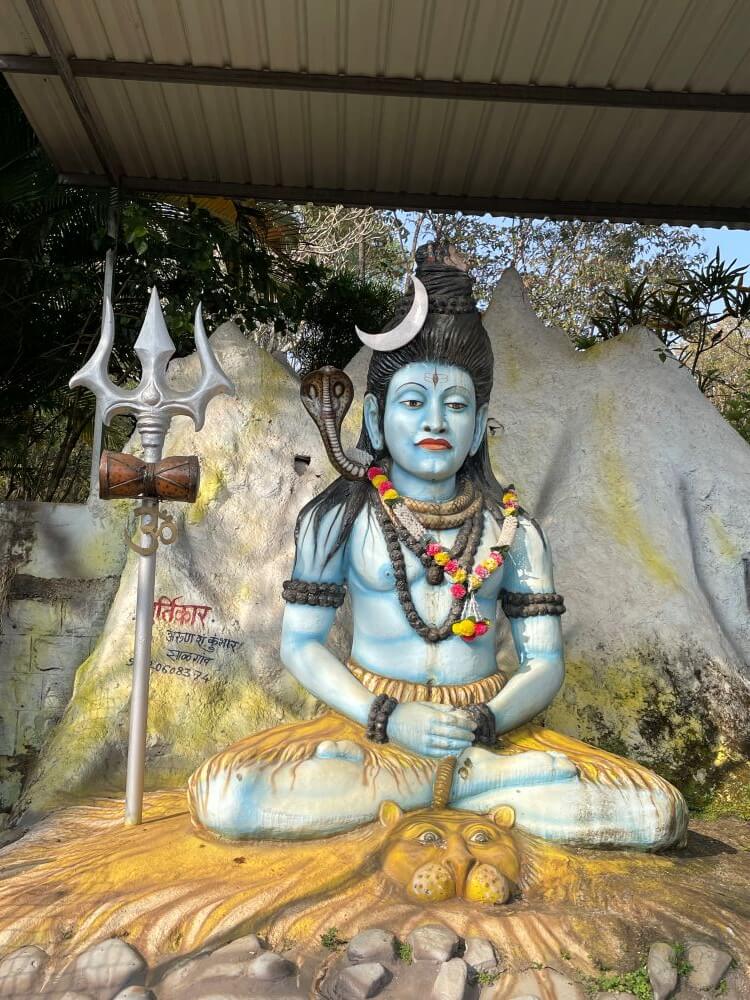
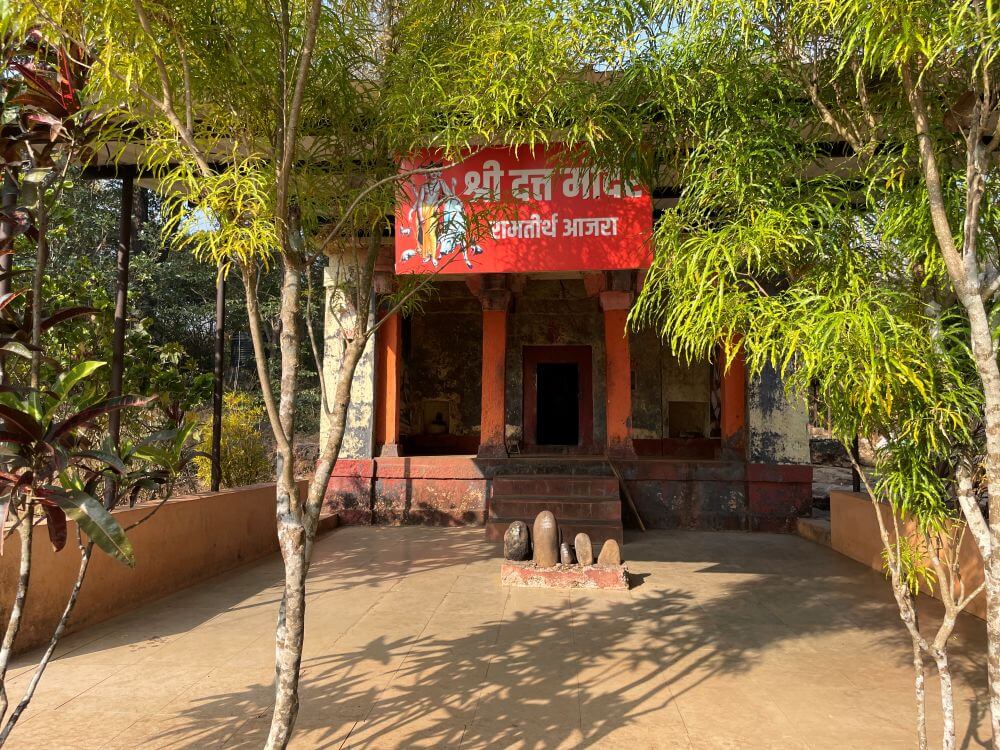
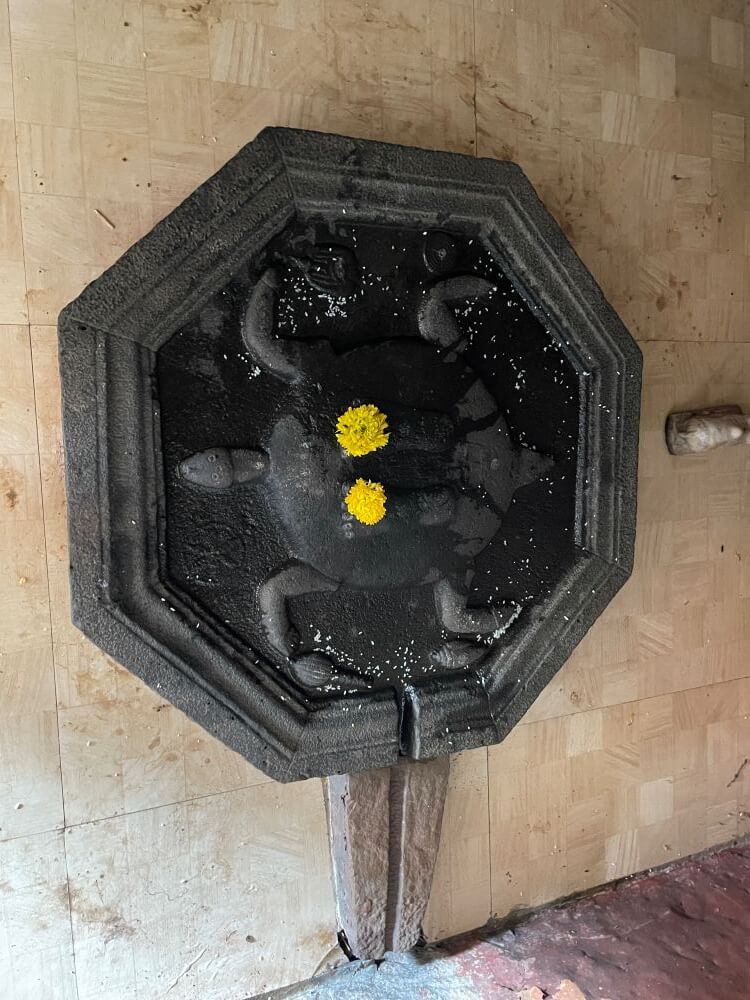
Next to the main temple is the Maruti temple. At the entrance of this temple, there are monkey idols in the form of door guardians on both sides. The door frames are decorated with carvings. Inside the temple is an idol of Hanuman in a warring posture, striking a demon with a mace. The spire of the temple is decorated with artistic carvings. Outside the temple, there are many stones bearing the footprints of Shri Ram. On a rock nearby, there is a unique, approximately ६-foot-tall idol of Lord Shiva in a meditative state. Beside the idol are a trident and a drum (Damaru). Behind this idol, Mount Kailash has been depicted. A short distance from here is an ancient temple of Dattatreya in the Hemadpanti style. In the temple courtyard, there are stones of various deities. In the center of the temple, there is a tortoise idol carved in octagonal stone, and in the front niche, there is a Shiva Linga. On the wall, there is a large image of Dattatreya.
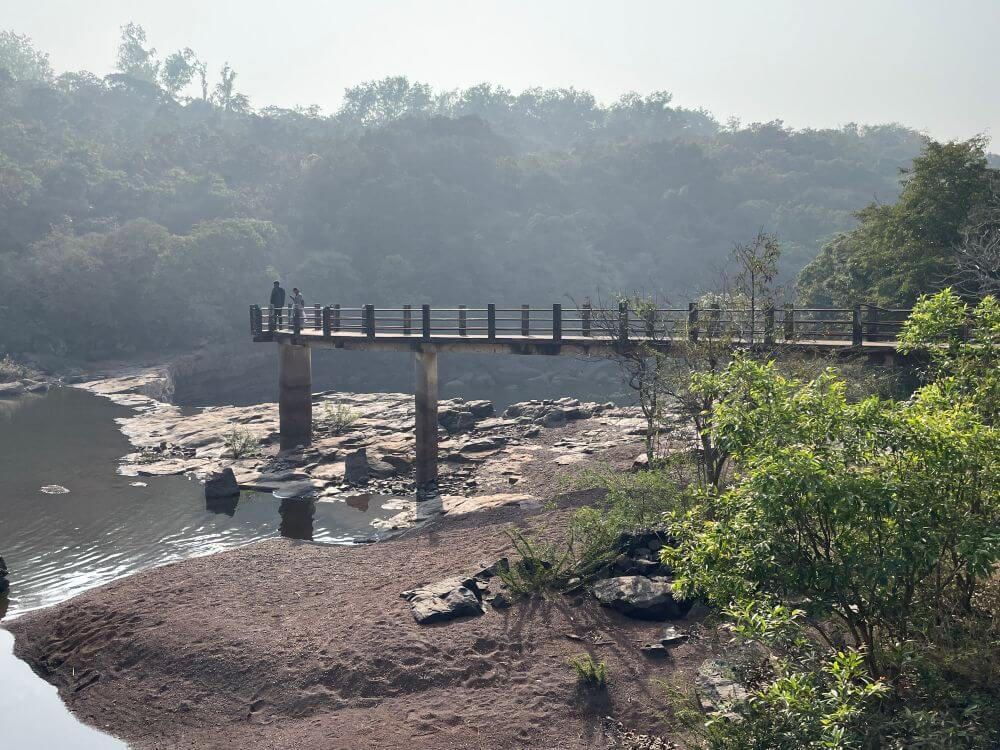
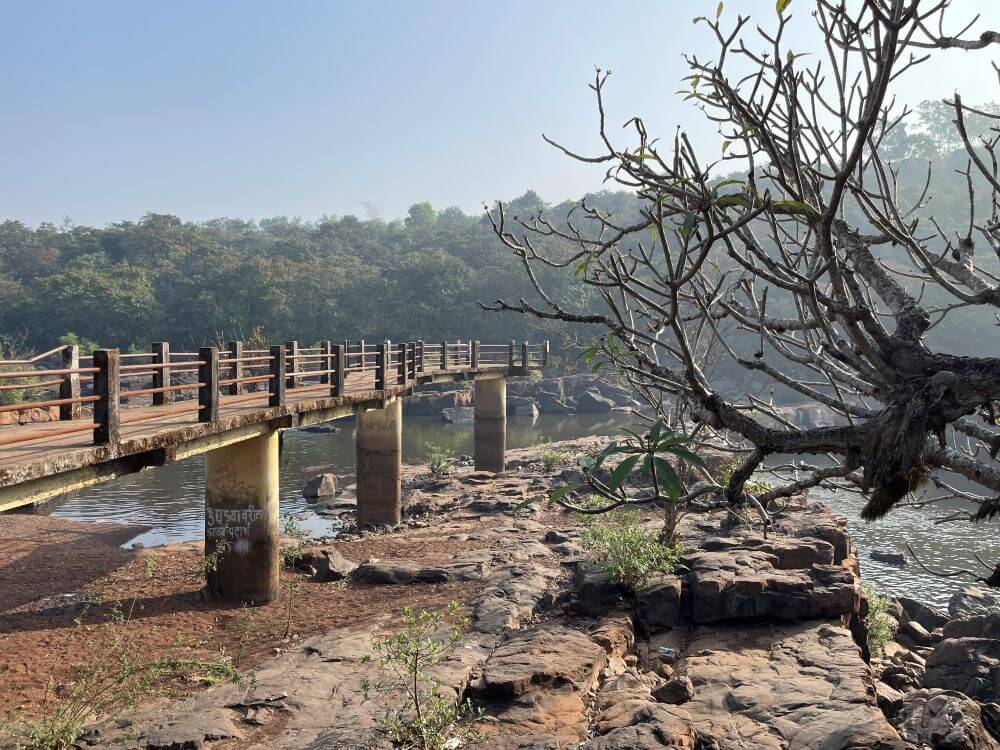
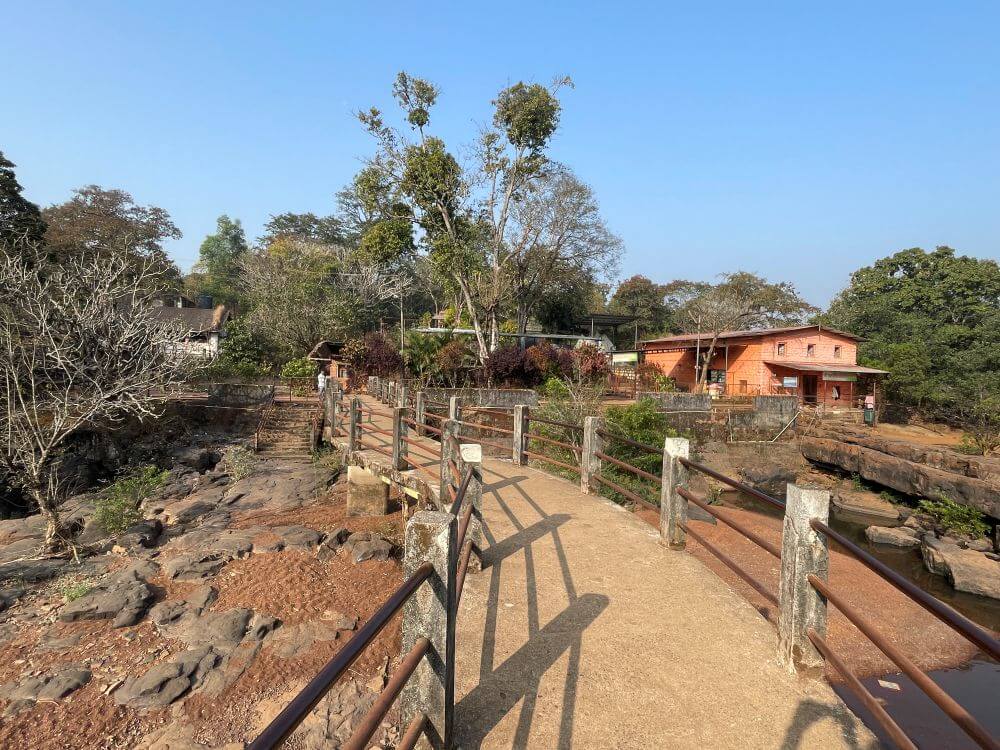
Since the Ramteerth Kund and Ramteerth waterfall in front of the temple are famous as tourist spots, there is a constant flow of tourists as well as devotees coming for darshan. The beauty of the temples is further enhanced by the surrounding greenery and the gurgling water. During the monsoon, this river flows bank-to-bank. A bridge has been built over this river from the temple to the Kund for devotees to visit the Ramteerth Kund located in the riverbed. This bridge makes it possible for devotees and tourists to reach the Ramteerth Kund in the riverbed and perform rituals.
Annual festivals like Ram Navami, Dussehra, Diwali, Hanuman Jayanti, and Datta Jayanti are celebrated in the temple. This is a spiritually awakened place, and devotees have faith that the deity fulfills their prayers. Therefore, thousands of devotees come for the darshan of the deity during the annual festivals. Ajara in Kolhapur district is the birthplace of ‘Mrityunjay’ author Shivaji Sawant. This novel, written by Shivaji Sawant based on the character ‘Karna’ from the Mahabharata, became immensely famous. In September ۱۹۹۵, the ‘Bharatiya Jnanpith’ organization announced the Moortidevi Award for this book. He became the first Marathi writer to be honored with this award.
This sacred temple stands as a testament to deep spiritual devotion, ancient architectural grandeur, and rich local cultural traditions.
The sanctum sanctorum houses the divine idol consecrated according to ancient Vedic traditions, surrounded by serene courtyards and traditional temple architecture.
Navratri, Maha Shivratri, Annual Temple Jatra & Deepotsav
Compare and book flights, secure top-rated local hotels near the temple, hire reliable guides, and rent cars instantly.
Extend your pilgrimage by visiting other highly sacred temples located nearby.


Add ₹999 more to unlock FREE SHIPPING!
Your sacred cart is currently empty.
Shop Photo FramesFill in your delivery details below to place your order.
Add comment