
Add ₹999 more to unlock FREE SHIPPING!
Your sacred cart is currently empty.
Shop Photo FramesThe Ajara taluka in Kolhapur district, blessed by the holy touch of Chhatrapati Shivaji Maharaj and rich in historical heritage, serves as a bridge between the Ghatmatha (mountain range) and the Konkan region. This area is blessed with lush greenery and biodiversity. Many animals, birds, and butterflies residing in its forests have been declared as protected species. Along with its natural splendor, this taluka is also famous for many ancient temples. One of them is the 13th-century Jomkai Devi Temple, a place of deep faith for thousands of devotees in the district. Devotees believe that this folk deity grants their prayers.
The abode of Jomkai Devi is situated on a high hill near Uttur village. The legend associated with it is that many years ago, a Gurav woman from the village used to go up the hill every day to worship Jomkai Devi. However, as she grew older, it became difficult for her to climb the hill, so she requested the Goddess to come down to the foothills. Pleased by the woman’s devotion, the Goddess accepted her request, but on the condition that the woman must walk ahead without looking back, and the Goddess would follow her. As they were walking, when they reached the spot where the temple currently stands, the woman looked back out of curiosity, and thus the Goddess became fixed there in the form of an idol. The woman then requested the Goddess to grant her a place at her feet. The Goddess accepted her request, and even today, this woman remains at the feet of the Goddess in the form of a stone.
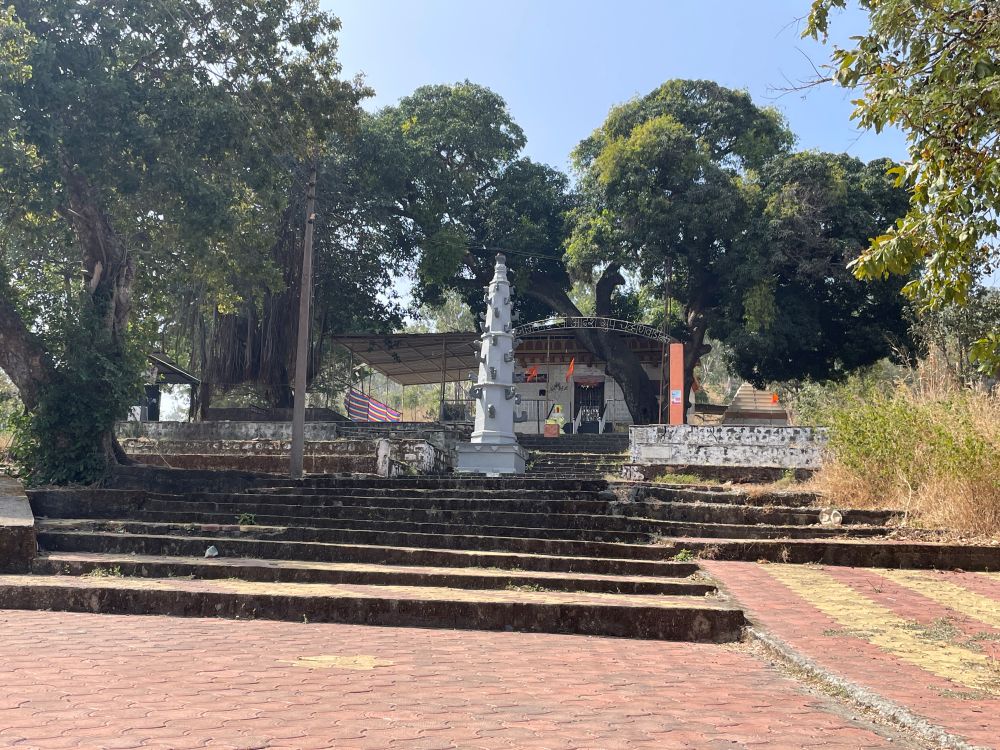
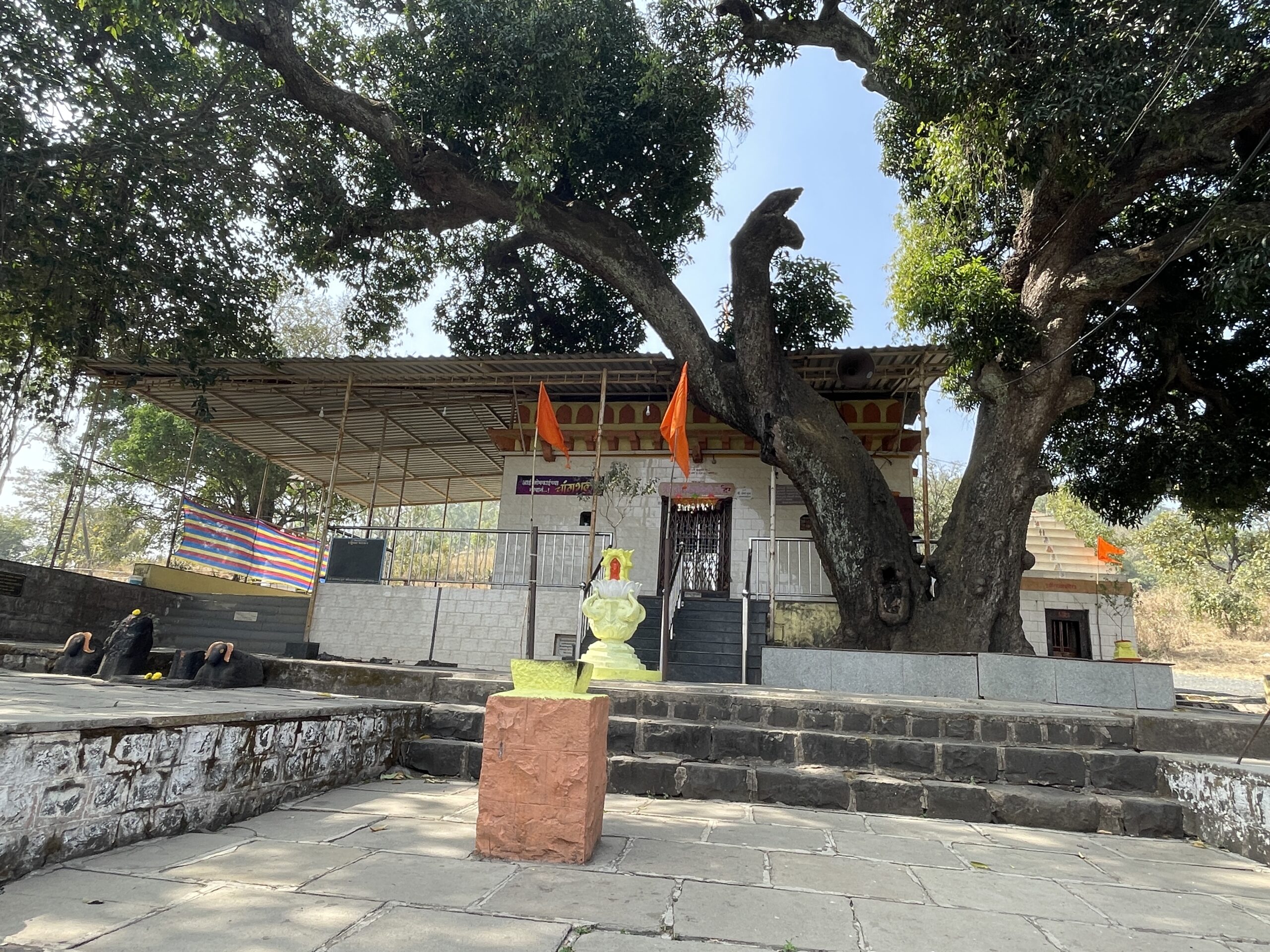
There is a stone stairway leading to this temple, which is located on the border of Uttur village. While ascending, the first thing that catches the eye is a five-tiered stone lamp pillar (Deepmal) on a large platform in front of the temple. This octagonal lamp pillar tapers as it goes up and has separate brackets for lighting the lamps. A unique feature here is that many of these brackets are carved with various animals and ‘Keechaka’ (mythological figures) sculptures. During the annual festival of the Goddess, the Deepotsav is celebrated by lighting lamps on this pillar. After climbing a few steps from the lamp pillar, one enters the temple courtyard. In the courtyard, in front of the temple, there is a Tulsi Vrindavan and an ancient tree. It is said that this tree has been here since the establishment of the temple. To the right, there are some stones and stone sculptures of sheep. Climbing seven more steps leads to the temple porch. The temple, which consists of a compact assembly hall (Sabhamandap) and a sanctum sanctorum (Garbhagriha), is built entirely of dressed stone in the Hemadpanti style. However, during renovations, marble tiles were placed on the outer walls, obscuring its ancient appearance. Once inside, however, its Hemadpanti construction becomes clear.
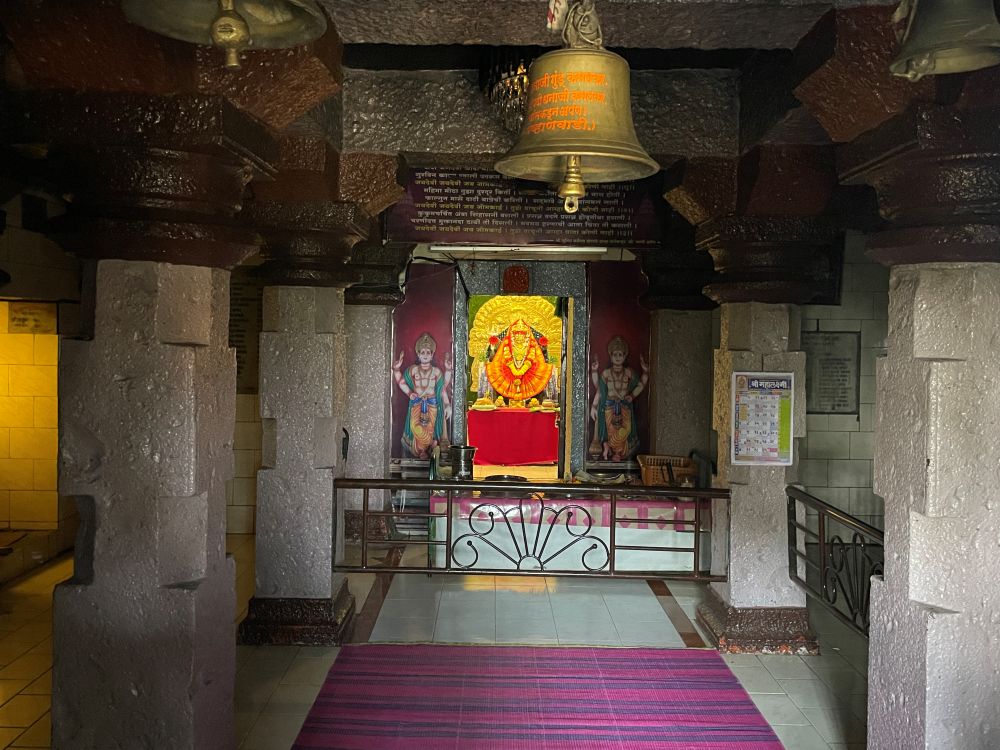
There are two steps to enter the assembly hall, which is at a higher level than the porch. The door frames of the hall are decorated with floral carvings, and there is an image of Lord Ganesha on the lintel. The enclosed assembly hall has four rows of three pillars each. The pillars in the two middle rows follow the medieval Maratha architectural style, being square at the base, hexagonal in the middle, and square again at the top. Above the pillars are stone capitals and ornate brackets, which support the beams. A hexagonal dome is created by stacking stones on the beam between the middle pillars. The pillars in the side rows are cylindrical, topped with capitals, brackets, and beams that support the stone roof. The floor between the middle pillars is a few inches lower, similar to the temple architecture of the Konkan region. In the center of this assembly hall, there is a tortoise (Kurma) idol.
The door frames of the sanctum sanctorum are adorned with intricate carvings. There are images of gatekeepers (Dwarapalas) on both sides of the entrance and a Ganesha idol on the lintel. Inside the sanctum, on a Vajrapitha, stands the approximately three-foot-tall, four-armed idol of Jomkai Devi made of black stone. In one hand, the Goddess holds a sword, in the second a trident (Trishul), in the third a shield, and in the fourth, a demon’s head. The Goddess is standing with her feet on the body of a demon. The garments and ornaments on the idol are carved with great detail. The halo (Prabhaval) behind her features a five-hooded serpent, with elephants on both sides and floral carvings around. There is a Kirtimukh at the top of the halo. Due to the unique east-facing design of this temple, the morning sun rays fall directly on the face of the Goddess on certain days of the year. The ceiling of the sanctum is built in a circular dome shape by stacking stones. To the right of the Goddess is a stone representing the Gurav woman, the devotee of the Goddess. To the left is the idol of Bhaveshwari Devi.
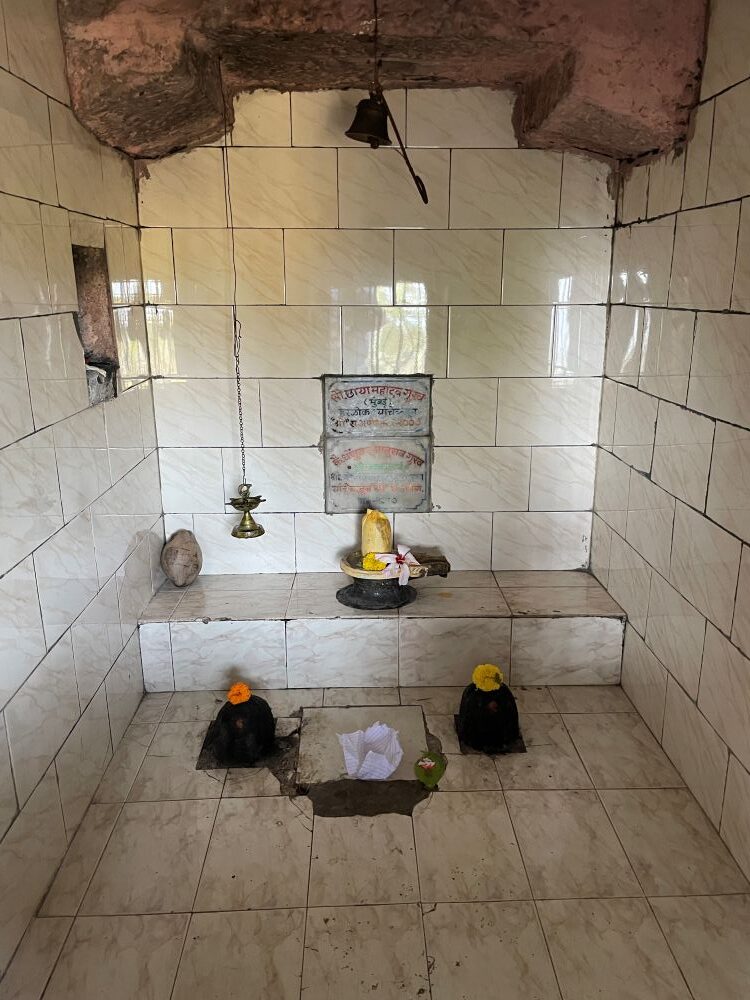
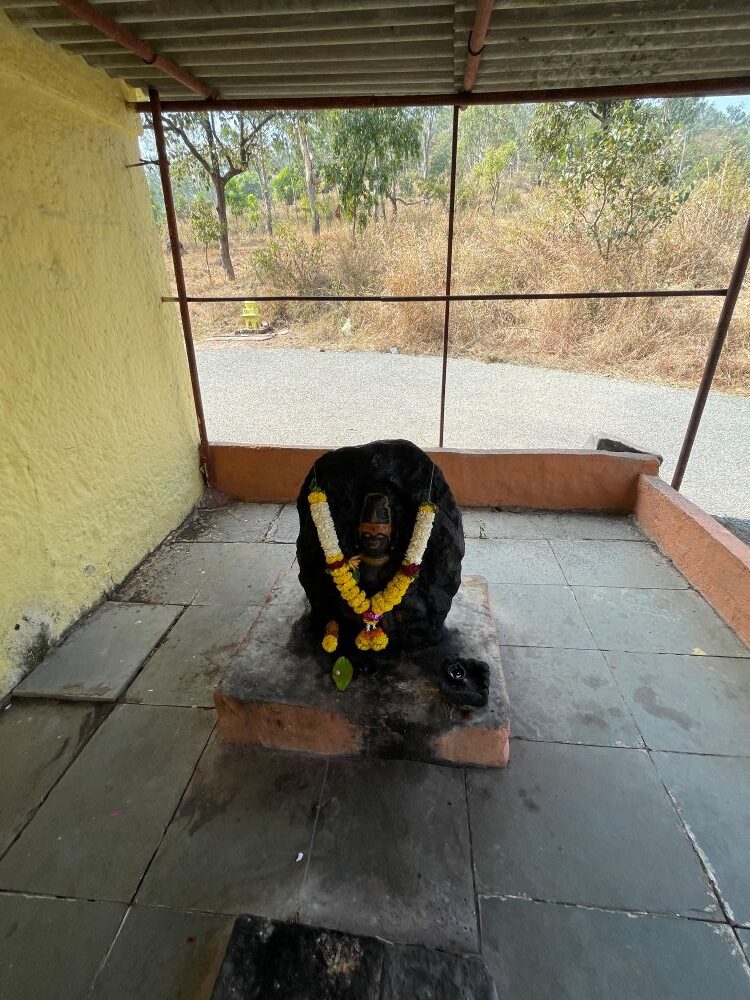
The main spire (Shikhara) of the temple is built by stacking 21 layers of stone, topped with an Amalaka and a Kalash. Four smaller spires with Amalakas are placed at the corners of the roof on all four sides of the main spire. A small temple of Lord Shiva next to the main temple is known as the ‘Basavanna Mahadev Temple’. The sanctum of this temple houses a Shiva Linga, and there is a black stone idol of Nandi outside. Behind the temple is a stone dedicated to Navdurga Devi.
Annual festivals like Chaitra Navratri, Diwali, and Mahashivratri are celebrated here with great enthusiasm. During the Sharadiya Navratri festival, a massive crowd of devotees gathers for ten days to seek the blessings of the Goddess. The annual fair (Jatrotsav) of the Goddess is celebrated with great fervor on Holi Purnima, i.e., Phalgun Purnima. On this day, the Goddess’s palanquin is taken in a procession from Uttur village to Chavanwadi and from there to the Goddess’s hill. After the traditional honors are offered to the Goddess, the palanquin returns to Uttur village. Thousands of devotees from the district attend this ceremony, offer prayers, and fulfill their vows. On this occasion, offerings are made to the Goddess.
A short distance from this temple, in Bhadgaon of Gadhinglaj taluka, is the Guddayi Devi temple, and in Shendur village is the Rasai Devi temple. Devotees believe that Jomkai, Guddayi, and Rasai are three sisters. It is said that the three hills where these temples are located are of equal height and the aerial distance between these temples is also the same.
This sacred temple stands as a testament to deep spiritual devotion, ancient architectural grandeur, and rich local cultural traditions.
The sanctum sanctorum houses the divine idol consecrated according to ancient Vedic traditions, surrounded by serene courtyards and traditional temple architecture.

Navratri, Maha Shivratri, Annual Temple Jatra & Deepotsav
Compare and book flights, secure top-rated local hotels near the temple, hire reliable guides, and rent cars instantly.
Extend your pilgrimage by visiting other highly sacred temples located nearby.


Add ₹999 more to unlock FREE SHIPPING!
Your sacred cart is currently empty.
Shop Photo FramesFill in your delivery details below to place your order.
Add comment