
Add ₹999 more to unlock FREE SHIPPING!
Your sacred cart is currently empty.
Shop Photo FramesIn the city of Karveer, which is the abode of the Primordial Shakti Goddess Mahalakshmi—one of the three and a half Shakti Peethas—there are four guardian deities stationed in the four cardinal directions. These are: Ujjwalamba (Ujalai Devi) in the east, Jyotiba in the north, Katyayani Devi in the south, and the Siddha Batukeshwar temple in the west. The ‘Shri Karveer Mahatmya’ explicitly mentions in its seventh chapter, “Siddha Batukeshwar in the west.” This temple is situated on a high hill in the Chambukhadi area of Shinganapur. Devotees believe that the Ganesha here fulfills all wishes.
The glory and legends of this site are recorded in the text ‘Shri Karveer Mahatmya’. This text was written by Dajiba Joshirao between the years 1821 and 1832, a period following the end of the Peshwa rule and the beginning of British governance. Its 48th chapter describes the battle between Siddha (Ganesha) and Batukeshwar (Bhairavnath) against the demon Kolhasur. Sage Agastya and his wife Lopamudra visited the city of Karveer while traveling across India. They visited all the holy sites and temples here. At each place, Lopamudra would narrate the legend of that site to Sage Agastya.
The legend of the Siddha Batukeshwar temple states that the demon Kolhasur once ruled this region. He had appointed demons as his representatives in all four directions. When the Primordial Mother Mahalakshmi slew Kolhasur, she called upon Ganesha and Batuk Bhairav to defeat Raktaksha, the commander of Kolhasur’s army, who was stationed on the western path. Both reached the site with their respective armies. Raktaksha cast a spell of enchantment (Mohini) on Batuk Bhairav, but it had no effect on him, and Raktaksha was forced to accept defeat. Ganesha, however, used his Siddhi (spiritual power) and Buddhi (intellect) to decapitate Raktaksha and emerged victorious. Delighted by the surroundings, Ganesha decided to stay there. Since then, Ganesha in his Siddha form and Batuk Bhairav have resided there permanently. Batuk Bhairav is considered a deity of the Shiva Ganas and the child form of Kalbhairav.
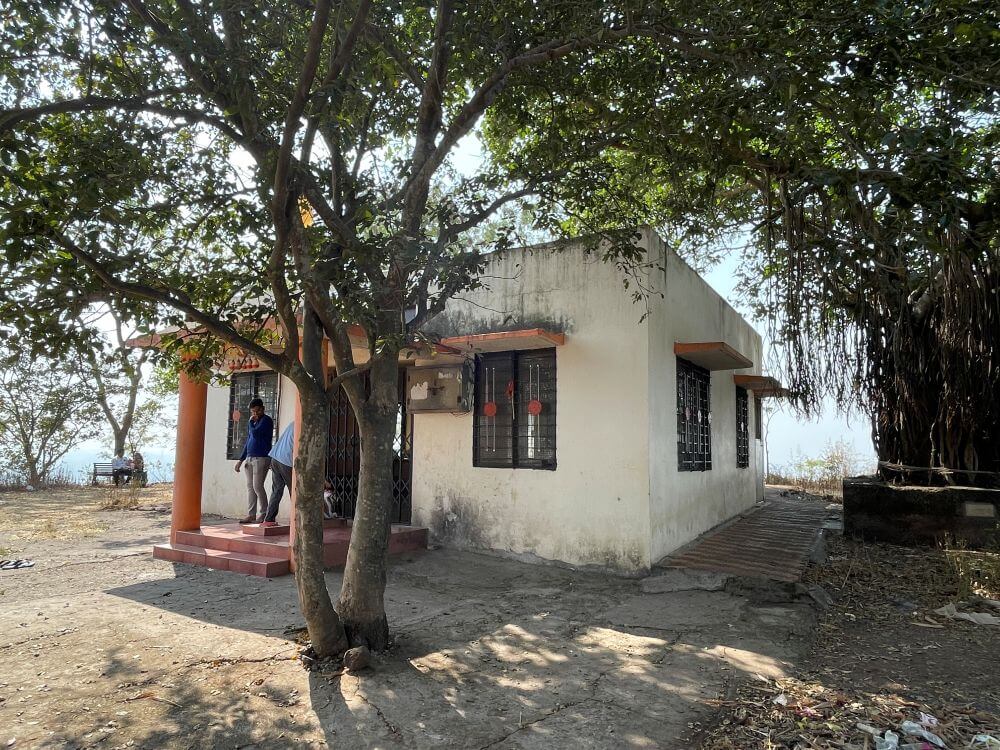
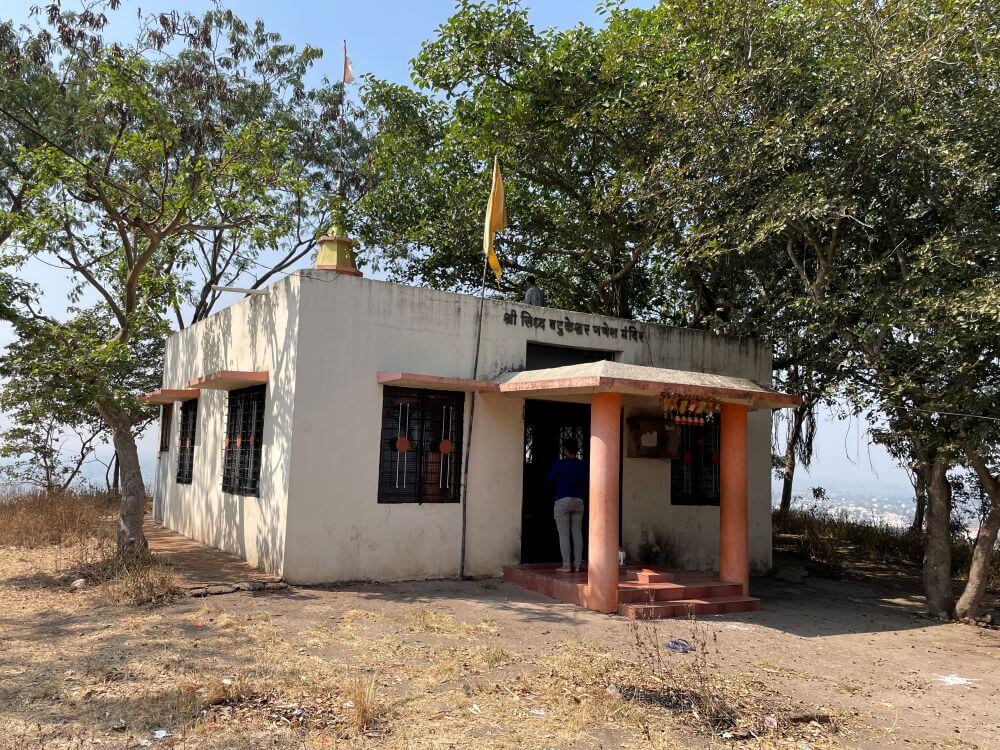
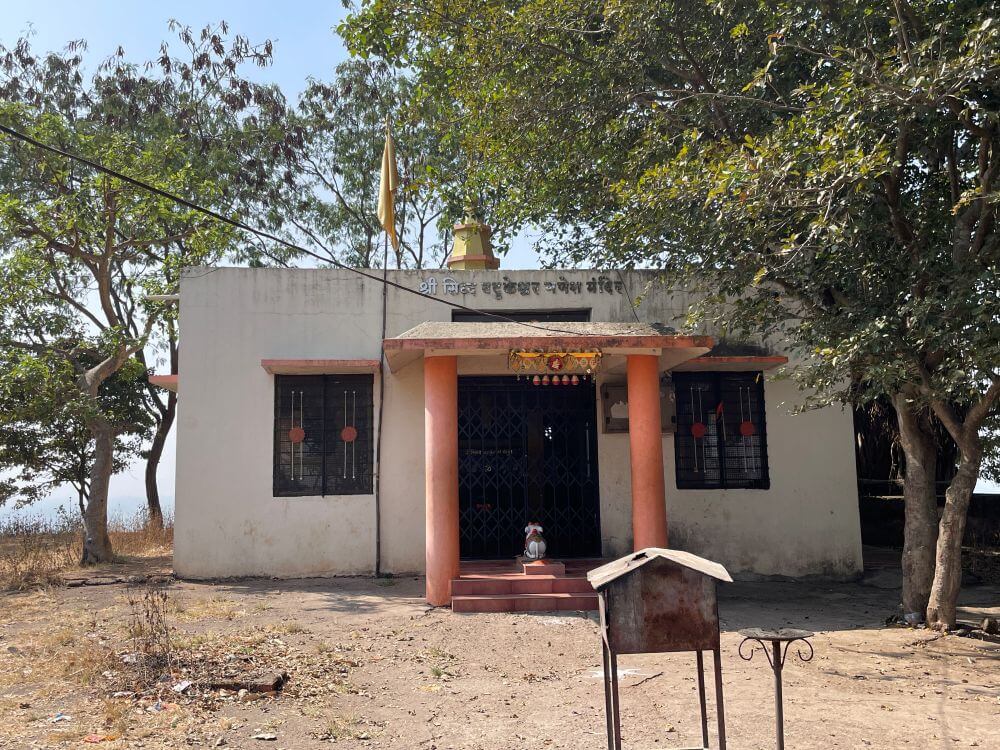
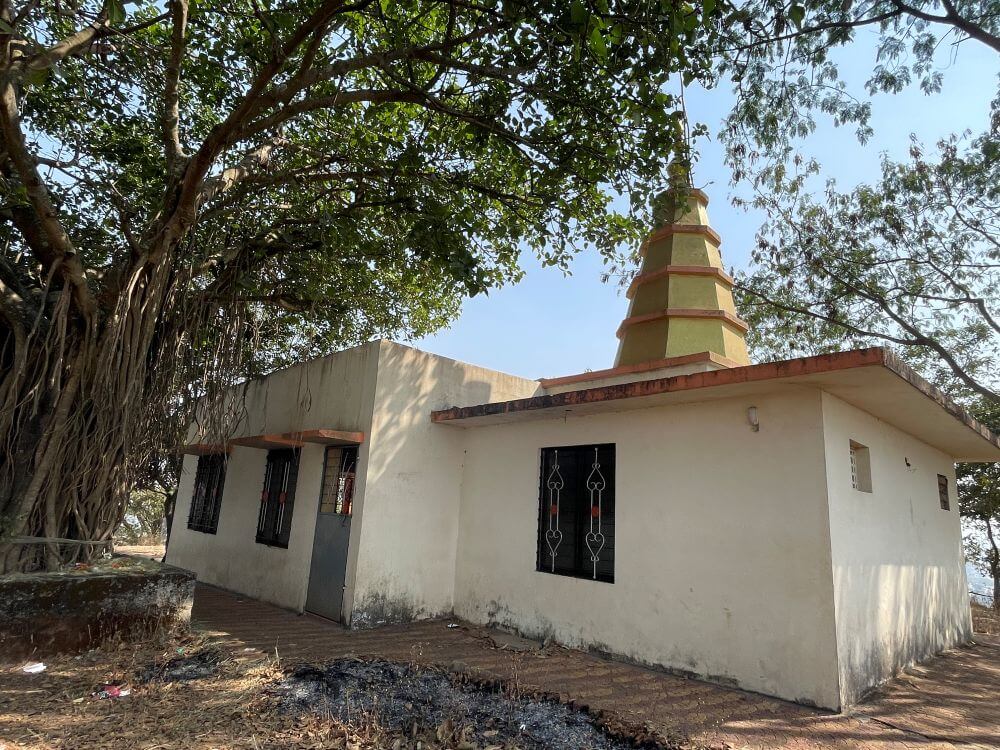
The temple is located on a high hill near two small ponds, a short distance from the main road. Stairs have been built to reach it. Previously, there was a small temple of Siddha Batukeshwar on this hill. It has since been renovated, and the temple premises have been developed. The temple consists of the original small sanctum and a newly constructed assembly hall (Sabhamandap). Outside the assembly hall, there are statues of a tortoise and a Nandi in white. The Ganesha Atharvashirsha is inscribed on the walls.
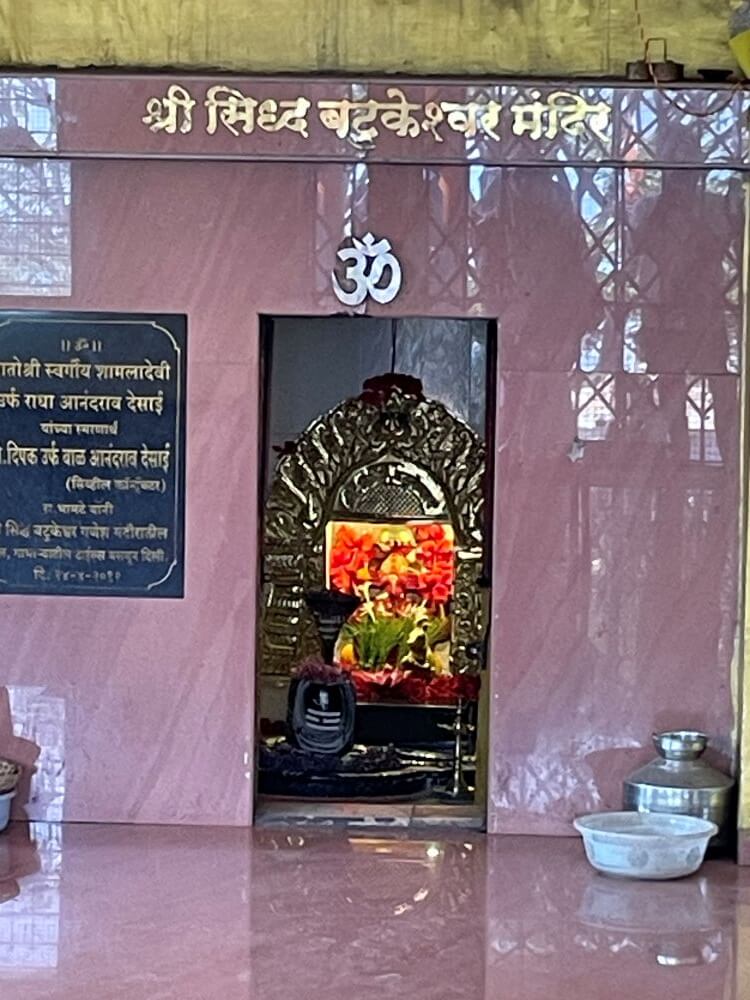
The walls of the Siddha Batukeshwar temple inside the assembly hall are adorned with marble tiles. In the center, there is a one-and-a-half-foot-tall idol of Ganesha. The Ganesha here has a trunk turned to the right. A Ganesha whose trunk turns to the right is called Siddhivinayak, while one whose trunk turns to the left is called Riddhi-Vinayak. Accordingly, the Ganesha here is Siddhivinayak. Siddhivinayak is considered the bestower of liberation (Moksha). Many devotees believe that a right-trunked Ganesha is “strict,” requires strict ritual purity, and should not be kept at home. However, according to the almanac-maker and astronomer Da. Kru. Soman, these are misconceptions and are not stated in any scripture. He explains that Ganesha is never “strict”; he is compassionate and forgiving. Ganesha holds a laddu or modak in his left hand, which is why his trunk is turned to the left to eat it, while his right hand is raised in blessing.
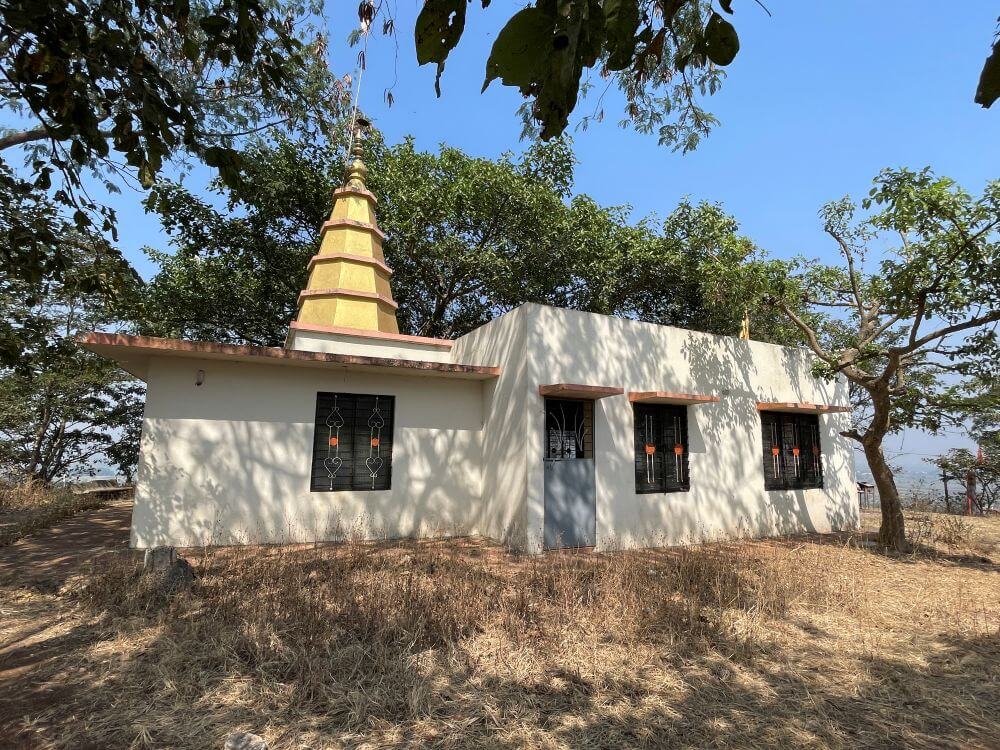
At the base of the Siddha Ganesha idol is his vehicle, the mouse. A beautifully carved golden arch (Mahirap) stands behind the Ganesha idol. To the left of Ganesha is the idol of Batukeshwar. The Batuk Bhairav here is in the form of a Linga. This black stone Shiva Linga is level with the ground. The temple has a sloped cement roof on all four sides, and above the assembly hall, directly over the sanctum, is a tall hexagonal spire (Shikhara).
Devotees believe that bathing in the pond at the foot of the hill and worshipping Ganesha on Bhadrapad Shukla Chaturthi fulfills all desires. Many devotees perform a vow of offering one thousand Durva grass blades. Panchopachar puja is performed daily in this temple between 7:30 and 8:30 in the morning. Abhisheka is performed on Tuesdays and Fridays, while on Sankashti, Abhisheka and Aarti are performed at 5:30 AM and at moonrise. A Ganesha Yaga and Mahaprasad program are organized on Maghi Ganesha Jayanti. Seating arrangements have been made for devotees in the temple premises. From the hill, one can get a view of parts of Kolhapur city.
This sacred temple stands as a testament to deep spiritual devotion, ancient architectural grandeur, and rich local cultural traditions.
The sanctum sanctorum houses the divine idol consecrated according to ancient Vedic traditions, surrounded by serene courtyards and traditional temple architecture.
Navratri, Maha Shivratri, Annual Temple Jatra & Deepotsav
Compare and book flights, secure top-rated local hotels near the temple, hire reliable guides, and rent cars instantly.
Extend your pilgrimage by visiting other highly sacred temples located nearby.


Add ₹999 more to unlock FREE SHIPPING!
Your sacred cart is currently empty.
Shop Photo FramesFill in your delivery details below to place your order.
Add comment