
Add ₹999 more to unlock FREE SHIPPING!
Your sacred cart is currently empty.
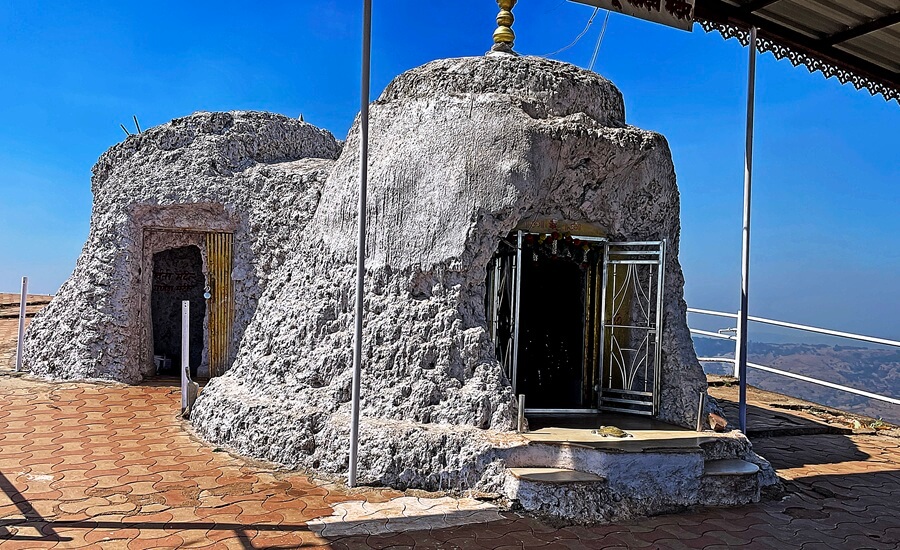
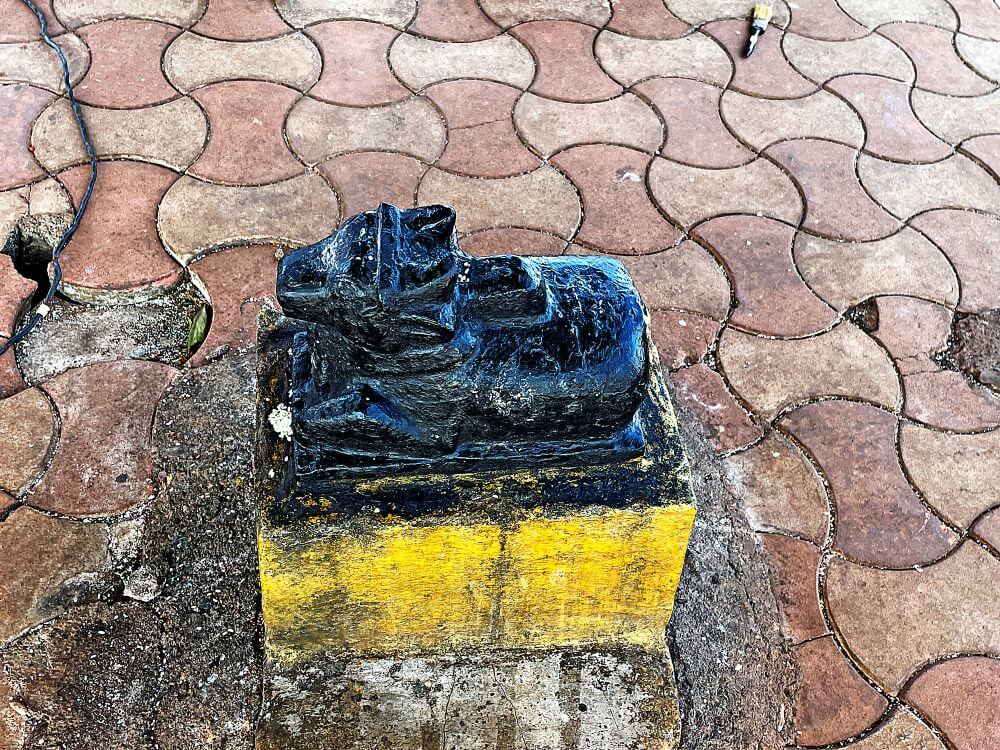
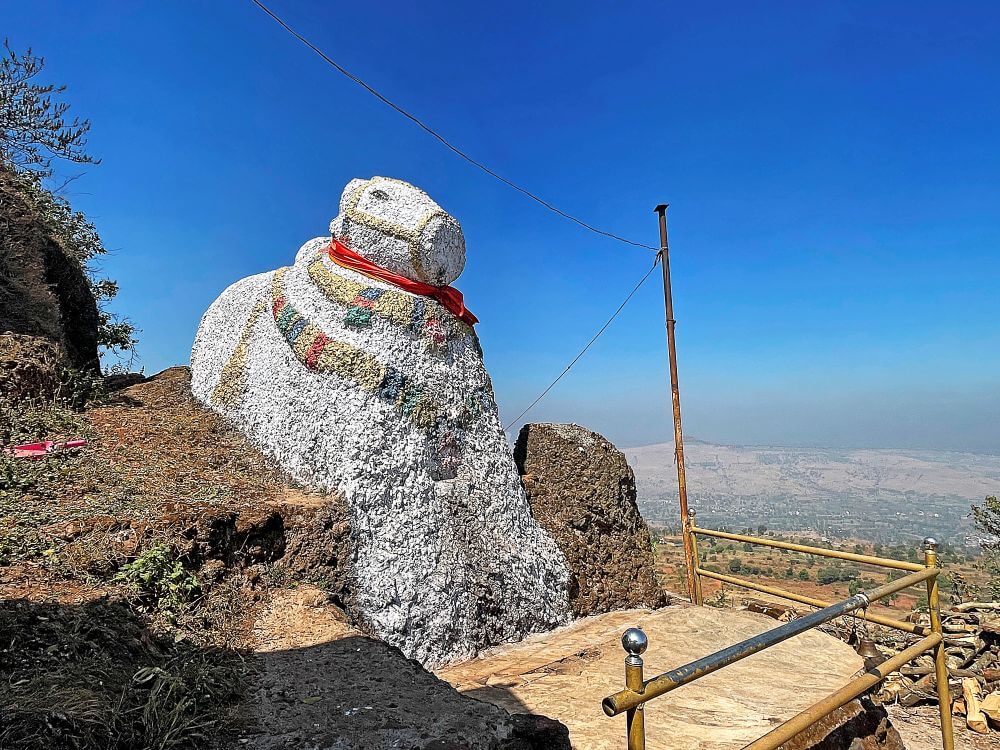
Shop Photo FramesOn the border of Radhanagari and Karveer talukas in Kolhapur district, a vast range of about 22 hills is visible. The last hill on the eastern side of this range is known as Mahadevachi Tekdi (Mahadev’s Hill). On this hill stands a temple of Lord Mahadev and Goddess Parvati, carved entirely out of solid rock. Due to the Sateri temple located at the base of this hill, it is also known as Sateri Mahadevachi Tekdi. Another unique feature of this temple site is the statue of Nandi. It is carved into a large boulder at some distance below the main temple.
Information regarding exactly when this rock-cut temple was carved is unavailable. It is a tradition to attribute such ancient temples, caves, or rock-cut structures of unknown history to the Pandavas. Accordingly, it is said that this temple was also excavated by the Pandavas. King Bhoja (I) of the Shilahara dynasty, who ascended the throne in Kolhapur in 1095 CE , resided at Tirwadbeed (present-day Kasba Beed). Subsequently, the permanent camp of the army of his brother Gandaraditya, who ascended the throne in 1110 CE, was also located at Tirwadbeed. A copper plate inscription of King Bhoja mentions the route from Tirwadbeed to Panhala. Among the many stages on this trade route, Mahadev Dongar was the highest point. Scholars speculate that this temple might have been carved during that period.
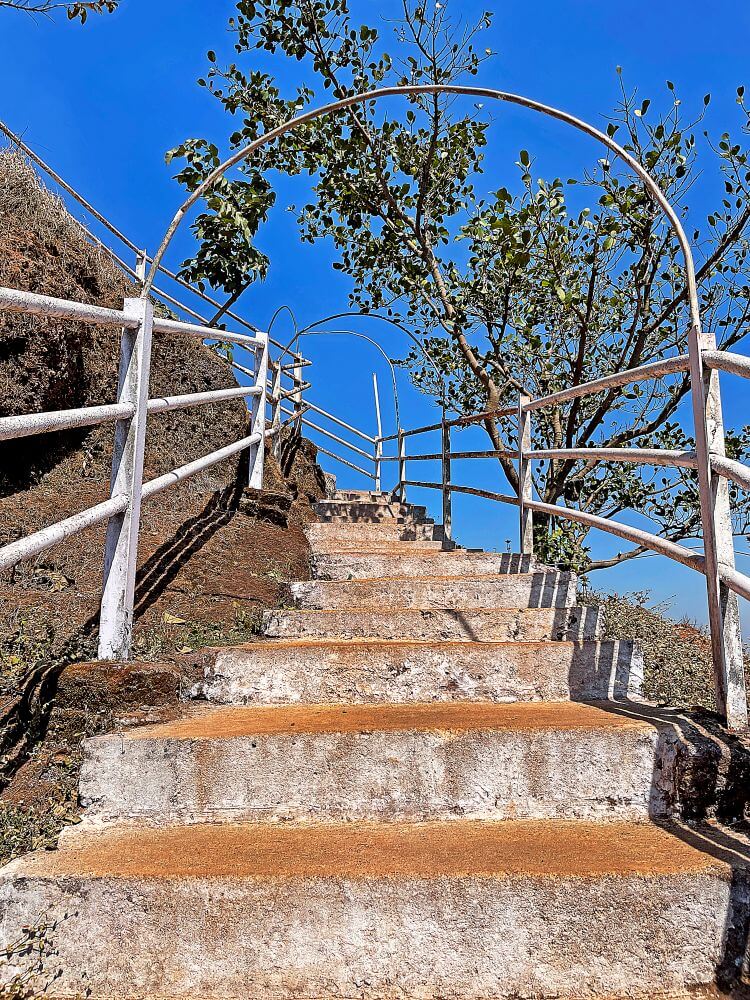
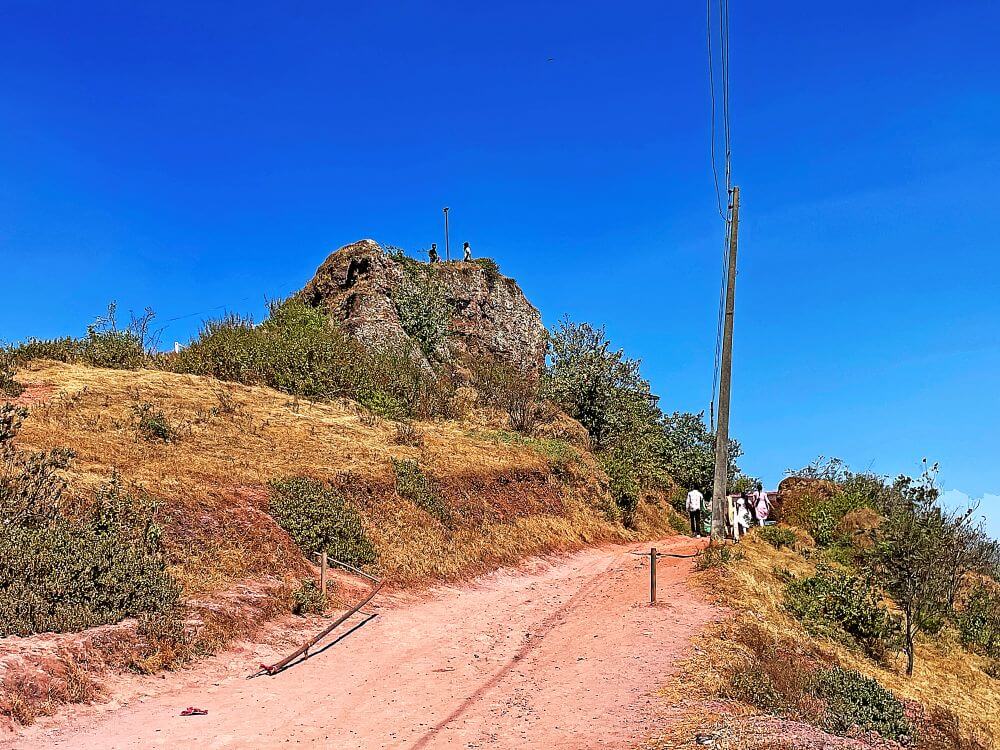
A motorable road has been built to reach this hill. Upon reaching the top, a tin shed has been constructed for the convenience of devotees. From there, a flight of stairs leads further upward. The first thing one sees here is a Nandi, approximately 5 feet tall, carved entirely out of solid rock. This Nandi is in a seated position, facing the southeast. The ornaments on this Nandi are carved into the rock with great finesse. A short distance from here, on the left side of the stairs, a well carved into the hill is visible. It is said that this well is about 40 feet deep. Steps have been designed to descend into the well. Some niches are also visible in certain places. Until a few years ago, this well was the only source of water here. It is said that the well dried up after construction work was carried out on the hilltop. Climbing the stairs from here to the top of the hill, one immediately faces the east-facing temple of Lord Mahadev. A tin pavilion has been built in front of the temple.
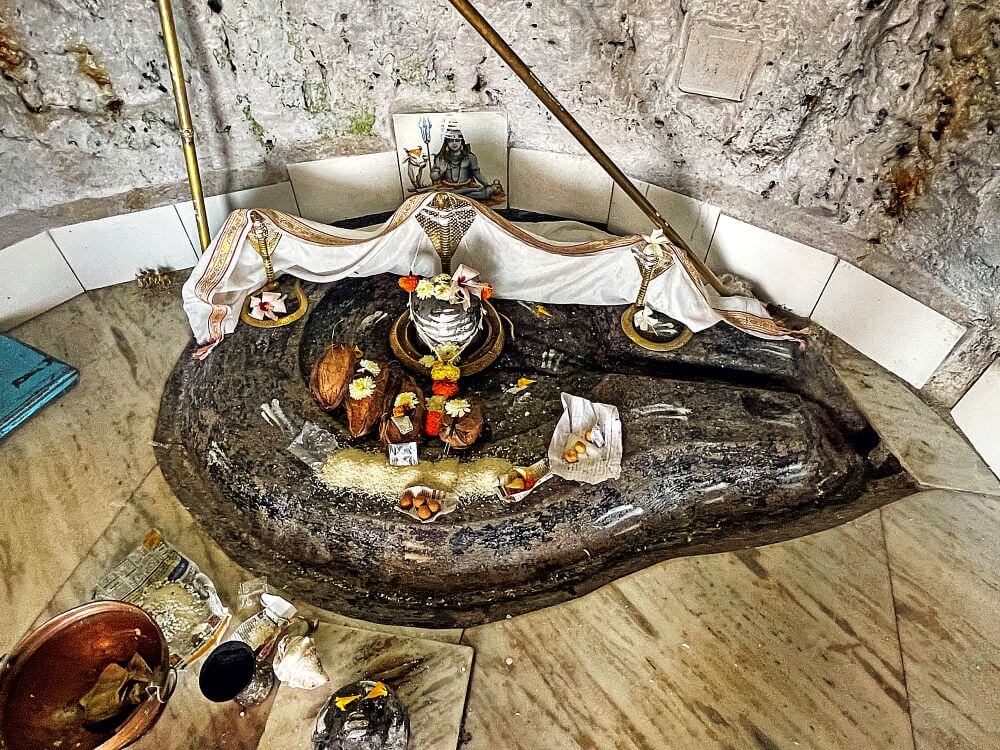
This temple of Lord Mahadev is carved into a massive rock boulder on the hill. The temple exterior is rugged, and a tall spire is mounted atop it. The temple has a steel door. Inside this cave-like temple, which is circular in shape, lies the ancient stone Pindi of Lord Mahadev in the center. The Pindi consists of a wide Shalunka, a Shivling in the center, and a brass idol of a serpent with its hood raised over it. There are two more brass serpent idols on the Shalunka, and two large brass tridents are placed at the back. In the very center of the cave ceiling, a circular structure is visible. This three-tiered structure resembles a flower. It has eroded significantly over the passage of time. Behind this cave temple, in the same rock, is the temple of Goddess Parvati. After entering through a small door, a niche is carved on the right side. A small idol of Lord Ganesha is enshrined there. This idol is made of marble and appears to have been installed in recent times. A short distance ahead is another entrance. Inside is a stone idol of Goddess Parvati. Only the face of this draped idol is visible. On the rock wall behind this idol, a four-armed image of Goddess Parvati is carved. To its right, there is a structure resembling a stone bench for sitting. The atmosphere in this part of the cave is found to be the coolest. No matter how harsh the sun is outside, the coolness inside does not diminish.
Many devotees visit this temple for darshan during Mahashivratri, Navratri, and every Monday. This Mahadev is the village deity (Gramdaivat) of Amshi village. The entire management of this temple is primarily looked after by the villagers of Amshi. Every year on Mahashivratri, a grand fair (yatra) is held here. On this occasion, a Palkhi procession and an Ashwa Ringan (horse circle) ceremony are organized from Amshi village. Although the Sateri-Mahadev hill falls under the Dhondewadi division for revenue purposes, it is primarily considered a part of Amshi.
From this hill, many places like Jyotiba Dongar, Panhala, Pavangad, Masai Pathar, and Tumjai Pathar come into view. From the back of the temple, one can see the forest area of Radhanagari, the mountain range, and the Tulshi and Keloshi reservoirs of Dhamod. During the monsoon, the flows of the Tulshi, Bhogawati, and Kumbhi rivers, as well as their confluence, can be seen from Mahadev Hill. While descending from the western side of Mahadev Hill, many caves are visible. These caves are large enough for many people to sit in at once.
Near the foothills of this hill is the temple of Goddess Sateri. A legend is told about this temple: in ancient times, a couple in the Kasba Beed area had seven daughters. The mother of these girls passed away suddenly. Finding it difficult to raise the girls afterward, their father deceived them, brought them to the forest near this hill, and abandoned them. The girls were never seen again. It is said that while waiting for their father, the girls merged into nature. In memory of nature embracing them, some people started worshipping the seven sisters at that spot. They later came to be worshipped here as Sateri, meaning the seven goddesses. Over time, a temple was built for them.
This temple was originally very small. A Sabha Mandap (assembly hall) has now been built in front of the original temple. In the center of this hall, some small pairs of padukas (footprints) are kept. The original seven pairs among these are worshipped daily. The sanctum sanctorum of this temple is small in size and built in the Hemadpanti style. There are seven uneven stones in the sanctum, which are worshipped here as the forms of the Goddesses.
Many signs of the original temple being ancient are visible in this area. Some stone-carved remnants can be seen outside the temple. Behind the temple, there are two hero stones (Virgals). Only the battle scene portion of one hero stone is available. The other hero stone, although fragmented, has all its parts available. This hero stone is four-tiered and depicts a hero protecting cattle. The lowest tier of this hero stone shows the hero protecting the cattle. The second tier depicts a battle scene. The third tier features Apsaras (celestial nymphs) taking the hero to heaven. The final fourth tier shows the worship of Lord Shiva in Kailasa. Beautiful carvings can be seen between each of these tiers. Experts estimate that this hero stone dates back to the pre-Shilahara period. There are two rooms on both sides of the temple. The villages of Dhondewadi, Kekatwadi, Amshi, Nargewadi, and Waghobawadi together celebrate the Goddess’s fair here every year.
This sacred temple stands as a testament to deep spiritual devotion, ancient architectural grandeur, and rich local cultural traditions.
The sanctum sanctorum houses the divine idol consecrated according to ancient Vedic traditions, surrounded by serene courtyards and traditional temple architecture.
Navratri, Maha Shivratri, Annual Temple Jatra & Deepotsav
Compare and book flights, secure top-rated local hotels near the temple, hire reliable guides, and rent cars instantly.
Extend your pilgrimage by visiting other highly sacred temples located nearby.


Add ₹999 more to unlock FREE SHIPPING!
Your sacred cart is currently empty.
Shop Photo FramesFill in your delivery details below to place your order.
Add comment