
Add ₹999 more to unlock FREE SHIPPING!
Your sacred cart is currently empty.
Shop Photo FramesKolhapur is the place where Goddess Mahalakshmi-Ambabai slew the demon Kolhasura. This ancient city in Western India has a history spanning at least 2000 years. Having witnessed the reigns of the Mauryas, Chalukyas, Rashtrakutas, and Yadavas, this city is home to many ancient temples, much like the Mahalakshmi Temple. One such ancient temple is the Uttarareshwar Mahadev Temple. This temple is situated on a hill in Uttarareshwar Peth. A unique feature of this temple is the colossal Shiva Linga. The temple is also known for the famous Waghachi Talim of Kolhapur and its ancient tradition of bhajans accompanied by the Ektari and Dimdi.
Kolhapur, referred to as ‘Matapur Kolhapur’ in Chakradhar Swami’s ‘Leelacharitra’, is a center of Shakti. As Shiva and Shakti are one, there are many temples of Shiva here as well. The hill of Brahmapuri on the banks of the Panchganga River is the most ancient part of Kolhapur. When excavations were carried out in Brahmapuri, many ancient relics were found there. It is believed that the city of Kolhapur gradually expanded from here. Since ancient times, this city had six parts: Brahmapuri, Uttarareshwar, Kholkhandoba, Rankala, Padmala, and Ravaneshwar. Uttarareshwar is the northern part. Naturally, it was settled after the colony in Brahmapuri. This area likely derived its name from the Mahadev temple located there. In the documents of the Kolhapur Municipal Corporation, this area is referred to as Lagmapur. The word ‘Lagma’ means a form of Lakshmi.
There is no concrete evidence as to exactly how ancient this Uttarareshwar temple is. However, some local scholars, citing historian G. H. Khare, state that this temple was built during the reign of the mighty Chalukya King Pulakeshin II (610 to 642 AD). During the reign of Pulakeshin II, in 624 AD, his governor named Karnadeva built the sanctum sanctorum of the Mahalakshmi Temple. According to temple architecture scholar Yogesh Prabhudesai, when the Chola king of Kanchi attacked the Chalukyas of Kalyani, the Chola king attempted to burn down the Mahalakshmi Temple in Kolhapur. This event occurred in the 11th century. The fact that an attempt was made to set fire to the Mahalakshmi Temple suggests that the temple structure at that time must have been made of wood. Subsequently, the Chalukyas likely built the current stone temple of Mahalakshmi. Given this history of the Mahalakshmi Temple, it is argued that the Uttarareshwar Temple, which shares similarities in its architectural style, was also built after the 11th century during the Chalukya rule. The Chalukya kings were devotees of Shiva. Their family deity was Shankara.
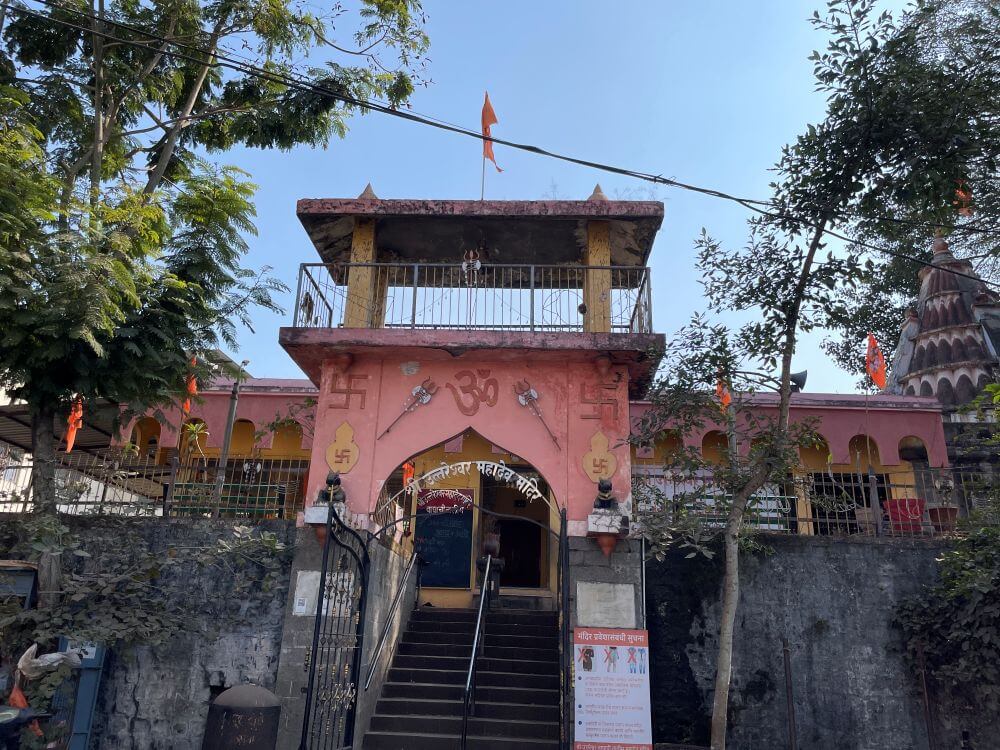
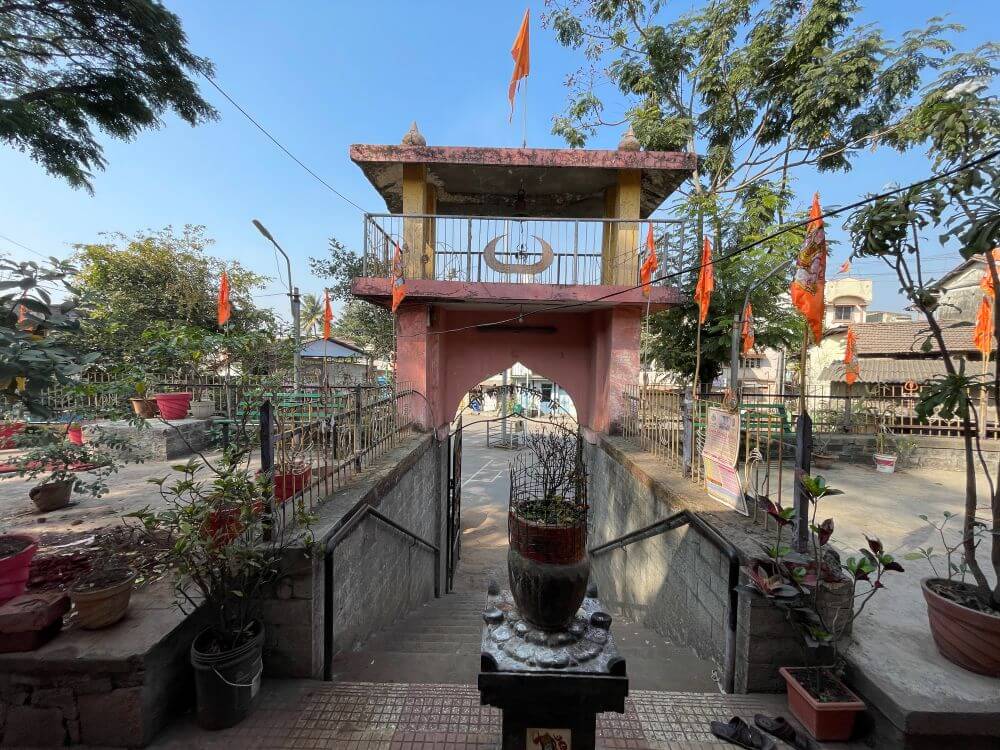
Although this temple is on a hill, the hill’s appearance has vanished due to construction and roads everywhere. Despite this, the temple is elevated from the road. One has to climb 15 stone steps to reach it. Previously, this temple was small. The Waghachi Talim institution operated here in a simple building. The people from that Talim used to look after the temple’s worship and the arrangements for the Mahaprasad. In the past, the original temple here was offered Jalabhishek. At that time, ladders were used to go up to the temple. The temple gained more grandeur from 1894 onwards.
In February 2004, the renovation of the temple was undertaken. During that time, a spacious Sabha Mandap (assembly hall) was built here using modern methods. Upon entering the Sabha Mandap through a large wooden door, there is a small stone temple of Maruti on the left side within the hall. The location of Maruti here is ancient, though the temple structure is newly built. Inside the temple, there is an idol of Hanuman holding a mace on a stone slab. The idol is of the relief sculpture type, and ten monkey figures are carved on the back slab. Directly in front of this temple is the original Uttarareshwar temple. It is not known whether this temple had a Sabha Mandap or Antarala in ancient times. Currently, only the sanctum sanctorum of the original temple remains.
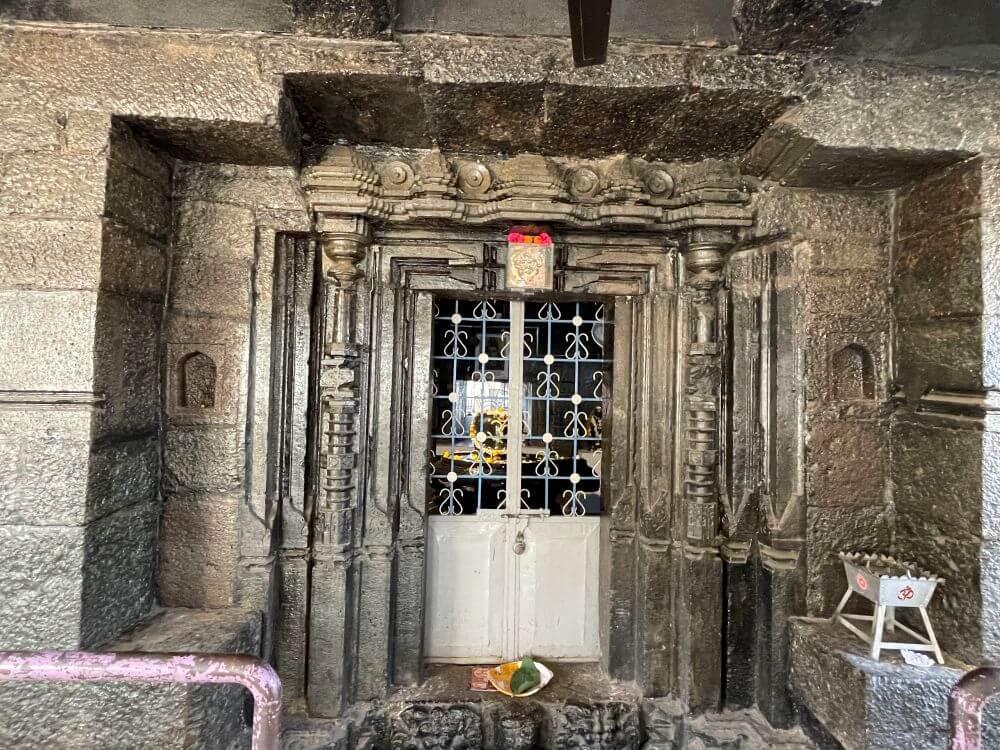
The entrance to the sanctum of this temple, built according to the Vesara architectural style of the Chalukya period, is five-branched (Panchashakhiya). The door pillars here are carved. The other branches are devoid of carvings. There is an idol of Ganesha on the lintel of the door frame. Above it is a Torana decorated with small replicas of temple spires. On the Mandarka, there is a crescent moon slab with Kirtimukhas on both sides. The outer and inner walls of the sanctum are built with flat stone slabs. Pillar-like carvings are visible on the inner walls.
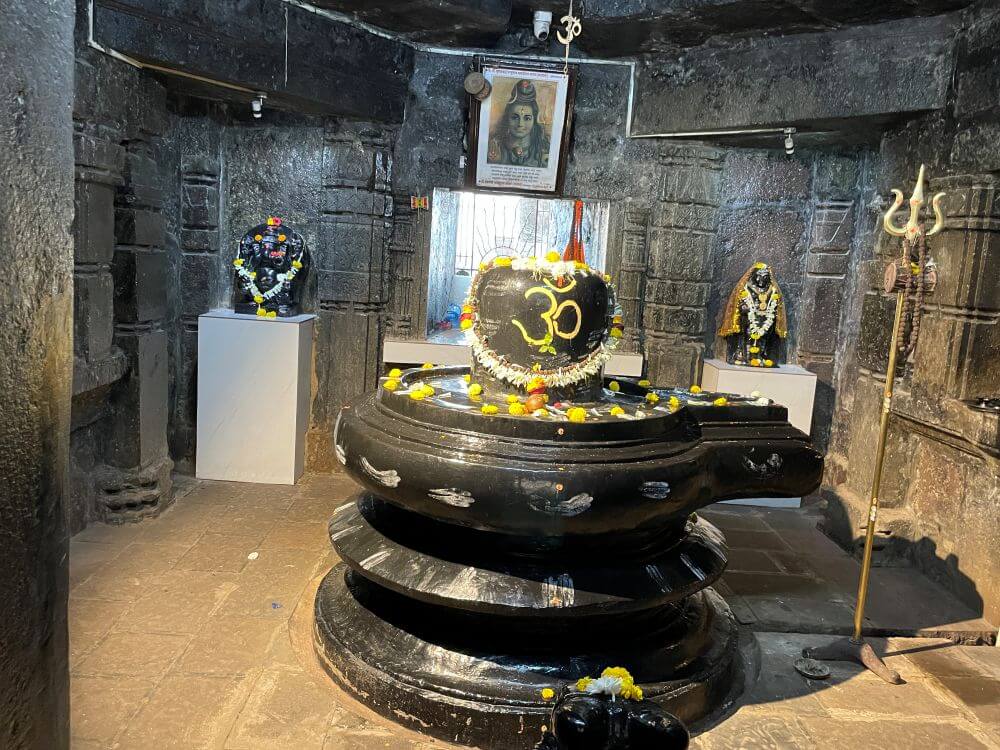
A unique feature of this sanctum is that the Nandi is placed inside the sanctum itself. In front is a magnificent Shiva Linga. It is 5 feet tall and 5 feet wide. This Shiva Linga is of the Manushalinga type. A Manushalinga has three parts: the lower square Brahma-bhaga, the octagonal Vishnu-bhaga, and the upper circular Shiva-bhaga. However, all three levels of this Manushalinga are circular. There is an Urdhva-pashan (upright stone) at the top. The water drainage channel (Shalunka) of this Linga is also short. It is said that the height of this Shiva Linga was reduced for the convenience of worship. At the base of this Shiva Linga is the place of Muktadeshwara. This Shiva Linga was Vajralepa-treated in 1971. On the back wall of the sanctum, on the left side on a square pedestal, is the idol of Ganaraya, and on the right side is the idol of Parvati.
The roof and the spire (Shikhara) of this sanctum are also unique. Inside the roof, stone slabs are arranged in a circular fashion. The spire is circular and tapers towards the top. In each of its layers, there is a structure resembling elongated pillars. There are niches (Devakoshthakas) on all four sides, but they do not contain any idols or sculptures.
According to information provided by the villagers, this temple has a tradition dating back to 1850: the bhajan accompanied by the Ektari and Dimdi. Every Monday night, in the hut-like building in the temple premises, bhajans were performed using the Ektari and Dimdi instruments. That tradition continues to this day. The name of the great liberal thinker Justice Mahadev Govind Ranade is associated with this temple. Justice Ranade received his primary education in Kolhapur. During that time, he used to visit this temple regularly for Darshan. In his will, he had decided to donate a certain amount for the maintenance of this temple. Later, the trust in his name used to give an annual donation of fifteen rupees to the municipality for the maintenance of the temple. There is a school named after Justice Ranade right next to this temple.
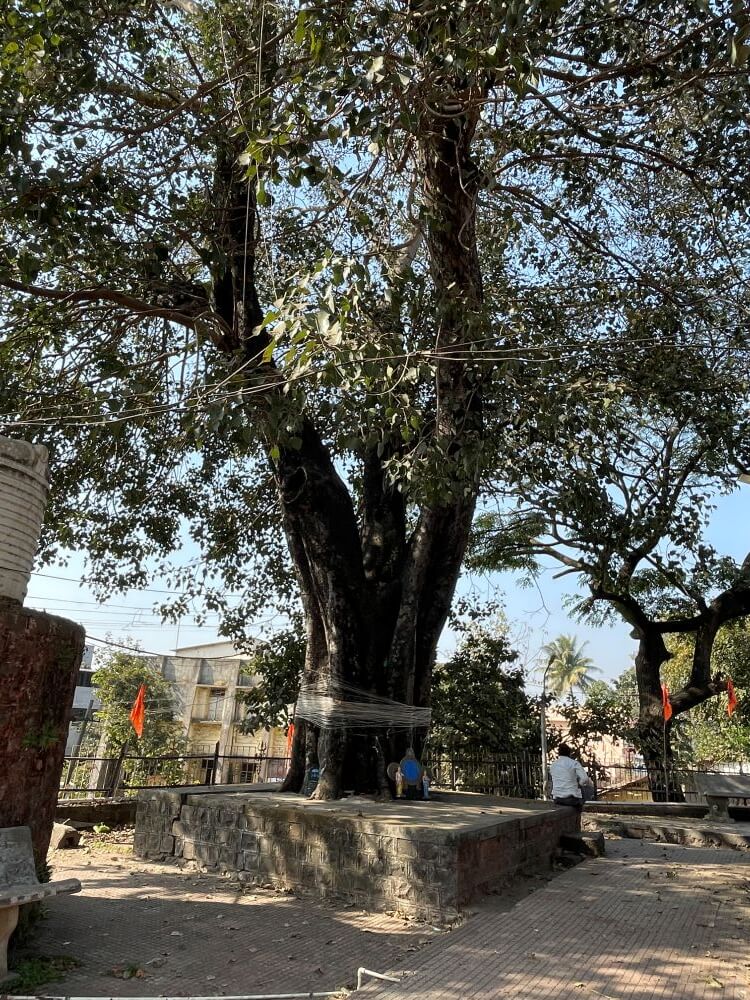
Seating arrangements have been made for devotees within the temple premises. There is a large Peepal tree behind the temple. It is said that this tree is one hundred twenty-five years old. Countless devotees gather for darshan in this temple on Mahashivratri and Shravani Mondays. A grand fair is held here on the third Monday of Shravan.
This sacred temple stands as a testament to deep spiritual devotion, ancient architectural grandeur, and rich local cultural traditions.
The sanctum sanctorum houses the divine idol consecrated according to ancient Vedic traditions, surrounded by serene courtyards and traditional temple architecture.
Navratri, Maha Shivratri, Annual Temple Jatra & Deepotsav
Compare and book flights, secure top-rated local hotels near the temple, hire reliable guides, and rent cars instantly.
Extend your pilgrimage by visiting other highly sacred temples located nearby.


Add ₹999 more to unlock FREE SHIPPING!
Your sacred cart is currently empty.
Shop Photo FramesFill in your delivery details below to place your order.
Add comment