
Add ₹999 more to unlock FREE SHIPPING!
Your sacred cart is currently empty.
Shop Photo FramesThe name Bhudargad for the taluka in Kolhapur district is derived from Bhudargad Fort. This fort, built by the last king of the Shilahar dynasty, Bhoj the Second, has witnessed many dynasties and transitions. The Dudhsagar Lake on this fort, with its milky-white water, and the ancient temple of Bhairavnath, a revered shrine for millions of devotees, are both famous. Devotees believe that this deity answers prayers and rushes to the aid of those who call upon Him. The annual Jatrotsav (fair festival) of Bhairavnath is celebrated with great enthusiasm on Magh Krishna Pratipada. Thousands of devotees, including Shiv-premis (admirers of Chhatrapati Shivaji Maharaj), attend this festival. This tradition of celebration has continued for hundreds of years, even today.
Bhudargad is a hill fort. It stands three thousand one hundred and ninety feet above sea level. According to historical records, it was built during the reign of the Shilahar king Bhoj the Second (one thousand one hundred and seventy-five to one thousand two hundred and twelve CE). Later, it was conquered by Adil Shah of Bijapur. After the slaying of Afzal Khan, Chhatrapati Shivaji Maharaj began to take control of the southern forts to strengthen his empire. Bhudargad was among them. In one thousand six hundred and sixty-seven CE, Shivraya attempted to repair this fort and make it a strong outpost; however, the Mughals soon recaptured it. Five years later, the Marathas again attacked Bhudargad and took control of the fort.
Rajaram Maharaj had stayed at this fort for a few days on his return from Gingee. After the death of Aurangzeb, when Chhatrapati Sambhaji Maharaj’s son, Shahu Maharaj, returned to Swarajya, two kingdoms were formed: Satara and Kolhapur. After the Chhatrapatis of Kolhapur, or Karveer, accepted the suzerainty of the British, the fort-keepers of the Karveer state, fed up with the oppressive British administration, revolted in one thousand eight hundred and forty-four CE. At that time, the fort-keepers of Bhudargad also joined the rebellion. The British attacked Bhudargad and conquered the fort. Besides the main temple of Bhairavnath, there are four other temples on this fort. In addition, there are remnants of some mansions, a secret tunnel or a hidden entrance, two lakes, and some tombs. The water in one of these lakes appears pure white due to the white sand within it. Hence, it is called Dudhsagar Lake. This entire fort and most of its constructions are made using laterite stone and lime.
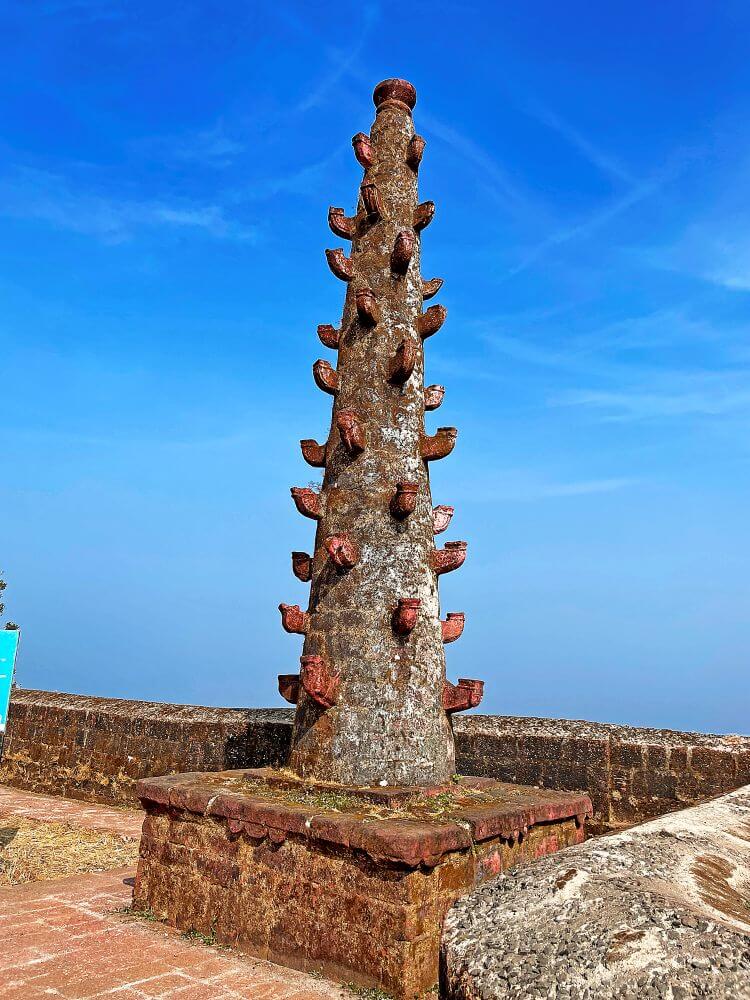
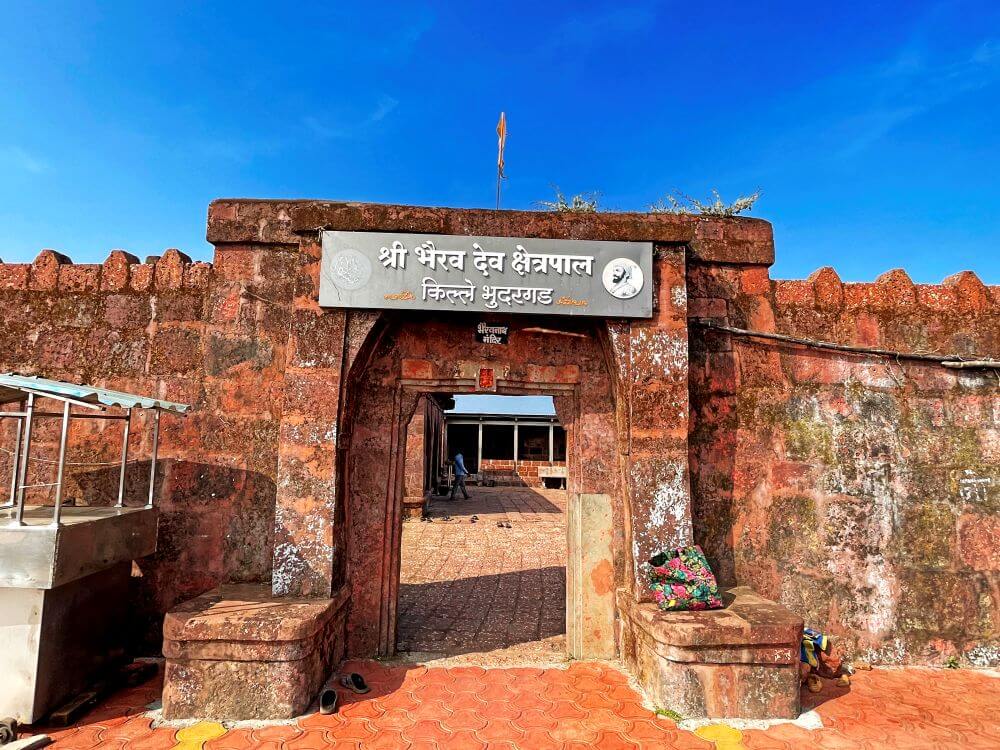
There is a road leading to Bhudargad Fort from Peth Shivapur village. At the foot of this fort, along with Peth Shivapur, there are villages and hamlets such as Gadbidri, Jakin Peth, Shindewadi, Kadamwadi, Varekarwadi, Ranewadi, Madekarwadi, Kalekarwadi, Ghavarewadi, Chopadewadi, Padkhambe, and Barve. These villagers have special faith in the Bhairavnath shrine here. Entry into the fort on the plateau is through the gateway in the ramparts surrounding the fort. From here, there is a motorable road to the Bhairavnath Temple. In the courtyard in front of the temple, adjacent to the rampart, on a raised platform, there is a Deepmal (lamp pillar) that tapers upwards and has a shikhara (spire). To the right of the temple, there is a samadhi (tomb) of a warrior, with two small Deepmalas on either side. Also, outside the temple’s rampart, there is a Deepmala, and next to it, on a platform, an old cannon is placed.
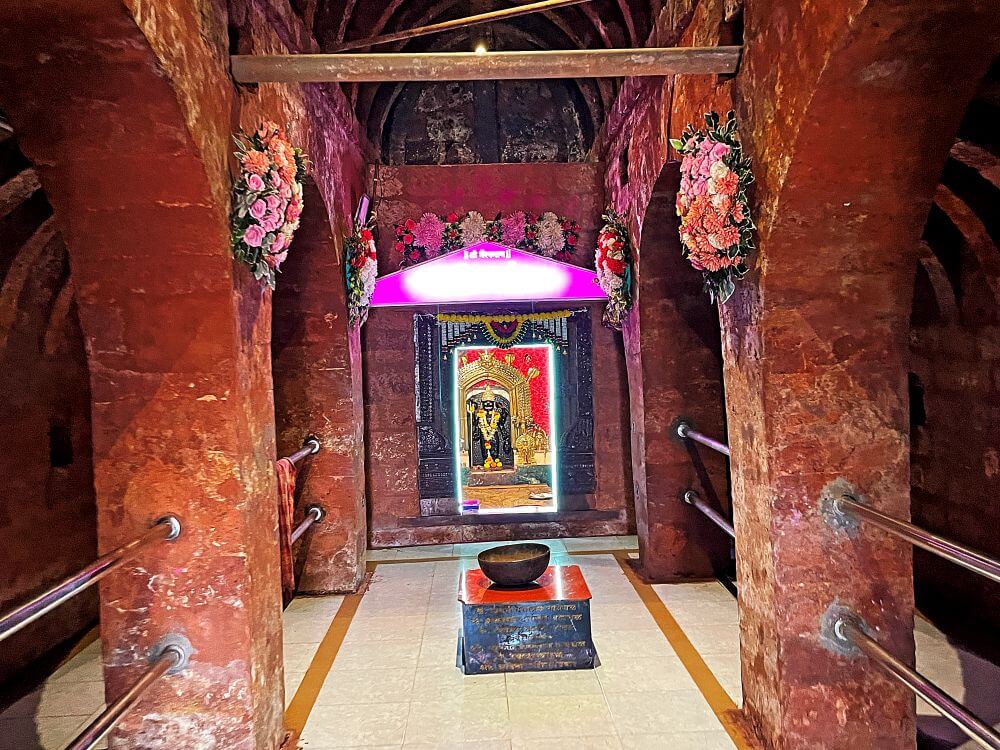
This temple, with a structure comprising a Sabhamandap (assembly hall), Antaral (vestibule), and Garbhagriha (sanctum sanctorum), has two windows near the entrance of the Sabhamandap. On the lalata-bimba (lintel) of the entrance, there is an idol of Ganesha. On either side of the entrance and both windows, there are devakoshthakas (niches for deities). Local villagers speculate that the enclosed Sabhamandap (Gudhamandap) might have been added to the original temple at a later time. From the Sabhamandap, there is a wooden entrance to the Antaral. The doorframes are adorned with floral designs. On the lalata-bimba here, there is an idol of Ganapati, and on the walls on both sides, there are horse-heads. Moving further from the Antaral, there are stone arches on both sides. The stone doorframe of the Garbhagriha is beautifully adorned with carvings. In the center of the Garbhagriha, on a Vajra-pitha (diamond pedestal), there is a two-armed black stone idol of Bhairavnath. In one hand of the idol, there is a Trishul (trident), and in the other, an Amritpatra (nectar vessel). The idol is carved with garments and ornaments. Behind the idol, on a decorated prabhavali (aura), there is a Kirtimukha (glory-face) and Nagas (serpents). In one thousand six hundred and seventy-two CE, when the Marathas captured this fort from the Mughals, the Mughal fort-keeper was killed. His insignia were offered by the Marathas to Lord Bhairavnath. They are still with the deity today.
The annual Jatrotsav of Lord Bhairavnath is celebrated with great enthusiasm on Magh Krishna Pratipada. On this day, the day begins with the Maha-abhisheka (grand anointing) of the deity. Throughout the day, programs such as bhajan, kirtan, pravachan (discourses), and jagaran (all-night vigil) are organized. Vows made to the deity are fulfilled, and new vows are taken. Hundreds of devotees visit this temple daily for darshan, which is a revered shrine for thousands of devotees from across the state.
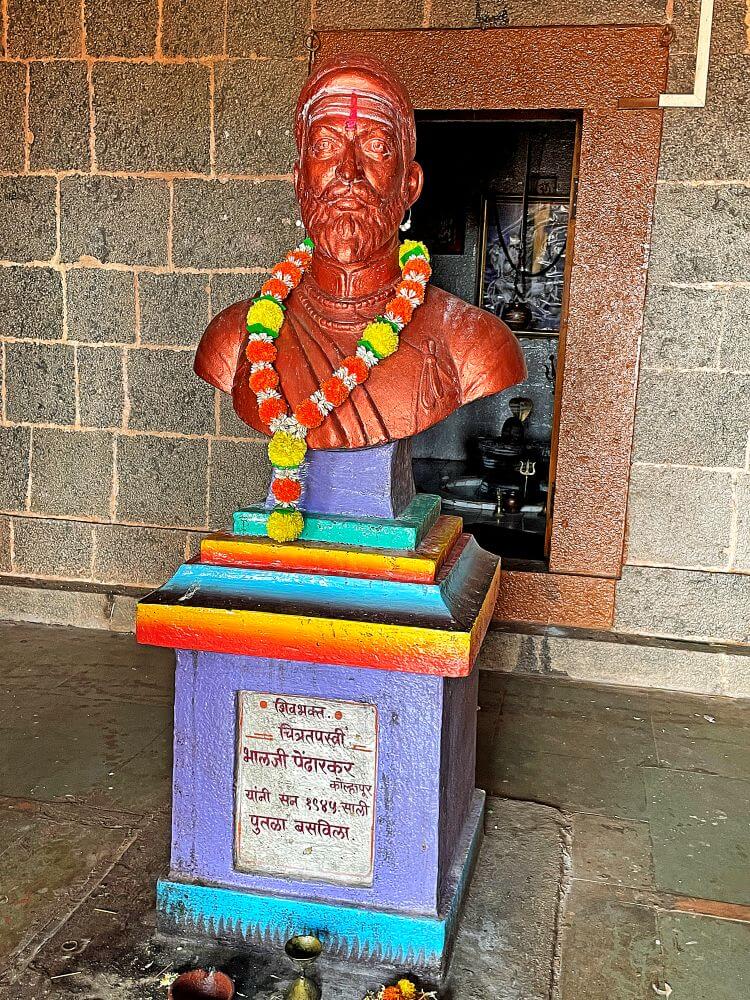
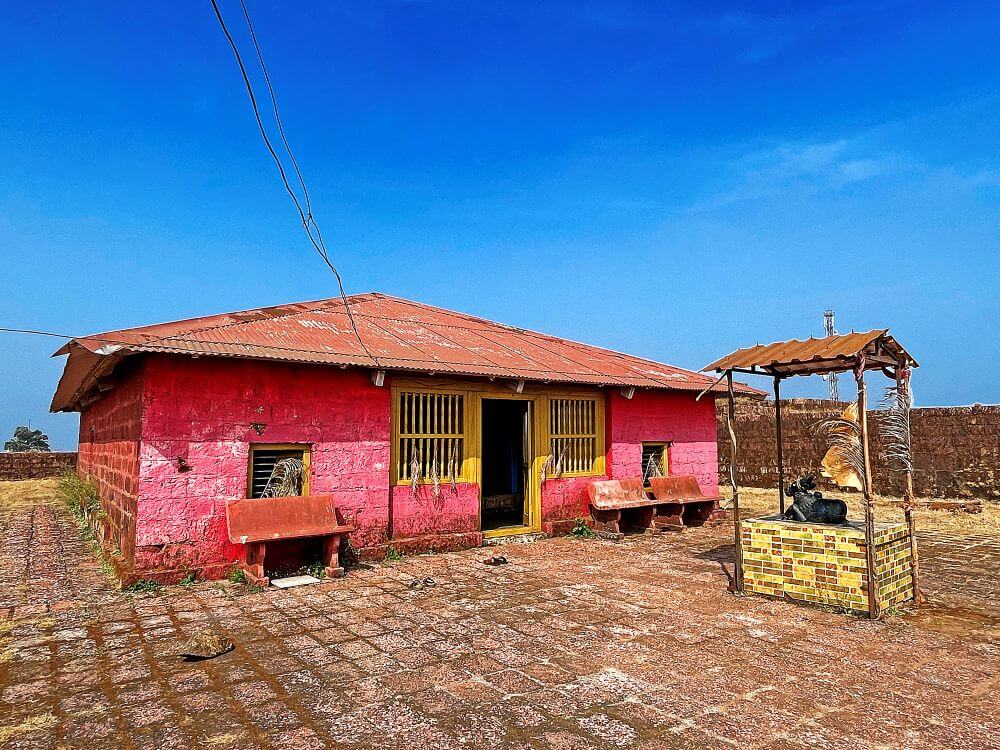
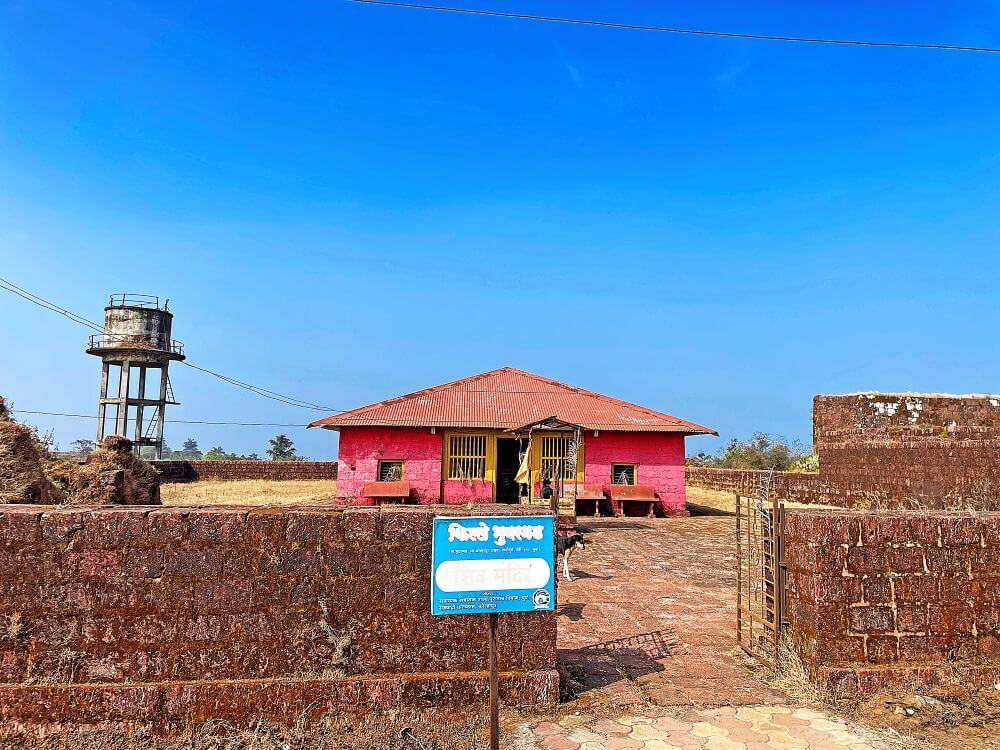
In the courtyard, next to the temple, there is a building for a Dharmashala (rest house for pilgrims). It is said that the ruined building some distance from the temple was once an administrative office. Further from here, there is a temple housing a half-bust statue of Chhatrapati Shivaji Maharaj, sculpted by Bhalji Pendharkar in one thousand nine hundred and forty-five. This temple contains a Shiv-pindi. Further ahead, on the banks of Dudhsagar Lake, there is a temple of Ambabhavani Devi, along with many smaller temples. In a cave on the fort, there is a temple of Jakhubai Devi.
This sacred temple stands as a testament to deep spiritual devotion, ancient architectural grandeur, and rich local cultural traditions.
The sanctum sanctorum houses the divine idol consecrated according to ancient Vedic traditions, surrounded by serene courtyards and traditional temple architecture.
Navratri, Maha Shivratri, Annual Temple Jatra & Deepotsav
Compare and book flights, secure top-rated local hotels near the temple, hire reliable guides, and rent cars instantly.
Extend your pilgrimage by visiting other highly sacred temples located nearby.


Add ₹999 more to unlock FREE SHIPPING!
Your sacred cart is currently empty.
Shop Photo FramesFill in your delivery details below to place your order.
Add comment