
Add ₹999 more to unlock FREE SHIPPING!
Your sacred cart is currently empty.
Shop Photo FramesThe Bhudargad taluka in Kolhapur district is blessed with a rich cultural tradition. The cultivation of traditional wrestling arenas (talims), fairs of deities, devotional singing (bhajan), discourses (kirtan), and music has continued here from time immemorial to this day. The wrestling matches and folk theatre performances (tamasha) held during fairs, and the turbans tossed into the sky amidst the roar of applause and whistles, create an atmosphere of vibrant energy. Similarly, the ancient temples standing on this land for thousands of years provide spiritual energy to the mind. One such ancient Shiva temple is located in the village of Barve in this taluka. As the precise period of its construction is unknown, it is known as the Pandav-era Shiva Temple. Devotees hold a deep faith that the deity here is awakened (jagrut) and grants the wishes of those who pray with devotion.
To underline the antiquity of this temple, a legend regarding its construction by the Pandavas is told here. It is said that during their exile, the Pandavas resided in the forest near the village. As evening fell, the Pandavas began building this Shiva temple. By the time this temple, made of carved stone, was nearing completion, dawn was approaching. Since they had to depart for their onward journey after the rooster crowed at dawn, they stopped the work on the temple. Therefore, it is said that this temple remains in an incomplete state. There are water tanks (kunds) at the base of this temple, which dates back to the 16th-century architectural style. Villagers say that when repair work on these tanks began in 1965, ancient construction tools and a brass sieve were found inside.
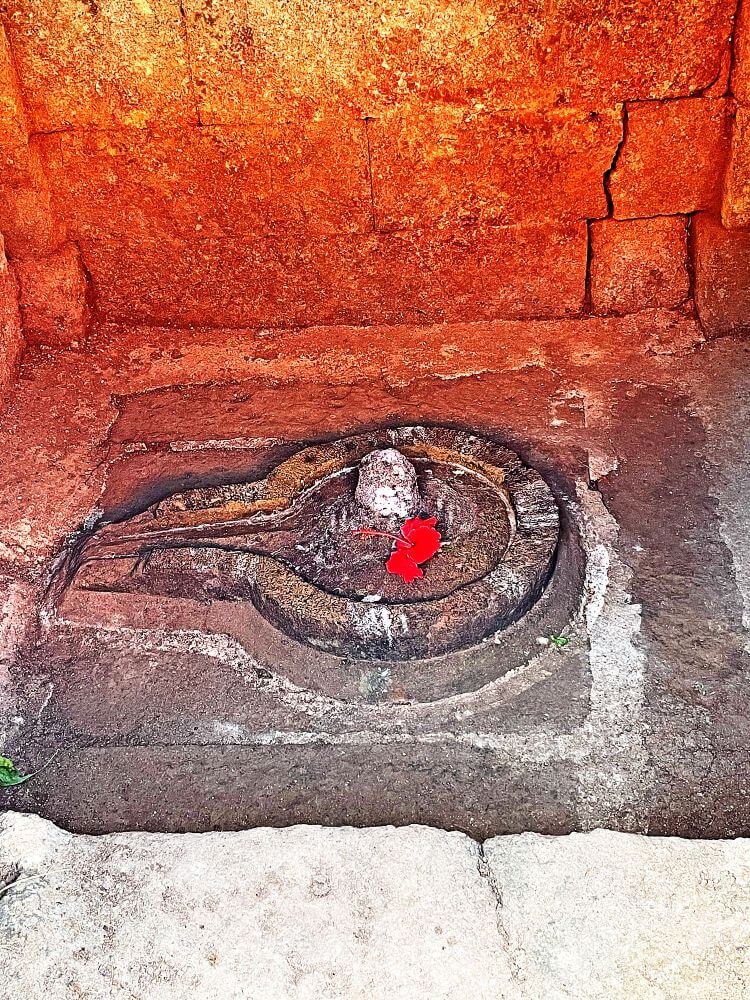
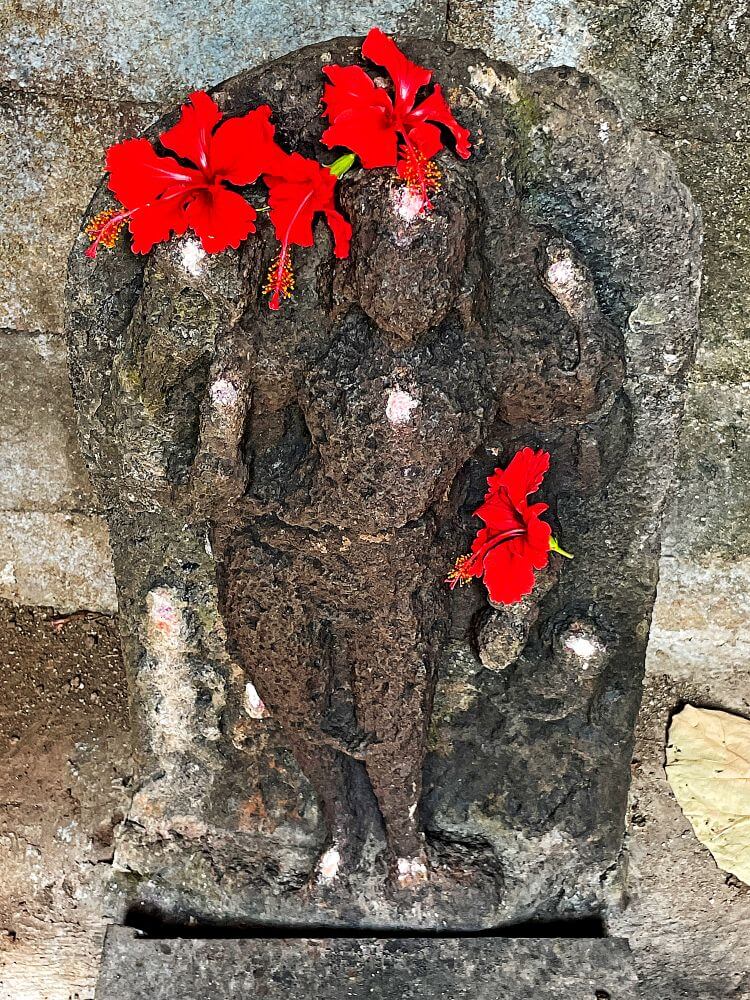
Located 10 km from Gargoti, on the northern side of Barve village, one can see twelve stone-built water tanks while heading towards the temple. Currently, these tanks appear like a pond as they are partially buried in the soil. There are stone steps along these tanks to reach the temple. Climbing these steps, one enters the compact courtyard through the entrance of the surrounding wall. A unique feature here is that the surrounding wall is made of large rectangular stone slabs and contains several alcoves (ovaris). Due to the filling of earth in the courtyard around the temple, more than half of these alcoves are buried. In these alcoves, which resemble caves, there is one Shiva Linga in each, totaling twelve. According to the villagers, these are the sites of the twelve Jyotirlingas. Some of these alcoves contain fragments of hero stones (virgals) and sati stones. One alcove houses a sculpture of a deity. Due to erosion, it is beyond recognition, but the deity is four-armed, and a weapon is visible in one of its hands. An attendant or handmaiden is also visible near its feet. It appears that some pieces of hero stones and sati stones have also been used in the construction of the surrounding wall. There are stone steps near these alcoves to climb onto the high surrounding wall.
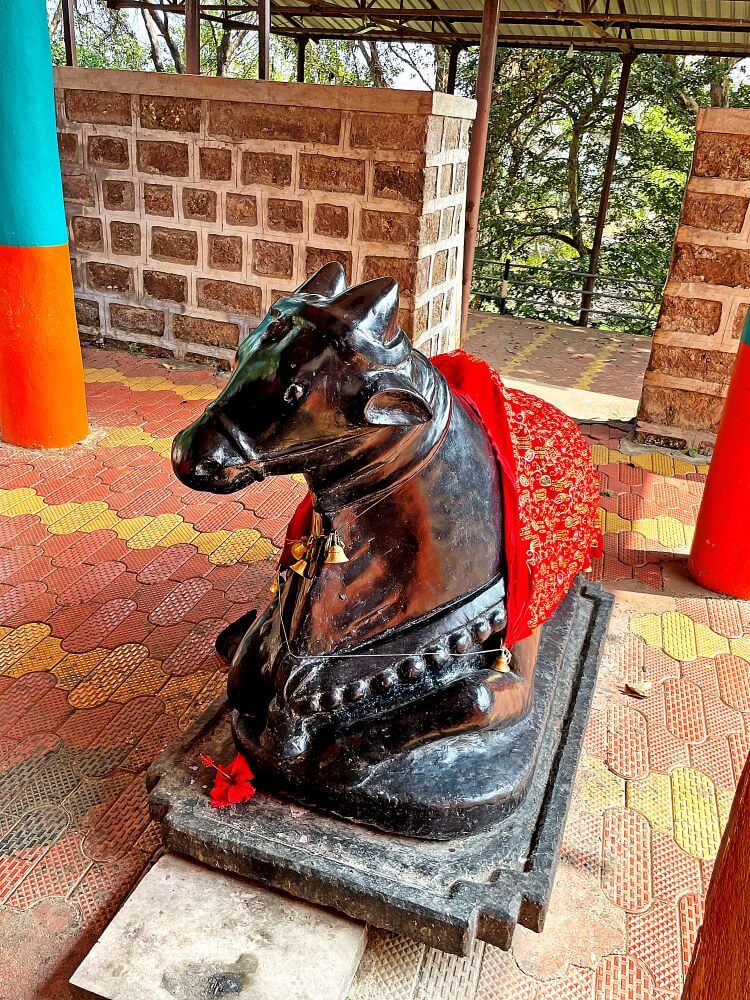
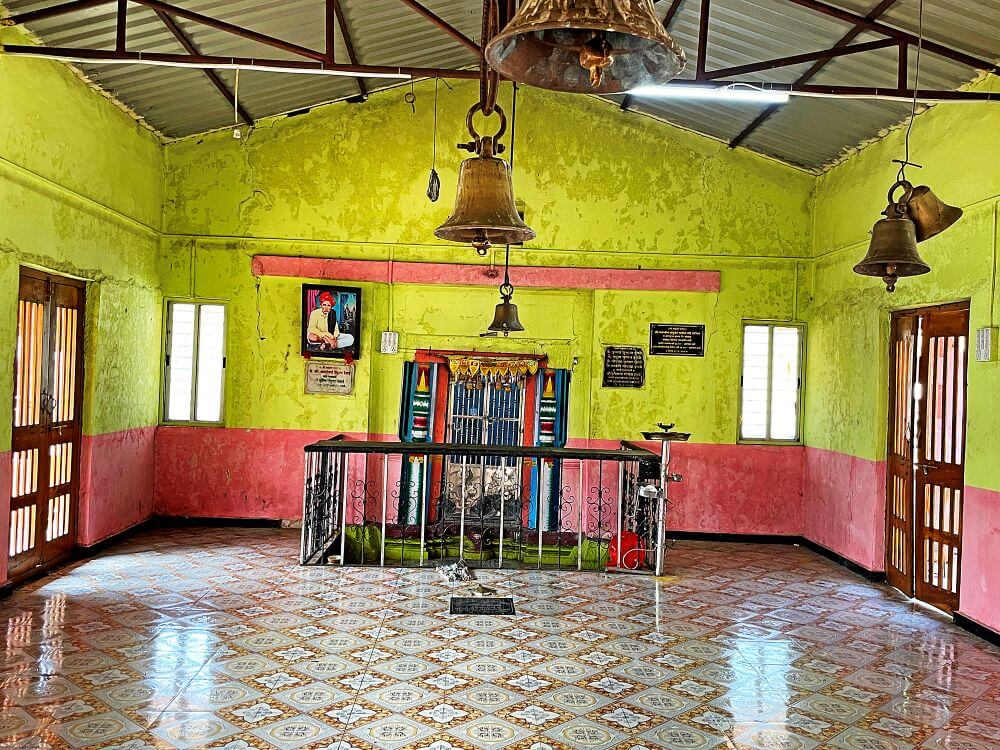
The structure of this temple consists of a Nandi pavilion (Nandi mandap), a main hall (sabha mandap), and a sanctum sanctorum (garbhagriha). In this pavilion, which is entirely made of stone, there is a large, monolithic black stone statue of Nandi. This statue appears to be from a relatively modern period. Some remnants of the ancient temple’s finial (kalash) are displayed here. One enters the main hall of the temple through the main entrance in front of the Nandi pavilion. The entrance to the main hall is made of stone, and its door frames and lintel are carved. The construction of the main hall is of a modern style and made of bricks. This hall is enclosed. Windows have been installed to allow sufficient light and air inside. The main hall has a sloping tin roof on both sides. Notably, this main hall is supported from the outside by large carved stone pillars. These stone pillars appear to be ancient. There are doors on the right and left sides at the front of the main hall.
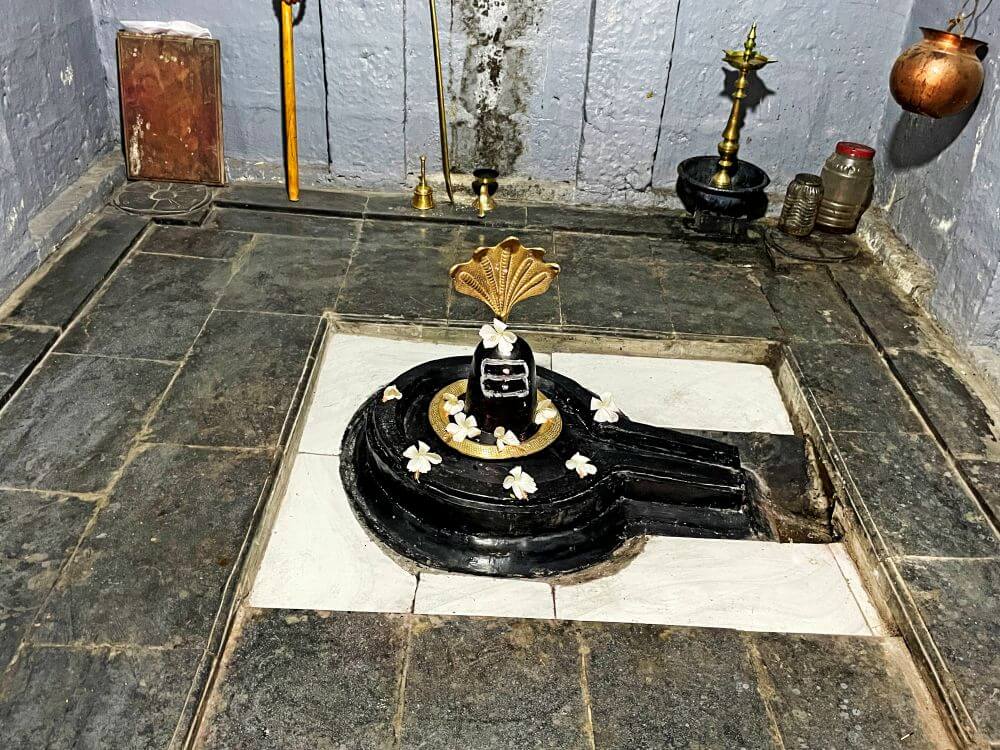
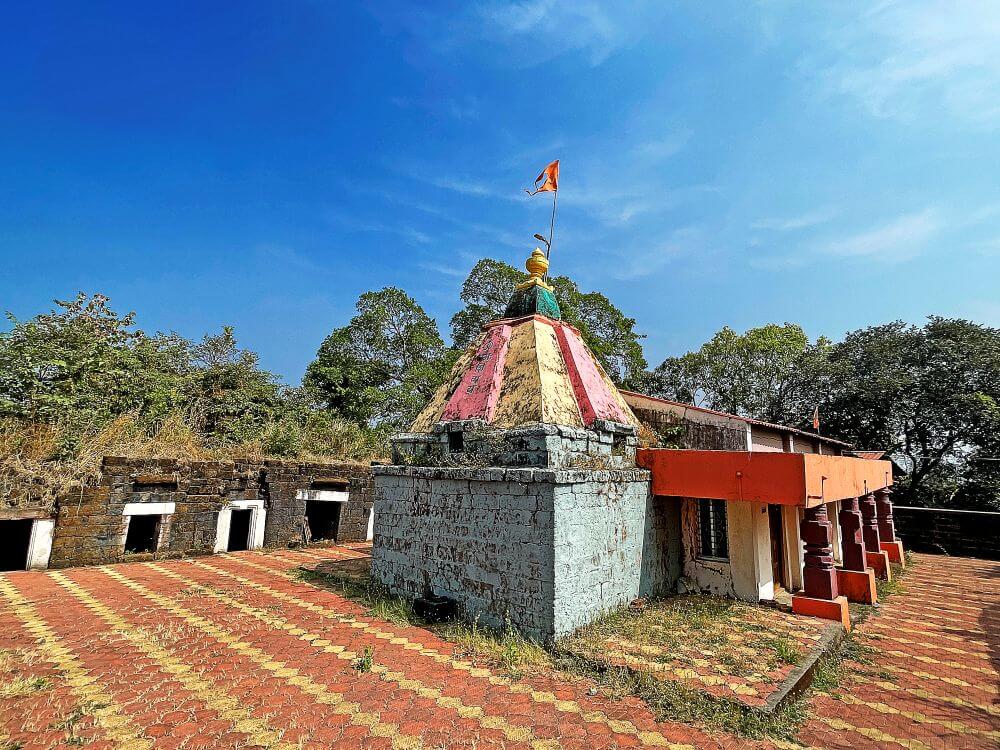
The entrance to the sanctum sanctorum is similar to the entrance of the hall. Its door frames are also carved with leaf and flower motifs. There are Kirtimukhas and a crescent moon stone on the high lintel. There is a Ganesha idol on the central panel. In the center of the sanctum sanctorum, there is a self-manifested (swayambhu) Shiva Linga on the floor. The sanctum sanctorum is constructed with black stone slabs. In recent times, a low pyramid-shaped spire (shikhara) has been built over it using cement. The top of the spire has a square shape that turns slightly inward, topped with an amalaka and a kalash. Overall, it is clear that the construction of this temple is a blend of ancient and modern styles.
Mahashivratri is the main annual festival at this temple, celebrated with great enthusiasm for eight days. An unbroken week of chanting the Lord’s name (Akhand Harinam Saptah) begins in the temple from Magh Krishna Panchami and concludes on Mahashivratri. During this time, for the entire week, there are grand ablutions (maha-abhishek), Laghurudra, devotional singing, night vigils, chanting, sacrificial rituals (yajna), and recitations of various scriptures. A grand feast (mahaprasad) is organized for devotees on the day of Mahashivratri. Thousands of devotees from the surrounding five villages come here for darshan on this day. The entire area takes on the appearance of a pilgrimage site at this time.
This sacred temple stands as a testament to deep spiritual devotion, ancient architectural grandeur, and rich local cultural traditions.
The sanctum sanctorum houses the divine idol consecrated according to ancient Vedic traditions, surrounded by serene courtyards and traditional temple architecture.
Navratri, Maha Shivratri, Annual Temple Jatra & Deepotsav
Compare and book flights, secure top-rated local hotels near the temple, hire reliable guides, and rent cars instantly.
Extend your pilgrimage by visiting other highly sacred temples located nearby.


Add ₹999 more to unlock FREE SHIPPING!
Your sacred cart is currently empty.
Shop Photo FramesFill in your delivery details below to place your order.
Add comment