
Add ₹999 more to unlock FREE SHIPPING!
Your sacred cart is currently empty.
Shop Photo FramesSituated on a high hilltop near Bhiwandi, a short distance past Kalyan on the Mumbai-Nashik highway, the temple of Dindeshwar Mahadev captivates one’s attention. As one of the ancient temples in Bhiwandi Taluka, it is renowned as a ‘Jagrut Devasthan’ (divinely active shrine). This region has been known as Dindigad since ancient times. Although there is no historical record of a traditional fort existing here, it is said that the region derived its name from this sacred temple. Along with devotees visiting for the holy *darshan* of Lord Dindeshwar Mahadev, many trekkers also frequent this place.
It is said that a few years ago, a devotee spotted a portion of a temple buried beneath the ground on this hillock. After he informed the villagers, they collectively excavated the site and discovered a dilapidated temple structure, a Shivpindi (Shivlinga), an idol of Lord Ganesha, a Nandi statue, and other temple remains. Following this discovery, local devotees began performing regular worship and sacred rituals here. It is also believed that during years when the monsoons were delayed, the villagers would gather at Dindigad to offer vows (*navas*). Subsequently, that year would bring bountiful rains. Devotees also hold the deep faith that devoutly serving Lord Shiva here blesses childless couples with offspring. As the glory of Dindeshwar Mahadev spread, the villagers, under the leadership of Eknath Patil from Rahnal, renovated the temple in 1991. The Dindeshwar Mahadev Trust was also established to oversee the temple’s maintenance.
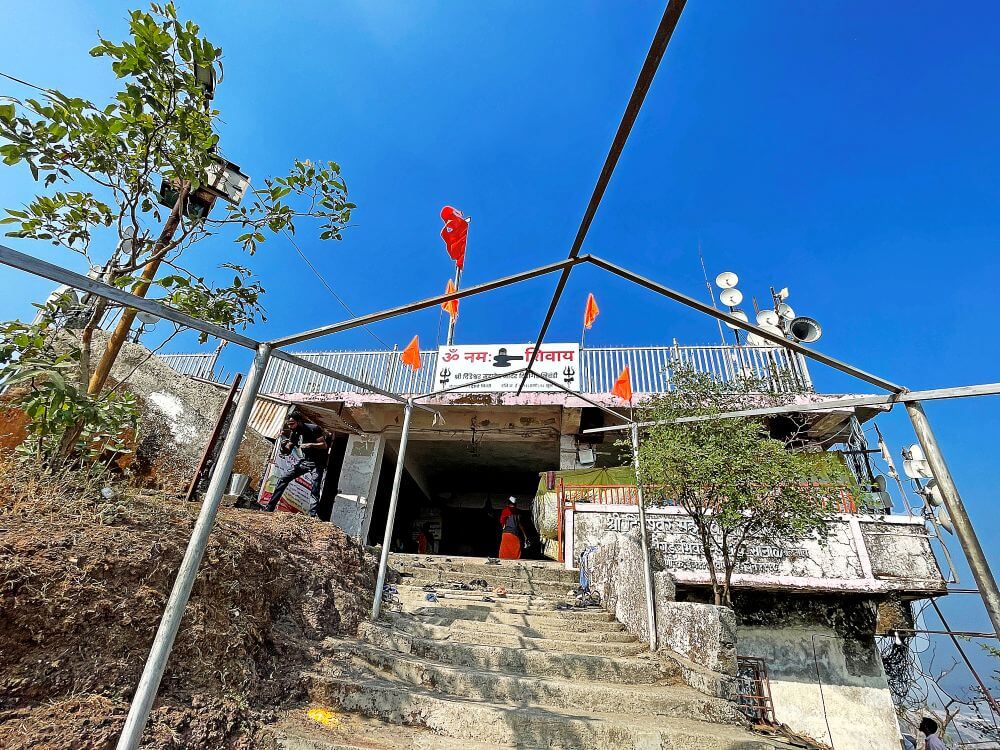
Located to the east of Bhiwandi, reaching this temple requires traveling by private vehicle from Sonale up to a hill plateau. From this plateau, the temple sits at an elevation of 200 feet. Around 300 steps have been constructed to reach the temple, along with a steep trek trail at certain points. Climbing the steps to the temple takes about 15 minutes. At the end of the steps, the temple structure and its magnificent *shikhara* (spire) come into view. The temple can also be reached via a walking trail from Poghav. The temple architecture consists of a large semi-open *sabhamandap* (assembly hall), an *antaraal* (vestibule), and a *garbhagriha* (sanctum sanctorum). The *antaraal* and inner hall formed the original ancient temple, in front of which a new spacious *sabhamandap* has been constructed. Bench seating arrangements are provided in this assembly hall for the comfort of devotees.
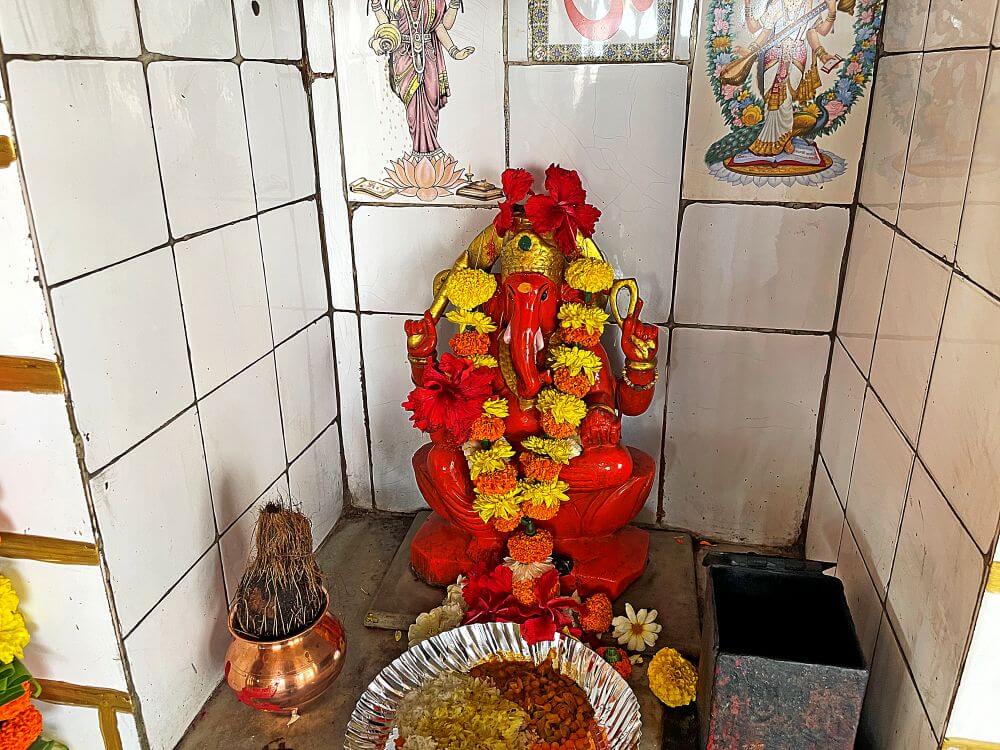
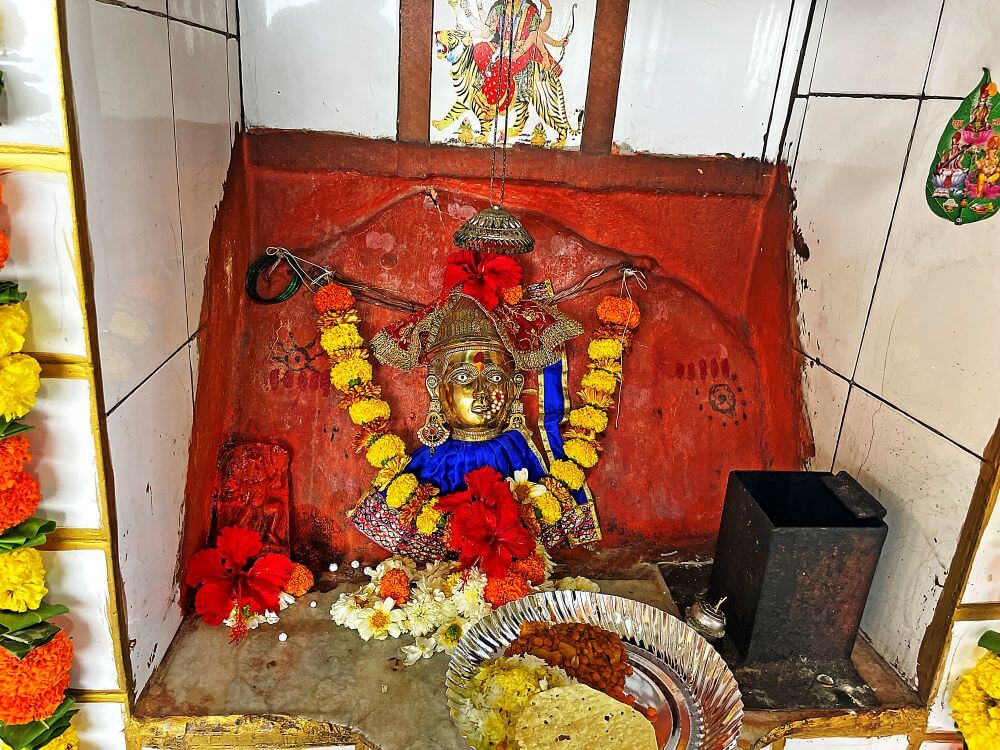
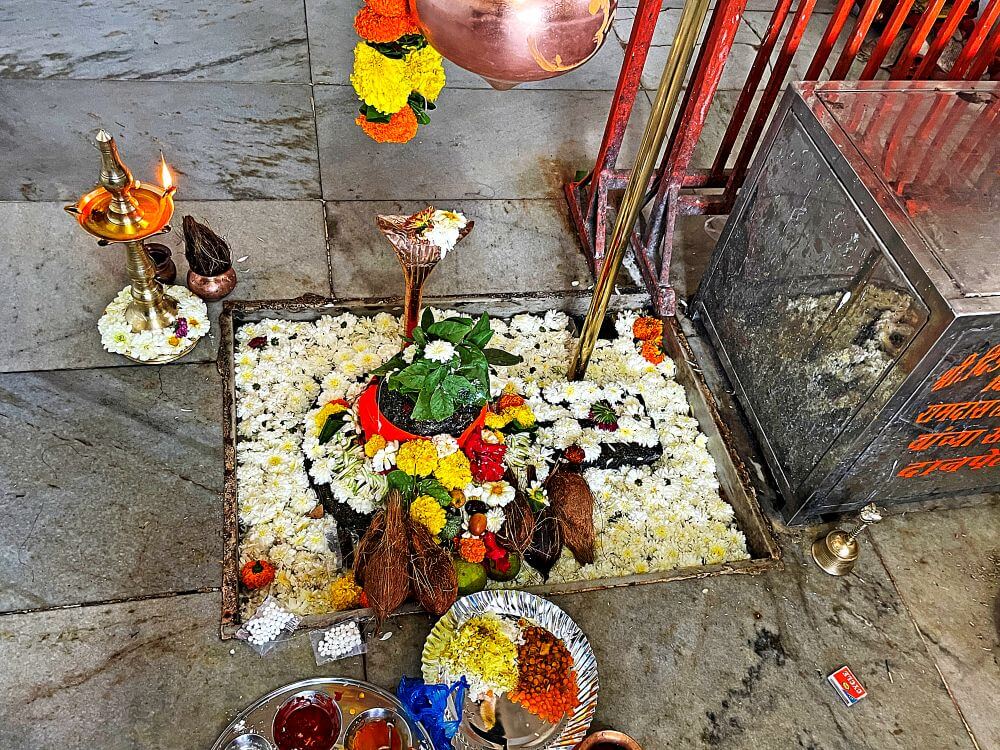
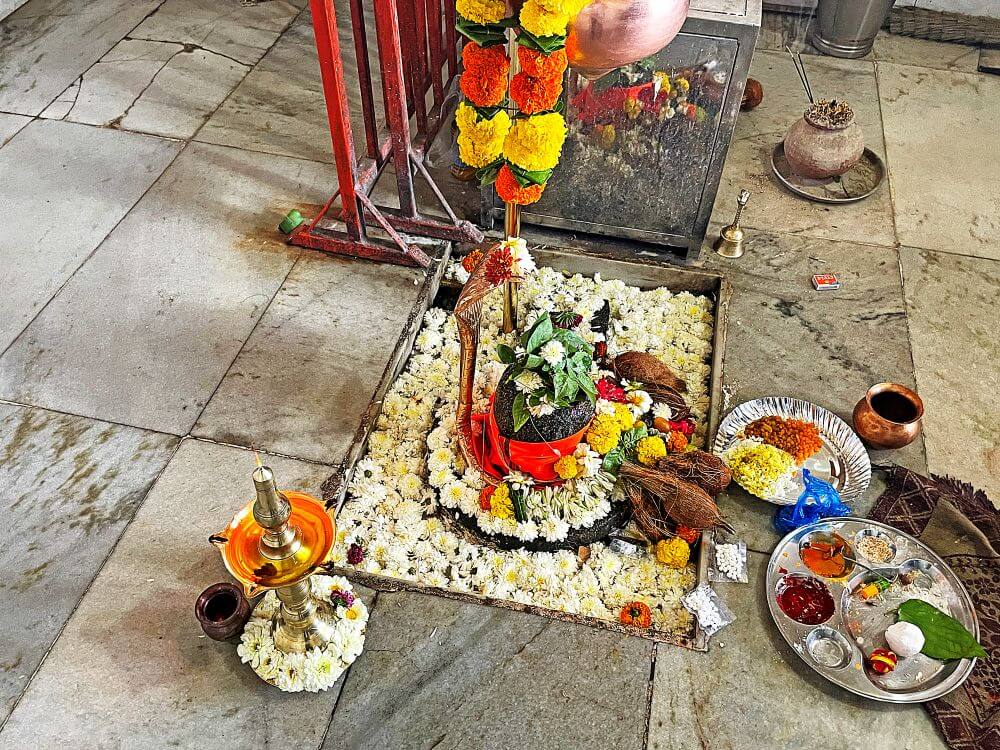
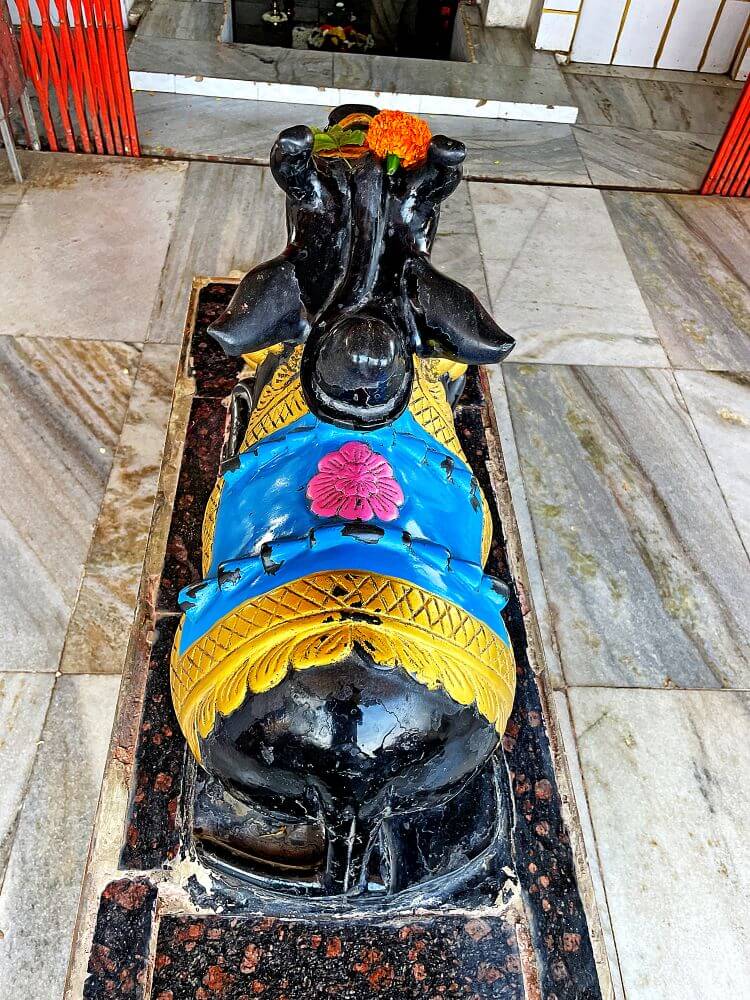
In the *antaraal*, resting on a raised platform, is a Nandi idol carved from a single stone, faced by a sacred turtle idol (*Kurma*). In the niches (*devakoshthas*) on the front wall of the sanctum, an idol of Lord Ganesha is enshrined on the left and Goddess Amba Mata on the right. Descending a few steps from the *antaraal* leads into the sanctum sanctorum. The *garbhagriha* houses a *pataallinga* (a stone Lingam set below ground level). A hooded serpent (*naag*) encases the Shivpindi, above which hangs an *abhishek patra* (*galantika*). The wall behind the Shivpindi features three niches enshrining Goddess Parvati in the center, Lord Vitthal on the right, and Goddess Rakhumai on the left. In one corner of the sanctum sits another small Shivlinga. There is a outer *pradakshina* (circumambulation) path surrounding the sanctum, adjacent to a deep valley.
In front of the temple stands a newly built two-storey *sabhamandap* with stairs leading to its terrace. From here, alongside the beautiful *kalash* (pinnacle) of the temple, one can behold panoramic views of parts of Thane and Bhiwandi cities, the mountain ranges of Matheran, Malanggad, and the region extending up to Mahuli Fort. According to local villagers, Dindigad served as a strategic watchtower during the era of Chhatrapati Shivaji Maharaj to monitor the vast region, though there is no documented historical proof for this.
Every day, hundreds of devotees visit this temple for the *darshan* of Lord Dindeshwar. A vast number of devotees assemble here every Monday. During Mahashivratri, thousands of pilgrims arrive, filling the area with the spirit of a grand religious fair (*jatra*). On this holy day, sacred *abhisheka* is performed on the Shivlinga, accompanied by day-long *bhajans*, *kirtans*, and other religious programs. Large crowds of devotees also gather on every Monday of the holy month of Shravan, when various spiritual events are organized. Similar to the Kanwar Yatra of Uttar Pradesh, a Kanwar Yatra has also been brought from neighboring villages in recent times.
Apart from the main temple of Lord Dindeshwar Mahadev, there is another ancient Shiva temple located near a small stream on this hill. It is believed to be around seven hundred to eight hundred years old. The pillars and surrounding walls of this ancient structure are in ruins, with archaeological remains scattered around. The sanctum of this temple measures 10 by 10 feet with a height of 10 feet, housing a Shivlinga at its center. Weathered idols are carved on the doorway, and hero stones (*veergals*) stand on one side. Engravings of mango leaves, a coconut, and a pot can be seen on one of the stones. Numerous carved stones lie scattered around the site, and sacred water tanks (*kunds*) are situated above the temple.
This sacred temple stands as a testament to deep spiritual devotion, ancient architectural grandeur, and rich local cultural traditions.
The sanctum sanctorum houses the divine idol consecrated according to ancient Vedic traditions, surrounded by serene courtyards and traditional temple architecture.
Navratri, Maha Shivratri, Annual Temple Jatra & Deepotsav
Compare and book flights, secure top-rated local hotels near the temple, hire reliable guides, and rent cars instantly.
Extend your pilgrimage by visiting other highly sacred temples located nearby.


Add ₹999 more to unlock FREE SHIPPING!
Your sacred cart is currently empty.
Shop Photo FramesFill in your delivery details below to place your order.
Add comment