
Add ₹999 more to unlock FREE SHIPPING!
Your sacred cart is currently empty.
Shop Photo FramesChimaji Ballal, also known as Chimaji Appa, the younger brother of the first Bajirao Peshwa, had resolved to renovate many temples in the state and have new idols crafted for some. The Ganpati Temple in Prabhu Ali (Chandraseniya Kayastha Prabhu Ganpati Temple), which is over three hundred years old and located in historic Bhiwandi, is one of them. Originally built in the style of a traditional mansion (wada), the temple structure has been given a modern look following its renovation. This Ganesha is renowned for answering the prayers of his devotees; consequently, hundreds of devotees visit this temple daily for darshan.
Known as the Mandai Ganesh of Prabhu Ali, this Ganesha was formerly referred to as the ‘Ganpati on the Hill’ (Tekdi-varcha Ganpati). The idol, carved from a single piece of black rock, did not have the refined features it possesses today; the stone merely bore the shape of Ganesha. This temple was once the private property of the Tamhane family. In those days, temples were built in the form of tiled mansions to protect the deities from foreign invasions, and this temple was constructed in the same style. While on the Vasai campaign, Chimaji Appa visited the Siddhivinayak idol at the Naikwada of Sardar Gangaji Naik Anjurkar in Anjur, near Bhiwandi. Thereafter, he arrived in Bhiwandi
with his troops. There was a Durve Wada near the Ambedkar Library in the city. As it was evening, Chimaji Appa stayed in that wada for the night. Upon learning about the Ganpati temple on the hill the next morning, he came here for darshan. He made a vow at that time that if the Vasai campaign were successful, he would have the Ganesha idol properly shaped and the temple renovated. After the success of the Vasai campaign, he went to Pune and instructed a trusted associate regarding the vow he had made to the Ganpati on the hill in Bhiwandi. Subsequently, that associate engaged skilled artisans to give the idol its proper form and renovated the temple. The temple then featured a tiled wada-style structure with a courtyard in front and a sabhamandap (assembly hall) inside.
Later, after one of the members of the Tamhane family became a doctor, he donated this temple to the Chandraseniya Kayastha Prabhu community. The temple was opened to devotees from all communities. From time to time, the idol was coated with vermilion (shendur). In August 1936, the vermilion layer on the Ganesha idol peeled off, revealing the original stone idol beneath. Upon receiving this news, hundreds of devotees stood in queues until two in the morning, even in heavy rain, to catch a glimpse of the idol. After some time, the idol was re-coated with vermilion.
A board of trustees was established around 1956 for the maintenance of the temple. Later, in 1987, the old wada-style structure was demolished, and a two-story temple building was constructed. The renovation ceremony concluded on November 30, 1987, in the presence of Shiv Sena Chief Balasaheb Thackeray. During the renovation, the Ganesha idol was re-installed slightly behind its original position. A samai (traditional lamp) used to be placed where the original idol stood. A few months after the renovation, officials from the Akhil Bharatiya Ganesh Sanshodhan Mandal visited the temple and suggested installing a mushak (mouse) in place of the samai. Accordingly, the installation of this brass mushak and the temple’s kalash-arohan (consecration of the pinnacle) ceremony took place on the auspicious occasion of Gudi Padwa in 2014.
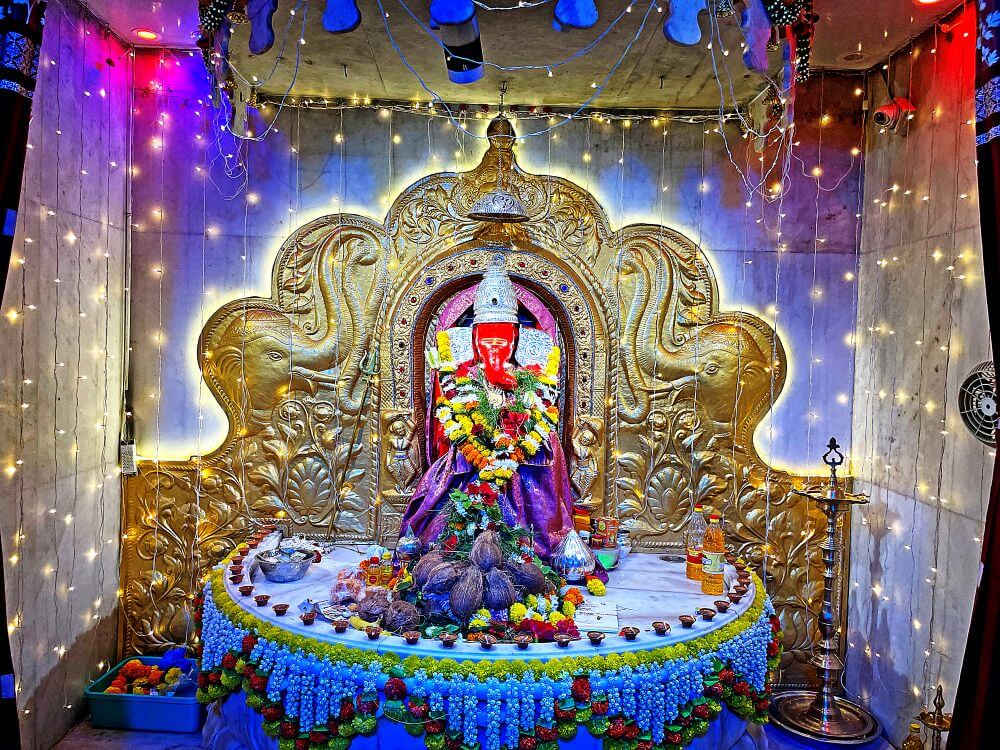
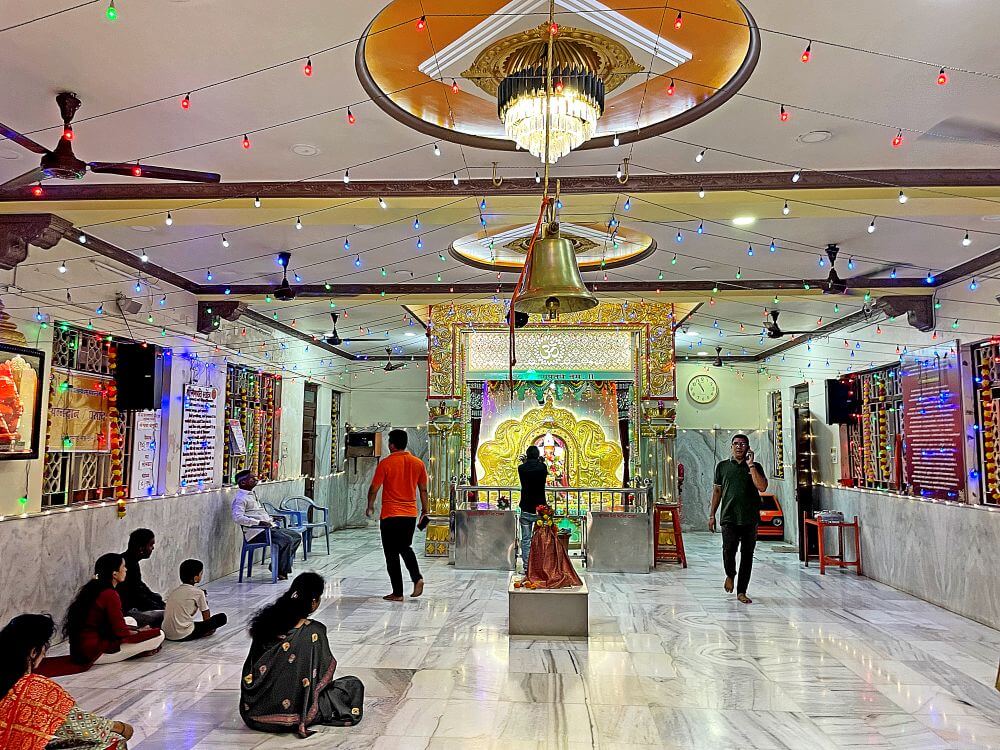
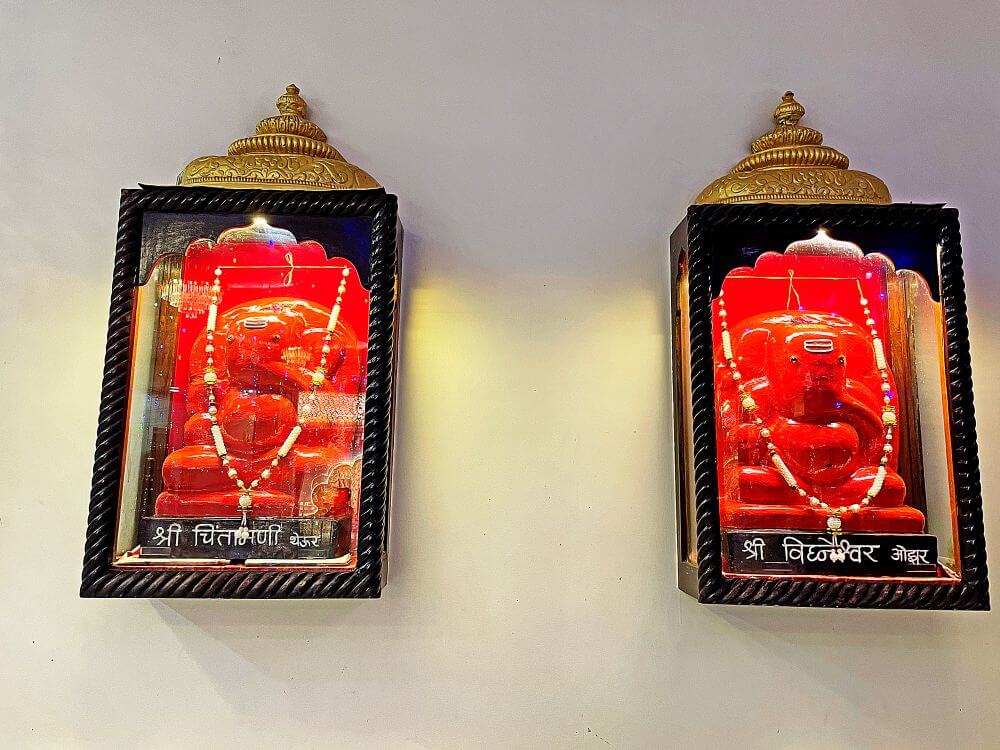
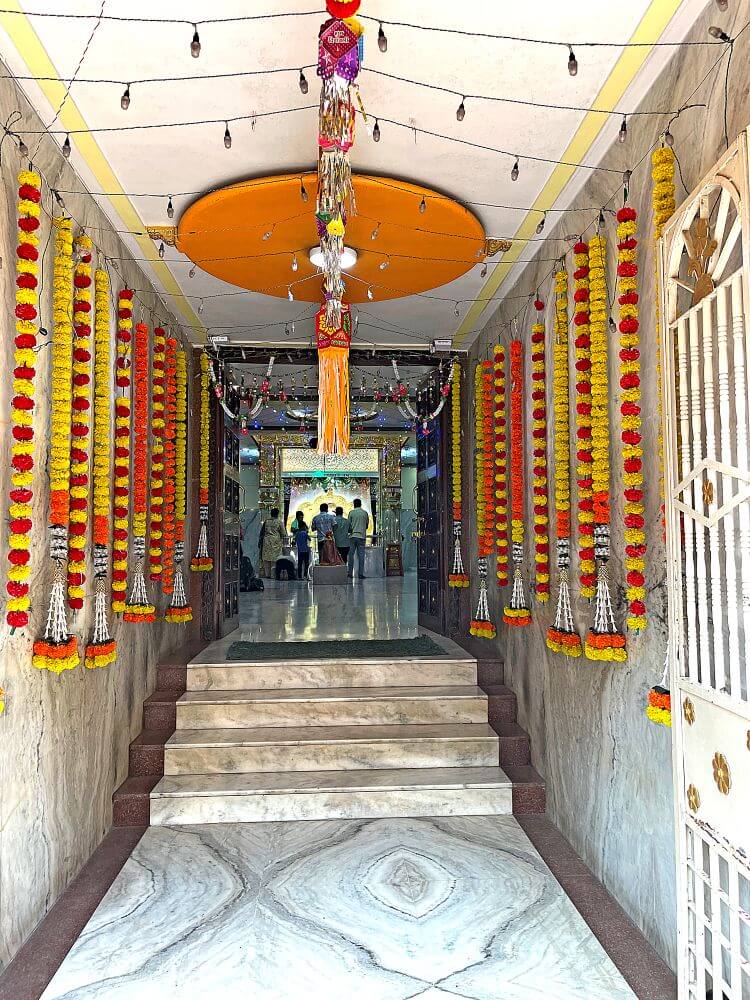
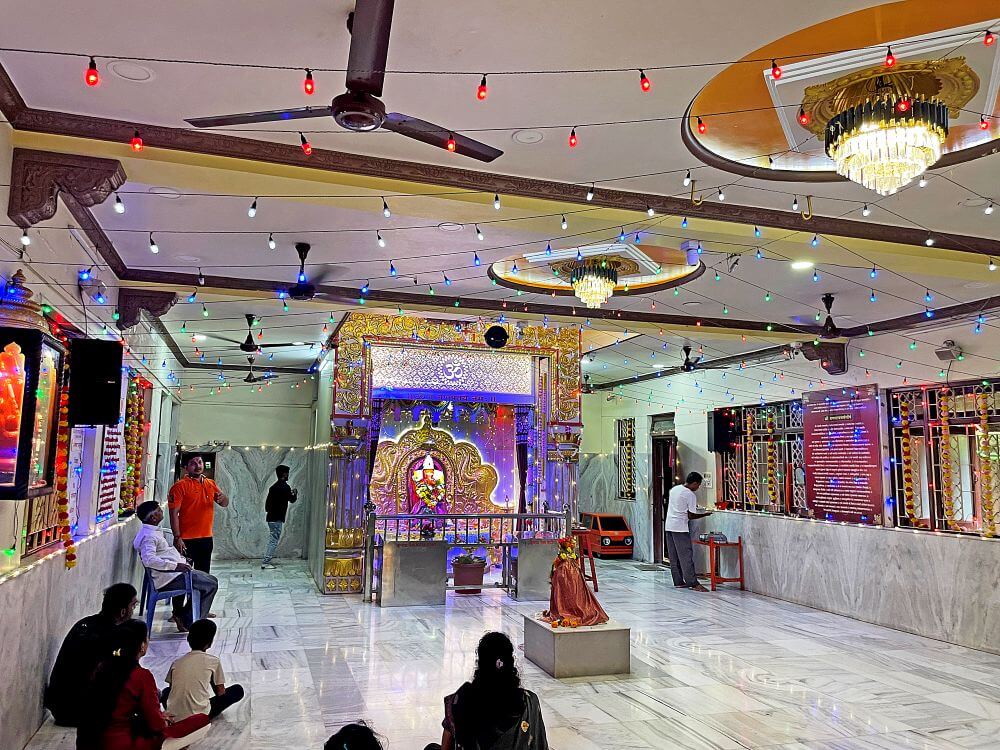
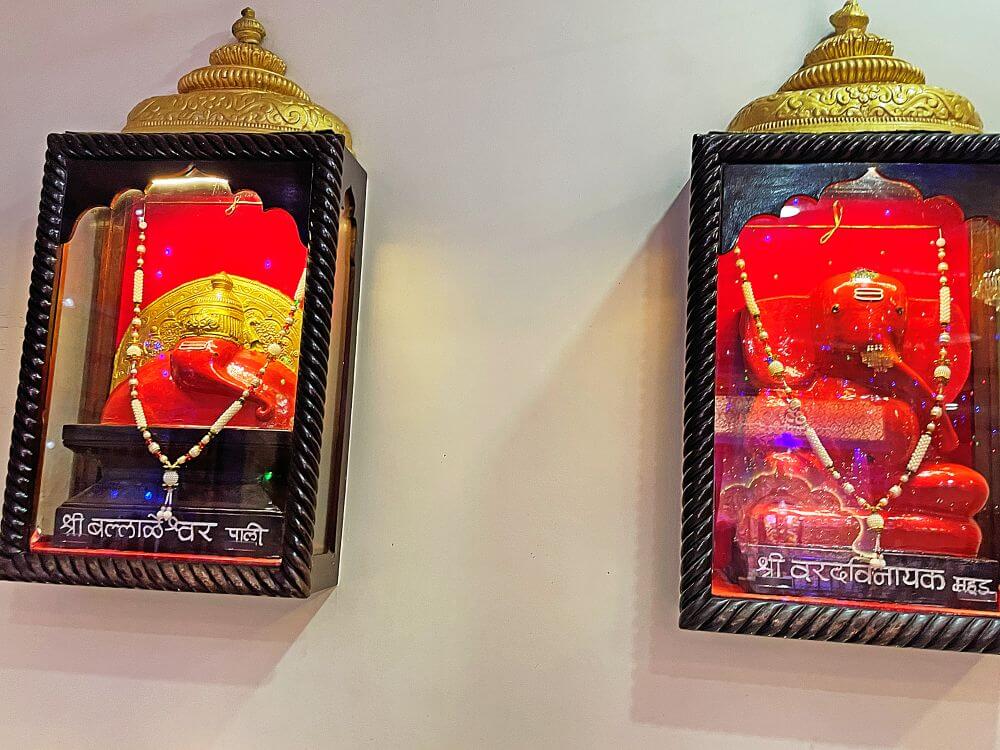
The two-story temple building is located near the Mandai rickshaw stand in Prabhu Ali. There is a small fountain in front of the temple. Gajrajs (elephants) are carved on both sides below the pillars of the entrance, and there are figures of musicians on the upper side. The temple consists of a darshan mandap, sabhamandap, garbhagriha (sanctum sanctorum), and a pradakshina marg (circumambulation path). The niches on the walls of the sabhamandap contain idols of the Ashtavinayakas. In the sabhamandap, in front of the garbhagriha, there is a platform where the Mushakraj is placed. Beyond the pradakshina marg, in the front part of the sabhamandap, is the attractive vermilion-coated idol of Ganesha on a semi-circular marble pedestal. The prabhavali (halo) behind the idol features attractive carvings of Gajrajs. In the upper center of the prabhavali is a Kirtimukh. The Ganesha idol is about three and a half feet tall. There is a silver crown on the head and a silver umbrella above. Additionally, there is a silver modak and a silver coconut near the feet of the idol. Near the idol, there is also a small Ganesha idol and a small mushak. During festivals, the idol is adorned with various gold ornaments.
The temple is open from 6:00 AM to 1:00 PM and from 4:00 PM to 9:30 PM. As this Ganesha is known for fulfilling vows, many devotees visit for darshan every day. Every afternoon around 12:30 PM, an offering (naivedya) of varan-bhat-poli-bhaji (lentils, rice, flatbread, and vegetables) is made to the deity. The evening aarti takes place at 7:00 PM. Every Tuesday at 11:30 AM, food is distributed outside the temple. On Sankashti Chaturthi, after the idol is bathed (abhishek) at 6:00 AM, puja and aarti are performed. On this day, the temple is decorated with flowers, and devotees visiting for darshan are given sabudana khichdi as prasad. There is a large crowd of devotees here on Angarki Chaturthi.
The Ganesh Utsav is celebrated here for ten days in the month of Bhadrapada. The Ganesha idol is installed in the temple’s sabhamandap, and displays conveying social messages are set up near the idol. Religious programs like bhajans are held during this time. Social activities, such as the distribution of uniforms to needy students, are also conducted during this period. The Maghi Ganesh Utsav is also celebrated with great enthusiasm. During this festival, which takes place between Magh Pratipada and Chaturthi, kakad aarti, bhajans, Ganesha japa, aarti, and kirtans are performed. On the day of Chaturthi, a kirtan depicting the birth of Shri Ganesha is held. Besides this, festivals like Gudi Padwa and Deepavali are also celebrated with great zeal in this temple.
This sacred temple stands as a testament to deep spiritual devotion, ancient architectural grandeur, and rich local cultural traditions.
The sanctum sanctorum houses the divine idol consecrated according to ancient Vedic traditions, surrounded by serene courtyards and traditional temple architecture.
Navratri, Maha Shivratri, Annual Temple Jatra & Deepotsav
Compare and book flights, secure top-rated local hotels near the temple, hire reliable guides, and rent cars instantly.
Extend your pilgrimage by visiting other highly sacred temples located nearby.


Add ₹999 more to unlock FREE SHIPPING!
Your sacred cart is currently empty.
Shop Photo FramesFill in your delivery details below to place your order.
Add comment