
Add ₹999 more to unlock FREE SHIPPING!
Your sacred cart is currently empty.
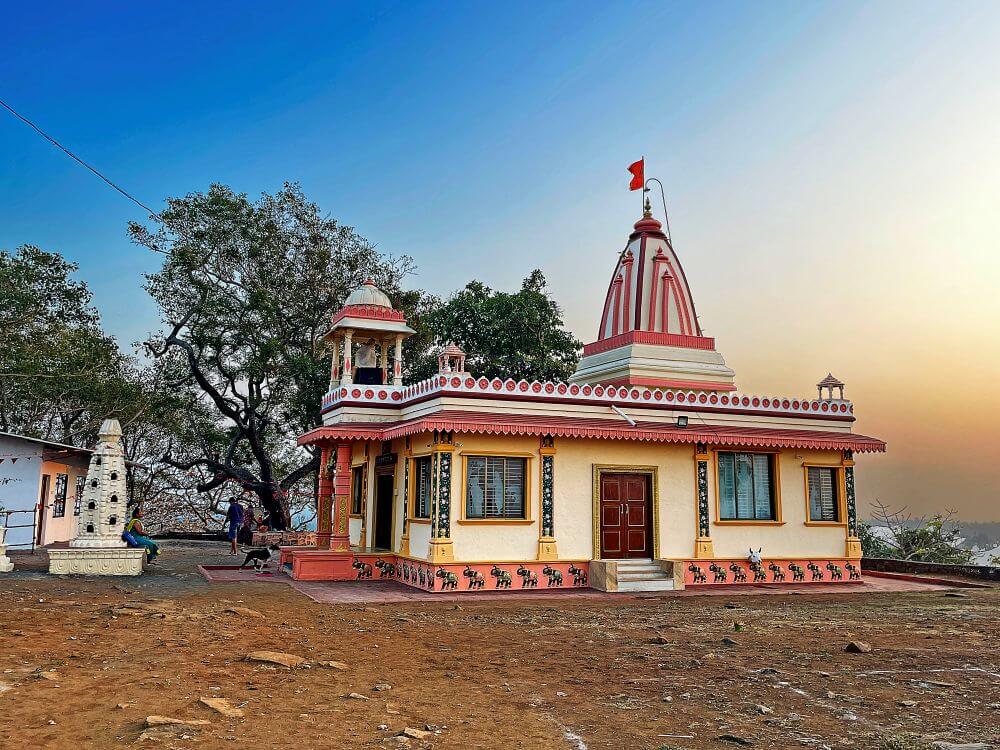
Shop Photo FramesThe famous temple of Lord Dattaguru is situated on the Hiradongri hill, formerly known as Vajirgad, a fort built by the Peshwas to keep the Portuguese in check during the Vasai campaign. Devotees believe that Lord Dattatreya resides here in a subtle form in this ancient and sacred place, which is blessed with a serene, natural environment. Many devotees visit regularly for Darshan. Thousands of devotees participate in the grand festival held here on Datta Jayanti.
Vajirgad, located between Vasai Fort and Arnala Fort, was originally a fort built by the Portuguese. In 1534 AD, Sultan Bahadur Shah of Gujarat handed over Vasai to Nuno da Cunha, the Portuguese Governor of Goa. Shortly thereafter, on December 23, 1534, he replaced the mud fort built by Bahadur Shah in Vasai with a stone fort. Later, as a support to the Vasai Fort, he built the Vajirgad fort on a hill near Manikpur. This name was later Sanskritized to Vajragad. During the Vasai campaign led by Chimaji Appa, the Maratha army captured Vajirgad in 1738 AD. Due to its strategic location for challenging Vasai, the Marathas later fortified the structure. In a letter dated December 8, 1738, from the Peshwa’s commander Vasudev Joshi Murudkar, it is mentioned that “the foundation of the hill fortress has been laid.”
Over time, the fort vanished, and it is now known as ‘Hiradongri Hill’. If one digs into the ground here, glass-like stones are found, which is said to be the reason behind the name ‘Hira Dongri’ (Diamond Hill). Since it was used as a bastion (buruj) during the Peshwa era, it is also called ‘Burujgad’. This hill, about 150 feet high, serves as a link between North and South Vasai and is located between the villages of Giriz and Bhuigaon in Vasai Taluka. Due to the Datta temple here, this hill is also known as ‘Datta Dongri’ or ‘Giriz Dongri’.
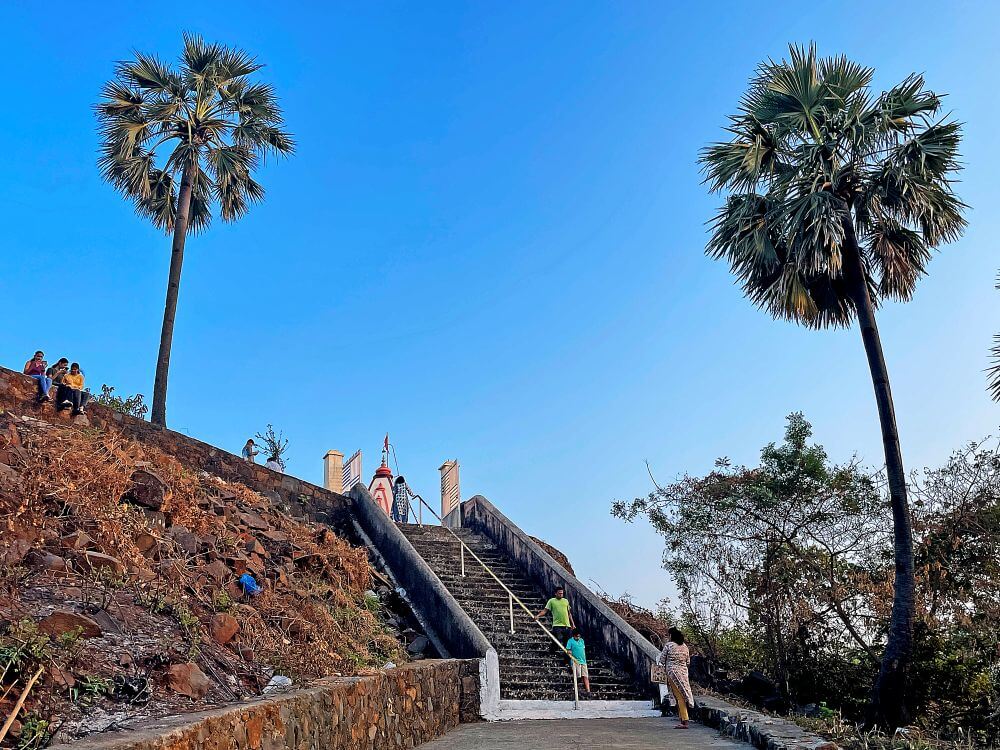
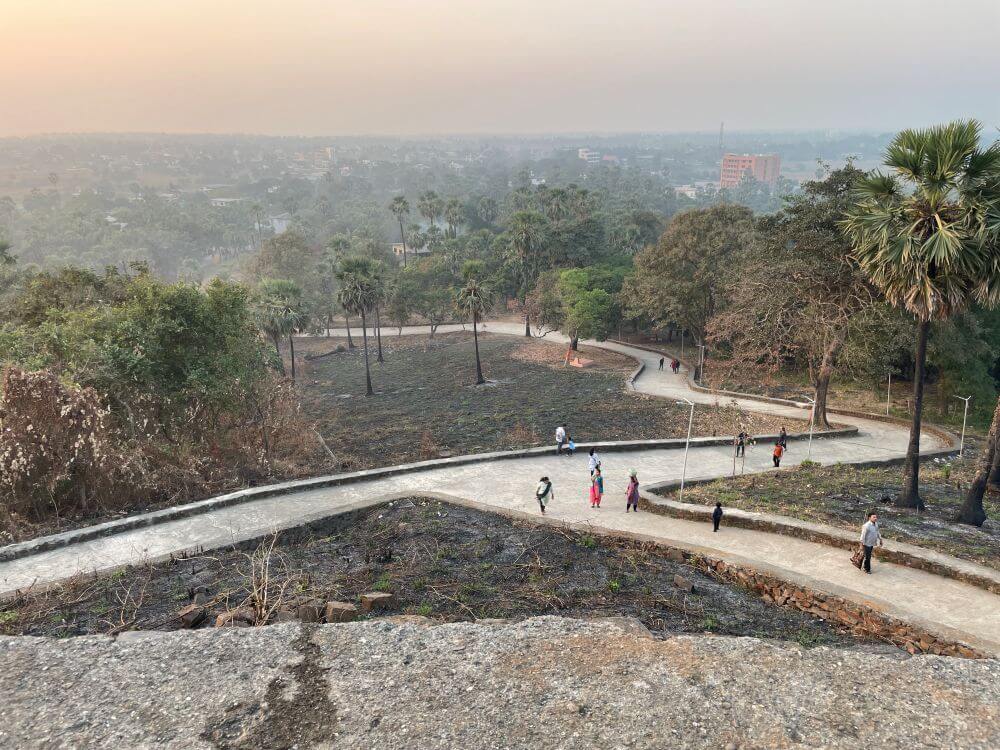
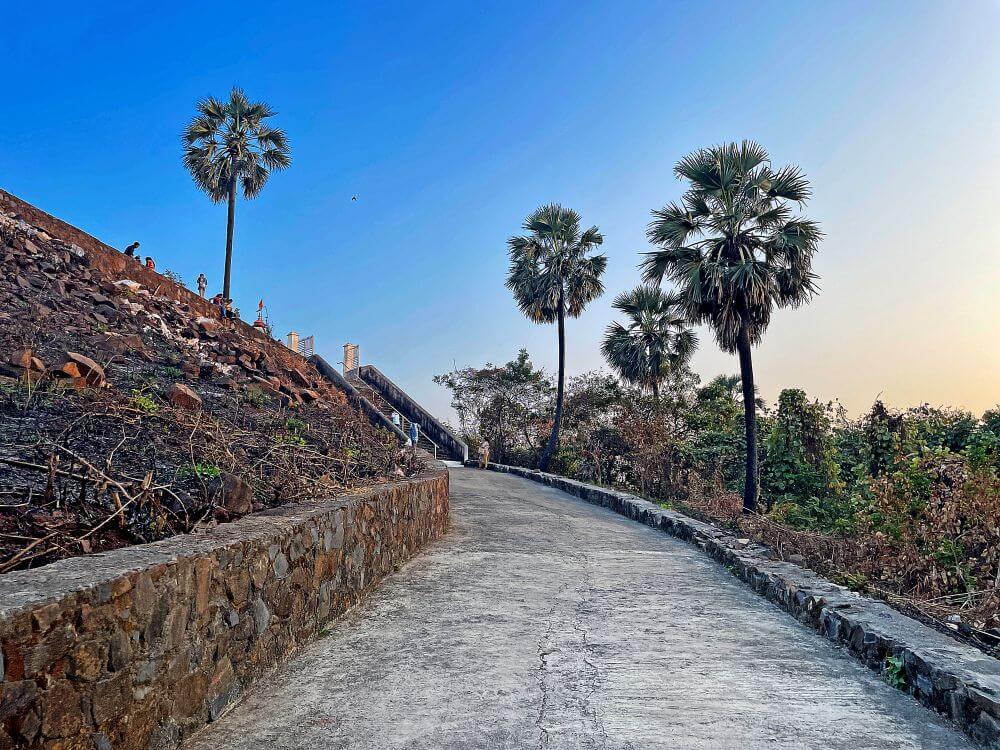
This hill, blessed with a quiet and picturesque environment, is located on the right side of the road while going from Vasai railway station towards Giriz. After entering through the iron gate of this privately owned temple, there is an open space on the left for parking vehicles. One can reach the hill where the temple is located by walking along the paved road built amidst the greenery on both sides. The temple can also be reached via another path with steps. While passing through this area, which is rich in biodiversity, one can hear the chirping of various birds. After a climb of eight to ten minutes, one enters the temple courtyard. Trees like Pipal, Audumbar (Cluster Fig), Neem, and Karuch, as well as various wild flowers, are found here. A panoramic view of Vasai can be seen from this hill. There is a large well on the left side of the temple. Near a large Neem tree in the vicinity, there is a Shivling and an idol of Hanuman. This site of Hanuman is ancient, and the 1882 Thane Gazetteer mentions the small Hanuman temple here.
In front of the Datta temple, there is an attractive Deepmal (lamp tower) and a Tulsi Vrindavan. The architecture of the temple is simple yet beautiful. Elephants are carved on all sides at the base of the temple structure, creating an illusion that these elephants are supporting the weight of the entire temple. The temple has an attractive Shikhara (spire), and in the Meghadambari (canopy) above the entrance, there is an idol of Gajanan Maharaj. The temple features exquisite carvings.
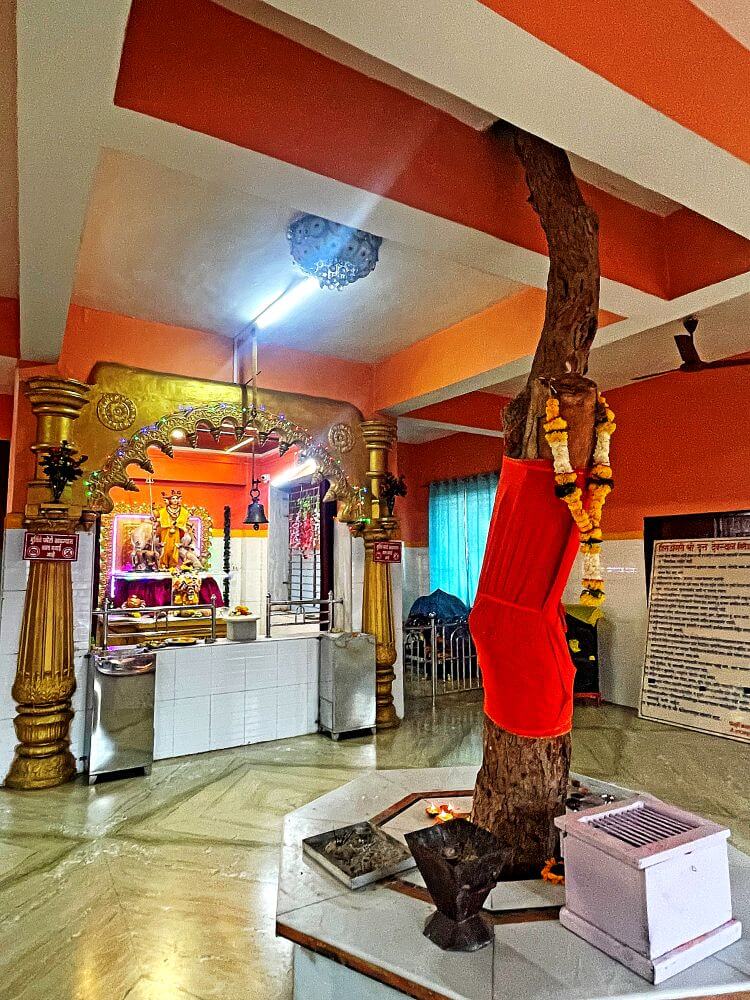
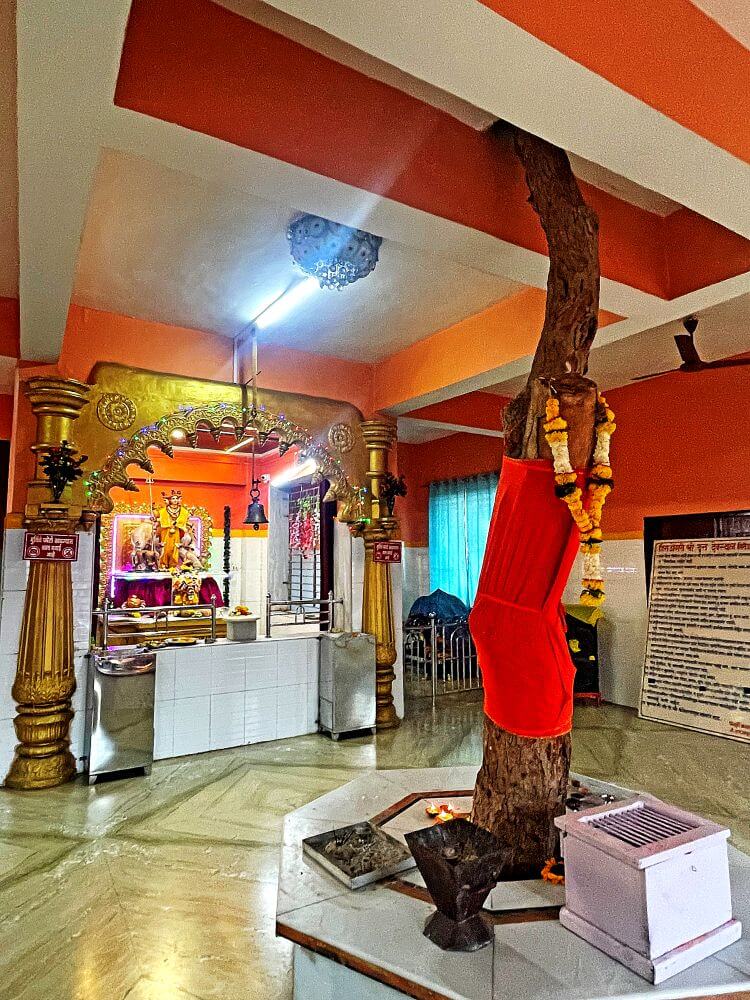
The temple consists of a Darshan Mandap, Sabha Mandap (assembly hall), and Garbhagriha (sanctum sanctorum). The temple has three entrances in total, adorned with attractive craftsmanship and Mangal Kalash (auspicious pots). An ancient Audumbar tree is located in the Sabha Mandap here. It has grown upwards through the roof of the Sabha Mandap. During the renovation of the temple a few years ago, the construction was carried out while keeping this tree intact. In the Garbhagriha, there is an idol of Dattatreya on a pedestal. Behind the idol is a cow, and in front is a dog. There is a large Trishul (trident) beside the idol. In front of the idol, there is a stone slab bearing the image of Datta. Padukas (footprints) are placed in front for Darshan. The paintings carved on the glass of the windows here depict chapters from the Gurucharitra.
Devotees can visit the temple for Darshan of Shri Datta every day from 7:00 AM to 8:00 AM and 4:15 PM to 7:00 PM, and on Thursdays from 6:00 AM to 12:30 PM and 4:15 PM to 7:00 PM. A grand festival is held here on Datta Jayanti. A fair is organized on that day, and shops selling various items are set up in the area. The temple is beautifully illuminated. Thousands of devotees come here for Darshan on this day. Mahaprasad is also organized for the devotees who visit on this day.
This sacred temple stands as a testament to deep spiritual devotion, ancient architectural grandeur, and rich local cultural traditions.
The sanctum sanctorum houses the divine idol consecrated according to ancient Vedic traditions, surrounded by serene courtyards and traditional temple architecture.
Navratri, Maha Shivratri, Annual Temple Jatra & Deepotsav
Compare and book flights, secure top-rated local hotels near the temple, hire reliable guides, and rent cars instantly.
Extend your pilgrimage by visiting other highly sacred temples located nearby.


Add ₹999 more to unlock FREE SHIPPING!
Your sacred cart is currently empty.
Shop Photo FramesFill in your delivery details below to place your order.
Add comment