
Add ₹999 more to unlock FREE SHIPPING!
Your sacred cart is currently empty.
Shop Photo FramesKelva-Mahim is a village known in the twelfth century as Mahikavati and served as the seat of power for Pratap Bimb, the brother of Govardhan Bimb, the king of Champaner. The ancient and famous temple of Shitaladevi is located a stone’s throw away from the picturesque Kelva Beach. Near this temple stands a self-manifested (Swayambhu) Shivalinga of Valukeshwar, and in front of it lies a sacred pond (Kund) created by Lord Rama by striking an arrow. This place, sanctified by the touch of Lord Rama’s feet, is the self-manifested abode of Shitaladevi. Devotees believe that this Goddess, who is the family deity (Kulaswamini) of many families from the Kshatriya and Chandraseniya Kayastha Prabhu communities, is a living presence who grants wishes and heals various ailments. Because of this, thousands of devotees from various parts of Maharashtra as well as states like Gujarat and Rajasthan visit her for darshan every day.
The history of Kelva village is recorded in the ancient text ‘Mahikavatichi Bakhar’, edited by the historian V. K. Rajwade. According to this chronicle and other historical evidence, in the year 1138, the King of Champaner, Govardhan Bimb, a feudatory of the Chalukyas, ordered his brother Pratap Bimb to invade North Konkan. Two years later, in 1140, fully prepared, Pratap Bimb descended into the Daman region via Paithan, Nevase, and Junnar. After conquering Daman, he proceeded from Tarapur and attacked Kelva-Mahim. At that time, a local king named Vinaji Ghodel was ruling here. When Pratap Bimb ousted him and conquered Kelva-Mahim, the province was in a state of extreme neglect. The Mahikavatichi Bakhar states regarding this: “From Tarapur until reaching Mahikavati, there was King Vinaji Ghodel. Having removed him, the King stayed in Mahikavati. He observed the state of the land; the country was desolate, and seeing the uncivilized people of the lower castes, he deliberated: ‘If there were noble people in this land, the country would be settled.'” Following this, Pratap Bimb brought noble Maratha and Brahmin people here and colonized the land. In Kelva, which possesses such historical heritage, there is a well-known temple of Shitaladevi, a protective, auspicious, and health-giving deity.
Shitala or Shitalamata is a folk deity and is considered an incarnation of Durga. Her form is revealed through her devotional hymn (Vandana Mantra). This mantra is: “Vandesham Shitalamdevim Rasastham Digambaram | Marjanikalashopetam Surpalankritamastakam ||” This means, “I bow to Goddess Shitala, who is seated on a donkey, is Digambara (clothed in the directions), holds a broom and a pitcher in her hands, and has a head adorned with a winnowing basket (Sup).” According to this verse, the Goddess’s vehicle is a donkey, and she holds a broom and a pitcher, which leads to the belief that she is the Goddess of cleanliness. In Sanskrit, the word ‘Shitala’ means ‘the one who provides coolness’. There is a religious belief that this Goddess is the deity who destroys diseases like fever, measles, and chickenpox in children.
Regarding the location of the Goddess here, a legend is told that in front of where the Shitaladevi temple currently stands, there was a grove (Wadi) called Bagalwadi. The Goddess resided there in a hidden form. Once, a farmer in the village had a vision of the Goddess in a dream. When the Gopalpanthi people of the village learned of this, they searched for the Goddess’s location. They found the idol of the Goddess in a cavity. They consecrated the idol at that very spot with proper rituals and built a small temple there. It is said that in the eighteenth century, the noble Ahilyabai Holkar renovated this temple.
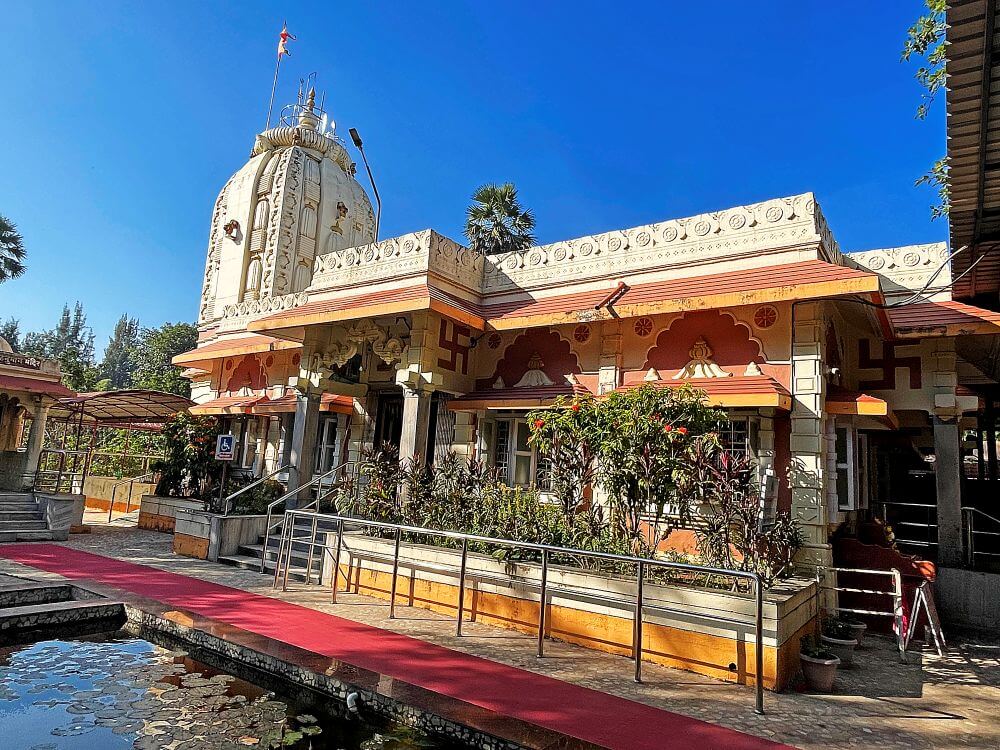
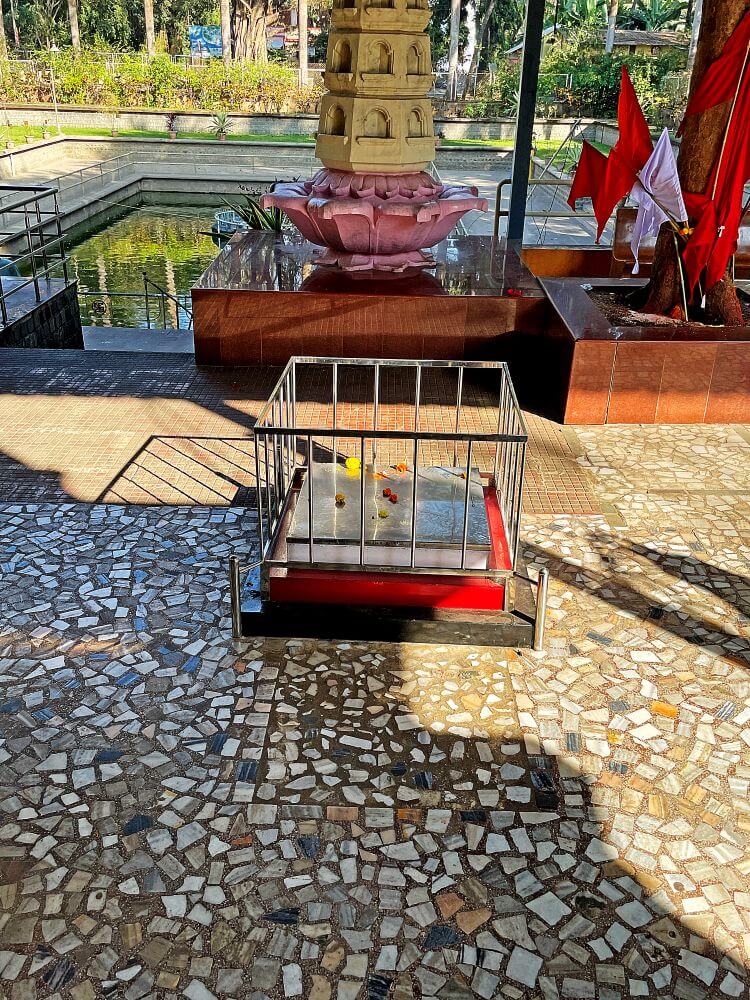
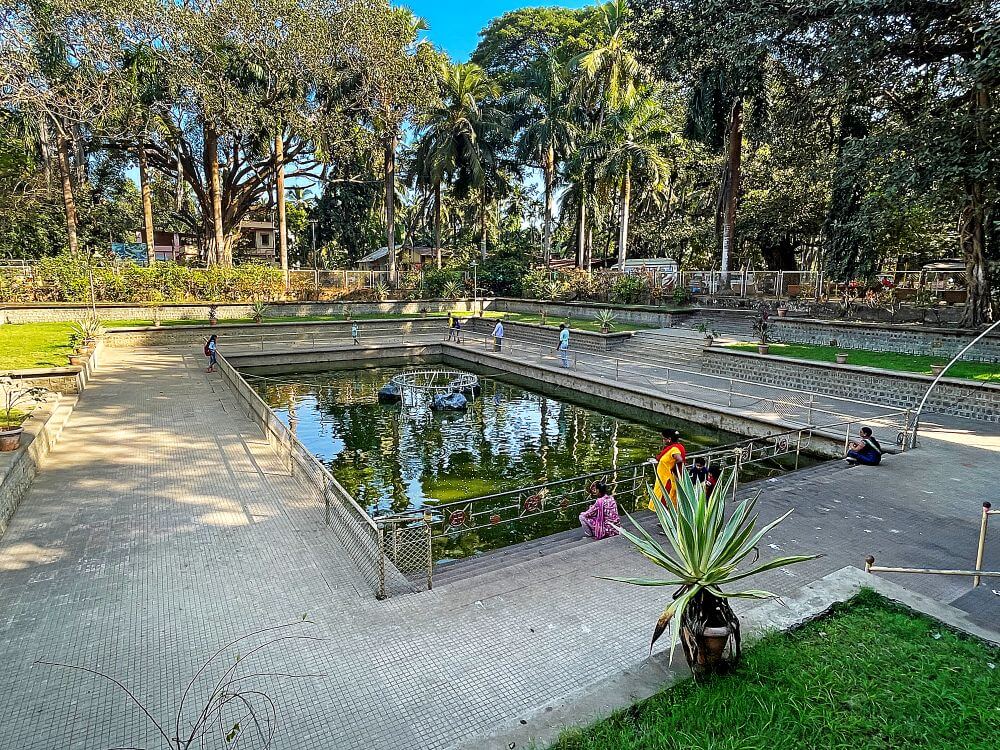
This Shitaladevi temple is located five minutes away from Kelva Beach. The temple premises are clean and peaceful. There are two large lamp pillars (Deepmala) in front of the temple. Behind these lamp pillars is the Ramkund. There is a legend about this Ramkund that before going to Lanka to fight Ravana, Lord Rama stopped for rest at ‘Kardalivah’ (now Kelva). Lord Rama, a devotee of Shiva, wanted to offer worship (Abhishek) to the Shiva Linga here. For this purpose, he created this pond by shooting an arrow. Even today, the water from this pond is used for worship in the temple. Devotees believe that drinking the water from this pond overcomes all diseases and troubles. Trees corresponding to every zodiac sign and constellation have been planted around this pond.
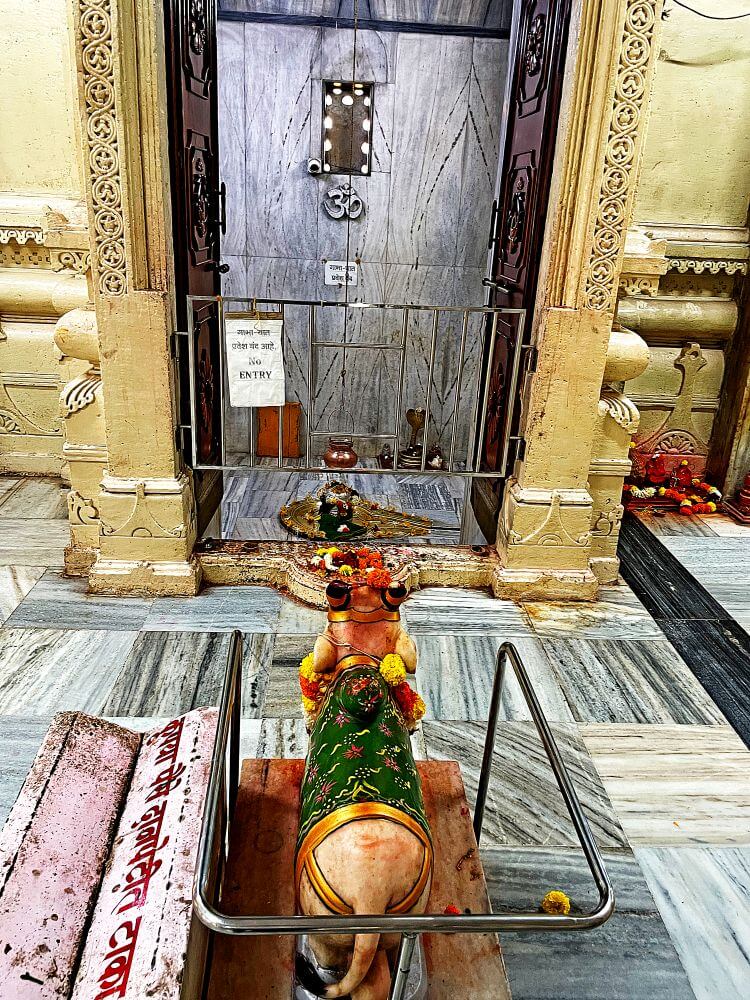
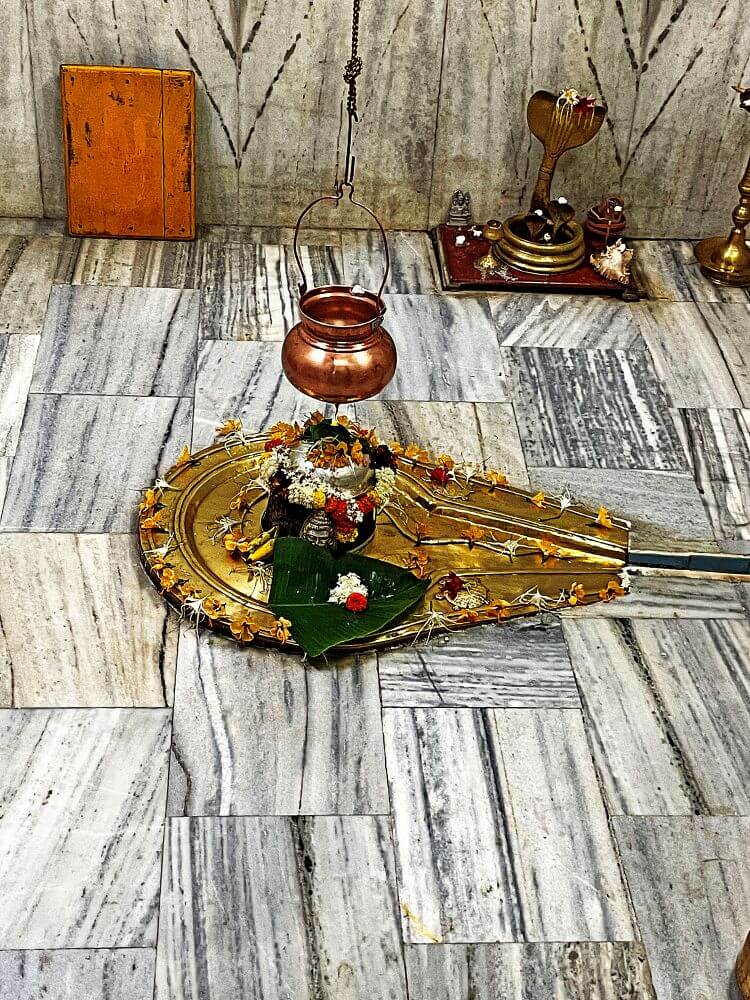
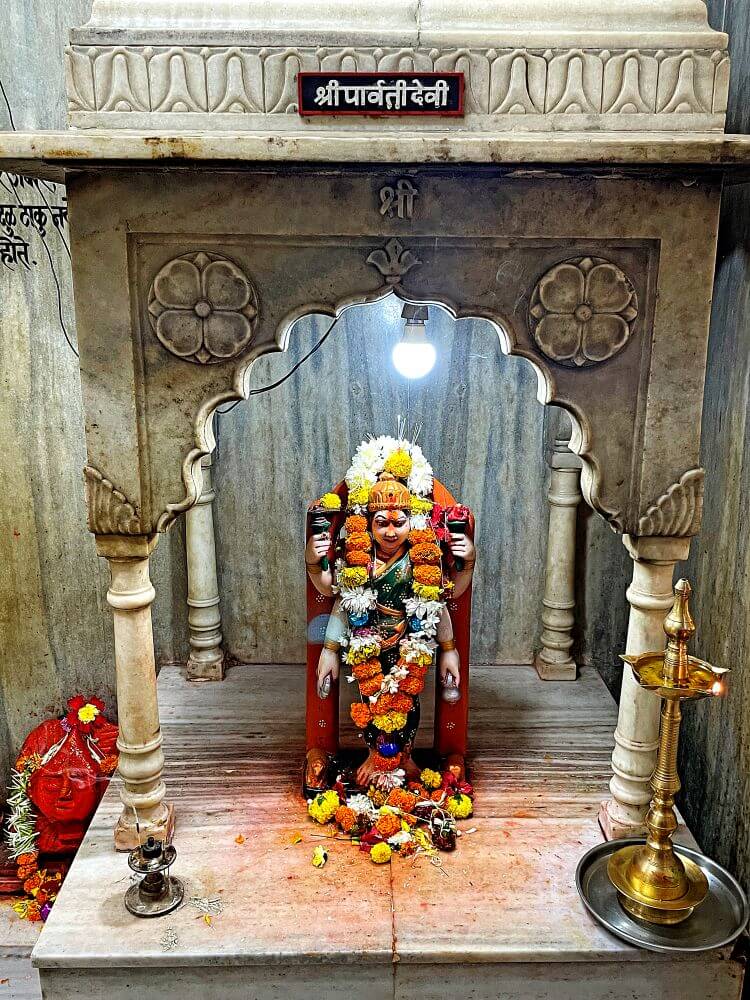
To enter this temple, which is situated on a slightly elevated platform, one must climb five steps. Near the entrance of this temple is the seat of Govala, the brother of Shitaladevi and her six sisters. There are two entrances at the front of the temple to reach the main sanctum. There are porch structures (Mukhamandap) near these entrances. Above the entrances are relief sculptures of auspicious symbols like a pitcher (Kalash) and a lamp (Samai). From here, one enters the assembly hall (Sabhamandap) of the temple. The enclosed assembly hall is quite large and is arranged with a path for the convenience of devotees. There are two sanctums (Garbhagriha) at the front of the assembly hall. The sanctum on the right contains the idol of Shitaladevi. In this vermilion-smeared idol, carved from a single stone, one hand holds a silver broom while the other holds a vessel containing cool water. This adorned Goddess of gentle, cool nature has a large forehead. The Goddess wears a silver crown on her head, and there is an ornate silver halo (Prabhaval) behind the idol. On the walls outside the sanctum, there are niches (Devakoshtha) containing idols of Parvati and Siddhivinayak. The second sanctum contains the Linga of Valukeshwar Mahadeva. It is believed that this Shivalinga has been here since before the establishment of Shitaladevi. Devotees believe that if this Shivalinga is worshipped during a drought, it rains within a few days. It is said that previously, a serpent (Bhujang) used to sit coiled around this Linga. However, after the crowd in the temple began to increase, it started residing within the temple premises. Even today, many devotees get a glimpse of it.
Hundreds of devotees come here every day for the darshan of Shitaladevi, who is famous for granting wishes. Many devotees offer gold and silver items and jewelry to the Goddess for the fulfillment of their vows. Devotees can take darshan of the Goddess in this temple every day from 6 in the morning to 7 in the evening.
A three-day pilgrimage fair is held here on Chaitra Purnima. During these three days, various programs are organized at the temple. On the third day, a procession of the deities’ idols is taken out in a palanquin. In the past, during the festival, goats and chickens were sacrificed to the Goddess. However, in ۱۹۶۵, the villagers came together and put an end to this practice of animal slaughter. Instead, a pumpkin is now offered as a sacrifice at the conclusion of the festival.
During the nine days of Navratri, various religious programs are held here. During this period, beautiful decorations are arranged before the Goddess. The Goddess is not bathed during this festival; only her feet are washed. It is believed that during this time, the Goddess is engaged in battle. On the day of Vijayadashami, the Goddess is bathed because she has become calm after slaying the demons. On the day of Vijayadashami, the Simollanghan ritual is performed at the temple. During the Deepotsav held here on the day of Tripurari Purnima, the premises are illuminated with lamps. On Mahashivratri, Rudrabhishek is performed on the Shiva Linga here. Hanuman Jayanti is also celebrated here with great enthusiasm. Various religious programs are held here during the Maghi Ganeshotsav. There is a Hanuman temple in the temple courtyard. Nearby, there is also a Ram temple built in the year ۱۸۴۹ AD.
This sacred temple stands as a testament to deep spiritual devotion, ancient architectural grandeur, and rich local cultural traditions.
The sanctum sanctorum houses the divine idol consecrated according to ancient Vedic traditions, surrounded by serene courtyards and traditional temple architecture.
Navratri, Maha Shivratri, Annual Temple Jatra & Deepotsav
Compare and book flights, secure top-rated local hotels near the temple, hire reliable guides, and rent cars instantly.
Extend your pilgrimage by visiting other highly sacred temples located nearby.


Add ₹999 more to unlock FREE SHIPPING!
Your sacred cart is currently empty.
Shop Photo FramesFill in your delivery details below to place your order.
Add comment